
María Dueñas & Itamar Golan – Fauré: Après un rêve
An evening pause: Hat tip Alton Blevins.
An evening pause: Hat tip Alton Blevins.
Courtesy of BtB’s stringer Jay.
His job is “Chief Information Officer,” which sounds like pr.
Apparently the concept art at the link is wrong, as it does not show the knock-off’s twin tails, like the X-37B
This will be NSIL’s first commercial launch of India’s GSLV-MK3 rocket, its largest. It will also be the first in OneWeb’s effort to replace the Russia Soyuz-2. SpaceX had signed the first contract with OneWeb after the Ukraine War started, but apparently OneWeb wants to fly first on India’s rocket.
This rocket is designed to only need two weeks to prep for flight, so the launch could happen this month.
Though its batteries are now getting charged by the Sun, engineers have still not regained full control of the smallsat lunar orbiter CAPSTONE, presently on its path towards the Moon.
As per the latest update:
The CAPSTONE mission team is continuing to work towards recovery of the spacecraft full three-axis control. This work includes collecting information from the spacecraft, running simulations, and refining recovery plans. The vehicle remains stable and power positive in its current configuration.
In other words, they’ve got the spacecraft oriented so that its solar panels can gather enough sunlight to charge the batteries, but its attitude remains incorrect and they do not yet have CAPSTONE fully under their control.
The spacecraft arrives in lunar orbit on November 13, 2022. At that time however it will have to do an engine burn to enter lunar orbit, and if full control is not regained by then this burn will not be possible because engineers will not be able to point it correctly.
After three years of delays due to payload issues, it now appears that the next Falcon Heavy launch will likely occur near the end of October.
The tentative date is October 28th, but this is not yet confirmed. Though a manifest of a half dozen Falcon Heavy launches has existed since 2019, and most were originally scheduled for launch in 2020-2021, none has taken place, all supposedly because of payload delays not issues with the rocket itself.
SpaceX officials are now saying that it plans to complete six Falcon Heavy launches within the next twelve months. Two are for the military, three for commercial communications companies, and the last is the Psyche mission for NASA. This last launch is delayed because of software issues discovered in June, only a few weeks before launch. Whether it can fix these issues in time for a new July 2023 launch window remains questionable.
Capitalism in space: A Boeing cubesat satellite launched last month is about to burn up as it returns to Earth because the Spaceflight Sherpa orbital tug that was supposed to raise its orbit has as yet done nothing.
Spaceflight planned to use a chemical propulsion system on the Sherpa, provided by Benchmark Space Systems, to raise the orbit of the vehicle to an altitude of 1,000 kilometers. The Sherpa payload, initially not disclosed by Spaceflight, is a V-band communications demonstration by Boeing called Varuna.
However, tracking information from the U.S. Space Force shows that Sherpa has yet to raise its orbit. Atmospheric drag has caused that orbit to gradually decay, and the spacecraft was most recently tracked in an orbit of 283 by 296 kilometers. That raised concerns that the spacecraft could reenter in a matter of weeks if it does not start firing its thrusters.
Spaceflight officials explain the lack of action is because they are still “commissioning” the tug, whatever that means. It also appears that problems was this same propulsion system caused SpaceX to ban Spaceflight in March as a customer on future rideshare launches.
Capitalism in space: SpaceX this afternoon successfully completed its second Falcon 9 launch of the day, placing 52 Starlink satellites into orbit from Vandenberg..
The seven hour gap between launches was a record for the shortest time between two SpaceX launches. The first stage landed successfully on a drone ship in the Pacific, completing its fifth flight.
The leaders in the 2022 launch race:
45 SpaceX
41 China
12 Russia
7 Rocket Lab
7 ULA
American private enterprise now leads China 64 to 41 in the national rankings, and the entire world combined 64 to 61. The U.S. total, 64, ties the total from 1965, the second most active year in American rocketry. The record of 70 successful launches, set in 1966, will almost certainly be broken sometime in the next month.
Courtesy of BtB’s stringer Jay, who reads Twitter so I don’t have to.
Jay says, “I bet you a Coke it will not launch on that date.” I wouldn’t take that bet if I were you.
My question: Why did they name it after an Israeli city?
They join Canada, Germany, Japan, and New Zealand, making seven total, including the U.S.
According to Anatoly Zak, this is a major redesign.
Might be true. Might not. Nothing that comes from Iran’s state-run press can be trusted.
Capitalism in space: Shortly after Firefly completed the first successful orbital launch of its Alpha rocket, the U.S. Space Force awarded the company its first military launch contract.
The VICTUS NOX mission will demonstrate an end-to-end Tactically Responsive Space capability, including the launch segment, space segment, ground segment, and on-orbit operations. VICTUS NOX will perform a Space Domain Awareness (SDA) mission from Low-Earth Orbit (LEO).
The next Alpha mission, a demonstration launch of a climate smallsat for NASA, presently hopes to launch before the end of the year, though more likely early next year.
Capitalism in space: Virgin Orbit announced today that it has completed its preparations for its first launch from Cornwall, United Kingdom, which would also be the first launch ever from British soil.
An actual launch date has not yet been set, due to the “launch permitting regulatory process” in the UK. At the moment Cornwall is vying with two new spaceports in Scotland for the honor of that first launch.
Capitalism in space: SpaceX this morning successfully launched two NASA astronauts, one Japanese astronaut, and one Russian astronaut into orbit for a mission to ISS, with the docking scheduled for tomorrow.
The capsule, Endurance, is making its second flight. This was SpaceX’s eighth manned launch. The first stage, making its first fight, landed successfully on the drone ship in the Atlantic. This was the first new first stage launched since May 2022, and only the second this year. All other launches in 2022 were completed using SpaceX’s existing fleet of boosters. The company also continues to hold to the pattern of last year for maintaining that fleet, by adding two new boosters each year.
That this achievement is now becoming as routine as SpaceX’s unmanned launches proves the company’s success. And SpaceX did it in less than a decade, something NASA with its government-built shuttle was never able to accomplish.
The leaders in the 2022 launch race:
44 SpaceX
41 China
12 Russia
7 Rocket Lab
7 ULA
American private enterprise now leads China 63 to 41 in the national rankings, and the entire world combined 63 to 61.
Capitalism in space: ULA today successfully used its Atlas-5 rocket to place two SES communications satellites into orbit.
Satellite deployment will occur in about five hours, after the rocket gets them to their proper geosynchronous orbit.
43 SpaceX
41 China
12 Russia
7 Rocket Lab
7 ULA
American private enterprise now leads China 62 to 41, and the entire globe combined 62 to 61. This lead will grow before the week is out. SpaceX has scheduled two launches on October 5th, first a manned mission to ISS followed a few hours later by an unmanned launch of 52 Starlink satellites. Rocket Lab follows on October 6 with another Electron launch.
The launch is presently scheduled for November 6, 2022.
The first on the list is their attempt to copy or beat SpaceX’s Raptor-2 engine. I wonder if their academic spies in the U.S. have managed to steal some juicy engineering data.
Too early to say if these experiments are a success, but they follow many similar planet experiments on the Salyut stations, Mir, and ISS.
According to the state-run press, the rocket, dubbed Saman, tested an “orbital transmission system and … its capability to change the orbit of satellites in near-space conditions.”
Company officials try to paint a rosy picture, but the future does not look good for this established geosynchronous satellite company.
Though OneWeb signed first with SpaceX to replace the Russians launch services, it appears the company wants to launch first with India.
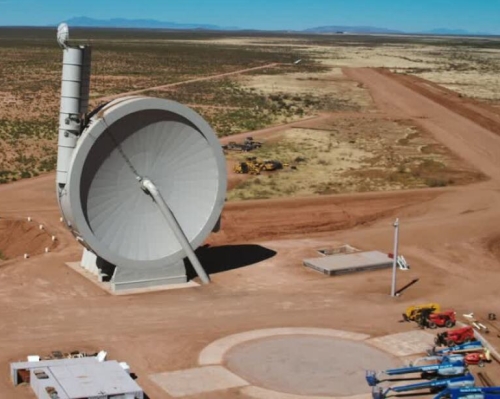
Capitalism in space: Spinlaunch on September 27, 2022 successfully completed the 10th test launch of its radical spin launch centrifuge, this time accelerating test components to approximately 35k feet for other potential customers, including NASA.
Flight Test 10, which had a similar flight trajectory as previous campaigns, was witnessed by more than 150 partners, government officials, and industry advocates. It was SpinLaunch’s tenth flight test in just under eleven months since the Suborbital Mass Accelerator came online in late 2021.
…Four partner payloads, as well as two instrumentation payloads, were flown on the Suborbital Accelerator Flight Test Vehicle. For partners, the flight test provided critical data on the launch environment and payload integration process.
As part of the pre-flight qualification process, SpinLaunch accelerated payloads up to 10,000G in SpinLaunch’s 12-meter Lab Accelerator at its Long Beach headquarters. Payloads were inspected post-spin and subsequently integrated into the Flight Test Vehicle in preparation for Flight Test 10.
It remains to be seen whether this technology will work for launches to orbit. Even if it does, because of the stress produced during spin up this launch technique will really only work for bulk payloads to orbit, such as water and oxygen. If it works however it could reduce launch costs for these items tremendously.
An evening pause: Paul Simon’s masterpiece of poetry, always worth hearing again.
Hat tip Alton Blevins.
All but the first provided by stringer Jay, who trolls Twitter so I don’t have to. A lot of launches by the U.S. in the next four days.
The link goes to the live stream, which goes active five minutes before the scheduled 4:56 pm (Pacific) launch time.
The live stream will be here.
The link goes to the live stream, set to begin five hours before launch.
It will place a NOAA satellite into orbit. The company will not attempt a recovery of the rocket’s first stage. That same day SpaceX also has a launch planned, the third for the company in a little more than three days.
The recruitment video at the link is like a television commercial.
Based on numerous sources, including at least one owner of a payload, this is not true. The second stage under performed. Instead of a 300 kilometer orbit, the second stage deployed at a lower orbit, either 223×283 kilometers, or 210×270 kilometers, depending on source. (The latter is likely more accurate, as it is more recent.)
Not a good look for new CEO Weber, or Firefly. The under performance is something that can be fixed. To make believe it didn’t happen only makes you look disingenuous and unable to face reality.

Capitalism in space: Firefly, a company that just two years ago had gone into bankruptcy, tonight successfully launched their new Alpha rocket into orbit on its second test launch. The screen capture to the right shows the rocket 1:48 minutes into flight, its first stage still firing.
A final 2nd stage engine burn has completed, and we now have confirmation of deployment of the payload satellites. My sources tell me that the second stage under-performed, putting the satellites into a 223x283km orbit, rather than the planned 300km orbit, which will shorten the lifespan of the smallsats. As this was a test launch, not an operational one, this issue does not to my mind make the launch a failure.They reached orbit and the satellites were successfully deployed.
Thus, Firefly now joins SpaceX, Rocket Lab, ULA, Virgin Orbit, and Northrop Grumman as an operational American commercial rocket companies. Astra had been operational, but it has stepped down as it builds a new rocket.
The leaders in the 2022 launch race:
43 SpaceX
41 China
12 Russia
7 Rocket Lab
6 ULA
American private enterprise now leads China 61 to 41 in the national rankings, and is tied with the entire world combined, 61 to 61.
Firefly will try again to complete the first successful launch of its Alpha rocket tonight from Vandenberg Space Force Base.
Last night they attempted twice to launch, the first aborting about 4 minutes before launch, the second aborting at T-0, with the first stage engine’s actually igniting and then shutting down.
I have embedded the live stream below. The launch window opens at 12:01 am (Pacific) and lasts two hours, giving them time for at least two launch attempts, should an abort occur on the first attempt.
An evening pause: The band is Greek, specializing in swing. The singer is Catarina Sisinni. This was performed live in 2016 in Thessaloniki.
Hat tip Judd Clark.
Link here. Doug Messier has probably provided the best news coverage of every up and down (mostly down) of Virgin Galactic since its beginning. As he notes at the beginning of his article:
A lot can happen in 18 years.
A mother can go from holding her newborn baby in her arms to sending her child off the college for the first time. In between, the child has learned to walk and talk, endured the rigors of puberty, and spent at least 13 years in school.
During that same time, Virgin Galactic essentially accomplished nothing, while wasting billions in private investment capital. Meanwhile, Richard Branson pumped and dumped, getting out when the getting was good and leaving others to hold the bag.
Definitely worth the read. The story of Virgin Galactic demonstrates the risks inherent in capitalism and freedom. Freedom allows for big dreams, but before you commit to any dream you better look it over very carefully or you might be burned.
Capitalism in space: In a press release issued yesterday, NASA revealed that it has signed an unfunded agreement with SpaceX and Jared Isaacman’s Polaris program (which has purchased a series of manned missions on Dragon) to study the possibility of sending one of those private manned missions to the Hubble Space Telescope to raise its orbit.
SpaceX – in partnership with the Polaris Program – proposed this study to better understand the technical challenges associated with servicing missions. This study is non-exclusive, and other companies may propose similar studies with different rockets or spacecraft as their model.
Teams expect the study to take up to six months, collecting technical data from both Hubble and the SpaceX Dragon spacecraft. This data will help determine whether it would be possible to safely rendezvous, dock, and move the telescope into a more stable orbit.
In my book describing the history of the people who created Hubble, The Universe in a Mirror, I repeatedly noted how throughout its history people have tried to kill it, first in the design phase, then in the budget, then during construction, then after it was launched and the mirror was found to be ground incorrectly, and then after the Columbia accident when NASA management tried to cancel its last shuttle servicing mission.
Every attempt failed. As I have noted in that book and many times since its publication, Hubble is a telescope that will not die. NASA has for years intended to launch a mission to de-orbit it when its orbit had decayed enough that it was unstable. I’ve always said that when that time came, someone would propose and push for a mission to instead raise that orbit.
That prediction is now coming true. Though no robot arm exists yet for Dragon to use to grab Hubble in any rendezvous attempt, creating one is hardly difficult. At that point raising the telescope’s orbit becomes relatively trivial.
Whether such a mission could do more, such as replace Hubble’s ailing gyroscopes, is unknown. It would be foolish however not to review that possibility as well.