Starbase to take control of nearby beaches

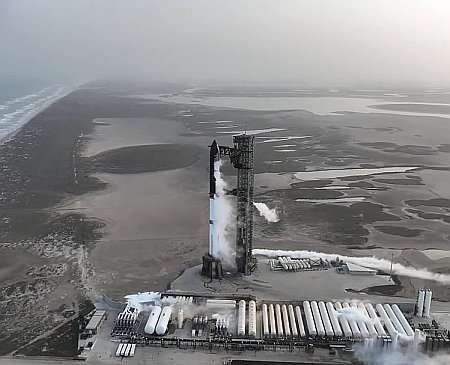
The new government of Starbase has reached an agreement with its local county to take control of the nearby beaches that will allow Starbase to not only maintain them but close them when it chooses.

Cameron County commissioners approved the agreement to hand over a portion of Boca Chica Beach on Tuesday. The deal outlines cleaning and maintenance obligations among other terms. Under the agreement, Starbase will be allowed to set requirements for beachfront construction and special events on the beach.

…The compact includes a plan to address beach erosion, which occurred at a rate of 10 to 20 feet per year from 1950 to 2012, Starbase Commissioner Jordan Buss told the county commissioners, citing a study conducted by the University of Texas at Arlington.

This agreement mirrors one Starbase had previously made with South Padre Island for other beach portions.

The article once again gives lots of column space to the fringe groups that oppose SpaceX and its operations at Boca Chica, even though the evidence suggests they have almost no support from the general public.

8 comments

Firefly’s stock sags due to poor revenue numbers in 1st quarter report

Firefly's stock price since IPO

Apparently Wall Street has lost faith in the rocket startup Firefly since that company went public last month. The stock zoomed initially, but has now sagged due to a poor 1st quarter report that showed revenues far below expectations.

The stock’s initial price had been predicted to range from $35 to $39, but quickly rose to $70.

Since then the price has steadily dropped, so that today it sits about about $41.

The news reports seem to think this indicates bad things for the company. I see this as simply a long term correction from the initial over-enthusiasm by buyers. The company had first offered a stock price close to this number. The price is now exactly where Firefly predicted.

If I was interested in buying stock, this might actually be a good time to buy. As a rocket startup, Firefly appears quite solid, being the only startup to successfully soft land on the Moon. Its Alpha rocket has also been cleared for further launches, and though it has had a mixed launch record, with several launches failing due to upper stage issues, it has likely solved these problems.

3 comments

Canadian rocket startup to try suborbital launch today after yesterday’s launch was scrubbed due to a fire on the launchpad

Proposed Canadian spaceports

UPDATE: The launch attempt today has also been scrubbed due to another small pad fire due to leaking fuel. The company is now aiming for another launch attempt tomorrow.

Original post:
———————
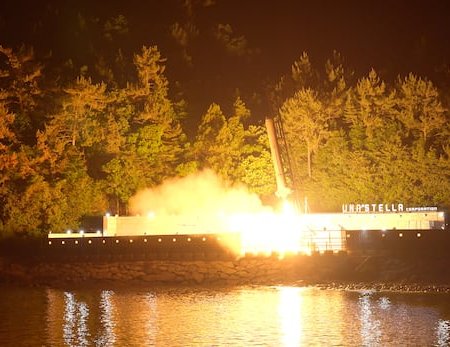
The Canadian rocket startup Nordspace was forced yesterday to cancel its first launch attempt of its Taiga suborbital rocket when flames and smoke appeared on the launchpad.

An update posted to the company’s website said it had to delay the launch “due to an anomaly on the launch pad. … Rocket, pad, and personnel are safe. We are working to resolve the issue and return to launch,” the update said. Later, in a comment on its livestream, the company said it would reschedule the launch to Wednesday morning.

I have embedded a live stream of today’s launch attempt below, set for lift off a little past noon today (Pacific).

With this launch, the company will not only complete the first Canadian launch of any kind from Canada by a private company, it will initiate operations at its own spaceport in Newfoundland, dubbed the Atlantic Spaceport. This achievement would also leapfrog Canada’s other proposed spaceport in Nova Scotia, which has been promising launches since 2016 without success.
» Read more

0 comments

Two launches by China and SpaceX

Both China and SpaceX completed launches today. First, China launched another 11 satellites for its Geely internet-of-things constellation, its Smart Dragon-3 rocket lifting off from a ocean platform off the nation’s eastern coast.

This was the sixth launch for this constellation, bringing the number of satellites in orbit to 64, out of a planned 240. The constellation is designed to provide positioning and communications for trucking and other ground-based businesses.

Next, SpaceX successfully placed three government science satellites into orbit (two for NASA and one for NOAA), its Falcon 9 rocket lifting off from the Kennedy Space Center in Florida. The first stage completed its second flight, landing on a drone ship in the Atlantic. The two fairings both completed their first flight.

The two NASA satellites were the Interstellar Mapping and Acceleration Probe (IMAP) to study the Sun’s heliosphere at the edge of the solar system and the Carruthers Geocorona Observatory to study the exosphere, the outermost layer of the atmosphere. The NOAA probe, Space Weather Follow On โ€“ Lagrange 1 (SWFO-L1), will observe the Sun from one million miles from Earth, providing advance knowledge of strong solar flares and eruptions so that utility companies can shield the electric grid appropriately.

The leaders in the 2025 launch race:

123 SpaceX
55 China
13 Russia
12 Rocket Lab

SpaceX now leads the rest of the world in successful launches, 123 to 94.

0 comments

Riccardo Cocchi & Yulia Zagoruychenko – 2018 Fred Astaire Cup Latin dance competition

An evening pause: The camera soon focuses on this couple, whose performance eventually won the competition, which apparently was their tenth victory. As noted in the comments, “You don’t understand exactly how great they are until you see them in a roomful of other people dancing the same dance.”

Hat tip Judd Clark.

4 comments

Australian satellite startup to fly an instrument on private mission to Apophis

In March 2024 the orbital tug startup Exlabs announced that it will use its orbital tug to deliver three cubesats to the asteroid Apophis when that object makes its next close fly-by of the Earth on April 13, 2029.

The California-based Exlabs has now signed its first customer for that mission. An Australian satellite startup, Fleet Space Technologies, has agreed to fly an instrument on this private commercial mission.

Under the ApophisExL mission, Fleet will provide geophysical sensing technologies for ExLabsโ€™ mothership to collect targeted data and characterize the asteroid. The datasets should enable new avenues for data sharing and commercial use, set criteria for prioritizing asteroids for prospecting and feed critical intelligence into planetaryโ€‘defence planning.

Fleet already has a contract to fly another instrument, a seismometer, on Firefly’s second Blue Ghost lander mission to the Moon. It has also developed and flown satellite instruments used to detect minerals on Earth.

Both companies are clearly aiming to enhance their brand name with this mission, set to launch in 2028.

1 comment

Universities in Taiwan and the United Kingdom sign partnership deal

The University of Surrey in the United Kingdom, a decades-long pioneer in cubesat technology, has now signed a partnership deal with the National Central University in Taiwan to work together.

Both universities began their work with cubesats to simply as a low-cost way to teach students about satellite design, but quickly found there was money to be made selling this technology commercially. This deal attempts to make two plus two equal six.

The collaborative plans follow multiple successful engagements between the Universities, from NCU professor Loren Chang joining a Taiwanese delegation to Guildford in March to partnership working between students from each university earlier this summer when Surrey and NCU worked with launch provider Stellar Kinetics at Etlaq Spaceport in Oman. The students worked together to integrate the Jovian-O and SIGHT space payloads that they had developed onto the KEA-1 rocket.

The universities also share research interests. The Surrey Space Centre has built space-based radiation detectors and, as part of the UKโ€™s SWIMMR programme to improve resilience to space weather, developed miniature detectors to measure radiation at different altitudes and created a model for the UK Met Office to predict radiation levels experienced by aircraft.

NCU has developed multiple scientific payloads and small satellite science missions, including the Deep Space Radiation Probe (DSRP), which flew aboard the commercial lunar payload service provider, ispace, Inc.โ€™s Resilience lunar lander, launched in January 2025. DSRP was operational for more than 97% of the five-month mission, providing measurements of the radiation belts, several solar radiation storms and radiation in lunar orbit. It was the first Taiwanese payload to fly and operate beyond Low Earth Orbit.

This deal now enhances both universities and the products both sell (educating students and developing new satellite technologies).

0 comments

SpaceX launches classified reconnaissance payload

SpaceX this morning successfully launched a classified payload for the National Reconnaissance Office, its Falcon 9 rocket lifting off from Vandenberg in California.

The first stage completed its 18th flight, landing back at Vandenberg. The two fairing halves completed their 27th and 28th flights respectively. As of posting the payload had not yet been deployed.

The leaders in the 2025 launch race:

122 SpaceX
54 China
13 Russia
12 Rocket Lab

SpaceX now leads the rest of the world in successful launches, 122 to 93.

0 comments

South Korean rocket startup Innospace wins launch and marketing contract with German broadcast company

The South Korean rocket startup Innospace announced last week that it has signed a $5.8 million launch with the German broadcast company Media Broadcast Satellites (MBS) to not only launch two MBS satellites in 2026 and 2028 using its Hanbit rocket, but to have MBS market the rocket in Germany.

Under the agreement, INNOSPACE will carry out two HANBIT launch missions to deploy MBS satellites into Low Earth orbit (LEO), with one launch in 2026 and the other planned by 2028. In both launch missions, MBS satellites will serve as the primary payloads, with priority in launch scheduling and orbit determination.

INNOSPACE also signed a separate contract on the same day, officially appointing MBS as its exclusive agent for launch service sales and marketing within Germany, marking the companyโ€™s entry into the European space launch market. Following the contract, MBS will exclusively distribute launch services based on the HANBIT series to satellite customers in Germany.

Innospace has not yet launched Hanbit. It had hoped to attempt the first launch in July, but in May it delayed it to the end of 2025 due to issues found in a first stage pump. The launch itself will take place at Brazil’s long abandoned Alcรขntara spaceport on that nation’s northeast coast.

4 comments

Avio wins U.S. launch contract for its Vega-C rocket

Capitalism in space: In what I think is a first, the Italian rocket company Avio has won a Vega-C launch contract without any participation from the European Space Agency’s (ESA) commercial division Arianespace.

The contract is also with an American company, SpaceLaunch, to put an “institutional Earth observation satellite” in orbit in 2027.

The significance of the deal is that Avio is now successfully marketing and selling its Vega-C rocket, without the middleman Arianespace taking a cut. As part of the shift of ESA and Europe to the capitalism model, whereby it no longer runs things but acts merely as a customer, it also freed Avio from the clutches of Arianespace. Previously, Avio built the rocket for that government agency, which then marketed and sold it to satellite companies. Avio had no control over profit or price. In fact, it didn’t really own its own rocket.

This absurd situation is now ending. There are still a handful of Vega-C launches that were contracted for under Arianespace, but after these Avio will be completely in charge. This deal, announced yesterday, is the beginning of that process.

2 comments

SpaceX launches 28 Starlink satellites

The beat goes on. SpaceX early this morning successfully placed another 28 Starlink satellites in orbit, its Falcon 9 rocket lifting off from Cape Canaveral in Florida.

The first stage completed its eleventh flight, landing on a drone ship in the Atlantic.

The leaders in the 2025 launch race:

121 SpaceX
54 China
13 Russia
12 Rocket Lab

SpaceX now leads the rest of the world in successful launches, 121 to 93.

4 comments
1 57 58 59 60 61 897