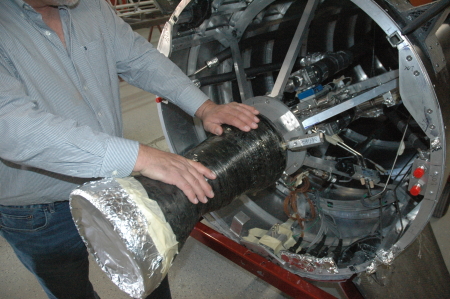
SpaceX successfully completes Falcon 9 static fire test

SpaceX on Sunday successfully completed the launch dress rehearsal countdown and static fire test for its next Falcon 9 launch, which will loft a Dragon capsule to ISS and is set now for February 18.

The article at the link as well as a lot of other news organizations are making a big deal about the fact that this launch is taking place at the LC-39A launchpad, used during the Apollo program as well as by the shuttle. While the historic background is interesting, of more significance to me is that this test brings SpaceX closer to having two operational pads in Florida, one of which (LC-39A) is configured for Falcon Heavy launches.

1 comment

Trump to the Moon!

Two stories in the past two days strongly suggest that the Trump administration is planning a two-pronged space policy approach, with the long-term goal of shifting most of space to private operations.

From the first link:

The more ambitious administration vision could include new moon landings that “see private American astronauts, on private space ships, circling the Moon by 2020; and private lunar landers staking out de facto ‘property rights’ for American on the Moon, by 2020 as well,” according to a summary of an “agency action plan” that the transition drew up for NASA late last month. Such missions would be selected through an “internal competition” between what the summary calls Old Space, or NASA’s traditional contractors, and New Space characterized by SpaceX and Blue Origin. But the summary also suggests a strong predilection toward New Space. “We have to be seen giving ‘Old Space’ a fair and balanced shot at proving they are better and cheaper than commercial,” it says.

Another thrust of the new space effort would be to privatize low-Earth orbit, where most satellites and the International Space Station operate — or a “seamless low-risk transition from government-owned and operated stations to privately-owned and operated stations.” “This may be the biggest and most public privatization effort America has ever conducted,” it says.

Essentially, they are going to do exactly what I suggested back in late December, give SLS/Orion a short-term realistic goal of going to the Moon. This is what it was originally designed for, and it is the only technology presently available that has even the slightest chance of meeting the three year deadline outlined above. More important, this will give Congress something in the negotiations, as SLS/Orion has been Congress’s baby — pushed and funded by Congress over the objections of the previous administration and without a clear mission to go anywhere — in order to keep the money stream flowing to the big “Old Space” companies like Boeing and Lockheed Martin. Obama tried to simply cancel its predecessor, Constellation, and that did not sit well with Congress. Trump however understands negotiation and how to play the game. In order to eventually eliminate SLS Trump is going to provide Congress some short term excitement and some viable long term alternatives.

The long term alternatives will be private enterprise. Even as they send SLS/Orion on its grand finale to the Moon, the Trump administration will accelerate the restructuring of NASA to make the agency less of a design and construction operation and more a mere customer of private space. All non-military Earth orbital operations will be shifted to the private sector over time, so that once SLS/Orion has achieved that goal of completing a lunar mission there will be a strong enough private space sector to replace it, allowing Congress to let it go the way of Apollo and the space shuttle.

9 comments

Lockheed Martin screwup delays delivery of Air Force GPS satellites

Our government in action! Incompetence by a Lockheed Martin subcontractor will delay the delivery of 32 new Air Force GPS satellites and will likely cost the government millions.

Lockheed has a contract to build the first 10 of the satellites designed to provide a more accurate version of the Global Positioning System used for everything from the military’s targeting of terrorists to turn-by-turn directions for civilians’ smartphones. The program’s latest setback may affect a pending Air Force decision on whether to open the final 22 satellites to competition from Lockheed rivals Boeing Co. and Northrop Grumman Corp. “This was an avoidable situation and raised significant concerns with Lockheed Martin subcontractor management/oversight and Harris program management,” Teague said in a Dec. 21 message to congressional staff obtained by Bloomberg News.

The parts in question are ceramic capacitors that have bedeviled the satellite project. They take higher-voltage power from the satellite’s power system and reduce it to a voltage required for a particular subsystem. Last year, the Air Force and contractors discovered that Harris hadn’t conducted tests on the components, including how long they would operate without failing, that should have been completed in 2010.

Now, the Air Force says it found that Harris spent June to October of last year doing follow-up testing on the wrong parts instead of samples of the suspect capacitors installed on the first three satellites. Harris “immediately notified Lockheed and the government” after a post-test inspection, Teague said in his message.

So, the subcontractor first failed to do the required tests, then it did the tests on the wrong parts. Sounds like the kind of quality control problems we have seen recently in Russia and Japan.

The worst part? The contract is a cost-plus contract, which means the government has to absorb the additional costs for fixing the screw-up, not Lockheed Martin or its subcontractor.

3 comments

Iran tests short range missile

Does this make you feel safer? Iran today launched a short range Mersad surface-to-air missile on a 35 mile test flight.

The launch took place on the same launchpad where earlier in the week they had placed and then removed an orbital Safir rocket, designed to put satellites into orbit. Why they removed it and launched the short range missile instead remains unknown

11 comments

Orbital ATK sues DARPA over its satellite repair program

Orbital ATK has filed a lawsuit against the Defense Department’s DARPA division over its satellite repair program that is apparently going to award a contract to a Canadian company to develop a system for using robots to repair orbiting satellites.

Orbital argues that the federal program, called the Robotic Servicing of Geosynchronous Satellites, would unfairly compete with its own privately funded effort, a system called the Mission Extension Vehicle 1, backed by at least $200 million from investors. The company has set up at a production facility in Northern Virginia, with a launch planned for next year.

DARPA wants to build out a government-funded program of its own, and is close to awarding a contract to a company that Orbital views as a competitor. In a contract announcement briefly posted on the agency’s website, DARPA said it is awarding a $15 million contract to Space Systems/Loral (SSL), a U.S. subsidiary of Canadian aerospace firm MacDonald, Dettwiler and Associates. DARPA spokesman Jared B. Adams said the contract award was posted in error and elements of the deal are still being worked on.

In its lawsuit, Orbital alleges that the contract violates federal policy against creating government space programs that compete with existing commercial ones. “The U.S. National Space Policy explicitly directs government agencies to avoid funding activities that are already in development in the commercial marketplace,” the company said in a statement. “Orbital ATK will continue to pursue all available options to oppose DARPA from moving forward with this illegal and wasteful use of U.S. taxpayer dollars.”

DARPA normally pushes projects that no one is doing, either because the work is too experimental or can’t yet make a profit. In this case however it appears that this is not the case. Worse (from a political perspective), they are awarding the contract to a non-American company. I would not be surprised if Congress soon steps in and shuts this particular DARPA project down.

0 comments

Democrats in Pima County vote to appeal World View court decision

The Pima County Board of Supervisors in Arizona has voted 3-2 on a party-line vote to appeal a judge’s decision that canceled the county’s deal with the space tourism balloon company World View because it violated state law.

The Pima County Board of Supervisors voted 3-2 to appeal a Superior Court decision which concluded the county violated state law when it signed an agreement and lease with World View, a space exploration company located near the Tucson International Airport.

The vote was along party lines, with the three Democrats voting for the appeal and the two Republicans voting against it.

The court ruled the county did not comply with a law which requires the county to appraise the property, hold a public auction, and negotiate a fair rental price before it agreed to build a $15 million complex for the company.

It seems to me that — rather than fight this in court — the smart thing to do here is to work out a new agreement that does not violate the law, something that the county was able to do with its lease agreements with Vector Space Systems. This apparently was what the Republicans on the board were proposing. Instead, the Democrats have chosen to fight, even though that will delay things further and is likely to fail in court anyway.

0 comments

An orbital change extends the life of India’s Mars orbiter

An orbital maneuver has allowed India’s Mars Orbiter Mission avoid an eight hour period with no sunlight — thus draining its batteries — so that the mission can be extended until 2020.

The on-board battery which was to take over had a life of just about 1.4 hours, while the eclipse was to last for 8 hours. The spacecraft’s future was bleak.

The scientists thought of a solution. On the night of January 17, a team of eight engineers at Indian Space Research Organisation’s Telemetry, Tracking and Command Network, Bengaluru, sent a time-delayed command to the Mars probe. The command set in motion firing of eight on-board thruster rockets. Each of them were fired for 431 seconds, pushing the Mars Orbiter Mission (MOM) space probe to a new orbit that completely avoids an eclipse up to September 2017. The shadowing in September is of a smaller duration, which the satellite’s batteries can handle. “Because of the crucial orbital change, the MOM now gets three additional years’ life. We are expecting it to transmit data till 2020,” Isro chairman A S Kiran Kumar told DH.

The mission’s science data is not as important as the experience it is giving Indian engineers in operating a planetary probe remotely from Earth. This success speaks well for the future of India’s space effort.

3 comments

NASA SLS/Orion facility in Louisiana sustains tornado damage

A tornado has damaged the building NASA uses at its Michoud facility near New Orleans for building SLS and Orion.

[One official] says a 43-acre building where they build rockets suffered significant damage on one end. A number of areas in the facility have lost parts of the roof or walls. He says the hardware and tooling used in the Orion and Space Launch System were not damaged. But they’ll have to do a “significant effort” to cover everything up and make sure any subsequent bad weather doesn’t affect it while the roof and walls are repaired.

Based on this report, this damage should not effect the SLS/Orion launch schedule. At least, if this was a private company it would not. We shall see how NASA responses.

0 comments

NanoRacks and Boeing to build private airlock on ISS

The competition heats up: NASA has signed an agreement with NanoRacks and Boeing to build private commercial airlock to attach to ISS in 2019 and be used for commercial operations.

Commercial opportunities through Airlock begin with cubesat and small satellite deployment from station and include a full range of additional services to meet customer needs from NASA and the growing commercial sector. Currently, cubesats and small satellites are deployed through the government-operated Japanese Kibo Airlock. Additionally, the crew on board may now assemble payloads typically flown in soft-stowage ISS Cargo Transfer Bags into larger items that currently cannot be handled by the existing Kibo Airlock. “We are very pleased to have Boeing joining with us to develop the Airlock Module,” says NanoRacks CEO Jeffrey Manber. “This is a huge step for NASA and the U.S. space program, to leverage the commercial marketplace for low-Earth orbit, on Space Station and beyond, and NanoRacks is proud to be taking the lead in this prestigious venture.”

Beyond station, the Airlock could at some future time, be detached and placed onto another on-orbit platform.

This is part of the overall transition at NASA from government-built and -run to privately-built and -run.

1 comment

New Curiosity data leaves scientists baffled about past evidence of water

The uncertainty of science: Despite substantial evidence by Curiosity that Gale Crater once had running water and even lakes, the rover has also found no evidence that the atmosphere ever had enough carbon dioxide in its atmosphere to warm the climate enough to allow that water to flow as a liquid.

Mars scientists are wrestling with a problem. Ample evidence says ancient Mars was sometimes wet, with water flowing and pooling on the planet’s surface. Yet, the ancient sun was about one-third less warm and climate modelers struggle to produce scenarios that get the surface of Mars warm enough for keeping water unfrozen.

A leading theory is to have a thicker carbon-dioxide atmosphere forming a greenhouse-gas blanket, helping to warm the surface of ancient Mars. However, according to a new analysis of data from NASA’s Mars rover Curiosity, Mars had far too little carbon dioxide about 3.5 billion years ago to provide enough greenhouse-effect warming to thaw water ice.

The same Martian bedrock in which Curiosity found sediments from an ancient lake where microbes could have thrived is the source of the evidence adding to the quandary about how such a lake could have existed. Curiosity detected no carbonate minerals in the samples of the bedrock it analyzed. The new analysis concludes that the dearth of carbonates in that bedrock means Mars’ atmosphere when the lake existed — about 3.5 billion years ago — could not have held much carbon dioxide.

Does anyone but me see the faulty scientific reasoning here? Basically, these scientists appear to be assuming that the only global warming atmospheric molecule that exists is carbon dioxide. And because Mars has little carbonates in its surface, meaning it had little past CO2 in its atmosphere, there thus no way Mars’ atmosphere could have been warmed enough to allow water to flow as a liquid.

Balderdash! On Earth, the most important global warming component in the atmosphere is water, not carbon dioxide. Moreover, there are other atmospheric components, such as methane, that are also more important than CO2 in warming the climate. In fact, carbon dioxide as a trace gas in the atmosphere plays only a tiny global warming role. On Mars it is just as likely that other atmospheric components, such as water and methane, provided the necessary warming. To assume it has to be carbon dioxide suggests to me that these scientists have become so caught up with the human-caused global warming scare here on Earth that they have lost the ability to consider other possibilities on Mars.

Nonetheless, this remains the fundamental scientific mystery of Mars. We have found enormous evidence on Mars that water once flowed on its surface. We have also found no explanation so far that would explain how that was possible.

15 comments

At Jupiter reality imitates art

Jupiter's south pole, fourth flyby

NASA this week released images taken by Juno during its fourth close fly-by of Jupiter on February 2. The image highlighted by that press release focused on a wide lightly processed view of the south pole, different from the image above. As the release states,

Prior to the Feb. 2 flyby, the public was invited to vote for their favorite points of interest in the Jovian atmosphere for JunoCam to image. The point of interest captured here was titled “Jovian Antarctica” by a member of the public, in reference to Earth’s Antarctica.

The image above, cropped and reduced here, was more heavily processed by another member of the public, and shows more clearly the mad, chaotic storms at the south pole.

What instantly struck me when I saw this however was how much it reminded me of this piece of art, painted in 1889 in France by a man who was slowly going insane.

The Starry Night

Vincent Van Gogh never saw the storms on Jupiter, but his imagination conceived their existence in paint. Juno has now imaged them in reality.

5 comments

ULA to trim workforce again

The competition heats up: In another effort to cut costs, ULA is planning to trim its workforce again in 2017.

In 2016 they cut 350 jobs. They haven’t specified a number this time, as they hope to initially eliminate jobs through voluntary buyouts and layoffs. Regardless, this is a good sign, as it indicates that the company remains serious about being competitive in the launch market.

0 comments

Judge strikes down Tucson/Worldview spaceport deal

A deal between Pima County in Tucson Arizona and the space tourism balloon company World View has been struck down.

The Tucson judge sided with the libertarian Goldwater group, which argued Pima County ran afoul of state rules governing subsidies and incentives to businesses. “Judge Woods’ ruling protects Pima County taxpayers from having to foot the bill for World View’s untested business model,” said Jim Manley, senior attorney at the Goldwater Institute. “Instead of relying on a sweetheart deal from taxpayers, World View will need to pay market rates to lease its building, just like every other business in Pima County.”

Goldwater attorneys didn’t like that Pima County approved the deal without a popular ballot measure and that the deal was done without an appraisal. Goldwater also argued the lease deal was for less than market rates for a custom building. “The county is free to renegotiate the lease,” said Manley, “but only after they appraise the building, hold a public auction, and lease the building to the highest bidder. All of that will protect taxpayers from illegally subsidizing a private business.”

As much as I want this business to thrive, I think the Goldwater Institute was right. Pima County violated numerous laws and even some parts of the state constitution putting together this deal. Even if there was no corruption here, it opened the door to future backroom corruption if the deal was allowed. Now, I expect World View and the county will have to renegotiate.

0 comments
1 551 552 553 554 555 816