Another rocket startup in India hopes to launch from its own spaceport

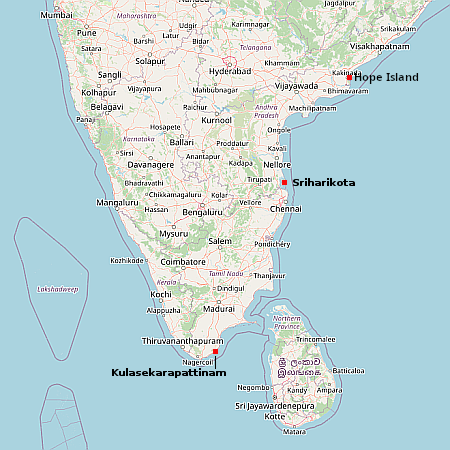
India's spaceports, active, under construction, or proposed
India’s spaceports, active, under construction, or proposed

A new rocket startup in India, dubbed Bharath Space Vehicle (BSV), is not only building a commercial rocket to launch smallsats, it hopes to establish its own private spaceport near the town of Kodinar in western India.

BSV has proposed a launch complex near Kodinar in Gujarat’s Gir Somnath district. Gujarat’s Science and Technology Minister Arjun Modhwadia told the state assembly that IN-SPACe has identified a suitable location between Diu and Kodinar for a satellite launch facility, comparable to Sriharikota.

The coastal location offers open sea access and favourable launch corridors for specialised satellite trajectories. Isro had earlier evaluated a Gujarat site for its SSLV launch complex before Kulasekarapattinam in Tamil Nadu was selected.

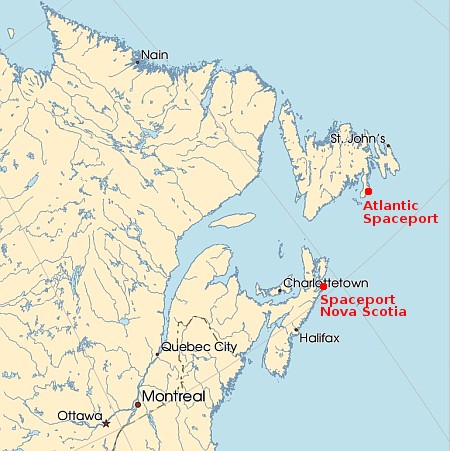
Sriharikota has been operated for decades by India’s space agency ISRO. Kulasekarapattinam is a new ISRO spaceport set to begin operations next year, focused on launching its Small Satellite Launch Vehicle (SSLV) for commercial missions. Hope Island is a proposed private and commercial spaceport, under study.

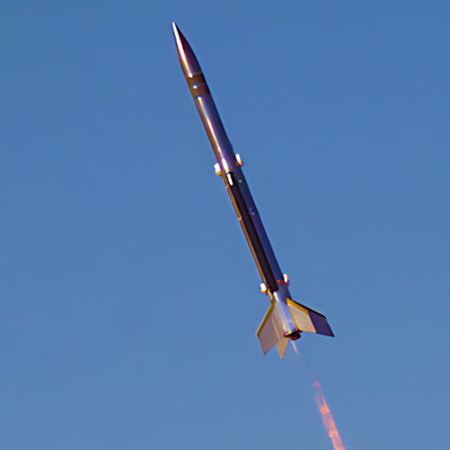
BSV’s rocket is called Agasthya-1 and will use liquid-fueled engines. It appears to be similar in design to SpaceX’s first rocket, the Falcon-1.

Though the company’s founders are all ISRO veterans who helped develop its rockets, its website makes no mention of a launch schedule. At present, India has two rocket startups, Skyroot and Agnikul, that appear close to their first orbital launch.

1 comment

Rocket Lab launches GPS-type demo satellite for Europe

Rocket Lab this morning successfully placed a European Space Agency (ESA) smallsat into orbit, its Electron rocket lifting off from one of its two launchpads in New Zealand.

The smallsat, dubbed Celeste, is the first of two such demo satellites that ESA has contracted Rocket Lab to launch. They are designed to test a low Earth orbit constellation for providing global navigation and location information to users on the ground, similar to the U.S.’s GPS constellation. Celeste will work from low orbit with Europe’s medium orbit Galileo constellation, but being smaller will be cheaper and faster to build and launch.

The leaders in the 2026 launch race:

38 SpaceX
15 China
5 Rocket Lab
4 Russia

SpaceX continues to lead the entire world combined in total launches, as it did in both โ€™24 and โ€™25.

4 comments

Ispace to replace engine on its lunar lander, delaying its NASA mission to 2030

Ispace's old and new landers

The Japanese lunar lander startup Ispace has been forced to institute a major shake-up of its upgraded lunar lander design because a subcontractor’s engine did not meet the required specifications.

The engine, called Voidrunner and built by Agile Space Industries, was about to be installed in the lander for a 2027 launch of NASA lunar lander mission when a review found its performance to be unsatisfactory.

After closely monitoring the engineโ€™s status and conducting careful review, Ispace has determined that a change in the development plan to incorporate a new alternative engine is necessary to ensure the successful execution of the lunar landing mission. The new engine, which will replace VoidRunner, has already been developed by the alternative supplier and has a proven track record of operation in past lunar missions.

The company has also decided to standardize its two lunar lander designs, one developed in Japan and the second in parallel by its American division. The new lander, dubbed Ultra, will use this new engine and fly all of Ispace’s subsequent missions. The image above shows the company’s original lander Hakuto-R on the left, compared to its new Ultra lander on the right.

This change will delay its planned NASA mission by three years, to 2030, though the company hopes it will not impact the schedule of two other lunar lander missions for Japan. Its new updated schedule, all using Ultra:

  • 2028: a Japanese mission funded by Japanโ€™s Ministry of Economy, Trade and Industry
  • 2029: a Japanese mission funded by Japanโ€™s Space Strategy Fund (designed at encouraging the private space sector
  • 2030: NASA’s mission, being built in partnership with the American company Draper

Ispace has also created a new lunar satellite program, to provide communications, location data, and satellite tracking from lunar orbit, with a goal of launching its first lunar orbiter by next year, and five by 2030.

As a lunar lander company Ispace has had a very mixed record. It has successfully flown two landers to lunar orbit and then down to the surface. Each however crashed, failing just prior to landing due to software issues. This new delay of its NASA mission is not going to please NASA administrator Jared Isaacman, who instead wants to speed up the agency’s lunar lander program, flying almost monthly beginning in 2030. It likely means Ispace is going to have problems winning any new NASA lander contracts, until it proves its new Ultra lander design.

0 comments

SpaceX launches another 25 Starlink satellites

SpaceX this afternoon successfully placed another 25 Starlink satellites into orbit, its Falcon 9 rocket lifting off from Vandenberg Space Force Base in California.

The first stage completed its 23rd flight 39 days after its previous flight, landing on a drone ship in the Pacific.

The leaders in the 2026 launch race:

38 SpaceX
14 China
4 Rocket Lab
4 Russia

SpaceX continues to lead the entire world combined in total launches, as it did in both โ€™24 and โ€™25.

1 comment

All space stocks soar in anticipation of SpaceX’s impending IPO

It appears SpaceX’s upcoming initial public offering (IPO) of publicly-traded stocks, now anticipated to raise as much as $75 billion for the company, has caused stock investors to also pour their money into a whole range of space stocks, causing them all to soar in value.

Initially, it was expected that the IPO could raise $50 billion for the company, but the latest report indicates it could raise as much as $75 billion, with a valuation as high as $1.75 trillion. The colossal figures being thrown around on Wednesday have garnered excitement among investors for other space stocks that are already publicly traded.

Here were the top gainers in the session:

  • Firefly Aerospace: +19%
  • Intuitive Machines: +11%
  • AST SpaceMobile: +9%
  • EchoStar Corporation: 9%
  • Rocket Lab Corporation: +8%

The most recent indications suggest SpaceX will file the offering’s prospectus in the next week or so. If the predictions about it are correct, and SpaceX does raise $75 billion, it would then have on hand more than three times the cash that Congress normally budgets annually to NASA, with an ability to use that money far more effectively.

As I have been saying now for more than a year, the real space program for the United States is being run by SpaceX, not NASA. Expect SpaceX to outpace NASA in their parallel and complementary efforts to build a moonbase.

7 comments

Isar’s second launch attempt scrubbed due to abort at T-0 seconds

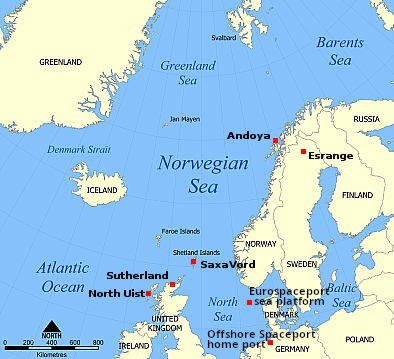
Proposed or active spaceports in North Europe

The German rocket startup Isar Aerospace was today forced to scrub its second attempt to launch its Spectrum rocket from Norway’s Andoya spaceport when the rocket aborted the launch at T-0 seconds.

The launch was then scrubbed for the day because the launch window was only 15 minutes long. An earlier hold due to a boat violating the range had used up most of the window, leaving no time to recycle the rocket to try again.

No word yet on when the company will try again. At the moment Isar is in the lead to be the first new European startup to get off the ground, though Rocket Factory Augsburg from Germany and PLD from Spain are not far behind. Isar’s first launch attempt in March 2025 had failed seconds after lift-off due to a loss of attitude control.

Andoya is also in the lead to be the first European spaceport to complete an orbital launch, though SaxaVord on the Shetland Islands hopes to see that Rocket Factory launch in the coming months.

3 comments

Intuitive Machines wins $180.4 million new NASA lunar lander contract

Intuitive Machines' Nova-D lunar lander
Click for original.

The lunar lander startup Intuitive Machines announced yesterday that it has won its fifth contract from NASA, a $180.4 million deal to place its larger upgraded Nova-D lander near the Moon’s south pole.

The IM-5 mission will target Mons Malapert, a ridge near the Lunar South Pole that offers continuous Earth visibility, stable illumination conditions, and access to permanently shadowed regions. These characteristics make the site a compelling location for future communications, navigation, and surface infrastructure.

The artist’s rendering to the right shows this Nova-D lander. What stands out immediately is its low-slung appearance. Intuitive Machines’ smaller Nova-C lander was tall (see this image), with a high center of gravity. In its only two landing attempts on the Moon it tipped over both times after touchdown. It appears the company has finally recognized the issue and reworked this new lander to make it more stable after touchdown.

This contract award appears to be part of the accelerated program by NASA administrator Jared Isaacman to land 30 unmanned rovers on the moon in three years, beginning in 2027. Mons Malapert is a plateau that Intuitive Machines second lander tipped over on. It is also the landing site for Astrobotics’ Griffin lander, as well as a candidate landing site for the first Artemis manned missions.

Note the small rover on the right in the graphic. While the mission will carry seven NASA science instrument payloads, it will also carry this commercial rover, built by Honeybee Robotics, a subsidiary of Blue Origin. As the company states above, the lander on this mission also has additional available payload capacity for more commercial customers.

2 comments

Lunar Gateway dead as NASA announces major changes to its future space station, lunar, and Mars plans

Capitalism in space As part of the reshaping of NASA being pushed by NASA administrator Jared Isaacman, the agency today announced major changes to its future programs in low Earth orbit, on the Moon, and in exploring Mars. Video of these changes can be viewed here and here.

The Moon

NASA will now focus all work in its lunar program on getting to the surface of the Moon. Lunar Gateway is “paused,” though the language of NASA’s press release suggests more strongly that it is dead, with the agency already trying to figure out ways to “repurpose” its already built components. NASA will instead ask for proposals from private industry and its international Artemis partners to ramp up as soon as possible a phased program to establish the infrastructure on the Moon needed for the lunar base. This new focus begins with “up to 30 robotic landings in three years, starting in 2027,” and at least two manned landings per year beginning in 2028.

The graph below, presented during today’s announcement, shows the basic plan for the next few Artemis missions, which will act as the manned foundation for this entire surface-focused program. The overall program will build out the lunar base in three phases, first to test some basic infrastructure using these smaller lunar landers, second to begin establishing the base’s foundational components with intermittent manned missions, and third to begin long-term human occupancy.
» Read more

35 comments

Satellite repair startup Katalyst awards Arianespace and its Ariane-6 rocket a launch contract

The satellite repair startup Katalyst has chosen Arianespace’s Ariane-6 rocket to launch its first Nexus servicing satellite to geosynchronous orbit in late 2027, where it will demonstrate its capabilities by servicing a Space Force satellite.

The choice of Ariane-6 is intriguing, as it is much more expensive that a Falcon-9. Either the satellite is too heavy for the Falcon-9 (unlikely), or the Space Force for political reasons pressured Katalyst to use Europe’s rocket. It is also possible Katalyst choose Arianespace to stimulate interest in its robotic repair satellites within Europe, thus increasing its chances of winning contracts from there.

Either way, this is one of the few contracts outside of Amazon’s Leo constellation and European government launches that Ariane-6 has gotten. As I already mentioned, it costs more to use than other rockets, as it is entirely expendable. I think it is only surviving at this point because there are not a lot of options available. This is going to change, however, in the next decade as new rocket companies gear up to meet the demand.

0 comments

SpaceX, xAI, and Tesla to build large-scale computer chip factory in Texas

At an event this weekend in Austin Elon Musk announced that SpaceX, xAI, and Tesla will a build large-scale computer chip factory in Texas, dubbed Terafab, designed to produce the chips needed by all three companies.

The โ€œTERAFABโ€ project is a joint effort involving Tesla, SpaceX and xAI. Musk said the chips will be used in vehicles, Teslaโ€™s humanoid AI robots and for projects in space, including solar-powered AI satellites.

…In a Sunday post on X, Musk clarified that the Austin-area facility is one part of the larger project and will focus on chip design. The main TERAFAB facility, he said, would require thousands of acres, and multiple locations are being considered. Musk said the chip production was necessary to fuel his companiesโ€™ growth. On Saturday, he shared an ambitious vision for the future powered by TERAFAB, including billions of robots and interplanetary travel. โ€œWe want to be a civilization that expands to the galaxy with spaceships, that anyone can go anywhere they want at any time,โ€ he said. โ€œAnd have a city on the moon, cities on Mars, populate the solar system and send spaceships to other star systems.โ€

Essentially, Musk has realized that to build his data centers in orbit and on the Moon, he will a lot of computer chips. Early in the history of SpaceX Musk learned that being dependent on outside contractors was crippling. Too often those contractors saw SpaceX has a competitor and acted to sabotage it. He soon decided his companies must be vertically integrated, doing as much work as possible in-house.

He is now applying that policy in chip production as well.

11 comments

Three launches today from three continents and three nations

The global launch pace continues, with three launches today. First, Russia launched a new Progress cargo capsule to ISS, its Soyuz-2 rocket lifting off from its repaired launchpad at Baikonur. That launchpad had experienced serious damage to an access platform during the previous launch in November 2025, and since it was the only pad that Roscosmos could launch payloads and crews to ISS, Russia committed heavy resources to get it fixed quickly.

Once Progress reached orbit, however, one of the antennas used by its Kurs automatic docking system failed to deploy. If engineers can’t get it opened by the time of docking, scheduled for March 24, 2026, the Russian astronauts on ISS will use the back-up TORU system, whereby they control the spacecraft manually from inside ISS.

Next, SpaceX placed another 29 Starlink satellites into orbit, its Falcon 9 rocket lifting off from Cape Canaveral Space Force station in Florida. The first stage (B1078) completed its 27th flight, landing on a drone ship in the Atlantic, only 20 days after its previous flight. This flight also moved the booster up to just behind the space shuttle Columbia in the rankings of the most reused launch vehicles, tying it with SpaceX booster B1077:

39 Discovery space shuttle
33 Atlantis space shuttle
33 Falcon 9 booster B1067
32 Falcon 9 booster B1071
31 Falcon 9 booster B1063
30 Falcon 9 booster B1069
28 Columbia space shuttle
27 Falcon 9 booster B1077
27 Falcon 9 booster B1078

Sources here and here.

At the pace SpaceX is reusing its fleet of Falcon 9 boosters, expect Columbia to drop off this list in about two months.

Finally, China launched 10 smallsats, according to China’s state-run press, for a planned 160-satellite GPS-type constellation, its Smart Dragon-3 rocket (also called Jielong-3) lifting off from an ocean platform off the northeast coast of China. Video here of launch.

The leaders in the 2026 launch race:

37 SpaceX
13 China
4 Rocket Lab
3 Russia

SpaceX continues to lead the entire world combined in total launches, as it did in both โ€™24 and โ€™25.

2 comments

Private mission to Apophis gets another customer, two student-built landers
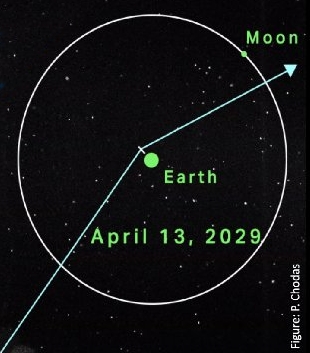
Apophis' path past the Earth in 2029
A cartoon (not to scale) showing Apophis’s
path in 2029.

The orbital tug startup Exlabs has signed up a second payload customer to fly on its private ApophisExL mission to rendezvous with the potentially dangerous asteroid Apophis when it makes its April 13, 2029 close fly-by of the Earth.

ExLabs has announced its partnership with Japan’s Chiba Institute of Technology (ChibaTech) and its Planetary Exploration Research Center (PERC) to send university-led payloads to the surface of asteroid Apophis during its rare near-Earth flyby in 2029. ApophisExL is the world’s first commercial deep-space rideshare and is supported by mission design and operations collaboration with NASA’s Jet Propulsion Laboratory (JPL) operated by Caltech.

Under the leadership of planetary scientist and PERC Director, Dr. Tomoko Arai, ChibaTech students and researchers are developing two landing payloads to be deployed on the asteroid’s surface.

An Australian satellite startup, Fleet Space Technologies, had already signed on to fly a mapping instrument on ApophisExL.

Though the press release at the link calls this private mission “a new model,” using private enterprise rather than relying on the government for doing planetary missions, it actually harks back to the way things were done in the U.S. before World War II, when the private sector did most of this pure research. In fact, as late as the 1960s there was at least one company, American Science and Engineering, doing the first X-ray astronomical observations flying suborbital rockets. It later won contracts from NASA and other agencies to help build several later orbiting X-ray telescopes.

Over time the government space agencies became dominant, so that most of this design work was either done by them or by universities, with private companies relegated to the roles of minor subcontractors.

This new model is simply an extension of the capitalism model that is taking over the entire space industry, shifting power and ownership from big, expensive, and inefficient government programs to small, cheap, and economical private missions. Those space agencies can still do missions, but they do it by buying payload space on these private missions.

Below is a list of the missions going to Apophis in 2029:
» Read more
2 comments
1 12 13 14 15 16 684