Sweden’s Esrange spaceport signs launch deal with Swedish military

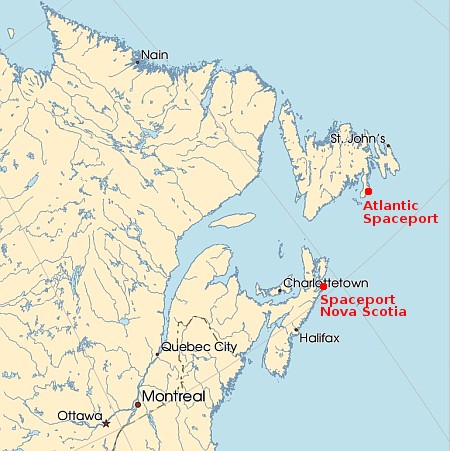
Proposed or active spaceports in North Europe

Sweden’s Esrange spaceport, used for decades for suborbital test launches but now trying to become an orbital spaceport, this past week signed a launch agreement worth about $22 million with Sweden’s military.

The contract covers systems and infrastructure that ensure protection, availability, and execution of satellite launches for the Swedish Armed Forces, as well as for partners and allies. The capability is scheduled to be operational by 2028.

…The initiative is part of a government decision from 2023 to allocate approximately [$100 million] to the Swedish Armed Forces through 2032 to develop Sweden’s space capabilities. The decision includes, among other things, improved space situational awareness, expansion of infrastructure at Esrange in cooperation with SSC Space, and the ability for the Swedish Armed Forces to carry out multiple satellite launches.

It seems unlikely Sweden’s military will be able to produce its own rockets for this amount of money. More likely they will buy the services from others. The American rocket company Firefly in 2024 signed a deal to launch its Alpha rocket from Esrange, but it appears there might be regulatory issues blocking any launches, some of which might stem from opposition by Norway. Esrange has an interior location, so any orbital launch has to fly over territory belonging to other countries. It appears Sweden is having problems getting permission to do so.

My guess is that this deal is mostly aimed at keeping Esrange open. Or to put it more bluntly, use the earnings of Swedish taxpayers to support a government-controlled spaceport with little financial promise.

1 comment

Two launches today by Rocket Lab and SpaceX

The launch pace continued today with two American commercial launches.

First Rocket Lab placed a Synspective radar satellite into orbit, its Electron rocket lifting off from one of its two launchpads in New Zealand. This was the company’s eighth launch for Synspective, out of a 27-launch contract.

Next, SpaceX placed 25 more Starlink satellites in orbit, its Falcon 9 rocket lifting off from Vandenberg Space Force Base in California. The first stage completed its fourth flight, landing on a drone ship in the Pacific.

The leaders in the 2026 launch race:

36 SpaceX
12 China
4 Rocket Lab
2 Russia

SpaceX continues to lead the entire world combined in total launches, as it did in both ’24 and ’25.

5 comments

Ursa Major test flies a new liquid-fueled missile engine for Air Force

Ursa Major's Draper engine being tested in flight

The rocket engine startup Ursa Major last week announced it had successfully completed for the Air Force a test missile launch of its new Draper liquid-fueled rocket engine.

As shown on the right, the Air Force’s Affordable Rapid Missile Demonstrator (ARMD) suborbital rocket was used to fly the engine. More information here.

On January 27, 2026, AFRL and Ursa Major launched the Draper liquid rocket engine on a demonstrator flight. While many details remain classified, the company says the test vehicle reached supersonic speeds during its flight. The test marked a transition from ground-based validation to in-flight evaluation, allowing engineers to study propellant stability, engine throttling performance, and how the system behaves under real flight conditions.

The Draper engine is designed to address key limitations of current hypersonic systems by making them cheaper, more scalable, and easier to operate. It runs on hydrogen peroxide and kerosene, fuels that are safer to store and handle compared to traditional alternatives.

The War Department’s hypersonic testing program has certainly heated up since the military switched to the capitalism model in the past five years. Beforehand, when the military tried to do its own testing, it took it years to get little done, while spending a fortune. Now it is flying suborbital rocket tests with Rocket Lab, Stratolaunch, and Firefly. It is testing new engines on flights such as Ursa’s above. And it testing hypersonic avionics on Varda’s orbiting capsules upon their return to Earth. Based on this commercial activity, it appears the U.S. military might get some real hypersonic capabilities in the very near future.

0 comments

Kratos wins $446 million contract to build/operate ground system for Space Force satellite constellation

The military contractor Kratos Defense & Security Solutions was yesterday awarded a $446 million contract by the Space Force to build and operate the ground systems used to control the military’s missile warning satellite constellation.

The contract covers ground management and integration for the service’s Resilient Missile Warning and Tracking program, according to a March 19 statement from Space Systems Command. Kratos will provide the systems used to operate the satellites after launch, including sending commands, receiving sensor data and processing that information for delivery to military operators.

The work supports a constellation being deployed in phases. The first 12 satellites, known as Epoch 1, are being built by Millennium Space Systems, a Boeing subsidiary. A second set of 10 satellites, called Epoch 2, is under contract to BAE Systems. Launches are expected over the next several years.

The method in which this entire constellation is being built and operated once again highlights the profound transformation that has occurred in how the Pentagon works in space since the formation of the Space Force. Beforehand, when the Air Force ran the military’s space operations, it would attempt to design and build everything, and the satellites built would be big and expensive, and take years to complete. Generally, little got built for a lot of money. Moreover, the upper management of the Air Force was in general not interested in space projects, and often gave these projects lower priority.

The Space Force was created during Trump’s first term to change this, giving the military an agency focused on its space needs. It was also designed to put those in charge who had been advocating going from these big gold-plated satellites that were few in number to many small satellites built quickly and cheaply by the private sector.

This new missile warning and tracking constellation demonstrates that this transition is largely complete. It is being built quickly by two different satellite companies, and will be maintained on the ground by a third.

Note: Kratos also builds the hypersonic test vehicles that Rocket Lab launches on its HASTE suborbital rocket. It will soon also fly those vehicles on a Firefly rocket.

1 comment

India’s second spaceport to be completed next year

The existing and proposed spaceports in India

According to officials in India, the nation’s second spaceport at Kulasekarapattinam is on schedule to be completed by next year, when it will become available for polar launches of the SSLV rocket as well as other commercial rocket launches.

India is moving ahead with plans to operationalise a new launch facility at Kulasekarapattinam in Tamil Nadu. It is expected to be commissioned during the 2026–27 financial year, according to information shared in the Lok Sabha by Jitendra Singh.

The new facility, officially called the Small Satellite Launch Vehicle (SSLV) Launch Complex, is being developed as the country’s second space launch site. The Kulasekarapattinam complex will primarily handle launches of SSLV missions to Sun-synchronous Polar Orbit, a trajectory widely used for Earth observation satellites.

The SSLV rocket is at present controlled by India’s space agency ISRO, though there has been an effort by the Modi government to transfer it to the private sector. It is not clear whether that effort has been successful. ISRO and India’s large space bureaucracy has been resistant. There have also been indications that this new spaceport will be made available to the handful of Indian rocket startups that are developing their own rockets.

The Sriharikota spaceport is ISRO’s main launch site. The Hope Island site is a proposed commercial and private spaceport, whose future remains very uncertain.

0 comments

ESA to rent SpaceX Dragon capsule to do a European manned mission to ISS

ESA logo

Capitalism in space: At a European Space Agency (ESA) this week in Switzerland, agency officials announced that it is purchasing use of a Dragon capsule from SpaceX in order to do an extended manned mission to ISS in 2028.

Member states endorsed the concept of EPIC — short for ESA Provided Institutional Crew — a proposed mission intended to provide a medium-duration stay for ESA astronauts aboard the ISS.

The plan foresees acquiring a Crew Dragon mission in the first quarter of 2028 in collaboration with “interested international partners.” Crew Dragon is the crew spacecraft built by US company SpaceX.

According to those officials, this mission will be for at least one month, and include astronauts from ESA and some as yet undetermined international partner astronauts.

This contract illustrates the fundamental shift in power and control in manned space in the past decade. Until 2011, all manned missions were flown on government-built rockets and spacecraft. The agencies controlled everything, and actually acted to stymie competition from the private sector.

Now, those agencies are dependent on that private sector for their manned missions. They are instead merely customers, buying services from competing commercial companies that own the rockets and spacecraft, and rent them out for profit. That SpaceX at present is the only one capable of doing these manned missions for hire makes no different. Soon others will enter the fray.

Moreover, this capitalism model actually gives these agencies more flexibility. Beforehand, ESA had to go through NASA to do such a manned mission, and that would involve a lot of negotiations. Now it simply buys the mission from SpaceX, and flies it when ready.

7 comments

Blue Origin files FCC application for its own 51,600 data center satellite constellation

Blue Origin yesterday filed with the Federal Communications Commission (FCC) an application to launch 51,600 satellites, dubbed Project Sunrise, aimed at creating its own data center constellation in orbit.

The proposed constellation includes up to 51,600 satellites operating in sun-synchronous orbits at altitudes ranging from 500 to 1,800 kilometers. To manage data traffic, the system will primarily use optical links and mesh backhaul networks, supplemented by Ka-band spectrum for telemetry, tracking, and command operations. The spacecraft will utilize multiple antenna variations to maintain efficient coverage across various orbital planes.

You can read the full application here [pdf].

Jeff Bezos
Jeff Bezos, maybe the world’s leader in chutzpah.

Blue Origin also requests several waivers from the FCC’s normal new satellite license requirements, including what I think is a request to waive the FCC’s normal requirement that the applicant launch half its constellation within six years of license approval and complete the constellation three years later. Failure to do so results in financial penalties. The rules were created to prevent companies from getting licenses to grab spectrum from competitors with no intent to launch.

That this Jeff Bezos company is requesting this waiver is what in Yiddish is called chutzpah! Bezos’ other company, Amazon, is clearly going to fail to meet its own license timetable in launching its Leo internet constellation, and was recently lambasted by FCC chairman Brenden Carr for doing so. For Blue Origin to now request this waiver truly is an example of unbelievable gall. I can’t imagine the FCC will do so.

Either way, the competition to put up a lot of satellites continues to grow, with SpaceX and Blue Origin in the best position to make their constellations profitable, because both have their own launch vehicles.

0 comments

SpaceX completes a Starlink launch

UPDATE: It appears The Russian launch described below did not occur as indicated by the story I linked to. There is no confirmation anywhere on the web that the launch occurred. If it had, the nature of the payload would have guaranteed some story in Russia’s state-run press. See also this X post, which suggests the lack of information about the scrub is related to Russian concerns about Ukrainian drone attacks.

Original post
———————-
There were two launches today, both of which sent up a cluster of satellites for broadband internet constellations.

First, Russia launched the first 16 satellites in its proposed 700+ satellite Russvet internet constellation, its Soyuz-2 rocket lifting off from its Plesetsk spaceport in northeast Russia. The satellites are built by the Russian company Bureau-1440, which hopes to have the entire constellation in orbit by 2035. Considering that this constellation is designed to compete with Starlink, its pace of launch is ridiculously low. SpaceX can generally launch 700 Starlink satellites in about a month, not ten years. By the time Russia gets this constellation in orbit it will be woefully obsolete.

SpaceX meanwhile proved this point today by continuing its brisk pace in Starlink launches. It successfully placed 29 more Starlink satellites in orbit, its Falcon 9 rocket lifting off from Cape Canaveral Space Force Station in Florida.

The first stage (B1077) completed its 27th flight, landing on a drone ship in the Atlantic, only 26 days after its previous flight. This flight also moved the booster up to just behind the space shuttle Columbia in the rankings of the most reused launch vehicles:

39 Discovery space shuttle
33 Atlantis space shuttle
33 Falcon 9 booster B1067
32 Falcon 9 booster B1071
31 Falcon 9 booster B1063
30 Falcon 9 booster B1069
28 Columbia space shuttle
27 Falcon 9 booster B1077

Sources here and here.

The leaders in the 2026 launch race:

35 SpaceX
12 China
3 Rocket Lab
2 Russia (corrected)

SpaceX continues to lead the entire world combined in total launches, as it did in both ’24 and ’25.

5 comments

German rocket startup signs deal to launch from SaxaVord spaceport in Scotland

Proposed or active spaceports in North Europe

The German rocket startup HyImpulse yesterday signed a contract with the SaxaVord spaceport on the Shetland Islands in Scotland to do a suborbital test launch at SaxaVord later this year.

HyImpulse has agreed a launch deal with the Unst spaceport, with the aim of a suborbital launch in quarter three of 2026. It will be the second launch of the company’s SR75 suborbital launch vehicle following a successful lift-off in Australia in 2024, which used a hybrid propulsion system involving paraffin “candle wax” and liquid oxygen. HyImpulse said that initial launch, from Koonibba, showed the vehicle could demonstrate “stable flight validating system performance under operational conditions”.

Under the agreement, SaxaVord will provide launch infrastructure and operational support for the launch of the SR75.

HyImpulse is the second German rocket startup to sign a deal to launch from SaxaVord. Rocket Factory Augsburg plans its second attempt to do an orbital launch from there later this year. In 2024 it was gearing up to do that launch but an explosion during a full static fire test of the rocket’s first stage killed that plan.

Considering the red tape the United Kingdom has imposed on rocket companies, bankrupting two and delaying all launches for years from both SaxaVord and the other proposed spaceport in Sutherland, Scotland, I am surprised these two rocket companies have signed these deals. Maybe the UK’s Civil Aviation Authority (CAA) has been reformed and eased that red tape.

Or maybe HyImpulse will find its plans blocked by the CAA as that agency once again ponders at glacial pace the issuing of a new launch license. Stay tuned.

2 comments

OHB wins $285 million contract to build weather satellite constellation for ESA

ESA logo

Capitalism in space The Swedish subsidiary of the European aerospace company OHB yesterday announced it has won a $285 million contract from the European Space Agency (ESA) to build and maintain a six satellite weather satellite constellation.

The company had already successfully launched and tested a single demo satellite, proving a small satellite could do the job.

The foundation for this is the Arctic Weather Satellite (AWS), which OHB Sweden successfully placed in orbit as a demonstrator more than a year ago. The OHB SE subsidiary developed the small satellite on behalf of the European Space Agency ESA in record time, using a deliberately chosen New Space approach. Only three years passed between contract award and launch.

This new constellation is dubbed EUMETSAT Polar System – Sterna (EPS-Sterna), and will supplement and eventually replace the expensive government-built Eumetsat weather constellation presently in orbit.

OHB Sweden is the prime contractor for the delivery of the satellites for the EPS Sterna constellation. The consortium also includes Omnisys in Sweden as the supplier of the microwave instruments, which constitute the primary meteorological payload. A total of 20 satellites will be delivered under the contract. The industrial team includes approximately 30 companies. Germany is also strongly represented by SMEs that will contribute key hardware for the instrument and the satellite platform. The satellites will be procured by EUMETSAT through ESA. EUMETSAT itself will develop the ground segment, procure and provide the launch services, operate the satellites, manage the constellation and distribute the data through its data distribution mechanisms, which has a planned operational lifetime of 13 years.

This contract is another example of Europe’s fast shift in the past three years from the government model to the capitalism model. It took ESA almost a decade to finally decide to make that shift, but once it did it seems to be moving far faster than NASA did to implement it.

0 comments

Update on SpaceX’s preparations for the 12th orbital test flight of Starship/Superheavy

Link here. The testing has apparently verified the fueling system of Superheavy at the new launchpad.

Starship Flight 12 took another step toward launch, with Booster 19 completing an initial test campaign on the newly commissioned Pad 2 at Starbase, Texas. Culminating in a short Static Fire test, the series of tests was a first for Pad 2, the Block 3/V3 Super Heavy Booster, and for the upgraded Raptor 3 outside of single engine testing.

As the inaugural vehicle to undergo operations on this pad, B19’s campaign served as both a booster qualification test and a commissioning milestone for the expanded launch infrastructure, paving the way for a long-awaited static fire test of its Raptor 3 engines.

Lots of details worth reading. Ground testing will now shift to Starship. All in all, it does appear that an early April launch is likely.

4 comments

Why are commercial space startups shifting their focus to the military? $185 billion is the answer

War Department logo

In the past two years a number of space startups as well as established companies have shifted their work focus from getting NASA or commercial contracts to pursuing projects from the War Department.

The best example of this has been Sierra Space, which until three years ago was entirely focused on building a Dream Chaser reusable mini-shuttle to bring cargo to and from ISS, as well as partnering with Blue Origin to build their proposed Orbital Reef space station.

Then, in late 2023 the company underwent a major management and staffing shake-up aimed at winning military and national security contracts. At the same time work on its LIFE inflatable module — intended for Orbital Reef — practically ceased, while the effort to get Dream Chaser finished seemed to slow to a crawl, eventually causing NASA to drop it as an ISS cargo vehicle.

Sierra Space however is only one example. During this time Rocket Lab shifted its focus somewhat to the military in developing HASTE, its suborbital test version of its Electron rocket, in order to win substantial hypersonic test contracts from the Pentagon. And then there’s Tory Bruno, who quit his job as CEO of the rocket company ULA to take a job at Blue Origin heading a national security team aimed at winning that company military contracts.

So what has caused this shift? Has investment in the civil space industry dried up?

Hardly. The number of rocket startups continues to grow, fueled by the many new and established satellite companies planning constellations of tens of thousands to millions of satellites as well as the orbiting manufacturing possibilities presented by the five space stations under development. There is a lot of investment capital pouring into these efforts

The reason for this shift — which really isn’t so much a shift but a new focus that many companies are adding to their portfolio — is provided by an article today in Air & Space Forces Magazine, describing the War Department’s recent decision to add $10 billion to the budget of its Golden Dome project, raising it to $185 billion, while noting this:
» Read more

7 comments
1 13 14 15 16 17 684