Speculation on future New Glenn launch schedule

According to anonymous sources at Blue Origin, the company has now delayed the second launch of its New Glenn rocket to September, ten months after its first launch in January 2025, and hopes to quickly follow with three more launches by the middle of 2026.

The September launch will launch NASA’s two smallsat Escapade Mars orbiters.

After Escapade, Blue Origin has several missions tentatively plotted out. However, sources cautioned that the manifest could be moved around due to the readiness of subsequent New Glenn vehicles and their payloads. Based upon information received by Ars, the launch manifest could look something like this:

  • New Glenn 2: ESCAPADE (fall 2025)
  • New Glenn 3: Firefly’s Elytra orbital transfer vehicle (end of 2025, early 2026)
  • New Glenn 4: Blue Moon MK1 lander (first half of 2026)
  • New Glenn 5: First batch of 49 Amazon Project Kuiper satellites (mid-2026)

Whether this schedule will occur as speculated is unknown. Blue Origin’s long term track record — slow and timid — suggests it is very unlikely. And even if it does fly as planned, it suggests strongly that Amazon is not going to meet its FCC license requirement to have 1,600 Kuiper satellites in orbit by July 2026. So far Amazon has only placed 54 operational Kuiper satellites into orbit, on two Atlas-5 launches. It has contracts to launch these satellites 46 times on ULA rockets (8 on Atlas-5 and 36 on Vulcan), 27 times on Blue Origin’s New Glenn, 18 times on ArianeGroup’s Ariane-6, and 3 times on SpaceX’s Falcon-9.

Except for the Falcon 9, none of the other rockets have begun flying with any frequency. Vulcan has only launched twice, New Glenn once, and Ariane-6 twice. All three have been extremely slow to ramp up operations, with months passing between each launch. To meet Amazon’s FCC license requirements, they will have to achieve between 35 to 60 launches in the next twelve months, a pace of three to six launches per month. At this point none of these companies appear capable of even coming close to doing this.

Nor does Amazon have the option to switch these launches to the Falcon 9. SpaceX would certainly accept the business, but the manifest for the Falcon 9 is presently very full. It is doubtful it could do more than double or triple its commitment to Amazon.

5 comments

Mitsubishi wants to cut launch price of H3 rocket to $35 million

Mitsubishi Heavy Industries, which developed the new H3 rocket for Japan’s space agency JAXA, wants to attract commercial launch business, and to do so hopes to cut the rocket’s launch price to about $35 million.

According to the article at the link, the price for the H2A rocket that the H3 has replaced was 10 billion Japanese yen, about $70 million.

The H2A launched more than 70 satellites and other objects into space, serving as the backbone of Japan’s space transportation. However, there was an average of only two launches a year, and most depended on “public demand” for government satellites. There were only orders for commercial launches for five satellites belonging to foreign countries, such as South Korea and the United Kingdom.

…For Mitsubishi Heavy Industries, Ltd., which took over the manufacture and operation of the H2A from JAXA in 2007, winning commercial orders has been a longstanding issue. The H3 was jointly developed by MHI and JAXA with the aim of halving the launch fee.

That price listed for the H2A rocket is likely wrong, much lower than the real price, as it matches what SpaceX has been offering publicly for the Falcon 9 for more than a decade. If the H2A had been that cheap, it would have garnered some business. It did not.

Lowering the cost for the H3 rocket to $35 million would definitely be competitive in the present launch market. Whether Mitsubishi can accomplish this however remains unclear. So far there is no indication that this new rocket has attracted any more business than the H2A, but as the rocket has only just started launching it is still too early to judge.

2 comments

Update on SpaceX’s plans to resume Starship/Superheavy flight testing

Link here. The article provides a detailed overview of the situation at Boca Chica following the static fire explosion of a Starship on June 18, 2025, which badly damaged the Masseys test stand used by Starship prior to launches.

The problem facing the company is that it wants to fly the last few version-two Starships (called Block 2) before it is ready to switch to the upgraded Block 3, and these two versions apparently require a different set up on the test stand. The article outlines three options, with the first two the simplest and most straightforward, but require the most delays.

Option three, which is the most SpaceX-like of them all, would involve the repair Masseys for Block 3 and, in parallel, attempt to come up with a plan to static fire Ships on Orbital Launch Pad 1 (A). This would allow SpaceX to continue testing and flying the remaining Block 2 Ships while preparing for Block 3 of Starship. This is what SpaceX is planning.

In other words, do Block 2 Starship prelaunch static fire tests on the launchpad itself while Masseys is being rebuilt for Block 3.

The article outlines in detail the technical difficulties this plan requires, because the launch mount is also used for prelaunch static fire tests of Superheavy. The two rockets require different mount clamping and fueling systems.

If this is the plan that SpaceX is following, it will likely mean that the next test flight, the tenth, will occur in about two months, maybe sooner. We will get a better idea of the company’s plans in the coming weeks.

6 comments

Blue Origin completes another New Shepard suborbital flight

My heart be still. Blue Origin yesterday successfully flew another New Shepard suborbital tourist flight, sending six passengers on a ten minute flight to the edge of space.

This was the company’s thirteenth suborbital flight, and the third in the past three months. Though it is gratifying that operations of New Shepard are becoming somewhat routine, it would be much more exciting if the company to do the same for its New Glenn orbital rocket. The suborbital flights are essentially a dead end. The real money and future is found in orbital operations, something Blue Origin has still not yet mastered.

4 comments

Orbex delays first launch from Saxavord until 2026

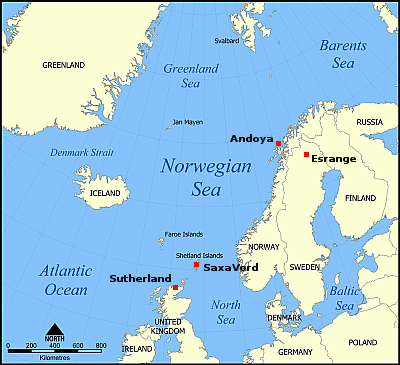
Map of spaceports surrounding Norwegian Sea
Proposed spaceports surrounding the Norwegian Sea

The rocket startup Orbex has now announced that “infrastructure requirements and engagement with regulators” has forced it to delay the first launch of its Prime rocket from 2025 until 2026.

Orbex at the start of this decade had signed a 50-year lease to launch its Prime rocket from the proposed Sutherland spaceport on the north coast of Scotland. In February 2022 it applied for a launch license, with the hope of launching before the end of that year. For three years it waited for the UK’s Civil Aviation Authority (CAA) to approve that license, to no avail.

Finally in December 2024 it gave up on launching from Sutherland and shifted its plans to the Saxavord spaceport in the Shetland Islands, apparently because that spaceport had been more successful in getting its CAA approvals (though even it had to wait years).

Though the company attributes this new delay as much to getting its launch facility ready at Saxavord, delays caused by British red tape continues to be a systemic and entrenched problem in the United Kingdom. It appears it remains so.

9 comments

More successful launches today

Two more launches occurred this morning, one in Japan and one in the U.S.

First, Japan completed the last launch of its H2A rocket, lifting off from its Tanegashima spaceport in south Japan, placing a Japanese climate satellite into orbit. This was the 50th launch for the H2A, which has now been replaced by the as expensive H3 rocket.

Next, SpaceX continued its unrelenting launch pace, its Falcon 9 rocket lifting off from Vandenberg Space Force Base in California carrying 26 more Starlink satellites into orbit. The first stage completed its eighth flight, landing on a drone ship in the Pacific Ocean.

As Japan’s launch was only its second in 2025, it does not make the leader board of the 2025 launch race:

82 SpaceX
35 China
10 Rocket Lab
7 Russia

SpaceX still leads the rest of the world in successful launches, 82 to 61.

1 comment

Two American launches this evening

This evening two different American companies completed successful commercial launches, doing so from opposites sides of the globe.

First, SpaceX launched another 27 Starlink satellites, its Falcon 9 rocket lifting off from Cape Canaveral, with the first stage completing its fifth flight, landing on a drone ship in the Atlantic Ocean. This launch was on the evening of June 27th.

Then, a few hours later Rocket Lab completed the first of two quickly scheduled launches for an unnamed commercial customer, its Electron rocket lifting off from one of its two launchpads in New Zealand. This launch, on June 28th in New Zealand, was the company’s second launch in less than two days, its fastest turn around yet. As of posting the payload was not yet deployed.

The leaders in the 2025 launch race:

81 SpaceX
35 China
10 Rocket Lab
7 Russia

SpaceX still leads the rest of the world in successful launches, 81 to 60.

6 comments

Another blacklisted professors wins big in court

Law professor Scott Gerber

Fight! Fight! Fight! After two years of battle in the courts, a blacklisted tenured professor who was fired by his university in 2023 without due process because he had publicly criticized and opposed its racist diversity, equity, and inclusion (DEI) quota policies has now won a complete victory in court.

First the background: In 2023 Ohio Northern University (ONU) sent campus police to Dr. Scott Gerber’s classroom — while he was teaching a class — and had him physically removed from the campus, without warning or explanation. In firing Gerber no legal due process was followed, with the university violating in every manner its own employment policies. Even months later university officials refused to give any reason for his firing. The timing of its action though strongly suggested the university administration objected to his opinions, as he had that same week published an op-ed opposing the school’s DEI policies.

Gerber sued, hiring the pro-bono legal firm America First Legal (AFL) to defend him. (You can read the full complaint here [pdf]. The college’s actions were clearly unconscionable.)

Now two years later, AFL announced yesterday that it has won a full settlement victory for Gerber.
» Read more

5 comments

European Union proposes new space law to supersede national space rules

The European Union

The European Union (EU) has now released its proposed Space Act that would impose European-wide regulations on the space industries of all its partnering nations, superseding their own regulations and policies.

The press release claims, at the start, that this space act would “cut red tape, protect space assets, and create a fair, predictable playing field for businesses,” but in reading the act itself [pdf], it appears to do the exact opposite. It imposes new environmental, safety, and cybersecurity regulations on the design of satellites and spacecraft in a manner that will likely slow development and competition in Europe significantly. And it applies these regulations not only to European companies but to the rest of the world’s space industry, should it do any operations at all in Europe.

This European Union space law was initially supposed to be released last year, but was delayed because it appeared there was strong opposition to it from many of the union’s member nations.

The proposed law appears to have been reshaped to limit the areas the EU can regulate space, but my appraisal of these regulations is that they are designed to quickly expand to cover everything, while adding an unneeded layer of red tape across Europe’s space industry that will only cause it to founder.

It must also be noted once again that there is no one in the bureaucracy of the EU qualified to impose these regulations on the space industry. The EU launches nothing. Its bureaucracy knows nothing about space technology. All it can do is say no to anyone that wants to achieve anything, just because it thinks it knows better.

It will be interesting to see if this space law passes. It still must be approved by European Parliament and the European Commission. I expect there to be significant opposition from several different member states, most especially Germany, Spain, and Italy, each of which have a newly emerging space industry. We should also expect opposition from the member nations formerly part of the Soviet bloc, as their past totalitarian experience makes them very skeptical of this kind of bureaucratic power play.

At the same time, the political structure of the European Union is designed to encourage the passage of such laws, which is one reason there is a rising movement in many member nations to leave the union. If the law passes, expect it to cause more fragmentation within Europe, rather than unifying the continent as it claims it will do.

4 comments

Rocket Lab launches four radio surveillance satellites

Rocket Lab today successfully launched four radio surveillance satellites for the company Hawkeye 360, its Electron rocket lifting off from one of its two launchpads at its New Zealand spaceport.

This was Rocket Lab’s second of three launches under a Hawkeye 360 three-launch contract.

The leaders in the 2025 launch race:

80 SpaceX
35 China
9 Rocket Lab
7 Russia

SpaceX still leads the rest of the world in successful launches, 80 to 59.

0 comments

Nozzle blows off of Northrop Grumman SLS solid rocket booster during static fire test

During a static fire test of a new upgraded strap-on solid-fueled booster to be used on the second version of NASA’s SLS rocket, it appears the nozzle broke off near the end of the test.

I have embedded the video below.

This failure is not good for getting the upgraded version of SLS built, dubbed Block 2. Block 1 has flown once unmanned, and is planned for the next two manned missions. Block 2 would be for further manned missions beyond that. The Trump administration has proposed cancelling it, ending SLS after those two Block 1 flights. Senator Ted Cruz (R-Texas) has instead introduced a bill that would save it in order to fly two Block 2 SLS manned missions.

This failure is definitely going to delay and add cost to Block 2 development, a program that is already over budget many times over and a decade-plus behind schedule. These additional delays and cost overruns are not going to help it politically. It justifies the Trump administration’s desire to cancel it.

Moreover, this nozzle failure suggests a very fundamental design problem. Northrop Grumman, which built and was testing this booster, also builds the solid-fueled strap-on boosters used on ULA’s Vulcan rocket, which had a similar nozzle failure during Vulcan’s second launch in October last year. Both Northrop Grumman and ULA have said they had identified and fixed the cause of that failure, and the military has certified it for operational launches, but nonetheless Vulcan still remains sidelined, more than eight months later.

I suspect ULA is going to have to do more testing of the Northrop Grumman Vulcan side boosters before its next Vulcan launch, delaying that rocket further.
» Read more

9 comments

French startup Latitude to spend $9.3 million on building its French Guiana launch facility

French Guiana spaceport
The French Guiana spaceport. The Diamant launchsite is labeled “B.”
Click for full resolution image. (Note: The Ariane-5 pad is now the
Ariane-6 pad.)

The French rocket startup Latitude has announced it will spend $9.3 million to build its own launchpad at the spaceport in French Guiana, where hopes to launch its Zephyr rocket in 2026.

In a 23 June update, Latitude confirmed the Guiana Space Centre as the launch site for the inaugural flight of its 19-metre-tall, two-stage Zephyr rocket, which is designed to deliver payloads of up to 200 kilograms to low Earth orbit. The site was one of two under consideration, with the company also having committed to developing launch infrastructure at SaxaVord Spaceport in Scotland. When that partnership was announced in March 2022, Latitude, then known as Venture Orbital Systems, aimed to carry out its first launch from SaxaVord in 2024.

Construction of the ELM-Diamant shared launch facility began in 2025 and is expected to be completed by 2026. According to Latitude’s 23 June update, the company will work with CNES and the European Space Agency in the coming months to implement its dedicated launch infrastructure at the site. This will be followed by the inaugural launch of its Zephyr rocket in 2026.

It is not clear exactly how that ELM-Diamant launch site will be shared. France’s space agency CNES (which operates French Guiana) had previously said it wanted all the new European rocket startups that wanted to launch from there to use a common launch infrastructure, thus requiring them to share technology as well as redesign their rockets to fit CNES’s requirements. The rocket startups objected, but it now appears two startups, Latitude and PLD, and come to an agreement of some sort.

This deal also suggests that Latitude is shifting away from using the Saxavord spaceport in the United Kingdom, possibly because it has seen the difficult regulatory hurdles required there and has decided French Guiana is a better option.

2 comments
1 59 60 61 62 63 684