Indian rocket startup Skyroot now shipping its Vikram rocket to launch site

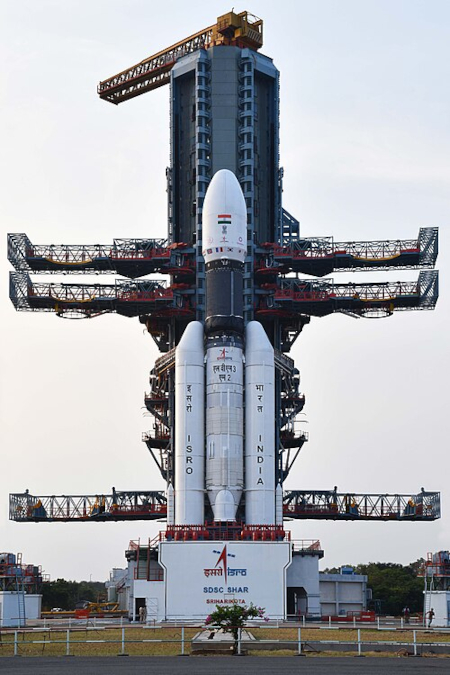
The Indian rocket startup Skyroot has now finished assembling its Vikram-1 rocket, and is about to ship it to its launch site at the Sriharikota spaceport on the east coast of India.

At Sriharikota, the rocket moves into final assembly and a round of system checks before a launch window is locked in the coming months. This is the last stretch before liftoff. Countdown operations, testing and integration now shift fully to the launch site.

One of the company’s founders said the most critical testing has been completed, with launch campaign activities set to begin at the spaceport.

The company is presently targeting a launch in June. If Vikram-1 reaches orbit successfully, Skyroot would become the first Indian private company to design, build, and launch its own rocket, and would be well positioned to win launch contracts from smallsat companies, competing directly with Rocket Lab and its Electron rocket.

This success would also help accelerate the Modi government’s effort to transition from a space industry controlled entirely by its government space agency ISRO to a private industry run by competing indepedent companies.

1 comment

Why is Sierra Space’s Dream Chaser spacecraft not ready for flight?

In a press release posted last week Sierra Space proudly announced that its Tenacity Dream Chaser mini-shuttle has completed its pre-launch ground vibration tests at the Kennedy Space Center in Florida, but instead of moving the mini-shuttle to a local facility where it could be integrated with its rocket for launch, the company announced it was shipping it back “to Colorado for final modifications and mission-specific upgrades.”

Normally when a spacecraft, satellite, or any payload passes these last ground tests, it is ready for launch, and it immediately begins integration onto the rocket that will carry it into space. That Sierra Space is not doing this strongly suggests Tenacity did not pass with flying colors, and that some issues were identified that need correction.

Note too that this spacecraft had been delivered for these tests in early 2024, and had been expected to pass them then and be launched that year. Instead, months passed with no word, then its launch was postponed indefinitely, and then NASA canceled Sierra’s contract to provide cargo to ISS.

Now, two years later Tenacity is still not ready for launch. Though the company says the ground tests are now complete, I suspect otherwise. I suspect there is some fundamental issue with the spacecraft that they are hiding because to reveal it would be devastating to Sierra’s public reputation.

Until we know more however this is pure speculation on my part. What we do know however is that this mini-shuttle has not done what was promised, and increasingly appears to be a lemon that will never do it.

13 comments

Two launches today, by China and Russia

Both China and Russia completed launches today. First China put a Pakistani Earth observation satellite into orbit, its Long March 6 rocket lifting off from Taiyuan spaceport in north China. China’s state-run press made no mention of where the rocket’s lower stages, using very toxic hypergolic fuels, crashed inside China.

Next Russia launched a Progress cargo capsule to ISS, its Soyuz-2 rocket lifting off from Baikonur in Kazakhstan. The freighter will dock with ISS in two days.

The leaders in the 2026 launch race:

49 SpaceX
23 China
8 Russia
6 Rocket Lab

For the third straight year SpaceX continues to lead the entire world combined in total launches, 49 to 42.

7 comments

Space Force issues twelve companies Golden Dome contracts worth $3.2 billion

As part of the first phase of development of the proposed Golden Dome defensive system, the Space Force revealed this week that it has awarded twelve companies contracts worth $3.2 billion to develop the first prototype designs.

The service awarded other transaction authority (OTA) agreements — worth up to a combined $3.2 billion — to the vendors in late 2025 and early 2026, according to a Space Systems Command press release. Under the contracts, the companies will develop prototypes of a space-based architecture that can shoot down enemy missiles after they’re launched.

The companies that received OTAs are Anduril, Booz Allen Hamilton, General Dynamics Mission Systems, GITAI USA, Lockheed Martin, Northrop Grumman, Quindar, Raytheon, Sci-Tec, SpaceX, True Anomaly and Turion Space Corp.

The twelve companies have very different capabilities, suggesting the Space Force is hoping to get a lot of different ideas and proposals that will not only give it options but could also provide it multiple methods for destroying in-coming missiles.

9 comments

Soyuz launch site destroyed at French Guiana

As promised, the Soyuz-2 launch site at France’s French Guiana spaceport was destroyed in a controlled explosion yesterday.

I have embedded video of the explosion below.

The remaining infrastructure at the site—including the assembly and testing complex, railway lines, liquid oxygen storage facilities, and fueling systems—will be transferred to MaiaSpace, a French startup affiliated with Arianespace. The company plans to reuse up to 80% of the existing infrastructure for its own launch vehicle program.

MaiaSpace is not “affliated with Arianespace.” It is a wholly owned subsidiary of ArianeGroup, the company that makes the much larger rocket Ariane-6. The company hopes MaiaSpace’s smaller Maia rocket can capture some of the smallsat business presently owned by Rocket Lab and SpaceX.

The Russians had almost a dozen launches scheduled from this launchpad, worth more than a billion dollars in revenue, when Putin decided to invade the Ukraine in 2022. Russia immediately became a pariah to the rest of the work. That revenue instantly vanished and the companies found other launch providers.

Europe meanwhile gave control of French Guiana back to France, which owns it. France in turn has now been leasing out the unused launchpads there to new rocket startups. Though some pie-in-the-sky academics lobbied to preserve the Soyuz launchpad for “historical reasons”, the French had no desire to do so. Better to make money.
» Read more

5 comments

China launches another “set of test satellites promoting internet technology”

China today successfully placed what its state-run press described merely as “a new set of test satellites promoting internet technology”, its Long March 2D rocket lifting off from its Xichang spaceport in southwest China.

No word on where the rocket’s lower stages, using very toxic hypergolic fuels, crashed inside China. The state-run press did add this about the payloads:

These satellites will be mainly used to carry out technology tests and verifications, including direct satellite-to-phone broadband connectivity and space-ground network integration.

The leaders in the 2026 launch race:

49 SpaceX
22 China
7 Russia
6 Rocket Lab

For the third straight year SpaceX continues to lead the entire world combined in total launches, 49 to 40.

0 comments

Isaacman before Congress: Speaking the truth to power

Jared Isaacman at House hearing yesterday

There has been a lot of attention given by the propaganda press to the testimony yesterday by NASA administrator Jared Isaacman before the House Science Committee, with almost all of that coverage focused on two issues, Trump’s proposal to cut NASA’s budget significantly, and the public statement by Isaacman that two Lunar Gateway modules were delivered “corroded.”

On the corrosion issue, much of the press focused on whether Isaacman’s statement is true (contractors are denying it). I instead was struck by how little pushback there was overall from Congress about Isaacman’s proposal to cancel Gateway entirely. In two hours of testimony, only one congressman brought it up, and even he did not challenge Isaacman’s decision very strongly.

Put simply, it really didn’t matter whether these modules were corroded or not. Congress is not going to challenge Isaacman on this decision. Some politicians might use it in fund-raising letters or at press events as a hammer to win votes or donations, but when it comes time to approve NASA’s budget, they are willing to accept Isaacman’s overall judgment. Gateway will be gone.

As for the budget cuts, I was also struck by the lack of hard opposition from Congress, despite reporting from the propaganda press (like this story) suggesting the cuts were rejected outright. Though repeatedly Isaacman was questioned about those cuts — especially from Democrats — repeatedly he fought back hard, to good effect. He supports Trump’s cuts and does not want more money, because in reviewing NASA’s budget and recent actions, he has found there is ample cash available in Trump’s reduced budget by simply shutting down bad or duplicative projects and focusing his resources more effectively.

The only threatened program that seemed to generate any passion from Congress was Trump’s effort to eliminate NASA’s education STEM program. “We need this program to inspire kids!” they would say. Isaacman would bluntly respond “No we don’t,” noting that NASA issues millions in education grants outside that program (making that program duplicative and unnecessary), and that the best way NASA can inspire kids is to actually fly missions, not send money to some bureaucratic program. Isaacman wants to use that money to make building the lunar base more likely.

Over and over again Isaacman pulled the rug out from under this big-spending congress critters by simply pointing out the truth to them, with one exchange with Zoe Lofgren (D-California) quite typical. She clearly was opposed to Trump’s cuts and wanted to challenge any cancellations being put forth. To do so, however, she wanted Isaacman to provide more detailed information about those cuts. Issacman said sure, I’m glad to provide you everything you want, but then added this:
» Read more

33 comments

ESA: Full-sized model of its Space Rider reusable capsule is ready for landing drop tests

Artist rendering of Space Rider in orbit
Artist rendering of Space Rider in orbit. Click for original.

My heart be still! The European Space Agency (ESA) yesterday announced that a full-sized model of its Space Rider reusable capsule is now ready for landing drop tests from a helicopter.

The avionics – Space Rider’s ‘brain’ – were installed in the second week of March. This computer hosts the Guidance, Navigation and Control algorithms that will steer the parafoil, adapting to the wind – including any gusts– to guide Space Rider to a soft landing.

Roughly the size of a mini-van, the drop-test model is a full-size stand-in for the 4.6-m long reentry module, Space Rider lands on skis with the landing gear permanently open on this model as the mechanism is not part of the drop test.

To get an idea how unserious ESA is, we need to review this project’s overall schedule. This reusable capsule concept — which appears to be a variation of either Varda’s returnable capsule or Boeing’s X-37B — was first tested by ESA in 2015. By 2017 the agency was promising it would be flying commercially by 2025. A decade later and they have not yet begun testing a full scale spacecraft.

And the development pace now is glacial. Last summer ESA did helicopter drop tests of just the “brain” and parafoil. It is now going to do those drop tests again, a year later, with this full scale model. Expect another year to pass — at a minimum — before it tries another set of helicopter drop tests, this time with the first actual Space Rider capsule.

At this pace, Space Rider might fly by 2030, maybe. In the meantime, expect at least a half dozen private capsules to fly commercially, for profit. Following Varda’s success investment capital has poured into this industry. All will go from a blank sheet of paper to a flight model in less than five years.

And even if ESA finally gets Space Rider operational, it has established some very complex rules about who can use it commercially, rules so complex I predict few will be interested.

8 comments

Russia launches the smallest version of its Angara rocket

Russia today successfully launched the smallest version of its Angara rocket, dubbed Angara-1.2, from its Plesetsk spaceport in northeast Russia, placing a number of classified payloads into orbit.

Russia’s state-run press released almost no information about this launch, partly because of its military nature but also because it has discovered recently that the Plesetsk spaceport is within range of Ukrainian drones, with one attack causing a launch to be scrubbed.

The leaders in the 2026 launch race:

49 SpaceX
21 China
7 Russia
6 Rocket Lab

For the third straight year SpaceX continues to lead the entire world combined in total launches, 49 to 39.

3 comments

China picks two Pakistanis to train for a future Tiangong-3 mission

As part of its Soviet-style propaganda effort to promote its space program, China yesterday announced the names of the two Pakistanis who will train for a future short mission to its Tiangong-3 space station.

The agency said in a statement that Muhammad Zeeshan Ali and Khurram Daud will come to China soon as reserve astronauts for training. After completing all training and evaluations, one of them will participate in a space mission as a payload specialist, becoming the first foreign astronaut onboard the Tiangong space station.

This flight is part of Pakistan’s partnership with China in its International Lunar Research Station (ILRS) project to build a lunar base, created by China to counter the U.S.’s Artemis Accords alliance. Pakistan will also fly a small demo rover on China’s Chang’e-8 unmanned lunar mission, scheduled presently for a 2029 launch.

While the American alliance has now signed 63 nations covering most of the world’s major nations, only thirteen nations and about eleven eleven academic or governmental bureaucracies — mostly third world — have joined China.

This Chinese international manned mission mirrors largely what the Soviets would do during the Cold War, flying someone from one of its captured countries to garner international propaganda points. Do not expect these astronauts to do much concrete work. During the Soviet era, the Russians would joke that these foreign astronauts would all get “red hands” disease, caused whenever they tried to touch anything and a Russian astronaut would then slap their hands, saying firmly “Don’t touch that!”

1 comment

Rocket Lab launches satellites for Japan’s space agency JAXA

Rocket Lab today successfully placed eight smallsats for Japan’s space agency JAXA, its Electron rocket lifting off from one of its two launchpads in New Zealand.

Because all of JAXA’s rockets are presently grounded due to technical failures, Japan’s space agency has had to turn to Rocket Lab. In fact, these eight satellites were originally supposed to launch on JAXA’s Epsilon-S rocket, which remains grounded after an explosion during a static fire test. There have been no updates on the status of Epsilon-S since December 2024.

Rocket Lab was also supposed to do a suborbital hypersonic test flight yesterday out of Wallops Island in Virginia, using the first stage of Election in its HASTE suborbital configuration. As this is a test for the War Department, little information is generally released. This video from a distance confirms the launch apparently took place, but whether it was a success or not remains unknown. That Rocket Lab’s announcers did not tout its success either before or after today’s JAXA launch — as they have routinely done in the past — suggests something might have gone wrong, though this too is pure speculation.

The leaders in the 2026 launch race:

48 SpaceX
21 China
6 Russia
6 Rocket Lab

For the third straight year SpaceX continues to lead the entire world combined in total launches, 48 to 38.

10 comments

Jordan to sign the Artemis Accords

According to a press announcement tonight from NASA, Jordan will sign the Artemis Accords on April 23, 2026 at NASA headquarters in Washington, DC.

NASA Administrator Jared Isaacman will host Ambassador Dina Kawar of the Hashemite Kingdom of Jordan and U.S. Department of State Principal Deputy Assistant Secretary for Oceans and International Environmental and Scientific Affairs Ruth Perry for the ceremony.

Jordan becomes the 63rd nation to sign the accords. It also joins Bahrain, Oman, Saudi Arabia, and the United Arab Emirates from the Arab Middle East. While it is certainly wise to not trust any nation controlled by Islam, having these nations allied with us in space will help mitigate the worst aspects of their religion. That they are also joining a space alliance that includes Israel is another indication that they are realizing that their future is better aligned with Israel than against it.

The full list of nations in this American space alliance is as follows:

Angola, Argentina, Armenia, Australia, Austria, Bahrain, Bangladesh, Belgium, Brazil, Bulgaria, Canada, Chile, Colombia, Cyprus, Czech Republic, Denmark, Dominican Republic, Ecuador, Estonia, Finland, France, Germany, Greece, Hungary, Iceland, India, Israel, Italy, Japan, Jordan, Latvia, Liechtenstein, Lithuania, Luxembourg, Malaysia, Mexico, the Netherlands, New Zealand, Nigeria, Norway, Oman, Panama, Peru, Poland, Portugal, Romania, Rwanda, Saudi Arabia, Senegal, Singapore, Slovakia, Slovenia, South Korea, Spain, Sweden, Switzerland, Thailand, the Philippines, the United Kingdom, the United Arab Emirates, the Ukraine, the United States and Uruguay.

4 comments

Japan to do test launch of its H3 rocket in June

Japan’s space agency JAXA is now planning a test launch on June 10, 2026 of its H3 rocket, carrying a dummy payload only in order to test the changes it has made in the rocket after a failed launch in December 2025.

The failure of the eighth H3 rocket was likely caused by an adhesion problem in the satellite mounting structure, which led it to break apart during flight, according to an investigation by JAXA. Similar issues were found in other units, prompting the space agency to fix them so the components can maintain their structural integrity.

In the June launch, a dummy satellite will be mounted on the test vehicle to collect data and verify the effectiveness of the measures. For future launches of actual satellites or space probes, JAXA plans to review the mounting structure design to reduce the risk of failure.

In other words, the method for attaching the payload to the rocket at some points failed, so that the satellite separated prematurely. The June launch will be to test a new mounting system.

Posting has been light the last few days as I deal with recovery from knee surgery.

0 comments

NASA’s IG: With only Axiom building NASA’s future spacesuits, the agency’s lunar program faces great scheduling risk

Axiom's two spacesuits being tested underwater
Axiom’s two spacesuits being tested underwater in October 2025.
Click for original.

According to NASA’s inspector general’s report today [pdf] on the state of NASA’s effort to create new spacesuits for use by its astronauts on future space stations as well as in its Artemis lunar program, the planned schedules for the lunar landing and those stations are threatened because the agency presently has only one contractor, Axiom, building new suits, and has not established any spacesuit standardization rules should it want to issue contracts to others. From the report’s conclusion:

While NASA is taking steps to mitigate schedule risk, it must also contend with the unique risks inherent to a single-provider environment until future competition is introduced. … If Axiom cannot satisfy its contractual requirements in a timely or cost-effective manner, then NASA could be forced to continue using the problematic EMUs throughout the life of the ISS and significantly adjust its lunar plans. [EMUs are the complex suits presently used on ISS, and would not work well for any lunar landing mission.]

While xEVAS [the new suit concept] is flexible enough to allow for additional providers, doing so may not help the Agency meet its more immediate Artemis goals. Critically, NASA must address existing design and safety risks resulting from the lack of standard requirements for spacesuits to be compatible with various lunar spacecraft and assets.

As shown by the photo above, the development of Axiom’s spacesuit has been proceeding, and seems likely to be available for next year’s Artemis-3 Earth orbit test mission. At the same time, it is still behind schedule, a fact that has been mitigated because NASA’s entire Artemis program is equally behind schedule.

The report lists three commercial companies that might be able to provide alternative suits, and thus some redundancy, as shown by the image below.
» Read more

9 comments

EU releases revised Space Act proposal, and it is as odious as the earlier drafts

The European Union
This label would be more accurate if it read
“NOT made in the European Union”

The Council of the European Union (EU) in Brussels at the end of March released [pdf] a revised draft of its proposed Space Act that would impose a single regulatory framework for all space activities across the entire EU.

I have just finished reading this odious 157-page monstrosity, and I can say without question if passed it will not only isolate Europe from all international space commercial activity, it will squelch any possibility that Europe will develop its own space industry.

The first draft of the law, first put forth in 2025, was routinely blasted by American officials, by think tanks in and out of Europe, and by industry representatives. It imposed byzantine regulations on Europe’s space industry while also demanding that non-European companies be required to follow these rules as well, national sovereignty be damned.

The newly released draft does the same, but now does so in a manner that is somewhat vague and unclear.

That lack of clarity includes what is required to comply with the regulations. “There are a lot of things where it says you need to do X. What counts as X? Who knows,” said Gabriel Swiney, director of the Office of Space Commerce’s policy, advocacy and international division. “It will probably be determined at some point by some European committee or standards body.”

“Without regulatory clarity with what the regulatory picture should be, it’s really going to have a stifling effect on what industry is striving to do,” said Janna Lewis, senior vice president of policy and general counsel for Astroscale U.S.

The first draft was delayed and apparently rejected because the member nations of the EU opposed it. It appears this new version, having done nothing to ease their concerns, might already be on its way to the dead letter office.

We shall see. If there is anything dear to the hearts of the EU bureaucrats in Brussels, it is imposing insane regulations on others. It appears those bureaucrats haven’t given up — despite opposition by numerous European governments — and are working hard to win that right in space.

20 comments

Final ground testing begins of Katalyst’s Swift rescue spacecraft

Katalyst's proposed Swift rescue mission
Katalyst’s proposed Swift rescue mission.
Click for original image.

Only seven months after NASA awarded the satellite repair startup Katalyst the contract to save the Gehrels-Swift space telescope, the company has delivered the completed LINK spacecraft to the Goddard Space Flight Center in Maryland for final ground testing.

Katalyst will move forward with LINK’s vibration and thermal tests using NASA Goddard’s in-house facilities in the coming weeks before installation into Northrop Grumman’s Pegasus rocket at the agency’s Wallops Flight Facility in Virginia.

Gehrels-Swift has been one of NASA’s most productive space telescopes. Unfortunately its orbit is decaying and if nothing is done to raise that orbit it will burn up in the atmosphere in 2029 or so. To extend this timeline engineers have stopped almost all science work in February.

Katalyst hopes to launch LINK as soon as later this year. It was able to get it built so quickly because it was already under construction as the company’s first demo of its repair technology. When NASA put out a bid for boosting Swift, the company shifted gears and reconfigured LINK for this mission.

If successfully, the achievement will be a major coup for this startup.

1 comment

The space agencies of Canada and Europe agree to exchange classified information

Canada:
Canada: “We let our government do it all!”

In what appears to be the increasing policy of the Canadian Liberal government to align its space program with Europe, the Canadian Space Agency this week signed an agreement with the European Space Agency that will make it possible for them to freely exchange classified information.

The European Space Agency (ESA) and Canada have signed a General Security of Information Agreement (GSOIA), which will establish a legally binding framework for the exchange of classified information. The agreement was signed on 14 April at the 41st Space Symposium in Colorado Springs, USA, by ESA Director General Josef Aschbacher and President of the Canadian Space Agency Lisa Campbell, on behalf of the Government of Canada.

The GSOIA will ensure that both parties uphold the highest standards of security while enabling the secure exchange of sensitive information entrusted to authorised institutions and industrial partners. It provides a robust foundation for cooperation in areas where the protection of classified information is essential. In particular, the agreement will facilitate closer collaboration in strategic domains such as space-based surveillance, disaster response and security-related technologies. It will also support the development of dual-use capabilities, including advanced sensing systems, secure communications and emerging space technologies.

Canada is the only country not in Europe that is a partner in ESA. This deal, plus Canada’s recent commitment to provide a half billion dollars of funding to ESA projects, illustrates the Liberal government’s policy to look to Europe more for its space effort, rather than the United States.

This appears also to be part of the Liberal government’s shift away from capitalism and towards a government-based space effort, a decision that is certain to produce few results while wasting a lot of money.

20 comments

The space station startups: NASA’s new space station plan is mistaken

The American space stations under development

At a conference event this week officials from three of the five American space station startups expressed strong disagreement with NASA’s new space station plan.

The new plan would have NASA build and launch its own new core module, dock it with ISS, and have the new stations attach their first modules to it prior to flying freely. NASA proposed this plan because it does not believe there is enough market to sustain the stations independently and NASA doesn’t have the budget to fully fund them.

The officials repeatedly disagreed about the market issue.

“We believe not only we can be ready by 2030” when the International Space Station is slated to be retired, “but we also believe that we can be profitable on the current market, not waiting for the future market we all will develop and will be successful at,” said Max Haot, CEO of Vast [building the Haven-1 and Haven-2 stations].

…Haot and executives from Axiom Space and Starlab Space said their responses to NASA’s request for information — which were due April 8 — show otherwise. “We put in 390 pages of independent analysis, research studies, datas, contracts, those types of things,” said Marshall Smith, CEO of Starlab Space, which is targeting 2029 for its station to be on orbit. “We’re being very clear and what we can do and how that works.”

One prominent revenue stream the panelists pointed to is other space agencies and nations eager to send their astronauts and payloads to space. “We’ve flown 12 people to space that paid us money to do that,” said Jonathan Cirtain, CEO of Axiom Space, referring to the four private astronaut missions it’s conducted to ISS. “We’ve flown 166 payloads today. All of those are paying payloads that generate revenue for the company.” The Texas company plans to begin operating in 2028 when its first two station modules are slated to be in orbit, then gradually grow the station to five modules.

The officials also said the core module idea would actually slow things down. NASA would have to first build and launch it, and would be starting from scratch to do so. It takes years to build such a thing, and it will certainly not be ready by 2030, when ISS is presently supposed to be retired. Moreover, forcing them to dock to this module would force them all to completely change their own plans, something they all find counter-productive.

In announcing NASA’s core module plan, NASA administrator Jared Isaacman also stated that he was open to industry feedback. I suspect that his core module proposal is going to die, and be replaced with the more direct transition from ISS to these private stations, the approach these companies favor.

I should add that the three startups that spoke up at this conference are also the three that are in the lead to build their stations, according to my rankings below. As far as I can tell, they are all tied for first place, with their station development very robust and well financed.
» Read more

26 comments

Two launches since yesterday, by Russia and China

The launch beat goes on! Russia and China each completed launches since yesterday, with Russia first placing a classified military payload involving “multiple spacecraft”, its Soyuz-2 rocket lifting off from its Plesetsk spaceport in northeast Russia. The rocket’s flight path took it over the Arctic, so the core stage and four strap-on boosters fell harmlessly in the ocean.

Next, China placed what it claimed was a “high-precision greenhouse gas detection” satellite into orbit, its Long March 4C rocket lifting off from its Jiuquan spaceport in northwest China. China’s state-run press provided no other information. Nor did it indicate where the rocket’s lower stages, using very toxic hypergolic fuels, crashed inside China.

The leaders in the 2026 launch race:

46 SpaceX
21 China
6 Russia
5 Rocket Lab

For the third straight year SpaceX continues to lead the entire world combined in total launches, 46 to 37.

0 comments

Latvia to sign Artemis Accords

NASA announced today that Latvia will be signing on to the Artemis Accords on April 20, 2026, becoming the 62nd nation to join this American alliance in space.

The Republic of Latvia will sign the Artemis Accords during a ceremony at 9 a.m. EDT Monday, April 20, at NASA Headquarters in Washington. NASA Administrator Jared Isaacman will host Dace Melbārde, Latvia’s minister for education and science; Jānis Beķeris, chargé d’affaires at the Embassy of the Republic of Latvia to the United States; and Jacob Helberg, under secretary of state for economic affairs at the U.S. Department of State.

With this signing, all three of the Baltic states that were once occupied and part of the Soviet Union have now joined this American alliance. So have the former Soviet provinces of the Ukraine and Armenia, as well as the nations of Bulgaria, Czech Republic, Slovakia, Hungary, Poland, Romania, and Slovenia, all of which were once part of the Soviet Bloc, behind the Iron Curtain. In fact, almost all of Russia’s neighbors in Europe have allied themselves with the U.S. Artemis space alliance. It does appear that Putin’s stupid effort to recapture the Ukraine has backfired badly, encouraging these nations to come to us out of fear of the aggressive tyrant on their borders. These nations also probably recognize that Russia’s space effort is a Potemkin Village, hollow and of little worth. If they want to go to space, they need to align themselves with American technology.

The full list of all signatories to this American space alliance:

Angola, Argentina, Armenia, Australia, Austria, Bahrain, Bangladesh, Belgium, Brazil, Bulgaria, Canada, Chile, Colombia, Cyprus, Czech Republic, Denmark, Dominican Republic, Ecuador, Estonia, Finland, France, Germany, Greece, Hungary, Iceland, India, Israel, Italy, Japan, Latvia, Liechtenstein, Lithuania, Luxembourg, Malaysia, Mexico, the Netherlands, New Zealand, Nigeria, Norway, Oman, Panama, Peru, Poland, Portugal, Romania, Rwanda, Saudi Arabia, Senegal, Singapore, Slovakia, Slovenia, South Korea, Spain, Sweden, Switzerland, Thailand, the Philippines, the United Kingdom, the United Arab Emirates, the Ukraine, the United States and Uruguay.

2 comments
1 3 4 5 6 7 590