Chavez says capitalism may have ended life on Mars
You can’t make this stuff up: The socialist leader of Venezuela, Hugo Chavez, said today that he thinks capitalism is to blame for the lack of life on Mars.
You can’t make this stuff up: The socialist leader of Venezuela, Hugo Chavez, said today that he thinks capitalism is to blame for the lack of life on Mars.
The kapton tape used on the next Mars rover, Curiosity, releases enough methane of its own that it could mess up the rover’s other science.
The new colonial movement: China’s first probe to Mars is now set for a November launch.
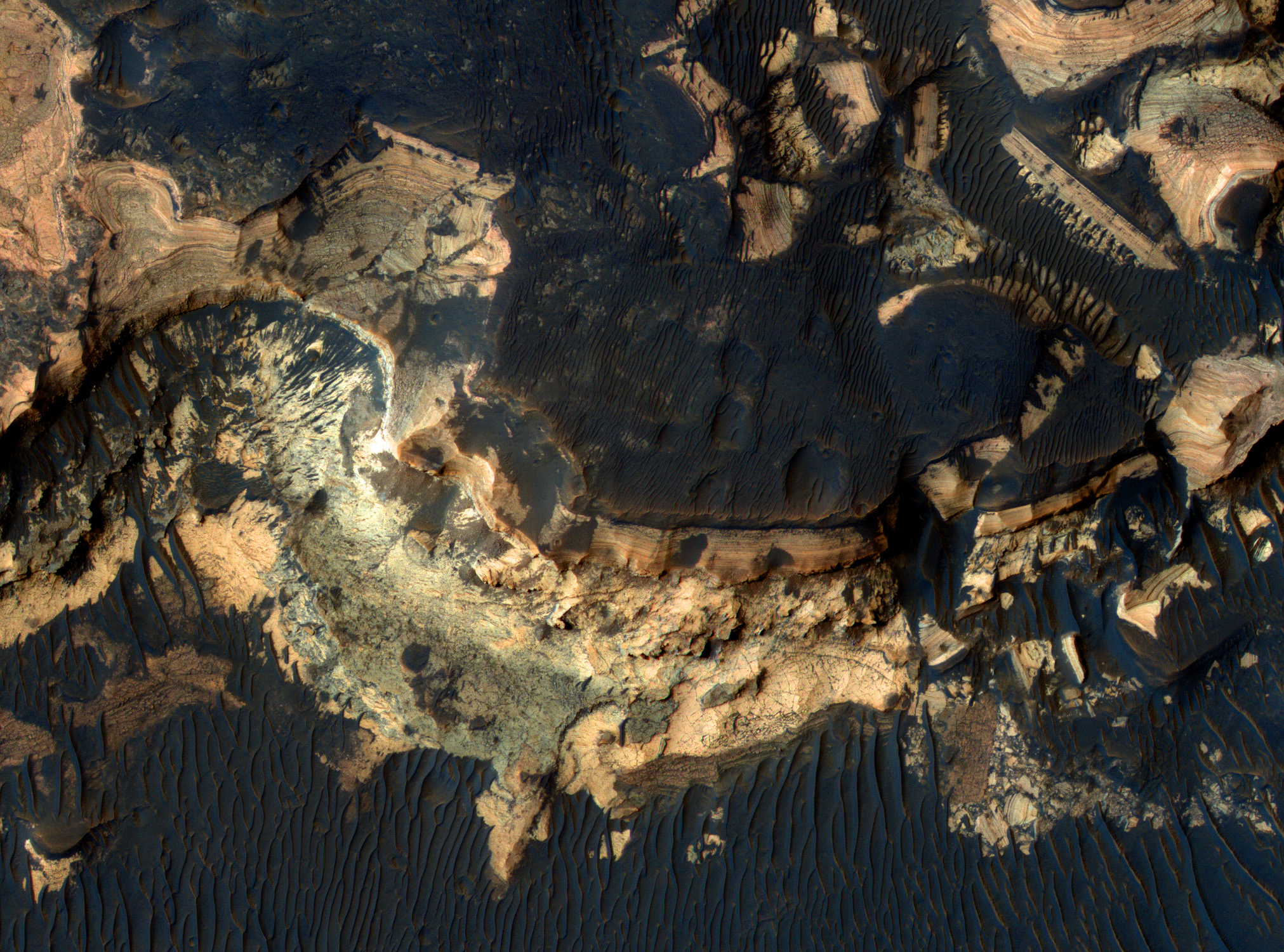
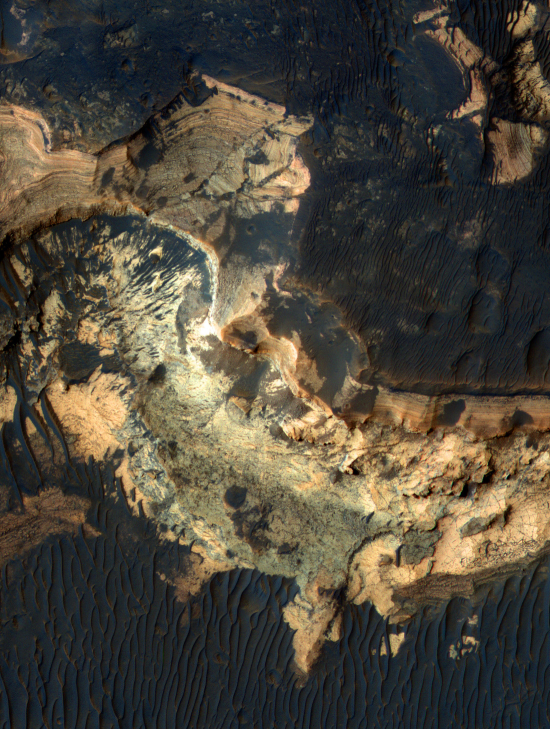
This week’s release of cool images from Mars Reconnaissance Orbiter included the color image below of a region on the floor of Holden Crater, one of the four possible landing sites for Curiosity, the Mars Science Laboratory planned for launch later this year. (If you want to see the entire image at higher resolution, you can download it here.)
Two things that immediately stand out about this image (other than this looks like an incredibly spectacular place to visit):
Astronauts on the Russian Mars500 simulated Mars mission simulated a Mars landing on Saturday. Key quote:
Three astronauts on the Mars500 simulated mission will make a simulated walk on the Mars “surface” Monday. After working 30 days on the simulated planet, the crew will then embark on a simulated 240-day return trip to Earth. Officials said the 520-day Mars500 mission is designed to test how humans cope with the physical and mental stresses of a long space flight.
Time for some more sightseeing on Mars. A recent news release from Mars Reconnaissance Orbiter noted the discovery of seasonal avalanches on Mars. This new image of the northern martian sand dunes illustrate again how the surface of Mars changes seasonally. The white patches on the ridges of the sand dunes is frozen carbon dioxide, dry ice that condenses on the crowns of the dunes every winter. When spring comes, the dry ice evaporates, and as it does so it disturbs the underlying sand, which then tumbles down the sides of the dunes, producing the dark streaks.

The process is less dramatic, however, than the avalanches seen in the previous news release, as suggested by this image below, showing the same dunes in summer without the dry ice. The dark streaks in the second image are not significantly different from the first, indicating that the process that forms them is slow and subtle.
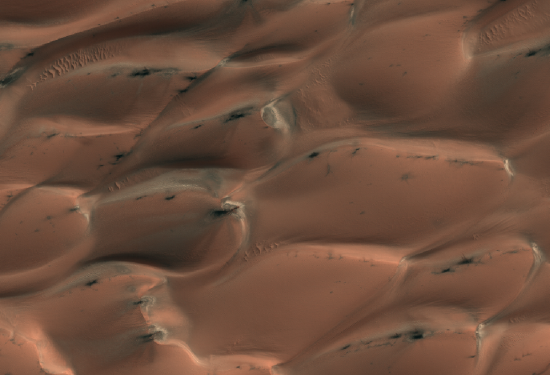
Scientists have discovered significant seasonal changes to the northern martian sand dunes, including a number of large avalanches.
Here we go again: NASA’s already overbudget Mars Science Laboratory rover is in need of even more cash.
The ESA probe Mars Express flew past the Martian moon Phobos today. Great image!
A Mars map app for Android phones.