Rocket Lab launches NASA climate satellite

Rocket Lab today successfully launched the first of two NASA PREFIRE climate satellites, its Electron rocket lifting off from its launchpad in New Zealand.

The leaders in the 2024 launch race:

55 SpaceX
23 China
7 Russia
6 Rocket Lab

American private enterprise now leads the world combined in successful launches, 63 to 36, while SpaceX by itself leads the entire world, including other American companies, 55 to 44.

2 comments

NASA/Boeing/ULA confirm new June 1st launch date for Starliner

In a press briefing this morning officials from NASA, Boeing, and ULA confirmed the new June 1, 12:25 pm (Eastern) launch date for the first manned flight of Boeing’s Starliner manned capsule.

The officials provided a more detailed explanation of the helium leak in a valve that effects the capsule’s service module attitude thruster system, noting that it is not a design flaw but some specific issue in this particular valve. Because of this, they are confident the system can function safely even with the leak, which is relatively small.

However, the officials also noted that during their reviews in the past two weeks they discovered a new software issue in the spacecraft’s de-orbit engines that — under very unusual and unlikely circumstances — could actually cause those engines to fail to operate. They have figured out a work-around, whereby they fire the engines at a lower thrust in two stages rather than once.

Should the launch on June 1st be scrubbed for weather, they have back up dates on the next few days, though by June 4th ULA might have to swap out batteries on its Atlas-5 rocket that will require a longer stand down of several additional days.

7 comments

Boeing/NASA now targeting a June 1, 2024 launch of Starliner

In a brief update posted today by NASA, the agency announced that Boeing, NASA, and ULA have a new 12:25 pm (Eastern) June 1, 2024 launch date for the first manned flight of Boeing’s Starliner capsule.

The announcement was incredibly obscure about what the issues are that have caused this additional week delay:

Work continues to assess Starliner performance and redundancy following the discovery of a small helium leak in the spacecraft’s service module. As part of this work, and unrelated to the current leak which remains stable, teams are in the process of completing a follow-on propulsion system assessment to understand potential helium system impacts on some Starliner return scenarios. NASA also will conduct a Delta-Agency Flight Test Readiness Review to discuss the work that was performed since the last CFT launch attempt on May 6, and to evaluate issue closure and flight rationale ahead of the next attempt, as part of NASA’s process for assessing readiness. The date of the upcoming Flight Test Readiness Review is under consideration and will be announced once selected.

It appears that engineers are worried the leak — which is linked to one of the attitude thrusters in the capsule’s service module — might impact the ability of Starliner to return to Earth safely. It also appears there is concern about the spacecraft sitting on the launchpad for more than a month, and an evaluation is on-going on whether this might be an issue as well.

I am guessing however. A more detailed explanation might be forth-coming after press update scheduled for 11 am (Eastern) tomorrow.

0 comments

Starliner manned launch delayed again; no new launch announced

In a very terse statement that apparently was only sent out by email to some sources, NASA and Boeing announced last night that the May 25, 2024 launch of the first manned Starliner mission on ULA’s Atlas-5 rocket had been postponed, with no new launch date set.

NASA, Boeing, and ULA are foregoing the Saturday, May 25 launch attempt for NASA’s Boeing Crew Flight Test. The team has been in meetings for two consecutive days, assessing flight rationale, system performance, and redundancy. There is still forward work in these areas, and the next possible launch opportunity is still being discussed.

NASA will share more details once we have a clearer path forward,

The first launch scrub prior to the first launch date of May 6th was due to a valve issue on the Atlas-5 rocket. ULA quickly replaced that valve and the launch was rescheduled for May 17th. Then Boeing engineers detected a helium leak related to one of the attitude thrusters in the capsule’s service module. The launch was first delayed until May 21st, then delayed again until May 25th. Now it is delayed indefinitely.

Whether that helium leak remains the cause of this new delay remains unknown. That no new launch date has been proposed suggests the need to bring the rocket and capsule back to the assembly building to destack it in order to fix the problem. That NASA, Boeing, and ULA are being so coy about revealing any details suggests however that some additional issue might have been uncovered.

Regardless, this new extended delay is very bad publicity for Boeing. While the comparison is somewhat unfair, it continues to make Starliner look like an American version of a Yugo, not the kind of vehicle one would nonchalantly climb into for a flight into space.

8 comments

Sierra Space’s Tenacity mini-shuttle arrives at the Cape

Capitalism in space: Sierra Space’s Tenacity Dream Chaser mini-shuttle has finally arrived at the Kennedy Space Center in Florida for its final testing and assembly onto ULA’s Vulcan rocket.

Upon arrival at Kennedy, teams moved Dream Chaser Tenacity to the high bay inside the Space Systems Processing Facility, where it will undergo final testing and prelaunch processing ahead of its launch scheduled for later this year.

…The remaining pre-flight activities at Kennedy include acoustic and electromagnetic interference and compatibility testing, completion of work on the spaceplane’s thermal protection system, and final payload integration.

If all goes right, Tenacity’s first mission will last 45 days, delivery about 7,800 pounds of cargo to ISS, and prove out the reusable mini-shuttle for up to seven more flights to ISS.

10 comments

Starliner launch delayed again, to May 25, 2024

Boeing, ULA, and NASA have decided to delay the first manned flight of Boeing’s Starliner capsule another four days to 3:09 pm (Eastern) on May 25, 2024.

The additional time allows teams to further assess a small helium leak in the Boeing Starliner spacecraft’s service module traced to a flange on a single reaction control system thruster. Pressure testing performed on May 15 on the spacecraft’s helium system showed the leak in the flange is stable and would not pose a risk at that level during the flight. The testing also indicated the rest of the thruster system is sealed effectively across the entire service module. Boeing teams are working to develop operational procedures to ensure the system retains sufficient performance capability and appropriate redundancy during the flight.

It appears they simply want to give themselves extra time to review their data thoroughly, with no rush, before lighting the rocket.

1 comment

NASA signs new agreement with ESA to partner on Franklin Mars rover

NASA yesterday signed a new agreement with the European Space Agency (ESA) that confirmed its previous commitment to help land ESA’s Franklin rover on Mars.

With this memorandum of understanding, the NASA Launch Services Program will procure a U.S. commercial launch provider for the Rosalind Franklin rover. The agency will also provide heater units and elements of the propulsion system needed to land on Mars.

Previously NASA had committed $30 million to pay for that launch provider, as yet undetermined. It now wants $49 million for the Franklin mission, with the extra money likely to pay for the new additional equipment outlined in this agreement.

Whether NASA gets this money from Congress however remains unknown. It has not yet been appropriated.

This overall European project has been fraught with problems. It was first designed as a partnership with NASA. Then Obama pulled NASA out in 2012, and ESA switched to a partnership with Russia, which was to provide the rocket and lander. Then in 2022 Russia invaded the Ukraine and Europe broke off all its partnerships with Russia.

Since then ESA has signed a deal with the company Thales Alenia to build the lander.

As these political foibles were going on, the rover also had parachute issues that forced ESA to cancel its original launch date in 2022, using the Russian rocket.

It is likely Congress will approve this additional funding, though it seems to me that Europe should be able to afford paying for its own launch, especially if it is buying that service from the much cheaper U.S. market.

4 comments

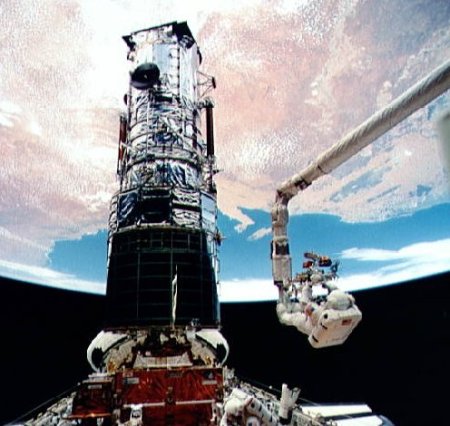
NASA versus Isaacman/SpaceX on upgrading Hubble

Link here. The NPR article is a long detailed look at NASA on-going review of the proposal by billionaire astronaut Jared Isaacman and SpaceX to to do a maintenance mission to the Hubble Space Telescope.

The NPR spin is subtly hostile to the mission, because it would be funded privately and run entirely by private citizens, not the government. Like all modern leftist news outlets, it can only imagine the government capable of doing such things properly.

Reading between the lines, however, what I instead sense is that NASA and the scientific community is generally quite enthusiastic about this proposal, but wants to make sure it not only is done safely but does nothing to harm Hubble in any way, both completely reasonable concerns. While there appear to be some individuals who are opposed for purely political and egotistically reasons — a desire to keep control of this turf no matter what — I don’t see that faction having much influence long term.

Whether this project can go forward I think will be largely determined by the success or failure of Isaacman’s next manned flight, dubbed Polaris Dawn and scheduled for this summer. On it he will attempt the first spacewalk by a private citizen, using SpaceX’s Resilience capsule and EVA spacesuit. If that spacewalk is a success, and he can demonstrate the ability to accomplish some complex tasks during the EVA, it will certainly ease the concerns of many about a follow-up repair mission to Hubble.

If it does proceed, the goal appears to be to attach new gyroscope hardware to the outside of Hubble, rather than replace the failed gyroscopes already in place. Such an approach will be simpler and more in line with the capabilities of a Dragon capsule, compared to the repair work the astronauts did on the space shuttle.

8 comments

Atlas-5 launch of Starliner slips to May 21, 2024

While ULA has successfully replaced the valve in the upper stage of the Atlas-5 rocket, the first manned launch of Boeing’s Starliner capsule has slipped another four days, to May 21, 2024, because a newly discovered helium leak in the capsule’s service module.

Starliner teams are working to resolve a small helium leak detected in the spacecraft’s service module traced to a flange on a single reaction control system thruster. Helium is used in spacecraft thruster systems to allow the thrusters to fire and is not combustible or toxic.

NASA and Boeing are developing spacecraft testing and operational solutions to address the issue. As a part of the testing, Boeing will bring the propulsion system up to flight pressurization just as it does prior to launch, and then allow the helium system to vent naturally to validate existing data and strengthen flight rationale.

The prevous launch scrub was entirely due to the ULA’s rocket, not anything related to Boeing. This delay however is a Boeing issue, and it only reinforces the general uneasiness everyone feels about Boeing’s quality control work.

3 comments

XRISM X-ray space telescope functioning despite closed “aperture door”

XRISM, a joint X-ray space telescope built by NASA and Japan’s space agency JAXA, is collecting data despite the failure on one instrument of an aperture door to open.

In January, project scientists said that XRISM was working well except for an aperture door, also called a gate valve, for the Dewar on its imaging instrument, Resolve, which failed to open. The instrument can still operate with the door closed, although the door, made of beryllium, does attenuate some X-rays at lower energies.

At the time, efforts were underway to try and open the gate valve. However, speaking at a May 7 meeting of the National Academies’ Board on Physics and Astronomy, Mark Clampin, director of NASA’s astrophysics division, said those efforts were on hold for the next year and a half.

Instead, the science team decided to proceed with science operations, since the telescope has two other working instruments, and can get data even from this hindered third.

XRISM is a replacement of a previous JAXA X-ray telescope that launched in 2016 but failed immediately.

0 comments

FAA and Air Force initiate new environmental impact statements for Starship/Superheavy launchpads in Florida

We’re here to help you! Really! Late yesterday, in a typical Friday story dump just before the weekend to reduce any notice, the FAA announced it has begun a new environmental impact statement (EIS) of SpaceX’s Starship/Superheavy launchpad infrastructure being built in Florida, working in parallel with a similar environmental impact statement now being conducted by the Air Force.

The EIS will be the second environmental review involving SpaceX’s plans to use LC-39A for Starship launches. NASA completed an environmental assessment (EA) in 2019 of the company’s plans at the time to build launch infrastructure at LC-39A for Starship, finding it would have no significant impact. At the time SpaceX was planning up to 24 Starship launches from that pad annually. A new EIS, the FAA concluded, is needed because of changes in the design of Starship and its operations since the 2019 assessment.

The FAA claims a new assessment is needed because SpaceX is now planning as many as 44 launches. The Air Force has not said why its new assessment is needed. That EIS, which began in March, covers a launchpad previously used by the Saturn-1B and Delta-4 rockets from 1964 to 2022, another pad use by the Air Force’s Titan rocket from 1965 to 2005, as well as a new pad, dubbed SLC-50.

LC-39A meanwhile has been used for launches since the 1960s. The Saturn-5, the space shuttle, and the Falcon 9 all launched from this pad.

The dishonest absurdity of these impact statements can not be overstated. There is zero reason to do new assessments. All the pads have been in use for decades, with all kinds of rockets, some comparable to Superheavy/Starship. The environment and the wildlife refuge at Cape Canaveral have both thrived.

Moreover, to force completely new impact statements because the design and plans for Superheavy/Starship have changed somewhat (but not fundamentally) is even more stupid. This is a new rocket, being developed day-by-day and launch-by-launch. Will the FAA and the Air Force require new EIS’s every time SpaceX changes anything? It seems so.

This is clearly lawfare against Elon Musk and SpaceX by the White House and the administration state. It doesn’t like Musk, and it is now searching at all times for ways to block or damage him.

I confidently predict that neither statement will be completed by the end of 2025. Based on the timeline of most EIS’s, which when politics are involved are almost always slowed by the legal action of activists, the earliest either will be approved will be mid-2026, though likely later.

What is not clear is whether the FAA and Air Force will stop all work while this red tape is being unwound. If so, then the first operational launches of Superheavy and Starship cannot happen out of Cape Canaveral until well into 2027, which means NASA entire Artemis program will be seriously delayed. My previous prediction that the first manned lunar landing can’t happen before 2030 is becoming increasingly too conservative.

And remember this: If Joe Biden and the Democrats remain in power after November, all bets are off. At that point they are certain to ramp up the lawfare against those they see as political enemies, even if their targets are doing great things for the nation and the American people.

11 comments

Launch of first manned flight of Starliner rescheduled for May 17, 2024

Because ULA engineers have decided they need to replace the valve that forced a launch scrub on May 8th, the first manned launch of Boeing’s Starliner capsule to ISS has now been rescheduled to May 17, 2024.

The oscillating behavior of the valve during prelaunch operations, ultimately resulted in mission teams calling a launch scrub on May 6. After the ground crews and astronauts Butch Wilmore and Suni Williams safely exited from Space Launch Complex-41, the ULA team successfully commanded the valve closed and the oscillations were temporarily dampened. The oscillations then re-occurred twice during fuel removal operations. After evaluating the valve history, data signatures from the launch attempt, and assessing the risks relative to continued use, the ULA team determined the valve exceeded its qualification and mission managers agreed to remove and replace the valve.

Replacing the valve is a somewhat routine procedure, but it will take a few days, causing the two-week delay.

2 comments

Starliner launch scrubbed due to valve issue

Yesterday’s Starliner launch was scrubbed before launch because ULA had detected an issue with a valve on the Atlas-5’s Centaur upper stage, causing that valve to flutter because it had not closed in the proper position.

At the press conference that followed, ULA’s CEO Tory Bruno explained that during an unmanned launch, engineers would have simply cycled the valve, which almost always works to get it to seat properly. ULA launch rules however forbids it from doing so on a manned launch, because that would be the equivalent of fueling the tank with people on board the rocket. The Atlas-5 was initially not built for manned flights, and though it has been upgraded to man-rate it, those upgrades did not permit ULA this capability, unlike SpaceX’s Falcon 9, which get fueled entirely after the crew boards Dragon.

They are reviewing the data to see if the valve will need to be replaced. If not, the launch could happen quickly. If it does, the launch will be delayed slightly longer, but not significantly. Right now ULA, NASA, and Boeing are targeting a May 10th launch.

It is worth listening to Tory Bruno’s explanation of the situation because of its clarity. I have embedded his comments below, time-stamped to when he began speaking.
» Read more

11 comments

Russia to NASA: We’ll wait a bit before putting our astronauts on Starliner

Even though Russia and NASA have a barter deal whereby one astronaut from each country flies free on each flight of its spacecraft, Russia it appears will forego flying any Russians on Boeing’s Starliner capsule for the immediate future.

At the May 3 briefing, though, NASA officials said it was unlikely that a Russian cosmonaut would be assigned to Starliner-1 [the first operational flight after the first manned demo flight launching today]. “We expect, on the Roscosmos side, they’re more likely to want to see a long-duration flight also, so we think they’ll want to start to fly with us on Starliner-2,” said Dana Weigel, NASA ISS program manager.

That would appear to disrupt the ongoing series of seat exchanges between NASA and Roscosmos. “We’re still working through that with our Roscosmos counterparts. It’s our desire to continue to do integrated crew,” she said, adding that NASA and Roscosmos don’t have an agreement yet in place for exchanging crews in the timeframe that will include Starliner-1.

This isn’t a surprise. Russia made the same decision with SpaceX’s Dragon manned capsule, waiting until it had flown a few times before agreeing to allow its astronauts on it. With Boeing Russia might be more hesitant, consider the problems Starliner has had in development plus the overall quality control issues known to exist at Boeing.

1 comment

NASA IG: Major technical problems with Orion remain unsolved

Orion's damage heat shield
Damage to Orion heat shield caused during re-entry,
including “cavities resulting from the loss of large chunks”

A just released report [pdf] by NASA’s inspector general has found the major technical problems discovered after the first unmanned Artemis mission of Orion around the Moon remain unsolved, and threaten the safety of the astronauts that NASA plans to send around the Moon on the second Artemis mission.

The problems with Orion are threefold and are quite serious, involving its heat shield, separation bolts, and power distribution.

Specifically, NASA identified more than 100 locations where ablative thermal protective material from Orion’s heat shield wore away differently than expected during reentry into Earth’s atmosphere. Engineers are concurrently investigating ways to mitigate the char loss by modifying the heat shield’s design or altering Orion’s reentry trajectory.

In addition, post-flight inspections of the Crew Module/Service Module separation bolts revealed unexpected melting and erosion that created a gap leading to increased heating inside the bolt. To mitigate the issue for Artemis II, the Orion Program made minor modifications to the separation bolt design and added additional thermal protective barrier material in the bolt gaps.

NASA also recorded 24 instances of power distribution anomalies in Orion’s Electrical PowerSystem. While NASA has determined that radiation was the root cause and is making software changes and developing operational workarounds for Artemis II, without a permanent hardware fix, there is increased risk that further power distribution anomalies could lead to a loss of redundancy, inadequate power, and potential loss of vehicle propulsion and pressurization.

Moreover, like with any engineering system, without understanding the residual effects of introducing design and operational changes, it will be difficult for the Agency to ensure that the mitigations or hardware changes adopted will effectively reduce the risks to astronaut safety.

This is not all.
» Read more

21 comments

NASA announces launch coverage for the first Starliner manned capsule launch on May 6, 2024

NASA today released the details for its public media coverage of the first manned launch at 10:34 pm (Eastern) on May 6, 2024 of Boeing’s Starliner capsule.

NASA will provide live coverage of prelaunch and launch activities for the agency’s Boeing Crew Flight Test, which will carry NASA astronauts Butch Wilmore and Suni Williams to and from the International Space Station.

Launch of the ULA (United Launch Alliance) Atlas V rocket and Boeing Starliner spacecraft is targeted for 10:34 p.m. EDT Monday, May 6, from Space Launch Complex-41 at Cape Canaveral Space Force Station in Florida. The flight test will carry Wilmore and Williams to the space station for about a week to test the Starliner spacecraft and its subsystems before NASA certifies the transportation system for rotational missions to the orbiting laboratory for the agency’s Commercial Crew Program.

Starliner will dock to the forward-facing port of the station’s Harmony module at 12:48 a.m., Wednesday, May 8.

Though that coverage includes several prelaunch and post launch press conferences, the key coverage of the launch itself will begin at 6:30 pm (Eastern) on May 6th, about four hours before the launch itself. It will also include the capsule’s docking with ISS on May 8th.

I will embed NASA’s Youtube live stream here on Behind the Black on both dates, though as always I sugggest waiting until just before launch and docking to tune in. The four hours of streaming prior to launch is mostly going to be NASA propaganda, touting the agency and often misconstruing the facts to overstate its importance. This launch will be just like SpaceX’s Dragon launches, in that almost everything will be run by the two private companies involved, Boeing and ULA, and not NASA. NASA’s real involvement will only begin at the docking to ISS.

This first manned flight of Starliner is long past due. It was supposed to occur about four years ago, but numerous technological and management problems at Boeing forced many delays. Getting that capsule operational will finally give NASA two American companies capable of putting humans in space. It will also offer some competition to SpaceX, though this competition will be weak until Boeing can demonstrate Starliner’s reliability.

0 comments

NASA wants to know the important technology the commercial space industry needs

Capitalism in space: NASA is now asking the commercial space industry to tell it which of 187 “technology shortfalls” it should give priority to for funding.

The agency has released a list of 187 “technology shortfalls,” or topics where current technology requires additional development to meet NASA’s future needs. The shortfalls are in 20 areas ranging from space transportation and life support to power and thermal management.

Through a website, the agency is inviting people to review the listed technologies and rate their importance through May 13. NASA will use that input to help prioritize those technologies for future investment to bridge the shortfalls.

This decision illustrates well NASA’s effort in the past decade to shift from being the boss which tells the space industry what to do to becoming a servant of that industry. In the past NASA would focus solely on what it considered its needs in deciding what new technology to fund. Often that would result in projects that NASA considered cool, but were dead-ends commercially, never used by anyone.

Now NASA wants to function more like it used to prior to 1957, when it was called the NACA. Then it worked to provide the engineering data that the aviation industry requested. This change is great news, because it means that NASA’s many small technology development contracts will better serve the needs of the industry and its need to make profits, rather the government’s wish list of projects, some of which serve no one’s real need.

2 comments

The plan for SpaceX’s first demo in-orbit refueling mission of Starship

Link here The details come from a presentation at a public meeting by Amit Kshatriya, Deputy Associate Administrator of NASA’s Moon to Mars program, with this the key takeaway:

Kshatriya then expanded the discussion beyond the next few Starship flights and talked about the required technologies for a fuel depot in orbit and the in-orbit capabilities needed to transfer fuel. “We need an instance of the ship that is essentially long, has the endurance to stay in orbit long enough for the sequence to work.

“So, we need a ship that has at least three to four weeks of endurance in orbit. That endurance is gained through augmented power system capability, augmented battery capacity, full insulation of the cryogenic systems, vacuum jacketing of all the lines, et cetera, to make sure that the cryogens that are being stored or are meant to be stored don’t boil off.”

The challenges of a cryogenic ship in orbit include the need to prevent boil-off from the stack. To facilitate the journey to the Moon’s surface, Starship will have to be refueled. For this, the company plans to refuel a depot in low-Earth orbit (LEO), which would be resupplied by several tanker Starships. The HLS Starship would then dock with this depot before departing for the Moon.

To prove this system will require a Starship test flight that lasts several weeks in orbit, to prove the capability needed for a lunar mission. It will also require a refueling mission that will require several Starship/Superheavy launches, one to put the fuel depot into orbit, several more to fuel that depot, and a final launch of Starship for its refueling and endurance test.

According to the update, SpaceX is still aiming to be ready of the upcoming fourth Superheavy/Starship demo orbital flight in the first two weeks. The NASA official claimed it would occur no later than the end of May. I see that as a confirmation that NASA really doesn’t expect the FAA to issue a launch permit when SpaceX is ready, and that the permit might not arrive in time for a May launch. This statement is meant to soften the blow when the launch finally gets delayed into June, or later.

Whether the many required later Starship launches as described above can get FAA approval quick enough to prove out this system soon enough to meet NASA’s 2026 present target date for its manned lunar landing seems very unlikely. Moreover, even if it does it will be a major challenge for SpaceX to meet this schedule.

7 comments

NASA: first launch of New Glenn is targeting a September 29, 2024 launch date

According to a presentation given by a NASA official at a conference in London yesterday, the first launch of Blue Origin’s New Glenn rocket is now targeting a September 29, 2024 launch.

In a presentation at a meeting of a planetary protection committee of the Committee on Space Research (COSPAR) in London April 24, Nick Benardini, NASA’s planetary protection officer, listed a Sept. 29 date for the launch of Escape and Plasma Acceleration and Dynamics Explorers (ESCAPADE) mission, a pair of smallsats that will go into orbit around Mars to measure the interaction of the planet’s magnetosphere with the solar wind.

NASA selected Blue Origin’s New Glenn rocket to launch ESCAPADE, awarding the company a $20 million task order through the agency’s Venture-Class Acquisition of Dedicated and Rideshare contract in February 2023 for the mission. The award at the time mentioned only a late 2024 launch, with the expectation that ESCAPADE would be on one of the first, if not the first, flight of the rocket.

Benardini mentioned ESCAPADE in his COSPAR presentation to discuss how the mission was complying with planetary protection requirements, intended to prevent any contamination of Mars, during the assembly of the spacecraft and launch preparations at Cape Canaveral. “They’re slated to be launching Sept. 29 with Blue Origin,” he said.

This is the first time any source at NASA or Blue Origin has revealed a specific launch date. The rocket was originally supposed to fly its first orbital test flight four years ago, but numerous delays, mostly related to the BE-4 engine used by the rocket’s first stage as well as decisions by the company’s former CEO, Bob Smith, to slow all development, pushed that launch back repeatedly. With Smith leaving late last year, the company has suddenly come back to life, with many indications that it was pushing for a launch this year.

3 comments

These are the idiots WE have put in power

Bill Nelson exhibiting his ignorance to Congress

On April 17, 2024 Bill Nelson, former Democratic Party senator and now NASA’s administrator, testified at a budget hearing in the House of Representives about the proposed 2025 NASA budget proposed by the Biden administration.

Such testimony is routinely boring and tells us nothing, which is why I no longer waste much time listening to it.

Other do, however, and as a result we all find out about moments of stupidity such as this one, spouted by Nelson:

“What do you think the Chinese are trying to get at, at the back side of the moon?” Rep. David Trone (D-MD) asked Nelson at a congressional hearing last week.

“They are going to have a lander on the far side of the moon, which is the side which is always in dark. Uh, we’re not planning to go there,” he said.

Trone followed up by asking, “And why not? What’s the benefit of doing so?”

“We don’t know what’s on the back side of the moon, so, uh, that would be something that they would discover,” the NASA administrator told lawmakers on Capitol Hill. “But our decision is that it’s more profitable for us to go to the South Pole of the moon because that’s where we think the water is,” he added.

First, Nelson exhibits the same kind of utter ignorance about basic space science as did congresswoman Sheila Jackson Lee (D-Texas) when she proclaimed on April 8, 2024 that the Moon “was made up mostly of gases.” Nelson says the “dark side” is always dark, when it is well known for many centuries that the back side of the Moon is sometimes referred to as the “dark side” not because it is dark, but because it is never visible to us on Earth, and until the space age no one knew what was there.

Furthermore, since the 1960s however we have known what is there, even if Nelson is an ignoramus about these basic facts. Landing there to research it up close and in detail is a entirely laudable science goal, something American scientists have wanted to do for decades. China is simply doing it.

Finally, China is also targeting the south pole for its lunar base, something Nelson seems utterly unaware, an ignorance that is shocking considering their lunar base goals are potentially in direct conflict with our lunar base goals.

You would think the administrator of NASA would know these basic facts.
» Read more

29 comments
1 19 20 21 22 23 116