The European Space Agency and China hold the first joint meeting in almost a decade

ESA logo

The European Space Agency (ESA) this week hosted the leaders of the China National Space Administration (CNSA) in Paris, the first such joint meeting since 2017.

The meeting was co-chaired by ESA Director General Josef Aschbacher and CNSA Administrator Shan Zhongde. Both ESA and CNSA had unique achievements to share and discuss since the last time the heads of agencies met in person.

Both highlighted joint successes in space science, notably the Tianguan (Einstein Probe) launch with ESA hardware, and progress on the joint Smile mission, set to launch this year. Similarly, the two sides addressed the successful Chang’e-6 mission carrying ESA’s NILS instrument, ESA’s first experiment on the lunar surface. In the field of telemetry and tracking, both looked back on their long-term cooperation in supporting science and exploration missions. In discussing their respective space safety and Earth observation related programmes, the importance of cooperation to protect our planet and climate was recognised on both sides.

It was discussed, that building past progress, both sides in their respective institutional contexts would explore potential opportunities for further collaboration in areas such as Earth and space science.

Let me translate: We in Europe have found that our cooperative Soviet-style government-run projects with NASA (ISS, Mars Sample Return, and Lunar Gateway) are going away, and we need to find some other authoritarian nation we can partner with.

You see, the bureaucrats in Europe like their Soviet-style government-run space program, and are actually offended that the U.S. is shifting from that approach to the capitalism model, an independent industry run by private enterprise. Moreover, these bureaucrats at ESA are finding their own political support dwindling within the ESA’s member nations, many of whom are adopting the same private industry approach as the U.S.

Thus, rather than embrace freedom, competition, and capitalism — the principles that once made Europe great — they look to China now to help fund their government projects. How so very governmental of them!

It is likely some space projects will come of this, but if the U.S. remains steadfast in support of freedom and private enterprise, it will flow like a tidal wave over anything ESA and China develop.

2 comments

China launches classified military satellite in partnership with Algeria

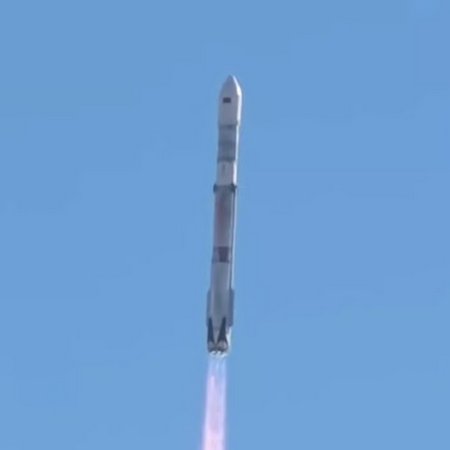
China today successfully placed a classified military remote sensing satellite into orbit, its Long March 2C rocket lifting off from its Jiuquan spaceport in northwest China.

China’s state-run press provided no update on where the rocket’s lower stages, using very toxic hypergolic fuels, crashed inside China. The story at the link, from China’s military, did provide this information about the satellite:

Developed by China Academy of Space Technology under China Aerospace Science and Technology Corporation (CASC), the satellite will be used for land planning and disaster prevention and mitigation. The launch is part of the Algeria remote sensing satellite system program, a joint project between China Great Wall Industry Corporation, a subsidiary of CASC, and the Algerian Space Agency. Signed in July 2023, the agreement includes two optical remote sensing satellites, ground systems, training, and related support services.

The 2026 launch race:

6 SpaceX
3 China

3 comments

Indian startup raises seed money to build robotic satellite servicing “jetpacks”

An Indian startup, Aule Space, has now raised $2 million in seed money to begin development of a robot servicing spacecraft it intends to call “jetpacks”, designed to attach to satellites and provide them fuel and power.

The seed funding will allow Aule Space to being work on a demonstration mission planned for launch next year to test its docking capabilities. That will involve two satellites, each weighing about 30 kilograms, but Panchal said one option is to instead use an orbital transfer vehicle as the client for the docking demonstration.

The 11-person company, which plans to grow to 20 people by the end of the quarter, is working on ground tests of its rendezvous and docking technology. It has access to facilities used by the Indian space agency ISRO for testing SPADEX, a docking demonstration mission flown a year ago.

This “jetpack” concept is very similar to Northrop Grumman’s Mission Extension Vehicles (MEV), several of which have already flown and extended the life of several satellites.

Aule is exactly the type of Indian satellite startup that India’s rocket startups, Agnikul and Skyroot, are being built to serve. The problem is that all of these startups, both satellite and rocket, are literally all startups. None has flown. India’s private space sector won’t really take off until its private rocket companies get off the ground, as its government space agency, ISRO, has done a very poor job launching its PSLV and SSLV rockets (both designed for smallsats). The PSLV has failed on its last two launches, and the SSLV has been in limbo now for years.

0 comments

Expedition-11 crew splashdowns safely

SpaceX’s Endeavour capsule has safely splashed down and been recovered off the coast of California, returning the four Expedition-11 astronauts several weeks early from ISS due to an as-yet undisclosed medical issue with one astronaut.

Crew-11 returned home about a month earlier than planned because of a medical concern teams are monitoring with one of the crew members, who remains stable. Due to medical privacy, it is not appropriate for NASA to share more details about the crew member. Prior to return, NASA previously coordinated for all four crew members to be transported to a local hospital for additional evaluation, taking advantage of medical resources on Earth to provide the best care possible.

Following the planned overnight hospital stay, the crew members will return to NASA’s Johnson Space Center in Houston and undergo standard postflight reconditioning and evaluations.

This hospital visit for all four astronauts is simply a cover to hide which astronaut has the medical issue. At some point this information must be revealed, simply because it impacts how future space travel will be planned.

7 comments

Axiom has delayed the launch of its first space station module to ’28

Axiom's module assembly sequence
Axiom’s module assembly sequence

When Axiom announced in September 2025 that Redwire would be building the solar panels for the first module of its space station, dubbed the PPTM, it also said that module would launch in late 2027, which was a delay of one year from the original launch date of 2026.

That schedule has now apparently been delayed again. In an interview yesterday, the company’s vice president of human spaceflight, former NASA astronaut Peggy Whitson, indicated the launch was now targeting 2028.

Plans call for the initial Axiom Station to be comprised of two modules, the PPTM — short for Payload Power Thermal Module — and a habitat module. The PPTM, which is to be shipped shortly to Houston for final assembly and integration, is slated to be launched in early 2028, with the second module following just months later. From there, Axiom aims to swiftly begin welcoming crew, Peggy Whitson, the company’s vice president of human spaceflight, told me in an interview.

This schedule almost guarantees that the Axiom station will not detach from ISS as quickly as originally intended. PPTM has a large hatch opening connecting it to ISS, allowing for the easy transfer of much of the research racks held on ISS. Before Axiom can become a free-flying station that ISS equipment must be moved, a process that will take time, likely months. To get it done the company will probably have to also attach its second habitation module so that crews can arrive and begin this transfer process.

In other words, Axiom’s schedule margins for getting its station launched, docked to ISS, loaded with ISS equipment, and then separated before ISS retires in 2030 are shrinking. It can ill afford further delays.

Below are my rankings of the five American space stations presently under development. Note that I now consider Axiom and Starlab tied for second.
» Read more

12 comments

Another ESA rendezvous demo mission proposed

The European Space Agency (ESA) and the Luxembourg startup ClearSpace yesterday announced a new demo mission to test autonomous rendezvous and proximity maneuvers, scheduled to launch in 2027.

PRELUDE aims to validate autonomous rendezvous and proximity operations in real flight conditions. The mission will test high-accuracy tracking, navigation and maneuvering using a combination of vision-based and complementary sensors feeding onboard algorithms and autonomous, fault-tolerant guidance, navigation and control (GNC) software. The goal is to demonstrate full freedom of movement and safe, repeatable maneuvers around another spacecraft.

Sounds good, eh? Not so fast. ClearSpace has had a bunch of these missions proposed, and none has yet flown. In 2019 ClearSpace won an ESA contract to de-orbit an old piece of space junk by 2025. In 2023 however that mission was stymied when that space junk, a payload adapter from a 2013 launch of Vega rocket launch, was hit by another piece of space junk.

Both ESA and ClearSpace apparently had difficulties re-designing the mission. In 2024, the ESA forced a major shake-up in ClearSpace’s management and missions, with the established company OHB taking over the startup. Subsequently the mission was redesigned to de-orbit a different defunct satellite, but delayed until 2029.

In 2024 the United Kingdom gave ClearSpace and Japan’s Astroscale a contract to de-orbit two satellites in ’26. It is however not clear at this time whether that mission will launch as planned.

This new PRECLUDE mission is interesting in that it will test the rendezvous and proximity technology that ClearSpace must have for all the other de-orbit missions. In other words, those other missions were never possible, because ClearSpace didn’t have the capability to do them. This new mission appears designed to develop that capability.

I ask: Why wasn’t PRECLUDE scheduled first, in the first place? That it wasn’t reflects very badly on both ClearSpace and the ESA.

0 comments

ULA loses another launch contract to SpaceX

The Space Force yesterday announced it has switched rocket companies for its next GPS satellite launch, taking the launch away from ULA and its Vulcan rocket and giving it to SpaceX.

SpaceX could launch the GPS III Space Vehicle 09 (SV09) within the next few weeks, as the satellite was entering the final stages of pre-flight preparations. As part of the swap, United Launch Alliance (ULA) will instead launch the third of the next generation of Global Positioning System satellites. The GPS III Follow-on (GPS IIIF) SV13 satellite was originally scheduled to launch on a Falcon Heavy, but will now fly on Vulcan.

“SV09 and SV13 were traded between ULA and SpaceX to get capability to orbit as soon as possible, for the same reason as the prior swap, which resulted in the last GPS launch in May 2025,” the spokesperson said in a statement. “The trade results in an overall net cost savings to the government and again demonstrates our sustained commitment to moving at speed to deliver combat-credible capabilities on orbit to meet warfighter needs.”

While at first glance it appears ULA has lost nothing, the military’s decision here bodes ill for the company. First, it indicates ULA has been unable to get Vulcan ready on time, forcing the Space Force to look to someone who could.

Second, this is the second time the Pentagon has taken a launch from ULA for these reasons. Increasingly it appears the military is losing patience with ULA’s inability to launch on time. For example, in awarding its most recent set of nine launches, it gave them all to SpaceX, bypassing ULA entirely.

In the past the Space Force tolerated ULA’s delays and high launch cost in order to guarantee the military had more than one launch provider. It now appears it is placing more importance on reliability and cost savings. And as I say, this bodes ill for ULA, which has not done a good job of providing either.

5 comments

NASA and Department of Energy agree to place nuclear reactor on Moon by ’30

NASA and Department of Energy have signed an agreement to develop nuclear power stations for NASA lunar base, and are targeting 2030 for placing a nuclear reactor on Moon.

NASA, along with the U.S. Department of Energy (DOE), announced Tuesday a renewed commitment to their longstanding partnership to support the research and development of a fission surface power system for use on the Moon under the Artemis campaign and future NASA missions to Mars.

A recently signed memorandum of understanding between the agencies solidifies this collaboration and advances President Trump’s vision of American space superiority by deploying nuclear reactors on the Moon and in orbit, including the development of a lunar surface reactor by 2030. This effort ensures the United States leads the world in space exploration and commerce. [emphasis mine]

Wanna bet? I’m laying odds that this joint government effort will end up being delayed and overbudget. In fact, the highlighted phrase suggests this work is already experiencing delays and budget overruns. Why else make a big deal about “a renewed commitment”?

3 comments

China launches twice from today different spaceports

China finally entered the 2026 launch race today with two launches from two of its spaceports.

First, it placed a classified remote sensing satellite into orbit, its Long March 6A rocket lifting off from its Taiyuan spaceport in northeast China.

No word on where the rocket’S lower stages, using very toxic hypergolic fuels, crashed inside China.

About an hour later it launched the 18th group of Guowang (also Satnet) satellites into orbit, its Long March 8A lifting off from its coastal Wenchang spaceport in south China.

Though the lower stages of this rocket fell in the ocean, they did so in the territorial waters of the Philippines, forcing its government to issue a warning to its citizens.

Though China’s state-run press provided no information about the number of Guowang satellites launched, all previous launches using the Long March 8A placed nine in orbit. Based on this guess, this internet-of-things constellation now has 137 satellites in orbit out of a planned 13,000.

The 2026 launch race:

5 SpaceX
2 China

0 comments

China claims it has launched and landed a new suborbital reusable spacecraft

Reports from China’s state-run press today and yesterday claim that a pseudo-company, CAS Space (wholly owned by a government agency) has successfully completed the first test flight and parachute recovery of a new small scale suborbital reusable spacecraft dubbed PH-1.

The vehicle lifted off at about 4 pm and reached an altitude of roughly 120 kilometers, passing the Karman line — commonly regarded as the boundary between Earth’s atmosphere and outer space — before descending back to Earth. After re-entering the atmosphere, its recoverable payload cabin deployed a parachute at around 10 km and landed smoothly at a designated site, the company said.

CAS Space said the test validated key technologies, including re-entry deceleration, parachute recovery and precision landing control. Engineers also assessed the performance of critical components during the flight.

A handful of images were released yesterday, but none showed the recovered capsule or its landing.

It is probably that this test was as successful as China’s press claims. It is also possible that this reporting has been carefully designed to hide aspects of the flight that were a failure.

Once developed, CAS Space claims the spacecraft, also dubbed Lihong-1, could be used to provide experiments about 300 seconds of weightlessness. This is not much longer than the periods of weightlessness produced when flying in a “vomit comet” airplane. Moreover, this spacecraft appears too small for manned flights. A larger spacecraft would have to be developed for that purpose.

Hat tip to BtB’s stringer Jay for the link to the images.

3 comments

Portugal signs Artemis Accords

Portugal yesterday become the 60th nation to sign the Artemis Accords, according to an announcement posted by NASA administrator Isaacman on X.

In October 2025 a Latvia government report had indicated that it had signed the accords, making it the 60th nation in this American alliance, but Isaacman’s announcement did not include it.

Thus, Portugal is the 60th nation, with this the full and corrected list: Angola, Argentina, Armenia, Australia, Austria, Bahrain, Bangladesh, Belgium, Brazil, Bulgaria, Canada, Chile, Colombia, Cyprus, Czech Republic, Denmark, Dominican Republic, Ecuador, Estonia, Finland, France, Germany, Greece, Hungary, Iceland, India, Israel, Italy, Japan, Liechtenstein, Lithuania, Luxembourg, Malaysia, Mexico, the Netherlands, New Zealand, Nigeria, Norway, Panama, Peru, Poland, Portugal, Romania, Rwanda, Saudi Arabia, Senegal, Singapore, Slovakia, Slovenia, South Korea, Spain, Sweden, Switzerland, Thailand, the Philippines, the United Kingdom, the United Arab Emirates, the Ukraine, the United States and Uruguay.

I suspect Latvia will soon make it official, especially because its neighbors, Estonia and Lithuania, have already signed. These three former Soviet vassal states try to work together as this reduces the Russian threat.

Portugal’s signing means practically all of Europe is now on board.

0 comments

Isaacman makes it official: Artemis-2 will fly manned around the Moon, despite Orion’s heat shield concerns

Orion's damage heat shield
Damage to Orion heat shield caused during re-entry in 2022,
including “cavities resulting from the loss of large chunks”

In a tweet yesterday afternoon, NASA administration Isaacman essentially endorsed the decision of the NASA managers and engineers in its Artemis program who decided they could live with the engineering issues of Orion’s heat shield (as shown in the image to the right) and fly the upcoming Artemis-2 mission around the Moon carrying four astronauts with that same heat shield design.

Isaacman’s statement however suggests to me that he is not looking at this issue as closely as he should.

Human spaceflight will always involve uncertainty. NASA’s standard engineering process is to identify it early, bound the risk through rigorous analysis and testing, and apply operational mitigations that preserve margin and protect the crew. That process works best when concerns are raised early and debated transparently.

I appreciate the willingness of participants to engage on this subject, including former NASA astronaut Danny Olivas, whose perspective reflects how serious technical questions can be addressed through data, analysis, testing, and decisions grounded in the best engineering judgment available. [emphasis mine]

The highlighted sentence is fundamentally incorrect. » Read more

12 comments
1 20 21 22 23 24 988