A crack on Mars more than 600 miles long

A crack on Mars more than 600 miles long
Click for original image.

Cool image time! The picture to the right, cropped and reduced to post here, was taken on March 29, 2024 by the high resolution camera on Mars Reconnaissance Orbiter (MRO).

The science team labels this “troughs in Labeatis Fossae.” On Mars, the word “fossae” is used to indicate regions where there are a lot of parallel fissures. Though there are a few examples where such fissures might have been caused by the movement of ice or water, carving out the channel, in almost all cases this is not the cause. Instead, fossae are usually formed when the surface stretches, either because underground upward pressure pulls it apart, or because there is a sideways spread at the surface. The resulting cracks are generally considered what geologists call “grabens,” depressions caused at faultlines when the ground on either side moves apart in some manner.

In this case the break in the trough proves this is a graben, though why it broke at this spot is not clear.
» Read more

0 comments

Today’s blacklisted American: Democrats demand Elon Musk be censored and arrested simply for disagreeing with them

Robert Reich
Robert Reich, labor secretary under Bill Clinton

They’re coming for you next: Based on the behavior of loyal Democrats in the past five years, no on should be surprised by this story. Several big name Democratic Party supporters have now called for the complete censorship and imprisonment of Elon Musk for the horrible crime of disagreeing with them and campaigning for their opposition.

First we have Robert Reich, that petty dictator who was once secretary of labor under President Bill Clinton and teaches public policy at — you guessed it — the University of California in Berkeley. In an op-ed for the leftist British newspaper The Guardian, Reich claims Musk is “out of control” and for this crime he must be squelched. First he calls for a global boycott of Tesla and X but then tops this demand with some decidedly tyrannical desires:
» Read more

23 comments

Musk: First unmanned Mars Starship targeting a ’26 launch

The prime and secondary Martian landing sites for Starship

According to a tweet yesterday by Elon Musk, SpaceX is aiming for a 2026 launch of its first unmanned Starship to Mars.

The first Starships to Mars will launch in 2 years when the next Earth-Mars transfer window opens. These will be uncrewed to test the reliability of landing intact on Mars. If those landings go well, then the first crewed flights to Mars will be in 4 years.

Flight rate will grow exponentially from there, with the goal of building a self-sustaining city in about 20 years.

The graphic to the right indicates the planned landing zone, with the four red dots the four prime locations. Three of the four are very flat, though they also appear to have a lot of very near-surface ice, accessible simply by digging a shovel into the ground. Attempting to land at any will definitely test Statship’s ability to land on Mars intact. A global map of Mars is shown below, showing the location of this landing zone. The map shows where researchers believe the saltiest water on Mars would be. According to this data, in the Starship landing zone some of that near-surface ice will turn to liquid brine a little less than one percent of each year. Otherwise it will be more easily processed for drinking and fuel.

As always with these ambitious predictions, Musk is aiming high, with the likelihood that this first mission will not make that ’26 date. At the same time, he is making it very clear that a first attempt will certainly happen by ’28.

I also think the timing of this announcement is intriguing, coming one day after NASA was forced to cancel the launch in October of two Mars orbiters because it could not be certain Blue Origin would have the New Glenn rocket ready on time. Musk’s response is to say that SpaceX is now about to begin regularly privately funded and privately built missions to Mars, on a schedule, essentially asking: “Which company would you choose to do things in space?”
» Read more

15 comments

Starliner lands in New Mexico unmanned without problems

Boeing’s Starliner manned capsule landed last night at White Sands in New Mexico, the undocking, de-orbit, and descent occurring as planned with no hitches.

The mission however was not a full success. Intended as the first manned demo flight of the capsule, it did not complete that demonstration. It took astronauts up to ISS, but did not bring them home. NASA made the decision that the technical problems during launch and docking to ISS were sufficient enough to preclude putting the astronauts back on board for the return flight.

NASA says it “will review all mission-related data” before deciding whether to certify the capsule for operational manned flights. The agency has essentially two choices. First, it could decide that the successful return with no hitches of this manned flight, even with no one on board, fulfilled Boeing’s obligations. It will certify the capsule, allowing Starliner’s next manned mission to fly with NASA paying the bill. Doing so however would likely expose NASA to a lot of bad publicity, since the press right now sees Boeing as the root of all technical evil, and will pile on to the agency for putting safety last.

Second, NASA could avoid that bad press and play hard-nosed and demand another manned demo flight, on Boeing’s dime, as required by contract. If so, however, expect Boeing to refuse to do it, citing the cost and the company’s fiscal responsibility to its shareholders. Even if successful Boeing is unlikely to ever recover those costs through passenger sales.

Based on this negotiating situation, I predict NASA will choose the former. The successful landing suggests this is probably the right decision. It however will not do so immediately, but will release a series of announcements touting the positive results from its review of that “mission-related data”. By dribbling out each positive result bit-by-bit, the goal will be to soften the press so that when the agency finally certifies Boeing for that next manned mission and thus agrees to pay for it, the press will not pile on so hard.

At least, that will be the agency’s hope. The mainstream propaganda press however doesn’t usually read NASA press releases, and even when it does it knows so little about the subject that it almost always comes to the wrong conclusion. Moreover, its present desire to attack Boeing in all conditions will likely help it report these stories badly.

26 comments

NASA cancels launch of its two Escapade Mars Orbiters due to Blue Origin delays

After reviewing the status of launch preparations by Blue Origin of its New Glenn rocket, NASA today decided to cancel the launch because it appeared that Blue Origin would not be able to meet the October 13-21 launch window for sending the agency’s two Escapade orbiters to Mars.

NASA announced Friday it will not fuel the two ESCAPADE (Escape and Plasma Acceleration and Dynamics Explorers) spacecraft at this time, foregoing the mission’s upcoming October launch window. While future launch opportunities are under review, the next possible earliest launch date is spring 2025.

The agency’s decision to stand down was based on a review of launch preparations and discussions with Blue Origin, the Federal Aviation Administration, and Space Launch Delta 45 Range Safety Organization, as well as NASA’s Launch Services Program and Science Mission Directorate. The decision was made to avoid significant cost, schedule, and technical challenges associated with potentially removing fuel from the spacecraft in the event of a launch delay, which could be caused by a number of factors.

The press release of course is vague about why the launch has been canceled, but the reasons are obvious if you have been paying attention. Though Blue Origin has clearly been making progress towards the first launch of New Glenn, recent reports suggested strongly that it would be impossible for it to assemble the rocket, integrate the two orbiters, and get everything on the launchpad on time.

Rocket Lab, which built the orbiters, of course fully supported the decision, though that company very much wanted it to fly now to demonstrate its ability to make low cost smallsat planetary probes.

This failure of Blue Origin to meet this deadline speaks poorly of the company. To serve the satellite and especially the planetary research community rocket companies must be able to launch on schedule and on time. Blue Origin has failed to do so in this case. It appears Jeff Bezos needs to ramp up the pressure on his moribund company to finally get it to perform in the manner he desires, as described by Bezos himself recently.

3 comments

Will NASA give up on Starliner after its present contracts are completed?

According to an article today at Ars Technica, there are indications that NASA will not buy any further flights of Boeing’s Starliner capsule after it finally completes its present three-launch contract.

NASA hasn’t decided if it will require Boeing to launch another test flight before formally certifying Starliner for operational missions. If Starliner performs flawlessly after undocking and successfully lands this weekend, perhaps NASA engineers can convince themselves Starliner is good to go for crew rotation flights once Boeing resolves the thruster problems and helium leaks.

In any event, the schedule for launching an operational Starliner crew flight in less than a year seems improbable. Aside from the decision on another test flight, the agency also must decide whether it will order any more operational Starliner missions from Boeing. These “post-certification missions” will transport crews of four astronauts between Earth and the ISS, orbiting roughly 260 miles (420 kilometers) above the planet.

NASA has only given Boeing the “Authority To Proceed” for three of its six potential operational Starliner missions.

Apparently NASA has not decided whether to commit to any more Starliner operational manned flights behind those first three.

There are obvious good reasons for NASA’s hesitancy, most of which center on Boeing and its inability to get Starliner flying without technical problems. One that isn’t as obvious however is ISS itself. Boeing has taken so long in getting Starliner flying that the end of ISS in 2030 is now looming. There are only so many manned flights that NASA needs to buy before the station is decommissioned. Afterward the agency will still need to hire ferrying services to the new privately owned stations, but it is too far in the future to consider either SpaceX or Boeing for those decisions.

8 comments

Local Texas authorities fine SpaceX for dumping potable water in Boca Chica

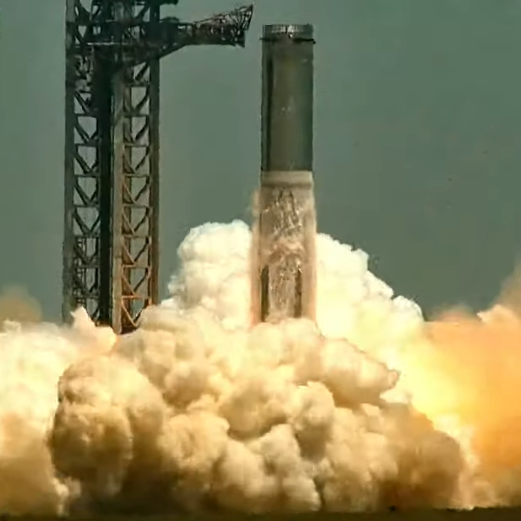
In what is simply another case of apparent harassment fueled by a tiny minority of anti-Musk activists, local Texas authorities have fined SpaceX a whopping $3,750 for dumping potable water at Boca Chica during the last test launch of its Starship/Superheavy rocket.

Late last month, the Texas Commission on Environmental Quality shared that SpaceX failed to get authorization to discharge industrial wastewater into or adjacent to surrounding wetlands, resulting in a $3,750 penalty. The wastewater SpaceX is charged with releasing comes from a water deluge system for its massive Starship rocket. The deluge system is used to absorb heat and vibration from the rocket engines firing.

This article is typical of most of our leftist mainstream press. It pushes the false claims of those activists — such as their insistence they represent everyone in the south Rio Grande Valley and that the water was “industrial wastewater.” First, they represent almost no one in south Texas, as almost everyone there is very happy with SpaceX and the billions of dollars and tens of thousands of jobs it is bringing to the area. For example, these groups recently held an event on the beaches near SpaceX facilities “to fight for its preservation, which they view as being in jeopardy since the arrival of Elon Musk’s SpaceX.”

Only about a dozen people showed up.

Second, the water is not “industrial wastewater.” As Elon Musk noted in a tweet, “Just to be clear, this silly fine was for spilling potable drinking water! Literally, you could drink it.”

Nonetheless, this manufactured environmental issue has clearly been used to stall SpaceX’s efforts. The company had said it was ready to do the next test launch of Starship/Superheavy on August 8, 2024. It is now a month later, and the FAA has still not issued the launch license. It is possible that part of the reason for the delay is because SpaceX has decided it will attempt to bring Superheavy back to the launch tower at Boca Chica, where the tower’s chopstick arms will try to capture it on landing. If so, the FAA might be demanding more assurances of safety than SpaceX can reasonably provide.

The delay however is also almost certainly caused by this fake environmental water issue. The FAA apparently has been forced to deal with it, and that action has stalled all of its new regulatory harassment of SpaceX, including the process to approve a new environmental assessment of Boca Chica that would allow the company to launch as many as 22 times per year.

12 comments

Dust storm in Jezero Crater

Overview map
Click for interactive map.

Dust storm in Jezero Crater
Click for original image.

An update today from the science team for the Mars rover Perseverance included the picture to the right, cropped, reduced, and sharpened to post here and taken by the rover on August 20, 2024. As the update noted,

It is dust-storm season on Mars! Over the past couple of weeks, as we have been ascending the Jezero Crater rim, our science team has been monitoring rising amounts of dust in the atmosphere. This is expected: Dust activity is typically highest around this time of the Martian year (early Spring in the northern hemisphere). The increased dust has made our views back toward the crater hazier than usual, and provided our atmospheric scientists with a great opportunity to study the way that dust storms form, develop, and spread around the planet.

The yellow lines on the overview map above indicate the approximate direction of the photo. The blue dot marks Perseverance’s present position, with the red dotted line its planned route and the white dotted line its actual travels.

At the moment this dust storm is localized to the region around Jezero Crater, and based on past seasonal dust storms, is not expected to expand to a global storm.

1 comment

China lands its X-37B copycat reusable mini-shuttle

China’s state-run press today announced in a short statement that its X-37B copycat reusable mini-shuttle has landed after a 268 day mission.

This was the spacecraft’s third mission since 2020, with the second lasting 276 days and the first two days. All three missions have involved the release of secondary objects, with the last two flights including additional rendezvous maneuvers with one object. It is not clear if that object on this third flight was ever redocked or grabbed by the mini-shuttle for return to Earth. Such a recapture is thought to have occurred on the second flight.

Very little information about these flights has been released by China.

1 comment

ESA releases images taken by BepiColombo during Mercury fly-by

Mercury as seen by BepiColombo September 4, 2024
Click for original image.

The European Space Agency (ESA) yesterday released images taken by the BepiColombo probe as it completed its fourth fly-by of Mercury on its long journey to enter orbit around that planet.

The picture to the right, cropped, reduced, and sharpened to post here, was taken four minutes after the closest approach of about 103 miles.

Four minutes after closest approach, a large ‘peak ring basin’ came into BepiColombo’s view. These mysterious craters – created by powerful asteroid or comet impacts and measuring about 130–330 km across – are called peak rings basins after the inner ring of peaks on an otherwise flattish floor.

This large crater is Vivaldi, after the famous Italian composer Antonio Vivaldi (1678–1741). It measures 210 km across, and because BepiColombo saw it so close to the sunrise line, its landscape is beautifully emphasised by shadow. There is a visible gap in the ring of peaks, where more recent lava flows have entered and flooded the crater.

BepiColombo still has two more fly-bys of Mercury to do before entering orbit in November 2026. At that time the spacecraft’s two orbiters, one from Europe and the other from Japan, will separate and take up complementary orbits.

2 comments

NASA requests industry proposals for its canceled satellite refueling demo mission

NASA today issued a request-for-information, asking the commercial aerospace industry for “alternate use” ideas for using the “flight hardware, test facilities, and experienced personnel” of its canceled satellite refueling demo mission, dubbed OSAM.

The request suggests NASA is hoping a private company will pick up the mission at its own cost, thus getting it off NASA’s hands. The agency canceled it because it is almost a decade behind schedule, hundreds of millions of dollars over-budget, and has an absurd workforce of 450 people. The agency is also under pressure from the Senate not to cancel the project, because our idiotic elected officials like to make-believe that funding these make-work projects accomplishes something.

Even if a private company takes on the project, if it does so at its own expense that workforce is certain to be reduced, possibly as much as 90%. No commercial satellite company is going to get saddled with that cost. It will want NASA to pay the bill.

0 comments

NASA confirms its giant solar sail is tumbling but doing so as planned

NASA today outlined the testing that its engineers are doing with the deployed 860 square foot Advanced Composite Solar Sail System (AC3), including the planned tumbling that an amateur astronomer detected based on the fluctuating brightness of the sail.

Currently orbiting Earth, the spacecraft can be seen with its reflective sails deployed from the ground. As part of the planned deployment sequence, the spacecraft began flying without attitude control just before the deployment of the booms. As a result, it is slowly tumbling as expected. Once the mission team finishes characterizing the booms and sail, they will re-engage the spacecraft’s attitude control system, which will stabilize the spacecraft and stop the tumbling. Engineers will then analyze flight dynamics before initiating maneuvers that will raise and lower the spacecraft’s orbit.

The release adds that NASA has added a feature to its mobile app that will help anyone spot the sail in the night sky.

0 comments
1 198 199 200 201 202 1,328