German rocket startup Hyimpulse completes suborbital test launch

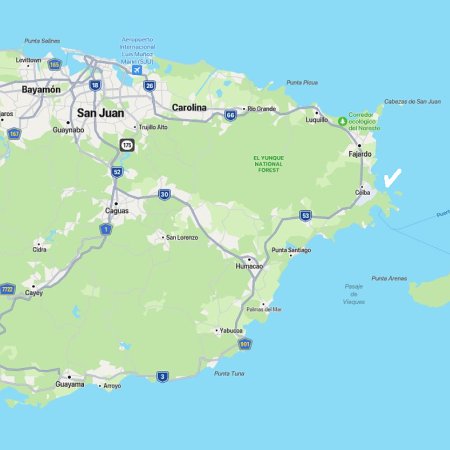
The German rocket startup Hyimpulse yesterday succesfully completed its first suborbital test launch, launching from the Southern Launch spaceport on the south coast of Australia.

The 12-metre, 2.5-tonne test rocket dubbed “SR75” lifted off shortly after 0500 GMT from a launch site in Koonibba, South Australia. It is capable of carrying small satellites weighing up to 250 kg (551 pounds) to an altitude of up to 250 km (155 miles) while being fuelled by paraffin, or candle wax, and liquid oxygen.

Paraffin can be used as a cheaper and safer alternative fuel for rockets, reducing satellite transportation costs by as much as 50%, according to HyImpulse.

The company hopes to launch its SL-1 rocket on its first orbital test flight next year.

13 comments

SpaceX last night launched another 23 Starlink satellites

The bunny is so fast I missed one: Last night, only a few hours after SpaceX launched two satellites for Maxar, out of Vandenberg in California, the company followed this with another launch of 23 Starlink satellites out of Cape Canaveral in Florida.

The first stage completed its 19th launch, landing successfully on a drone ship in the Atlantic.

The leader board that I posted earlier today for the Chang’e-6 launch thus gave the wrong totals for SpaceX and the American launch industry. Below are the corrected numbers for the 2024 launch race:

46 SpaceX
18 China
6 Russia
5 Rocket Lab

American private enterprise now leads the world combined in successful launches, 53 to 30. SpaceX by itself still leads the rest of the world, including other American companies, 46 to 37.

Hat tip to reader MDN to letting me know.

2 comments

Curiosity’s journey in Gediz Vallis approaching its end

Panorama taken on May 1, 2024
Click for original image.

Overview map
Click for interactive map.

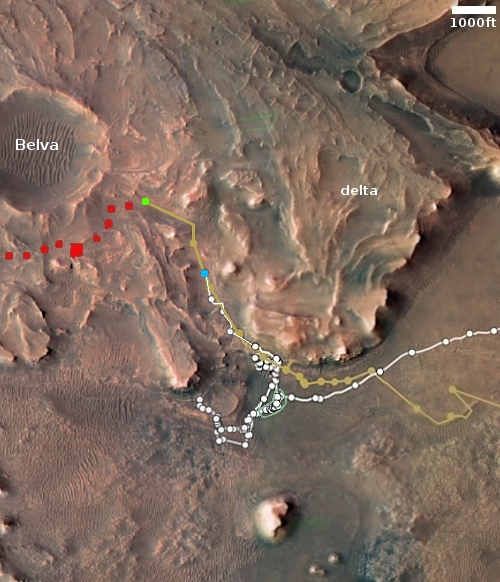
Cool image time! The panorama above, cropped, reduced, enhanced, and annotated to post here, was created using 31 pictures taken by Curiosity’s right navigation camera on May 1, 2024. It looks uphill into Gediz Vallis, the slot canyon that the rover has been traversing since August 2022.

The overview map to the right gives the context. The blue dot marks Curiosity’s present position. The red dotted line, on both the panorama and the overview indicate the rover’s planned route, with the white dotted line marking the route it actually traveled. The yellow lines indicate approximate the area covered by the panorama.

Coming into view inside Gediz Vallis is that small outcrop in the center of the canyon that the science team has targeted for inspection for years. It will be the last spot the rover visits in Gediz Vallis before turning west to head uphill in a parallel canyon. To see that route look at the map in this September 2023 post. Curiosity will travel west past two canyons before turning uphill again in the third.

Even then, Curiosity will still be in the low foothills at the base of Mount Sharp. The peak, blocked from view by the mountain’s lower flanks, is still 26 miles away and about 16,000 feet higher up. The journey to get there has really only begun, even after a dozen years exploring Gale Crater.

0 comments

China launches Chang’e-6 sample return mission to the far side of the Moon

Chang'e-6 landing zone

The new colonial movement: China today successfully launched its Chang’e-6 sample return mission to the far side of the Moon, its Long March 5 rocket lifting off from its coastal Wenchang spaceport. Unlike the Long March 5B, whose core stage reaches an unstable orbit and later crashes uncontrolled somewhere on Earth, the core stage of Long March 5 does not, and thus returns to Earth immediately, over the ocean.

The graphic from the right, released by China’s state-run press, shows the landing zone in red on the far side. The target is the southern rim area of Apollo Crater, marked by the uneven white outline. Apollo sits inside the South Aitken Basin, one of the Moon’s largest impact basins, 1,600 miles across, and roughly indicated by the black circle. The circle to the left of Apollo indicates Van Karman crater, where Chang’e-4 landed in 2019 with the Yutu-2 rover, both still operating.

The mission includes a lunar orbiter, a lander, an ascent vehicle, and an Earth sample return capsule. If all goes as planned, the samples will return to Earth in 53 days.

The leaders in the 2024 launch race:

45 SpaceX
18 China
6 Russia
5 Rocket Lab

American private enterprise still leads the world combined in successful launches, 52 to 30. SpaceX by itself still leads the rest of the world, including other American companies, 45 to 37.

6 comments

SpaceX launches two commercial Earth imaging satellites

The bunny rolls on. SpaceX today successfully launched two commercial Earth imaging Worldview Legion satellites, its Falcon 9 rocket lifting off from Vandenberg in California.

The first stage successfully completed its 20th flight, landing back at Vandenberg. This is the third Falcon 9 booster to fly twenty times. SpaceX now has two such boosters in its fleet, and is now working to upgrade its whole booster fleet to capable of flying forty times. The two fairings on this mission also completed their thirteenth and sixteenth flights, respectively.

The leaders in the 2024 launch race:

45 SpaceX
17 China
6 Russia
5 Rocket Lab

American private enterprise now leads the rest of the world combined in successful launches 52 to 29, while SpaceX by itself still leads the rest of the world, including other American companies, 45 to 36.

0 comments

Sunspot update: A minor uptick in sunspot activity in April

It is that time of the month again. Yesterday NOAA posted its monthly update of its graph tracking the number of sunspots on the Sun’s Earth-facing hemisphere. As I have done now for every month since I began this website in 2010, I have posted this updated graph below, with several additional details to provide some larger context.

In April the number of sunspots on the Sun went up somewhat, the count rising to the highest level since the count hit its peak of activity last summer. The sunspot number in April, 136.5, was however still significantly less than the 2023 peak of 160. Thus it appears the Sun is likely still the middle saddle of a doubled-peaked relatively weak solar maximum, with the Sun doing what I predicted in February 2024:
» Read more

1 comment

NASA IG: Major technical problems with Orion remain unsolved

Orion's damage heat shield
Damage to Orion heat shield caused during re-entry,
including “cavities resulting from the loss of large chunks”

A just released report [pdf] by NASA’s inspector general has found the major technical problems discovered after the first unmanned Artemis mission of Orion around the Moon remain unsolved, and threaten the safety of the astronauts that NASA plans to send around the Moon on the second Artemis mission.

The problems with Orion are threefold and are quite serious, involving its heat shield, separation bolts, and power distribution.

Specifically, NASA identified more than 100 locations where ablative thermal protective material from Orion’s heat shield wore away differently than expected during reentry into Earth’s atmosphere. Engineers are concurrently investigating ways to mitigate the char loss by modifying the heat shield’s design or altering Orion’s reentry trajectory.

In addition, post-flight inspections of the Crew Module/Service Module separation bolts revealed unexpected melting and erosion that created a gap leading to increased heating inside the bolt. To mitigate the issue for Artemis II, the Orion Program made minor modifications to the separation bolt design and added additional thermal protective barrier material in the bolt gaps.

NASA also recorded 24 instances of power distribution anomalies in Orion’s Electrical PowerSystem. While NASA has determined that radiation was the root cause and is making software changes and developing operational workarounds for Artemis II, without a permanent hardware fix, there is increased risk that further power distribution anomalies could lead to a loss of redundancy, inadequate power, and potential loss of vehicle propulsion and pressurization.

Moreover, like with any engineering system, without understanding the residual effects of introducing design and operational changes, it will be difficult for the Agency to ensure that the mitigations or hardware changes adopted will effectively reduce the risks to astronaut safety.

This is not all.
» Read more

21 comments

The EU’s government-owned satellite constellation is faltering in its attempt to compete with Starlink and OneWeb

In a pattern that should surprise no one, the government-owned internet satellite constellation proposed by the European Union to compete with private constellations such as Starlink and OneWeb is now in trouble and faces significant delays, partly because its budget has already doubled, even before anything has been built, and partly because there is friction between the various European countries tasked with building it.

A new report in a German publication, Handelsblatt, provides information on some likely causes of the delay. The report indicates that the cost estimate for the Interconnectivity and Security by Satellite (IRIS²) constellation has doubled from an initial estimate of 6 billion euros to 12 billion. Additionally, the project is exposing long-running fault lines between Germany and France when it comes to European space policy.

…Germany, which alongside France is likely to be the main financial backer of IRIS², is not happy that most of the prime contractors are based in France or linked to the nation. … And finally, it appears the operations for the constellation will be based primarily in Italy.

In other words, this government project is not being run to make a profit, but to distribute contracts to various countries in the European Union. Under these conditions, it is guaranteed to fall behind scheduled, cost a fortune, ald lose gigantic amounts of money.

These European countries are already shifting away from this failed model, abandoning its government-run rocket company Arianespace to instead encourage competing private rocket companies. It is therefore no surprise that many member countries in the EU are now having second thoughts about building this government-run satellite constellation.

Nonetheless, EU officials want Europe to have its own internet satellite constellation. Getting it however is problematic. There presently are no continent-based companies capable of building and launching it. And a government built and owned constellation is guaranteed to fail in any attempt to compete on the open market.

2 comments

Private Nova Scotia spaceport company opens spaceport to all rocket companies

The company Maritime Launch, which has been building a new spaceport in Nova Scotia since 2016, has abandoned its original concept of providing both the launch facilities and rocket for satellite companies, and will instead make its launch facilities available to all rocket companies.

In an interview with The Journal last week, Matier – who started the spaceport project in 2016 to launch satellites with Cyclone-4M rockets it intended to buy from a Ukrainian manufacturer – said geopolitical realities in Eastern Europe now makes that approach unworkable. “We can’t get the rockets out of Ukraine,” he said. “So, we’ve pivoted away from a customer-supplier relationship with [them] … There’s such huge demand for satellites going into orbit that there’s all these [other] rockets in development that don’t have a home. The bottleneck is really the spaceport, and that’s what we’re addressing.”

According to the article at the link, the spaceport is already negotiating with an unnamed European rocket company to do an orbital launch by 2025. Matier also said there will a suborbital launch at the spaceport this summer, but offered no details about the rocket or payload.

0 comments

Astroscale to go public

abandoned upper stage, taken by ADRAS-J
Click for original image.

The Japanese orbital tug start-up Astroscale announced yesterday that it is becoming a publicly traded company on the Tokyo stock market, beginning June 5, 2024.

The company plans to offer 20.8 million shares in the initial public offering, but has not announced a share price. According to filings with the exchange, Astroscale will set that price May 27.

Astroscale has raised more than $375 million through a series of private rounds, most recently a $76 million Series G round in February 2023. That funding has primarily come from Japanese investors, including a strategic investment by Mitsubishi Electric in that Series G round.

The company has also won two major contracts with Japan’s space agency JAXA, building its two ADRAS-J missions to first rendezvous and survey an abandoned upper stage (as shown to the right) and then fly a grapple mission to de-orbit that stage sometime in the future.

0 comments

Another Mars location being considered for future helicopter mission

Global overview of potential Mars helicopter missions

Floor of Degana Crater
Click for original picture.

In today’s May download of new photos from Mars Reconnaissnce Orbiter (MRO) I came across the picture to the right, reduced and sharpened to post here, and taken on April 2, 2024 by MRO’s high resolution camera. The scientists labeled it “Sample Rim Traverse Hazards at Possible Mars Helicopter Landing Site.” It was clearly taken as part of preliminary research to determine some potential landing sites for a future Mars helicopter mission.

Nor is this the first such location or region on Mars targeted for such a mission. As shown in the global map above of Mars, colored by the elevation data from MRO (blue is low and orange is high), two other candidate sites are being looked at as well. About a half dozen pictures have been taken inside the eastern end of Valles Marineris, exploring a helicopter mission there. In addition, MRO took for the same purpose a recent photo of the floor of Terby Crater, on the northern interior slope of Hellas Basin.
» Read more

0 comments

Hubble out of safe mode and resumed science observations

According to the Hubble website, engineers have corrected the gyro issue that put the Hubble Space Telescope into safe mode on April 23, 2024.

On April 30, 2024, NASA announced it restored the agency’s Hubble Space Telescope to science operations April 29. The spacecraft is in good health and once again operating using all three of its gyros. All of Hubble’s instruments are online, and the spacecraft has resumed taking science observations.

No other information was released. The safe mode was initiated by faulty readings from one of those gyros. Was the problem in the gyro itself, or were the readings merely incorrect? This matters because when one of those gyros finally fails, the telescope will go to one-gyro mode, saving its second gyro in reserve. At that point Hubble will no longer be able to take sharp images, though it will still be able to some science.

2 comments
1 239 240 241 242 243 1,327