FAA releases proposed revisions to environmental assessment at Boca Chica to accomodate full orbital testing and return of both Superheavy and Starship

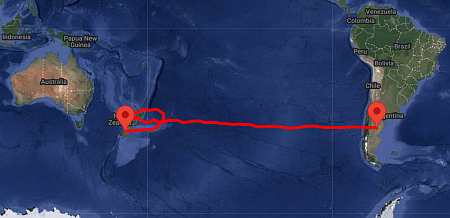
The planned return trajectories for both Superheavy and Starship
The planned return trajectories for both
Superheavy and Starship

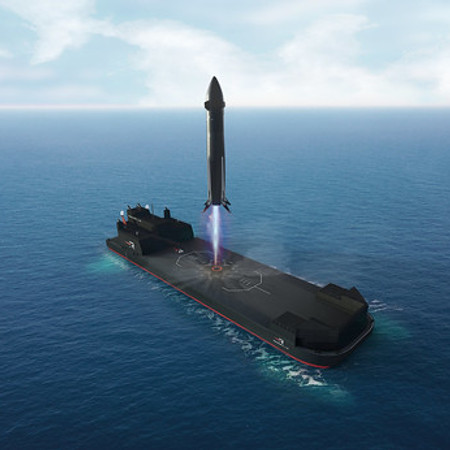
The FAA today released [pdf] a new draft of the environmental assessment of SpaceX’s Superheavy/Starship operations at Boca Chica that will allow for full orbital flights as well as for both to return to that launchpad.

The two maps to the right show the two planned return paths for Superheavy (top) and Starship (bottom) as it comes back from orbit. In both cases the ships will return to Boca Chica to be caught by tower chopsticks. The reassessment analyzed the impacts of these trajectories, including its impact on aviation traffic, and concluded the proposal was acceptable. From its conclusion:

The 2022 PEA [Programmatic Environmental Assessment] and April 2025 Tiered EA [environmental assessment] examined the potential for significant environmental impacts from Starship-Super Heavy launch operations at the Boca Chica Launch Site and defined the regulatory setting for impacts associated with Starship-Super Heavy. The areas evaluated for environmental impacts in this Tiered EA include aviation emissions and air quality; noise and noise-compatible land use; hazardous materials; and socioeconomics. In each of these areas, the FAA has concluded that no significant impacts would occur as a result of the Proposed Action. [emphasis mine]

This approval is still only a draft. It must go through a public comment period, ending October 20, 2025. There will also be a virtual public meeting on October 7, 2025. Information about submitting comments or participating in that virtual meeting can be found here.

Such meetings are likely to see the leftist anti-Musk crowd come out in droves, screeching how we are all gonna die if these launches are allowed. The FAA will nod its head, and then ignore the Chicken Littles and approve this plan.

The plan itself tells us that SpaceX is definitely gearing up the first orbital flights of Starship next year, along with the first attempts to catch it with the tower chopsticks.

2 comments

Inexplicable very large patterns found in Saturn’s upper atmosphere

Beads and arms in Saturn's upper atmosphere
Click for original image.

Using the Webb Space Telescope’s infrared capabilities, scientists have detected several different and inexplicable large atmospheric structures linked somehow to the gas giant’s north pole aurora.

The two images to the right, cropped, reduced, and annotated to post here, show both types of newly discovered features.

The international team of researchers, comprising 23 scientists from institutions across the UK, US and France, made the discoveries during a continuous 10-hour observation period on 29 November 2024, as Saturn rotated beneath JWST’s view. The team focused on detecting infrared emissions by a positively charged molecular form of hydrogen, H3+, which plays a key role in reactions in Saturn’s atmosphere and so can provide valuable insights into the chemical and physical processes at work. JWST’s Near Infrared Spectrograph allowed the team to simultaneously observe H₃⁺ ions from the ionosphere, 1,100 kilometres above Saturn’s nominal surface, and methane molecules in the underlying stratosphere, at an altitude of 600 kilometres.

In the electrically-charged plasma of the ionosphere, the team observed a series of dark, bead-like features embedded in bright auroral halos. [top picture] These structures remained stable over hours but appeared to drift slowly over longer periods.

Around 500 kilometres lower, in Saturn’s stratosphere, the team discovered an asymmetric star-shaped feature [bottom picture]. This unusual structure extended out from Saturn’s north pole towards the equator. Only four of the star’s six arms were visible, with two mysteriously missing, creating a lopsided pattern.

A more accurate word for the “beads” I think would be “patches”, as they are not small but major dark regions that appear to rotate with the planet, as do the arms. Both also seem to be related to each other as their rotations match, though one sits about 300 miles lower in the atmosphere. As noted in the press release, “the processes that are driving the patterns may influence a column stretching right through Saturn’s atmosphere.”

All guesses. All we have at this point is a truly intriguing observation.

1 comment

Luxembourg cargo capsule startup Space Cargo raises $32 million in private investment capital

The Luxembourg cargo capsule startup Space Cargo has now raised $32 million in private investment capital in a new funding round focused on developing its BentoBox platform for in-space manufacturing and experimentation.

On 15 September, the company announced that it had closed a €27.5 million Series A funding round led by Expansion Ventures and supported by Eurazeo. The round included participation from the European Innovation Council, the European Investment Bank, and the Luxembourg Future Fund II, which is managed by Société Nationale de Crédit et d’Investissement and the European Investment Fund. It also included contributions from numerous private investors who participated through the crowd-equity platform Tudigo.

Unlike Varda’s returnable capsule, BentoBox is smaller and not designed to return to Earth. Instead it gets launched incorporated on orbital spacecraft built by others, such as Thales Alenia’s REV-1 tug and Atmos’s Phoenix returnable capsule.

0 comments

Astra is now targeting mid-’26 for first launch of its new Rocket-4 rocket

According to a presentation by Astra officials this week, the company now plans the first launch of its larger Rocket-4 rocket in the summer of 2026, followed by a second launch in the fall for the Pentagon.

The summer 2026 inaugural launch will be a test flight, Kemp said, followed by one in October or November for the Defense Department’s Space Test Program. Astra plans quarterly launches of Rocket 4 in 2027, with long-term goals for much higher launch rates. Astra has maintained plans to make Rocket 4 a transportable launch system using standard shipping containers, allowing it to operate from sites with little more than a concrete pad.

This company has had a checkered history. It built and launched its smaller Rocket-3 rocket several times back in 2021 and 2022, with mixed results. After those launch failures it then decided to retire that smaller rocket for Rocket-4, only to run out of cash in 2023-2024. In 2024 its founders put together the cash to buy up the company’s stock to go private, and since then it has made most of its money from that one military test contract as well as selling its electrical propulsion systems to satellite companies.

If it gets Rocket-4 off the ground and begins regularly launches it will be an amazing recovery.

1 comment

Japan closes down its Akatsuki Venus orbiter mission

japan’s space agency JAXA today announced that it has shut down down operations on its Akatsuki orbiter, in orbit around Venus since 2015.

Communication with “Akatsuki” was lost during operations near the end of April 2024, triggered by an incident in a control mode of lower-precision attitude maintenance for a prolonged period. Although recovery operations were conducted to restore communication, there has been no luck so far. Considering the fact that the spacecraft has aged, well exceeding its designed lifetime, and was already in the late-stage operation phase, it has been decided to terminate operations.

Akatsuki has a interesting history. Launched in 2010, it failed to enter Venus orbit as planned in two attempts in 2010 and 2011 because of a failure in its main engine. Engineers then improvised and — after orbiting the Sun for several years — were able to get it into Venus orbit in 2015 using only its attitude thrusters. Its primary mission ended in 2018, but it continued to study Venus’ atmosphere since.

3 comments

Russia’s Bion-2 capsule returns to Earth after a month in space

After a month in space carrying a cargo of biological samples, including 1,500 fruit flies and 75 mice, Russia’s Bion-2 capsule was successfully recovered today after landing in southern Russia.

Following the landing, some mice was [sic] to be dissected at the site, followed by further dissections on the 1st, 5th, 15th and 30th days after landing to study the effects of space conditions on live organisms.

While resembling the commercial private returnable capsules, such as Varda’s, that are being developed, the difference is significant. Russia has been flying these capsules for decades, which is actually an upgrade from the very first Vostok capsule which it flew Yuri Gagarin in 1961. However, the research has always been focused not on producing a product for sale on Earth but related to Russia’s manned program. Thus, the results has always been somewhat dead end. Expect the same here.

1 comment

Astronomers refine the spin and size of Hayabusa-2’s next target asteroid

Using a number of ground-based telescopes, astronomers have determined that asteroid 1998 KY26, which Japan’s Hayabusa-2 probe will visit in 2031, spins much faster and is much smaller than previously estimated.

The new observations, combined with previous radar data, have revealed that the asteroid, 1998 KY26, is just 11 meters wide. It is also spinning about twice as fast as previously thought: “One day on this asteroid lasts only five minutes!” he says. Previous data indicated that the asteroid was around 30 meters in diameter and completed a rotation in approximately 10 minutes. The smaller size and faster rotation will make the spacecraft’s touchdown maneuver more difficult to perform than anticipated.

The observations also found that 1998 KY26 is bright, suggesting it is a solid object, not a rubble pile. Its fast rotation adds weight to this conclusion.

4 comments

SpaceX launches 28 Starlink satellites

SpaceX very early this morning successfully launched another 28 Starlink satellites, its Falcon 9 rocket lifting off from Cape Canaveral in Florida.

The first stage completed its seventh flight, landing on a drone ship in the Atlantic.

The leaders in the 2025 launch race:

119 SpaceX
54 China
13 Russia
12 Rocket Lab

SpaceX now leads the rest of the world in successful launches, 119 to 93.

0 comments

Perseverance data suggests multiple past wet periods occurred in Jezero Crater

Perseverance's travels inside Jezero Crater
Figure 1 of the paper, showing Perseverance’s travels inside Jezero Crater. PIXL is an instrument on the rover. The numbers indicate the Martian days since landing. The Three Forks Depot is where Perseverance placed its first cache of sample cores. Click for original.

Scientists analyzing data taken by the Mars rover Perseverance while it traversed the floor and delta inside Jezero Crater strongly suggests that the landscape there experienced multiple past wet periods.

In Jezero, the 24 mineral species reveal the volcanic nature of Mars’ surface and its interactions with water over time. The water chemically weathers the rocks and creates salts or clay minerals, and the specific minerals that form depend on environmental conditions. The identified minerals in Jezero reveal three types of fluid interactions, each with different implications for habitability.

The first suite of minerals — including greenalite, hisingerite and ferroaluminoceladonite — indicate localized high-temperature acidic fluids that were only found in rocks on the crater floor, which are interpreted as some of the oldest rocks included in this study. The water involved in this episode is considered the least habitable for life, since research on Earth has shown high temperatures and low pH can damage biological structures.

…The second suite of minerals reflects moderate, neutral fluids that support more favorable conditions for life and were present over a larger area. Minerals like minnesotaite and clinoptilolite formed at lower temperatures and neutral pH with minnesotaite detected in both the crater floor and the upper fan region, while clinoptilolite was restricted to the crater floor.

Finally, the third category represents low-temperature, alkaline fluids and is considered quite habitable from our modern Earth perspective. Sepiolite, a common alteration mineral on Earth, formed under moderate temperatures and alkaline conditions and was found widely distributed across all units the rover has explored. The presence of sepiolite in all of these units reveals a widespread episode of liquid water creating habitable conditions in Jezero crater and infilling sediments.

You can read the peer-reviewed paper here. The uncertainty of these results is important to note. The analysis did not actually look at real samples. It took data obtained by Perseverance and used computer models and AI to analyze it. The research also assumes the minerals formed based on our understanding of such geological processes on Earth. On Mars conditions are very alien, and could result from chemistry we as yet do not understand, or are unaware even exists.

1 comment

ISS research suggests weightlessness accelerates aging in stem cells

According to a study that flew stem cells on four separate missions to ISS ranging in length from 32 to 45 days, weightlessness appears to age stem cells significantly.

Researchers from University of California San Diego Sanford Stem Cell Institute have discovered that spaceflight accelerates the aging of human hematopoietic stem and progenitor cells (HSPCs), which are vital for blood and immune system health. In a study published in Cell Stem Cell, the team used automated artificial intelligence (AI)-driven stem cell-tracking nanobioreactor systems in four SpaceX Commercial Resupply Services missions to the International Space Station (ISS) to track stem cell changes in real time. The findings show that the cells lost some of their ability to make healthy new cells, became more prone to DNA damage and showed signs of faster aging at the ends of their chromosomes after spaceflight — all signs of accelerated aging.

Upon return to Earth the study also found the cells recovered somewhat.

You can read the peer-reviewed paper here.

In a sense, this study confirms what numerous other research has found, that weightlessness mimics the conditions of old age, and causes the same physical decline seen in the elderly. It also shows that much of that damage in weightlessness is transient, recovering upon return to Earth.

This research once again highlights the imperative need to study the impact on various levels of artificial gravity on the human body. Will producing a 10% g environment — using centrifugal force — mitigate these negative impacts? Or will we have to simulate a full 1 g environment? Or something in between?

The first option is much easier in terms of engineering. The last will be complex and take time to develop.

At the moment almost no research has been done in this area. And it needs to happen soon, if people intend to go to Mars in the near future. Such journeys, six months minimum in weightlessness, are likely to leave the passengers somewhat debilitated upon arrival, no matter how much they exercise along the way. And being debilitated is not a good condition for a pioneer trying to build a new civilization on an alien world.

10 comments

NASA and Northrop Grumman work out rendezvous plan to get Cygnus to ISS

UPDATE: The plan worked and Cygnus is safely berthed at ISS.

According to a press release tonight, NASA and Northrop Grumman have figured out a new rendezvous plan to get Cygnus to ISS after its previous engine burns yesterday cut off prematurely and left it in the wrong orbit.

NASA and Northrop Grumman are targeting the safe arrival of the company’s Cygnus XL at approximately 7:18 a.m. EDT Thursday, Sept. 18, to the International Space Station. The Cygnus XL now will conduct a series of burns to bring the spacecraft to the space station for its robotic capture and installation.

NASA astronaut Jonny Kim is scheduled to capture Cygnus XL using the station’s Canadarm2 robotic arm with backup support from NASA astronaut Zena Cardman. After capture, the spacecraft will be installed on the Unity module’s Earth-facing port and will remain at the space station until March 2026.

The release also added this detail about why that engine burn ended too soon:

Data shared by the spacecraft confirmed that Cygnus XL operated as intended during two planned maneuvers when an early warning system initiated a shutdown command and ended the main engine burn because of a conservative safeguard in the software settings.

Apparently this cause has reassured them that the engine is in good shape for the final rendezvous burns.

4 comments

Monitoring the largest recent impact detected by InSight’s seismometer

Overview

Cool image time! On December 24, 2021 the seismometer of the Mars lander InSight detected a four magnitude earthquake, the largest detected up until then. Because its nature suggested that it had been caused by an impact, not an internal shifting, the science team for Mars Reconnaissance Orbiter (MRO) immediately started searching for new impact craters in the area of Mars where the data suggested the quake came from.

Two months later they found it, in the northern lowland plains just south of the prime landing zone chosen by SpaceX for its Starship spacecraft. The black cross on the overview map to the right indicates the position. The four red spots are the prime Starship landing sites. The white dots indicate other locations considered. The black dots were images taken for a proposed Dragon landing. This impact is thus only about 100 miles away from the nearest possible Starship landing spot.
» Read more

7 comments
1 80 81 82 83 84 1,328