SpaceX launches 23 Starlink satellites, using a first stage for the 22nd time

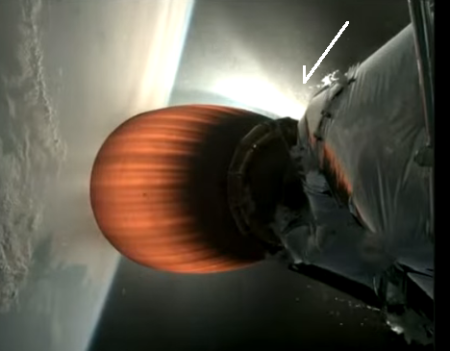
SpaceX early this morning launched another 23 Starlink satellites, its Falcon 9 rocket lifting off from Cape Canaveral and using a first stage on its record-setting 22nd flight.

That stage successfully landed on a drone ship in the Atlantic. The flight was so routinely boring for the launch crew that the flight director felt no need to even bother having anyone do a T-10 second countdown at launch.

The leaders in the 2024 launch race:

68 SpaceX
28 China
8 Russia
8 Rocket Lab

American private enterprise now leads the world combined in successful launches, 79 to 42, while SpaceX by itself still leads the entire world, including other American companies, 68 to 53.

0 comments

SpaceX completes two launches today, from opposite coasts

The bunny marches on! SpaceX successfully completed two launches today.

First, its Falcon 9 rocket launched 22 Starlink satellites from Cape Canaveral in Florida. This was the launch that had been delayed several times by weather, and then by a tecnical launch abort at T-0. After several days of review, it lifted in the morning today with no problems, the first stage completing its eleventh flight, landing on a drone ship in the Atlantic.

Then, about ten hours later a Falcon 9 rocket lifted off in the evening Vandenberg in California, putting 20 Starlink satellites into orbit, 13 of which are said to be designed for direct cell-to-satellite capabilities. This first stage also completed its eleventh flight, landing on a drone ship in the Pacific.

This post is a bit late because we had a five hour power outage in my neighborhood tonight, caused apparently when someone drove into a utility pole and knocked it over.

The leaders in the 2024 launch race:

66 SpaceX
28 China
8 Russia
8 Rocket Lab

American private enterprise now leads the world combined in successful launches, 77 to 42, while SpaceX by itself still leads the entire world, including other American companies, 66 to 53.

5 comments

SpaceX announces a mini-version of Starlink designed for backpackers

SpaceX today unveiled what it calls Starlink Mini, a smaller version of the Starlink antenna that can fit inside a backpack.

Early Starlink customers were invited to purchase the Starlink Mini kit for $599, according to an invitation sent to customers and viewed by TechCrunch. That’s $100 more than the standard Starlink kit. They were also given the option to bundle Mini Roam service with their existing service plan for an additional $30 per month, though the data is capped at 50 gigabytes per month.

That would mean a Starlink residential customer on the standard service plan would spent $150 month. SpaceX aims to reduce the price of the kit, it said in the invitation. As of now, there is no stand-alone Mini Roam plan.

The unit weighs only 2.5 pounds, with the first deliveries arriving in July. It is designed specifically for travelers who want a reliable internet connection wherever they go.

4 comments

SpaceX launches 20 Starlink satellites

After a ten day pause in launches, which included one launch abort at T-0, SpaceX yesterday successfully launched 20 Starlink satellites, its Falcon 9 rocket lifting off from Vandenberg in California.

The pause is noteworthy because it is possibly SpaceX’s longest pause in launches this year (I haven’t gone back and checked). Consider this fact: A ten day pause between launches would have once been considered a fast launch pace. Now it seems like something is wrong.

The rocket’s first stage completed its fifth flight, landing on a drone ship in the Pacific.

The leaders in the 2024 launch race:

63 SpaceX (with another launch scheduled for later today)
27 China
8 Russia
7 Rocket Lab

American private enterprise now leads the world combined in successful launches, 73 to 41, while SpaceX by itself leads the entire world, including other American companies, 63 to 51.

2 comments

A new Chicken Little report: The mega satellite constellations are going to destroy the ozone layer!

The American Geophysical Union, where science is no longer practiced
The American Geophysical Union, where
science is no longer practiced

We’re all gonna die! According to a new paper touted today by the PR department of the American Geophysical Union (AGU), a new study has concluded — based on computer modeling — that the many giant satellite constellations totaling tens of thousands of satellites pose a risk to the ozone layer because the aluminium used in their structures that gets vaporized upon re-entry will interact with the ozone layer and destroy it.

You can read the paper here. From the abstract:

This paper investigates the oxidation process of the satellite’s aluminum content during atmospheric reentry utilizing atomic-scale molecular dynamics simulations. We find that the population of reentering satellites in 2022 caused a 29.5% increase of aluminum in the atmosphere above the natural level, resulting in around 17 metric tons of aluminum oxides injected into the mesosphere. The byproducts generated by the reentry of satellites in a future scenario where mega-constellations come to fruition can reach over 360 metric tons per year. As aluminum oxide nanoparticles may remain in the atmosphere for decades, they can cause significant ozone depletion.

The uncertainties and biases here are hard to count. First, it is a computer model (“Garbage in, garbage out”). Second, the simulations make many assumptions, most of which cannot be confirmed, or are simply absurd. For example, the model is based on a single “typcial, small satellite” coming from a specific orbit and elevation when we know these satellites will have many variations in size, make-up, and orbits. Third, the scientists admit they use “a worst-case scenario” for determining what would happen when the satellite re-enters the atmosphere.

Finally, and most damning, the whole premise of this threat is based on a somewhat implausive chain of chemical actions.
» Read more

16 comments

Pentagon wants to buy from SpaceX its own 100-satellite Starshield constellation

The Pentagon is so impressed with its experience using SpaceX’s Starlink system as well as its military-hardened version dubbed Starshield that it is negotiating the purchase from SpaceX of its own 100-satellite Starshield constellation.

Col. Eric Felt, director of space architecture at the office of the assistant secretary of the Air Force for space acquisition and integration, said the plan is to acquire a constellation of Starshield satellites by 2029, contingent upon receiving the necessary funding appropriations from Congress.

Speaking at SAE Media Group’s Milsatcom USA conference on June 10, Felt noted that the military has been an avid consumer of SpaceX’s commercial Starlink services, but also wants to take advantage of the company’s dedicated Starshield product line and procure a government-owned constellation. In a briefing slide presented at the conference, titled “Satcom 2029,” Felt showed the DoD’s notional future satcom architecture including more than 100 Starshield satellites.

If approved for funding from Congress, this Starshield constellation would be used in conjunction with other military communciations satellites, which could also include satellites provided by other satellite companies such as Amazon and its as-yet unlaunched Kuiper constellation. The main advantage for such a system is redundancy. It is very difficult for an enemy to take the system down, since it uses so many small satellites. It is also cheaper to maintain and upgrade.

6 comments

SpaceX completes two Starlink launches hours apart

SpaceX last night completed two Starlink launches hours apart from opposite coasts. First its Falcon 9 rocket took 23 Starlink satellites into orbit, lifting off from Cape Canaveral. The first stage completed its 16th flight, landing on a drone ship in the Atlantic.

Then, a Falcon 9 rocket lifted off from Vandenberg carried 20 Starlink satellites into orbit, its first stage completing its 21st flight (tying the record), landing safely on a drone ship in the Pacific.

The leaders in the 2024 launch race:

62 SpaceX
27 China
8 Russia
7 Rocket Lab

American private enterprise now leads the world combined in successful launches, 72 to 41, while SpaceX by itself leads the entire world, including other American companies, 62 to 51.

10 comments

SpaceX and Rocket Lab complete successful launches

This evening both SpaceX and Rocket Lab completed launches only about an hour apart but on opposite sides of the world.

First, SpaceX this evening successfully launched another 20 Starlink satellites, its Falcon 9 rocket lifting off from Cape Canaveral.

The first stage completed its 20th flight, landing safely on a drone ship in the Atlantic.

Next, Rocket Lab completed the second to two launches for NASA, placing the second Prefire climate satellite into orbit, following the first launch on May 25, 2024. Its Electron rocket lifted off from Rocket Lab’s launchpad in New Zealand.

The leaders in the 2024 launch race:

59 SpaceX
26 China
8 Russia
7 Rocket Lab

American private enterprise now leads the world combined in successful launches, 68 to 40, while SpaceX by itself leads the entire world, including other American companies, 59 to 49.

5 comments

SpaceX last night launched 23 more Starlink satellites

Go bunny! Last night SpaceX successfully launched another 23 Starlink satellites, its Falcon 9 rocket lifting off from Cape Canaveral.

The first stage completed its 14th flight, landing on a drone ship in the Atlantic.

The leaders in the 2024 launch race:

58 SpaceX
26 China
8 Russia
6 Rocket Lab

American private enterprise now leads the world combined in successful launches, 66 to 40, while SpaceX by itself leads the entire world, including other American companies, 58 to 48.

3 comments

Botswana approves Starlink

After first denying SpaceX the right to sell Starlink in Botswana in February, government officials have now done a sudden about-face and approved Starlink.

During a business summit in the United States earlier in May, President Mokgweetsi Masisi met with Ben MacWilliams, the Director of Starlink’s Global Licensing and Activation, who expressed interest in obtaining a license to operate in Botswana. Following this meeting, President Masisi decided to approve Starlink’s licensing and instructed the regulator to expedite the application process within two weeks.

I could speculate on what caused the president to change his mind after this meeting, but I’ll leave that to my readers.

2 comments

SpaceX launches more Starlink satellites

The bunny never stops. SpaceX this morning successfully placed another 23 Starlink satellites into orbit, its Falcon 9 rocket lifting off from Cape Canaveral.

The first stage successfully completed its tenth flight, landing on a drone ship in the Atlantic.

The leaders in the 2024 launch race:

56 SpaceX
23 China
7 Russia
6 Rocket Lab

American private enterprise now leads the world combined in successful launches, 64 to 36, while SpaceX by itself leads the entire world, including other American companies, 56 to 44.

1 comment

SpaceX launches more Starlink satellites

More bunny action. SpaceX tonight successfully launched another 23 Starlink satellites, its Falcon 9 rocket lifting off from Cape Canaveral in Florida.

The first stage completed its thirteenth flight, landing on a drone ship in the Atlantic.

Increasingly, SpaceX is treating its rockets and launchpads like the airlines treat their airplanes: They only have value if they are flying, and SpaceX is trying to keep both rockets and launchpads flying at all times.

The leaders in the 2024 launch race:

55 SpaceX
23 China
7 Russia
5 Rocket Lab

American private enterprise now leads the world combined in successful launches, 62 to 36, while SpaceX by itself leads the entire world, including other American companies, 55 to 43.

5 comments

SpaceX launches more Starlink satellites

March on bunny! SpaceX last night successfully launched another 23 Starlink satellites, its Falcon 9 rocket lifting off from Cape Canaveral in Florida.

The first stage completed its eighth flight, landing on a drone ship in the Atlantic.

The leaders in the 2024 launch race:

54 SpaceX
23 China
7 Russia
5 Rocket Lab

American private enterprise now leads the world combined in successful launches, 61 to 36, while SpaceX by itself leads the entire world, including other American companies, 54 to 43.

0 comments

SpaceX launches another 23 Starlink satellites

This bunny never stops. SpaceX today successfully launched 23 more Starlink satellites, its Falcon 9 rocket lifting off from Cape Canaveral.

The first stage set a new record for reflights, completing its 21st flight after landing on a drone ship in the Atlantic. The company has said it is upgrading these stages to last for 40 launches instead of 20, and this launch clearly is the first step in that direction.

The leaders in the 2024 launch race:

52 SpaceX
21 China
7 Russia
5 Rocket Lab

American private enterprise now leads the world combined in successful launches, 59 to 34, while SpaceX by itself still leads the rest of the world, including other American companies, 52 to 41.

2 comments

SpaceX launches 20 more Starlink satellites

SpaceX last night successfully placed another 20 Starlink satellites into orbit, its Falcon 9 rocket lifting off from Vandenberg in California.

The first stage completed its eighteenth launch, landing on a drone ship in the Pacific.

The leaders in the 2024 launch race:

51 SpaceX
21 China
6 Russia
5 Rocket Lab

American private enterprise now leads the world combined in successful launches, 58 to 33. SpaceX by itself now leads the rest of the world, including other American companies, 51 to 40.

2 comments

SpaceX launches 23 more Starlink satellites

SpaceX tonight successfully launched 23 Starlink satellites, its Falcon 9 rocket lifting off from Cape Canaveral.

This was the 50th successful launch by SpaceX this year, in only a little more that five months. Reaching the company’s goal of 150 launches in 2024 (six of which were planned to be Starship/Superheavy test launches) remains a challenge, but if the company reaches even 80% of that goal (120) it will have set a record for launches greater than what the entire world achieved for every year of the space age until 2020.

This was also the 15th launch of the rocket’s first stage, landing successfully on a drone ship in the Atlantic.

The leaders in the 2024 launch race:

50 SpaceX
21 China
6 Russia
5 Rocket Lab

American private enterprise now leads the world combined in successful launches, 57 to 33. SpaceX by itself now leads the rest of the world, including other American companies, 50 to 40.

4 comments

Pentagon: SpaceX effectively blocking Russian illegal use of Starlink

According to one Pentagon official, SpaceX has effectively blocked Russia’s illegal use of captured or illegally purchased Starlink terminals.

Plumb declined to elaborate on what tactics, techniques or procedures are being used to stem Russia’s use of the highly portable communications terminals that connect to SpaceX’s fleet of low-orbiting satellites. Ukrainian government officials had no immediate comment.

Starlink terminals continue to be advertised for sale in Russia on platforms such as e-commerce site Ozon. Their sellers say they function through subscriptions taken out in the name of residents of European countries where the technology is licensed, and they say that connections work — not within Russia’s heartlands but near border regions such as Ukraine’s occupied territories.

This week, however, users complained of unprecedented connectivity issues. On the messaging app Telegram one of the sellers recommended transferring onto a more expensive global service plan. Bloomberg hasn’t been able to independently verify whether those workarounds restore connectivity for illicit Starlink use in Russia.

The official tried to make it sound as if the Pentagon was an equal partner with SpaceX in accomplishing this work, but that’s absurd. The military is without doubt helping SpaceX anyway it can, but the bulk of the technical work is almost certainly being done by SpaceX.

3 comments

Starlink revenue in 2024 estimated at $6.6 billion

According to an independent analysis of the state of SpaceX’s Starlink constellation, the company will generate $6.6 billion in revenue in 2024.

The independent analysis was done by the market research firm Quilty, and was based largely on extrapolating out from Starlink’s 2.7 million known subscribers.

“We’re projecting a revenue jump from $1.4 billion in 2022 to $6.6 billion in 2024.”

To put that in perspective, the combined revenue of the two largest geostationary satellite operators, SES and Intelsat, which recently announced a merger, is around $4.1 billion. “The answer lies in their subscriber base,” explained Quilty. Viasat and Hughes, two dominant players in the consumer GEO satellite internet market for over 20 years, peaked at a combined 2.2 million subscribers in 2020. Starlink surpassed that number in just a few years, he said.

The financial outlook is equally impressive. Quilty Space estimates Starlink’s EBITDA (earnings before interest, taxes,depreciation, and amortization) to reach $3.8 billion in 2024, a significant leap from negative $128 million in 2022.”We expect Starlink to achieve positive free cash flow for the first time in 2024,” said Quilty.

This revenue number is even more astonishing when you compare it with the $12 billion in private capital the company has raised from investors since 2017. Next year alone SpaceX’s returns will cover half that investment, practically guaranteeing a generous profit in the coming years for those investors.

Even more significant, these revenues mean SpaceX now has a very healthy cash stream for completing construction of Starship/Superheavy, or in fact practically anything the company decides to build.

5 comments

SpaceX launches 20 more Starlink satellites

SpaceX tonight successfully launched 20 more Starlink satellites, 13 of which were capable of direct cell phone use, its Falcon 9 rocket lifting off from Vandenberg in California.

The first stage completed its fourth flight, landing on a drone ship in the Pacific.

The leaders in the 2024 launch race:

49 SpaceX
20 China
6 Russia
5 Rocket Lab

American private enterprise now leads the world combined in successful launches, 56 to 32. SpaceX by itself now leads the rest of the world, including other American companies, 49 to 39.

1 comment

SpaceX launches another 23 Starlink satellites

SpaceX today successfully launched another 23 Starlink satellites, its Falcon 9 rocket lifting off from Cape Canaveral.

The first stage completed its third flight, landing on a drone ship in the Atlantic.

The leaders in the 2024 launch race:

48 SpaceX
19 China
6 Russia
5 Rocket Lab

American private enterprise now leads the world combined in successful launches, 55 to 31. SpaceX by itself now leads the rest of the world, including other American companies, 48 to 38.

6 comments
1 12 13 14 15 16 29