Sunspot update for October 2017

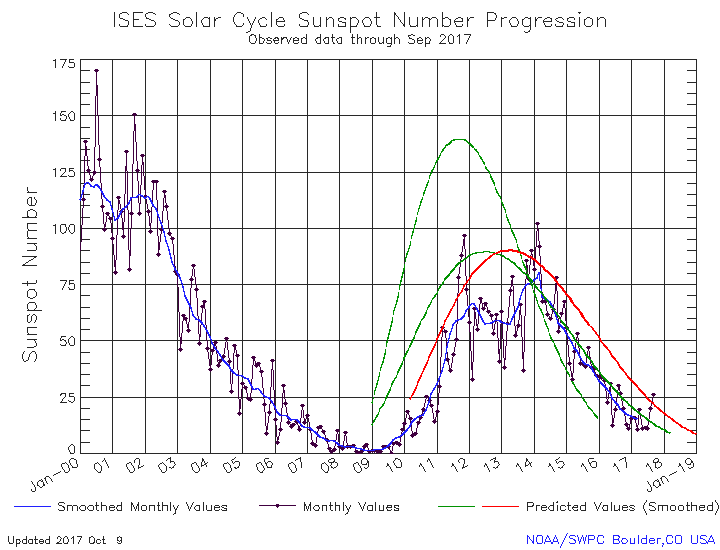
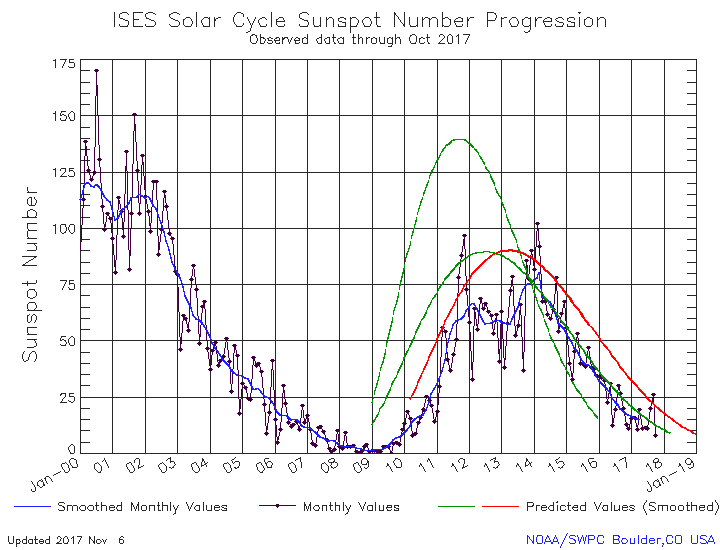
NOAA today posted its monthly update of the solar cycle, covering sunspot activity for October. That graph is posted below, with annotations.

October 2017 Solar Cycle graph

The graph above has been modified to show the predictions of the solar science community. The green curves show the community’s two original predictions from April 2007, with half the scientists predicting a very strong maximum and half predicting a weak one. The red curve is their revised May 2009 prediction.

After two straight months of rising sunspot activity, the number of sunspots plunged in October, returning the numbers almost exactly back to the general trend we have seen since 2014 when the solar maximum ended. While the short two month increase indicated that the minimum will not occur as soon as this long term trend suggests, the quick return to that trend this month suggests that it will.

Meanwhile, November is six days old and has yet to see any sunspots at all.

6 comments

Sunspot update for September 2017

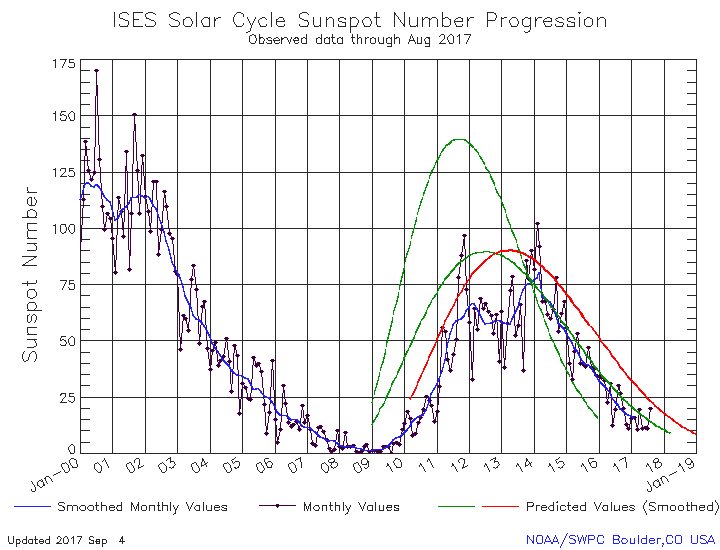
On Sunday NOAA posted its monthly update of the solar cycle, covering sunspot activity for September. That graph is posted below, with annotations.

September 2017 Solar Cycle graph

The graph above has been modified to show the predictions of the solar science community. The green curves show the community’s two original predictions from April 2007, with half the scientists predicting a very strong maximum and half predicting a weak one. The red curve is their revised May 2009 prediction.

Last month saw the strongest amount of sunspot activity in a year, thus helping to bring the pace in the decline of sunspot activity back towards the low prediction from April 2007. This also suggests that the ramp down to solar minimum will continue through 2019, with minimum not occurring before then, at the earliest. At the same time, the increase in sunspot activity seen in September seems to have eased in October, with the return of a blank Sun this past week.

2 comments

Sunspot update for August 2017

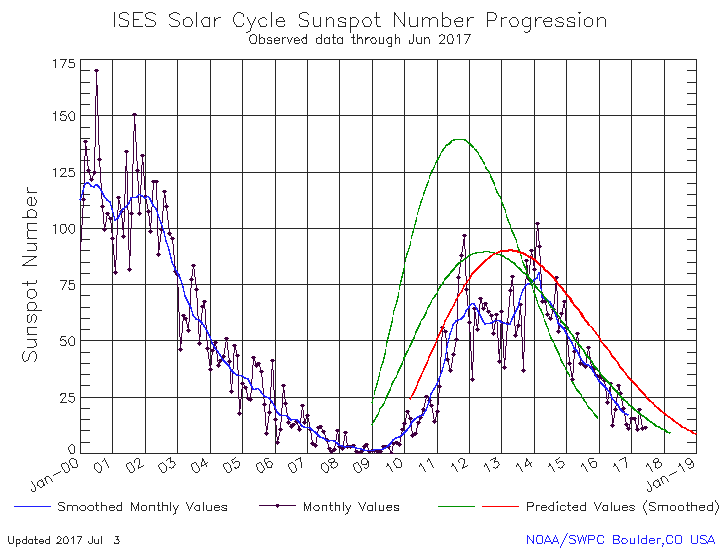
Yesterday NOAA posted its monthly update of the solar cycle, covering sunspot activity for August. That graph is posted below, with annotations.

August 2017 Solar Cycle graph

The graph above has been modified to show the predictions of the solar science community. The green curves show the community’s two original predictions from April 2007, with half the scientists predicting a very strong maximum and half predicting a weak one. The red curve is their revised May 2009 prediction.

The long slow decline to solar minimum has now shown itself. Up until now, the ramp down from solar maximum had been fast and steep, unlike past solar cycles where the ramp down is slow and steady. The last few months the ramp down had practically ceased. In this August graph the ramp down turned into a temporary ramp up. Considering the strong activity going on right now as well as the past week, I expect the September numbers to also show this increase.

None of this means that the ramp down has ended, or that we will not see a solar minimum. All it means is that it takes awhile for the Sun to slowly calm down after each solar maximum. The sunspots we are seeing right now, all near the equator, are from the solar cycle now slowly ending. We will know the minimum is coming as well as the next solar maximum when the first tiny and rare sunspots appear in high latitudes. These high latitude sunspots will belong to the next cycle, and will have reversed polarity.

2 comments

Sunspot update for July 2017

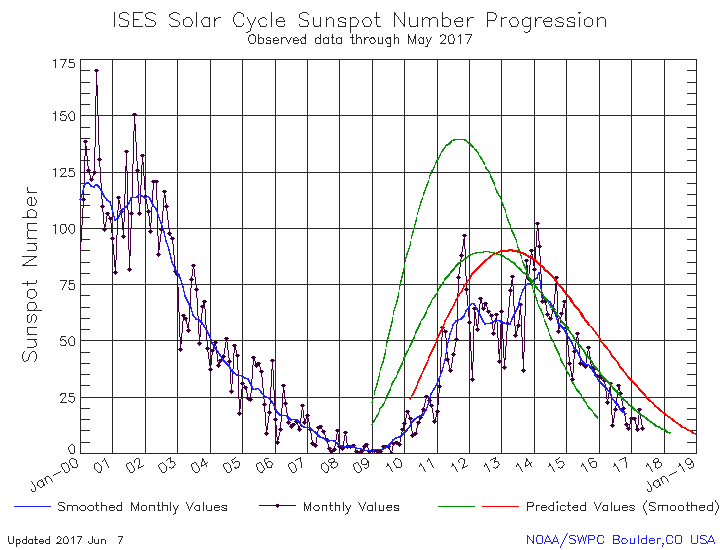
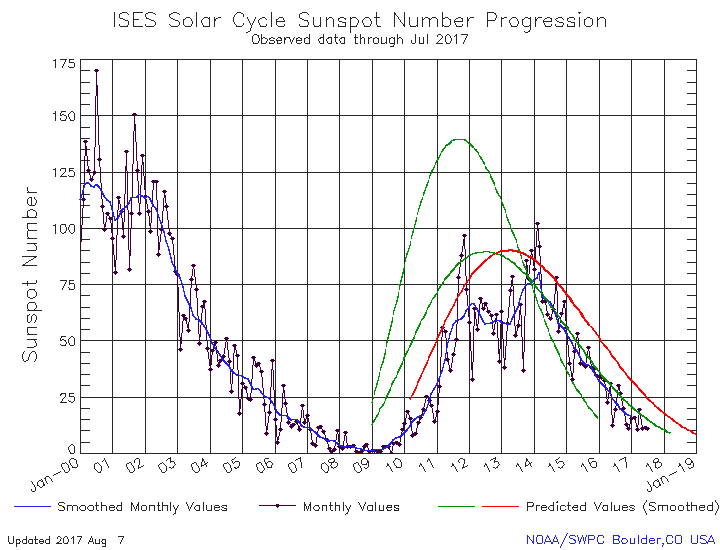
NOAA today posted its monthly update of the solar cycle, covering sunspot activity for July. As I have done every month since 2010, the graph is posted below, with annotations.
July 2017 Solar Cycle graph

The graph above has been modified to show the predictions of the solar science community. The green curves show the community’s two original predictions from April 2007, with half the scientists predicting a very strong maximum and half predicting a weak one. The red curve is their revised May 2009 prediction.

Sunspot activity in July remained almost exactly the same as in both May and June. This is the first indication that this cycle’s ramp down from solar maximum will follow the standard pattern of a slow and extended decline to minimum. Up until now the drop in sunspot activity has been as fast as the increase during ramp up. Historically the ramp down has instead been slower, sloping downward gently and over a much longer time period. The last few months suggest that this cycle’s end is beginning to resemble past cycles.

Meanwhile, a review of past solar cycles by German scientists suggests that a cyclical cooling period in the Sun’s output is coming, and that such ups and downs can be tracked in the solar record.

In order to elucidate the solar influence, we have used a large number of temperature proxies worldwide to construct a global temperature mean G7 over the last 2000 years. The Fourier spectrum of G7 shows the strongest components as ~1000-, ~460-, and ~190 – year periods whereas other cycles of the individual proxies are considerably weaker. The G7 temperature extrema coincide with the Roman, medieval, and present optima as well as the well-known minimum of AD 1450 during the Little Ice Age. We note that the temperature increase of the late 19th and 20th century is represented by the harmonic temperature representation, and thus is of pure multiperiodic nature. It can be expected that the periodicity of G7, lasting 2000 years so far, will persist also for the foreseeable future. It predicts a temperature drop from present to AD 2050, a slight rise from 2050 to 2130, and a further drop from AD 2130 to 2200. [emphasis mine]

Note that this prediction is not based on any real understanding of the Sun’s sunspot cycle or what causes any variations in its brightness. All they have done is extrapolate into the future the patterns of past fluctuations. This is as if a weatherman averaged how many times it normally rains in your town, and then predicted rain in the next few days merely by those averages. “It rains on average every three days, so because it rained yesterday expect no rain for the next two days!”

Nonetheless, the past fluctuations seem to follow a cyclical pattern, and thus also appear to confirm other studies that suggest we are heading towards another grand minimum, with no sunspots for decades, which also in the past corresponded with cooler global temperatures.

1 comment

Sun’s core rotates 4X faster than surface

The uncertainties of science: Scientists have discovered that the core of the Sun rotates four times faster than its surface layers.

The rotation of the solar core may give a clue to how the sun formed. After the sun formed, the solar wind likely slowed the rotation of the outer part of the sun, he said. The rotation might also impact sunspots, which also rotate, Ulrich said. Sunspots can be enormous; a single sunspot can even be larger than the Earth.

The researchers studied surface acoustic waves in the sun’s atmosphere, some of which penetrate to the sun’s core, where they interact with gravity waves that have a sloshing motion similar to how water would move in a half-filled tanker truck driving on a curvy mountain road. From those observations, they detected the sloshing motions of the solar core. By carefully measuring the acoustic waves, the researchers precisely determined the time it takes an acoustic wave to travel from the surface to the center of the sun and back again. That travel time turns out to be influenced a slight amount by the sloshing motion of the gravity waves, Ulrich said.

This phenomenon had been predicted more than twenty years ago, but never observed until now.

4 comments

New data suggests Sun undergoing fundamental changes

The uncertainty of science: New data, when compared with similar data collected over decades, suggests the Sun’s solar cycle is undergoing some fundamental changes.

In work just published in the Monthly Notices of the Royal Astronomical Society, the team shows that the interior of the Sun has changed in recent years, and that these changes persist in the current cycle. In combination with theoretical models, the observations suggest that the magnetic field distribution in the outer layers may have become a bit thinner. Other seismic data shows that the rotation rate of the Sun has also undergone some changes in the way the Sun rotates at different latitudes.

“Again, this is not how it used to be and the rotation rate has slowed a bit at latitudes around about 60 degrees. We are not quite sure what the consequences of this will be but it’s clear that we are in unusual times. However, we are beginning to detect some features belonging to the next cycle and we can suggest that the next minimum will be in about two years,” says Elsworth.

First, they don’t know what will happen because of these changes. Second, their data confirms that the solar minimum will occur in about two years, which would make this cycle only 9 years long, one of the shortest but also one of the weakest that has been observed, two things that previously had never gone together.

3 comments

Sunspot update for June 2017

Today NOAA posted its monthly update of the solar cycle, covering sunspot activity for June. As I have done every month since 2010, the graph is posted below, with annotations.

June 2017 Solar Cycle graph

The graph above has been modified to show the predictions of the solar science community. The green curves show the community’s two original predictions from April 2007, with half the scientists predicting a very strong maximum and half predicting a weak one. The red curve is their revised May 2009 prediction.

Sunspot activity in June was almost exactly the same as in May, and thus continued the overall downward trend that is below the 2007 low prediction and that suggests that this very weak solar maximum will end much earlier than predicted, and will make it an unprecedented short but weak cycle. The Sun is once again blank today for the first time in about two weeks, repeating the pattern we have seen for several months where, because one hemisphere of the Sun is blank while the other hemisphere has some sunspots, the rise and fall of the sunspot counts tracks the 27-day solar rotation almost precisely.

There continues to be evidence that the Sun is undergoing significant changes this solar cycle, all of which are pointing to the possibility that a grand minimum is coming, with no sunspots for decades. And as I have said now monthly for six years, past grand minimums have consistently occurred at the same time the Earth’s climate has cooled. The scientific link remains unclear, but if we should undergo a grand minimum in the coming decades, we will finally have the opportunity to find out what that link is.

7 comments

Sunspot update for May 2017

Last week NOAA posted its monthly update of the solar cycle, covering sunspot activity for May. Unfortunately, there appeared to be a problem with their posting software. Though the date of the image changed, the graph itself was not updated. I contacted NOAA, and Ann Newman, IT Specialist at NOAA’s
Space Weather Prediction Center, took a look and quickly fixed the problem.

The corrected graph is posted below, with annotations, as I have done now every month since 2010.

May 2017 Solar Cycle graph

The graph above has been modified to show the predictions of the solar science community. The green curves show the community’s two original predictions from April 2007, with half the scientists predicting a very strong maximum and half predicting a weak one. The red curve is their revised May 2009 prediction.

The decline in sunspot activity resumed in May, putting the trend back below the 2007 low prediction. Overall, the trend continues to suggest that this very weak solar maximum will end much earlier than predicted, and will make it an unprecedented short but weak cycle. As the Sun is at this moment blank, and has been for several days, I expect that June will end up with low numbers as well, continuing this trend.

As I have repeatedly said now monthly for six years, if history is any guide, the Sun’s low activity should correspond with cooler temperatures here on Earth. Why this happens is not yet understood, though there are theories.

3 comments

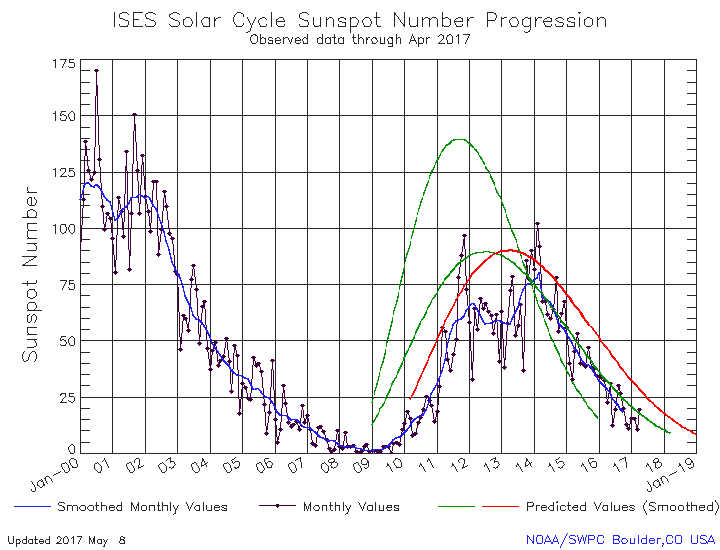
Sunspot update for April 2017

Today NOAA posted its monthly update of the solar cycle, covering sunspot activity for April. It is posted below, with annotations, as I have done now every month since 2010.

April 2017 Solar Cycle graph

The graph above has been modified to show the predictions of the solar science community. The green curves show the community’s two original predictions from April 2007, with half the scientists predicting a very strong maximum and half predicting a weak one. The red curve is their revised May 2009 prediction.

April showed an uptick in sunspot activity, enough to move the numbers back up above the 2007 low prediction. Nonetheless, activity as the cycle has been ramping down has consistently and generally remained below expectation, and does seem heading to an early arrival of solar minimum, sometime in late 2019 or early 2020, about a year early.

I don’t want to sound like a broken record, as I have written this practically every month since I started these updates in 2010, but this short and weak solar maximum suggests the possibility that we might be facing a grand minimum, where there are no significant sunspots for decades. Some solar scientists think this is coming. Others are much more doubtful. Regardless, we can only wait and watch, while also recognizing that weak solar maximums and grand minimums have in the past consistently coincided with global cool weather. The reasons why this has happened are not yet known, but it has happened nonetheless.

1 comment

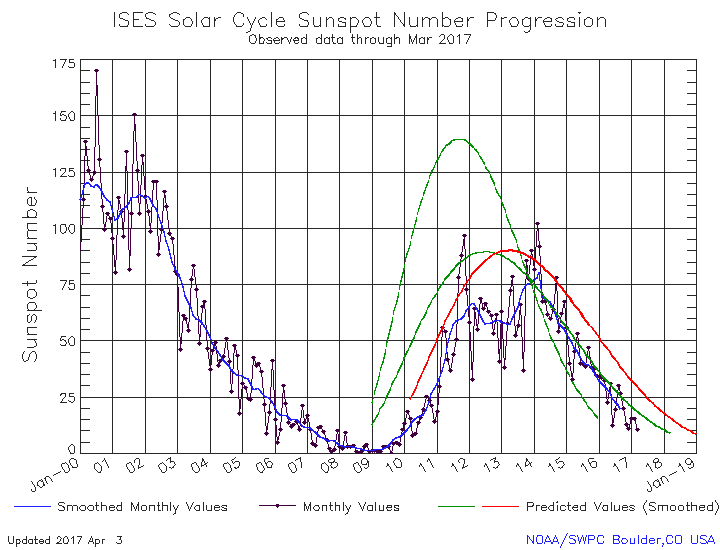
Sunspot update for March 2017

On April 3, while I was in the Grand Canyon, NOAA posted its monthly update of the solar cycle, covering sunspot activity for March. As I have been doing every month since 2010, I am posting it here with annotations to give it context.

March 2017 Solar Cycle graph

The graph above has been modified to show the predictions of the solar science community. The green curves show the community’s two original predictions from April 2007, with half the scientists predicting a very strong maximum and half predicting a weak one. The red curve is their revised May 2009 prediction.

The decline in sunspots continues to run below predictions, suggesting an end to this solar cycle and a solar minimum as early as sometime in 2018. And as I noted in my February update, sunspot activity continues to track the Sun’s 27 day rotation, alternating every two weeks between blank and active hemispheres. We had the longest stretch, more than two weeks, without sunspots in March. This was followed by about two weeks of activity, followed by several blank days and a relatively inactive Sun at present, beginning a little less than a week ago. I expect this period of inactivity to last another ten days or so, and then things will pick up again.

2 comments

The longest stretch of no sunspots since 2009

The Sun just completed its longest stretch, 15 days, without sunspots since 2009, suggesting once again that the solar minimum is coming much sooner than expected.

So far this year the Sun has been blank 34% of the time, a pace that makes this year almost as blank as 2009, the year in which the previous solar minimum ended. This suggests that 2017 might be the year in which the next solar minimum begins, which would be about two years earlier than the earliest predictions.

The more likely scenario is that 2018 will be the year the solar minimum begins, with 2019 when solar activity bottoms out. This will still be much earlier than expected, making this solar cycle only about 9-10 years long. What makes this more significant is that historically short cycles always went with high activity, while long cycles signaled an inactive and weak maximum. This cycle will be the first that is both short and weak.

What happens next remains the big question. Will the Sun enter a grand minimum, with no sunspots for decades? Or will sunspot activity continue? Since solar scientists really do not yet understand the mechanism within the sun’s magnetic field that causes this solar cycle, we really can’t answer these questions, in advance. We must wait, and see.

3 comments

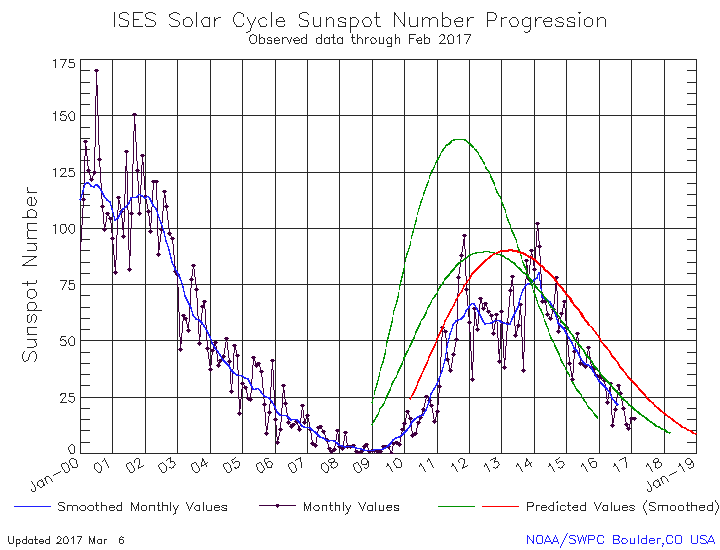
Sunspot update for February 2017

On Sunday NOAA posted its monthly update of the solar cycle, covering sunspot activity for February. As I have been doing every month since 2010, I am posting it here with annotations to give it context.

February 2017 Solar Cycle graph

The graph above has been modified to show the predictions of the solar science community. The green curves show the community’s two original predictions from April 2007, with half the scientists predicting a very strong maximum and half predicting a weak one. The red curve is their revised May 2009 prediction.

The decline in sunspots continues. Though the increase in activity from January held in February, the overall activity remains significantly below the predictions, and continues to point to a much earlier arrival of the solar minimum, sometime in 2019.

0 comments

The Sun turns

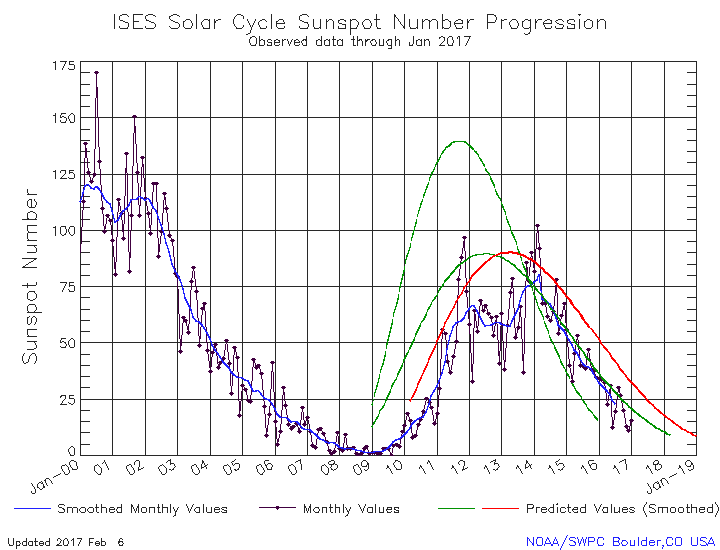
NOAA today posted its monthly update of the solar cycle, covering sunspot activity for January. As I do every month, I am posting it here with annotations to give it context.

January 2017 Solar Cycle graph

The graph above has been modified to show the predictions of the solar science community. The green curves show the community’s two original predictions from April 2007, with half the scientists predicting a very strong maximum and half predicting a weak one. The red curve is their revised May 2009 prediction.

Since my last solar cycle update, sunspot activity showed a slight increase in activity when compared to the previous month. Overall, however, the ramp down from solar maximum continues to underperform the predictions, and suggests that this solar maximum will not only be a very weak one, but a short one as well.

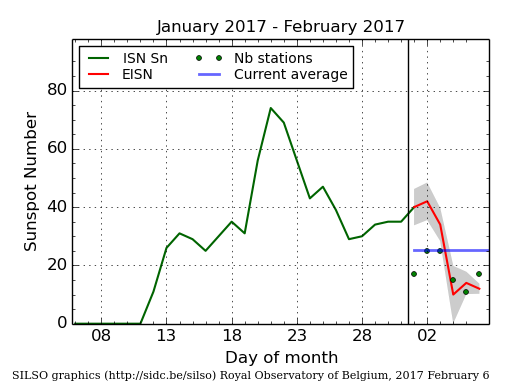
January’s activity however illustrated a statistical phenomenon that is typical of the sunspot count. That count is determined not by the numbers of sunspots on the entire surface of the Sun, but on the sunspots visible on the side of the Sun facing the Earth. Since it is not unusual for one face to be more active than the other, as we transition from maximum to minimum the sunspot counts will often show a more pronounced up-and-down curve reflecting this fact. Since the Sun’s day equals about 27 Earth days, this means that about every two weeks the active side will dominate our view until it rotates away and the inactive side reveals itself for two weeks.

Silso daily sunspot graph, January to February 2017

This pattern was very evident in January, as shown by the graph on the right and obtained from here. During the first two weeks of the month the Sun was blank. Then that inactive face rotated out of view. For the next two weeks or so the sunspot count went up, then began to drop as the active face began to rotate out of view to be replaced by the blank face last seen in early January.

This pattern of course is very fluid, as at any time the inactive face can become more active and the active face less so. Nonetheless, for short periods covering one to three months it helps to partly explain the up-and-down pattern of sunspot fluctuations during this time period when large portions of the Sun’s face are blank.

7 comments

The sunspot crash continues

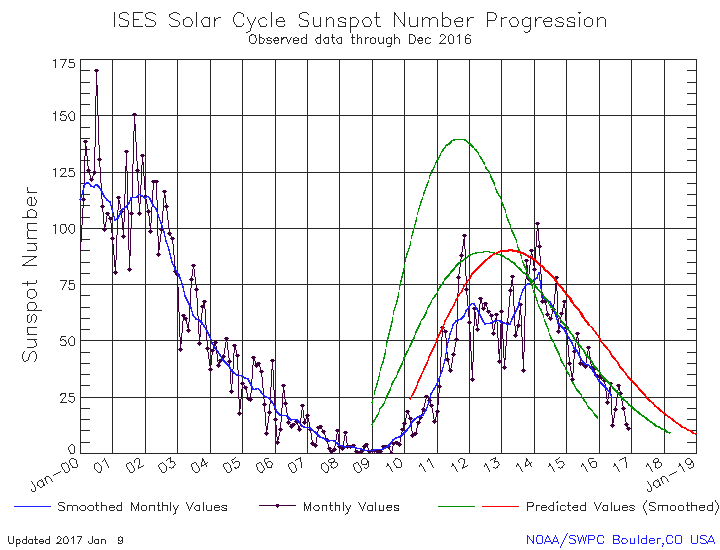
On Sunday NOAA posted its monthly update of the solar cycle, covering sunspot activity for December. As I do every month, I am posting it here with annotations to give it context.

December 2016 Solar Cycle graph

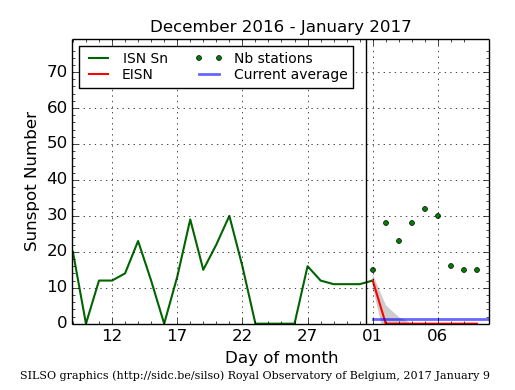
January 2017 sunspots as of January 9, 2017

The graph above has been modified to show the predictions of the solar science community. The green curves show the community’s two original predictions from April 2007, with half the scientists predicting a very strong maximum and half predicting a weak one. The red curve is their revised May 2009 prediction.

Sunspot activity continues to decline, and it appears to be declining at a steadily faster rate as the solar cycle ramps down towards minimum. Not only did sunspot activity drop below the 2007 low prediction in 2016, since 2017 began the sun has been blank almost continuously, as shown by the graph on the right. The signs continue to point to a solar minimum occurring much sooner than predicted, producing an unprecedented short and weak solar cycle.

Despite this, the appearance in December of the first sunspot for the next solar cycle suggests that we will not be entering a Grand Minimum in the coming decades. It does not guarantee it, as there is some evidence that even though no sunspots were visible during the Maunder Minimum in the 1600s the magnetic activity that causes sunspots did continue, and with our better observation equipment today we may see sunspots they would not have seen in the 1600s.

2 comments

First sunspot for the next solar cycle spotted

Solar scientists have spotted the first sunspot on the Sun with a reversed polarity, meaning that it really belongs to the next sunspot cycle.

This is not unusual. The sunspots from different cycles routinely overlap by several years, with the sunspots from the old cycle moving close to the equator with time and the new cycle sunspots appearing at high latitudes. What this does suggest is that there will be sunspots after the upcoming solar minimum, rather than the beginning of a new Grand Minimum with no sunspots for decades.

0 comments

Sunspot activity continues to drop

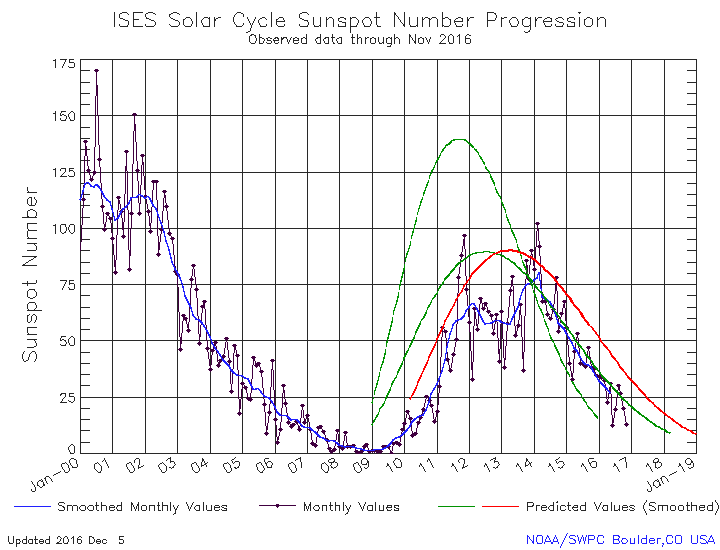
NOAA yesterday posted its monthly update of the solar cycle, covering sunspot activity for November. Below is my monthly annotated version of that update.

November 2016 Solar Cycle graph

The graph above has been modified to show the predictions of the solar science community. The green curves show the community’s two original predictions from April 2007, with half the scientists predicting a very strong maximum and half predicting a weak one. The red curve is their revised May 2009 prediction.

In November sunspot activity dropped again, to the second lowest point seen since 2010. Essentially, activity today is about where it was in 2010 when the solar minimum was finally ending. Now, the solar maximum is ending and we are beginning the next solar minimum.

Throughout the entire just completed solar maximum, the Sun continuously under-performed all predictions. Even now, despite following almost precisely the prediction of the 2007 low prediction during 2014 and 2015, in 2016 the ramp down has begun to slip below that prediction. The trend continues to suggest the arrival of solar minimum will be early, possibly as early as sometime late next year.

2 comments

Decline in sunspots continues

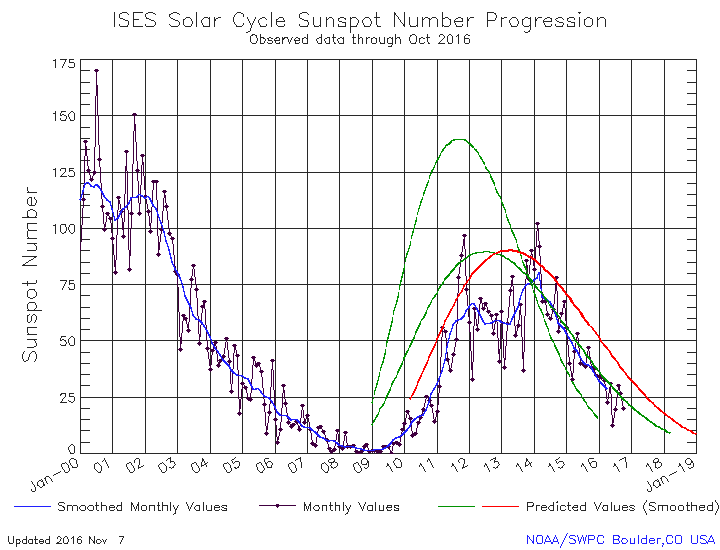
Late Sunday NOAA posted its monthly update of the solar cycle, covering sunspot activity for October. As I do every month, I am posting it here with annotations to give it context.

October 2016 Solar Cycle graph

The graph above has been modified to show the predictions of the solar science community. The green curves show the community’s two original predictions from April 2007, with half the scientists predicting a very strong maximum and half predicting a weak one. The red curve is their revised May 2009 prediction.

The sunspot decline continued in October, dropping the sunspot number for the month to below the 2007 low prediction. Though the decline continues to track that low prediction, the sunspot count for November has been even lower, suggesting that the ramp down to solar minimum will continue to under perform that prediction and will arrive at minimum sooner than expected. As I noted last month, this fast decline will also mean that the ending solar cycle will be a both a weak and a short cycle, two phenomenon that in the past never went together. In the past, a short cycle meant the maximum was strong, while a long cycle would correspond with a weak maximum.

The Sun continues to behave in a manner that is unprecedented, and suggests the possibility that a Grand Minimum might be coming.

1 comment

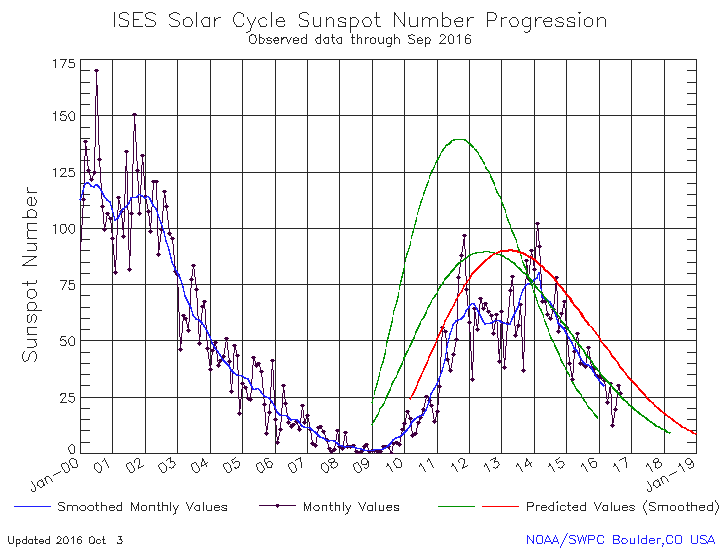
Sunspot ramp down resumes

On Monday NOAA posted its monthly update of the solar cycle. I am posting it here, as I do every month, with annotations to give it context.

September 2016 Solar Cycle graph

The graph above has been modified to show the predictions of the solar science community. The green curves show the community’s two original predictions from April 2007, with half the scientists predicting a very strong maximum and half predicting a weak one. The red curve is their revised May 2009 prediction.

After two months of increased sunspot activity, the decline in sunspots resumed in September, though activity did not drop significantly. Overall though, the ramp down towards the next solar minimum continues to track quite closely the ramp down predicted by weak prediction made by half the solar science community back in 2007 (the lower green curve above). These scientists however do not have much to brag about. Their same prediction completely missed the ramp up, which happened a year later than predicted, as well as the activity peak, which was far weaker than predicted.

In fact, the ramp down now continues to point to the possibility that this very weak solar cycle will also be a very short one, something that is quite unprecedented, and suggests that we might be seeing the lead in to another Grand Minimum, where there are no sunspots for decades. Since no one understands yet exactly why such grand minimums happen, however, this remains pure speculation. We will only find out by watching what happens, as it happens.

3 comments

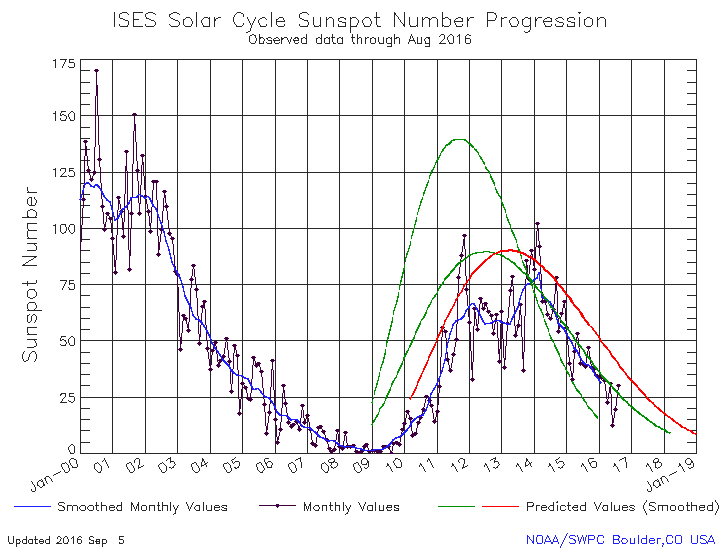
Sunspots: A recovery in August

NOAA’s monthly update of the solar cycle was posted today. As I do every month, I am posting it here, with annotations to give it context.

August 2016 Solar Cycle graph

The graph above has been modified to show the predictions of the solar science community. The green curves show the community’s two original predictions from April 2007, with half the scientists predicting a very strong maximum and half predicting a weak one. The red curve is their revised May 2009 prediction.

The recovery in sunspot activity that began in July continued in August. The number of sunspots increased enough to once again raise the overall curve up to match the green curve of the 2007 weak prediction. Even so, this solar maximum remains far weaker than the weakest prediction. Also, this solar maximum, which started later than all the predictions, looks like it will be far shorter than all the predictions. As I have noted previously, this is counter to all previous solar cycles, where it is the more active cycles that are shorter and the weaker cycles are longer. Here, we are getting a weak cycle that is also short, which once again suggests that we are seeing solar behavior previously unobserved. The solar cycle is doing things it hasn’t done since scientists began studying it closely after Galileo.

2 comments

Sunspot ramp down continues

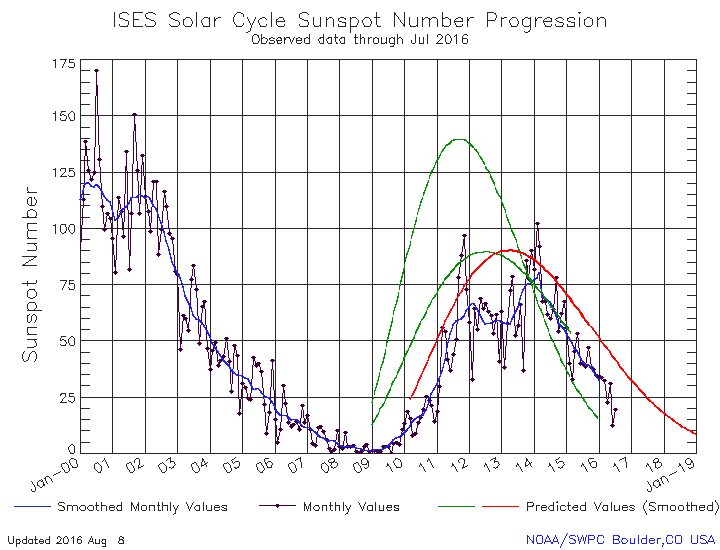
Below is NOAA’s monthly update of the solar cycle, posted by them on August 7. It shows the Sun’s sunspot activity in July, with annotations.

July 2016 Solar Cycle graph

The graph above has been modified to show the predictions of the solar science community. The green curves show the community’s two original predictions from April 2007, with half the scientists predicting a very strong maximum and half predicting a weak one. The red curve is their revised May 2009 prediction.

As expected, there was a recovery in sunspot activity in July compared to June. Also as expected, the recovery was not significant, so that it appears, based on the past two months, as if the ramp down to solar minimum is accelerating so that solar minimum will occur sooner than expected, possibly as soon as two years.

I would not put much stock on that prediction, however. When sunspot activity first reached this level during the past solar cycle in late 2005, it still took three more years before solar minimum was reached. If this cycle matches the last, that would mean that this cycle, from minimum to minimum, will have lasted 10 years, making a short solar cycle though not one of the shortest. However, it is more likely that the ramp down will stretch out, as it usually does, gliding downward to solar minimum in a slow gentle curve that makes for a full cycle of about 11 years.

4 comments
1 5 6 7 8 9 15