Respighi – Ancient Airs and Dances, Suite 2, movements 3-4

An evening pause: The first two movements are wonderful too, so if you want, start this from the beginning. I begin it at movement three only because that movement is to me one of the most powerful pieces of music I have ever heard. The mix of low and high notes I think creates vibrations that touch the soul. And the melody ain’t bad either.

0 comments

The icy Phlegra Mountains: Mars’ future second city

Icy glaciers in the Phlegra Mountains of Mars
Click for full image.

About a thousand miles to the west of the candidate landing site for SpaceX’s Starship spacecraft rises a massive mountain wall dubbed the Phlegra Mountains, rising as much as 11,000 feet above the adjacent lowland northern plains.

Phlegra Montes (its official name) is of special interest because of its apparent icy nature. Here practically every photograph taken by any orbiter appears to show immense glacial flows of some kind, with some glaciers coming down canyons and hollows [#1], some filling craters [#2], some forming wide aprons [#3] at the base of mountains and even at the mountains’ highest peaks [#4], and some filling the flats [#5] beyond the mountain foothills.

And then there are the images that show almost all these types of glaciers, plus others [#6]. Today’s cool image above is an example of this. In this one photo we can see filled craters, aprons below peaks, and flows moving down canyons. It is as if a thick layer of ice has partly buried everything up the highest elevations.

None of this has gone unnoticed by scientists. For the past decade they have repeatedly published papers noting these features and their icy appearance, concluding that the Phlegra Mountains are home to ample buried ice. SpaceX even had one image taken here [#3] as a candidate landing site for Starship, though this is clearly not their primary choice at this time.

The map below gives an overview of the mountains, their relationship to the Starship landing site, and the location by number of the images listed above.
» Read more

0 comments

Failed past predictions from a COVID-19 “expert”

Neil Ferguson, the Imperial College London epidemiologist and professor of mathematical biology that has been called the “gold standard” of disease modeling, according to the New York Times and Washington Post, and whose initial predictions that the Wuhan flu would kill more than two million people in the United States and half a million in the UK, has in the past routinely made absurdly wrong and vastly overstated predictions for numerous other diseases.

The article compared Ferguson’s predictions with the real data for the following:

Bird Flu: Ferguson predicted up to 200 million deaths worldwide. So far 455 people have died.

Mad Cow Disease: Ferguson predicted up to 150,000 deaths. So far 178 people have died.

Ferguson’s predictions for coronavirus have been as bad. His initial prediction of 2.2 million deaths in the U.S. is going to be so wrong that every politician and individual that cited it to justify the Wuhan panic should be made to apologize, publicly.

As COVID-19 numbers have come in, Ferguson downgraded his predictions, lowering his UK prediction from 500,000 to only 20,000. At this moment the death toll in the Great Britain is under 9,000. It is very unlikely it will reach Ferguson’s revised number. And even if that number ends up close to accurate, it just illustrates that Ferguson’s ability to predict is garbage. His only accurate number was issued on March 26, when almost anyone could have made a prediction of reasonable accuracy.

So we come to the fundamental question: Why have our press and politicians repeatedly relied on this quack’s predictions? Could it be that his over-the-top cries that the world is about to end might serve their interests, and not the general public’s? Might it be possible that they are using him to convince the pubic to give them more power? Could it?

These are valid questions. And the history of the past two decades justifies asking them, as the track record of our mainstream press and politicians during that time has consistently shown they are not interested in the public’s needs, but their own, exclusively.


41 comments

BepiColumbo successfully completes Earth flyby

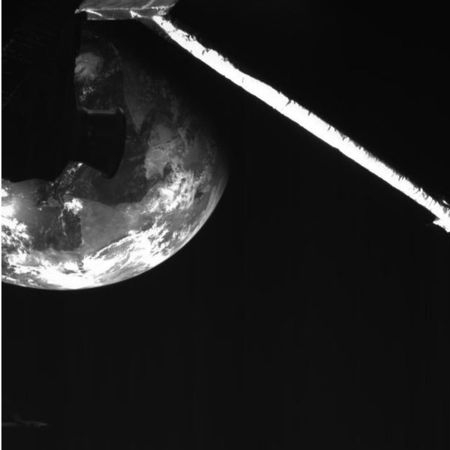
The Earth seen from BepiColumbo

BepiColumbo, the joint European-Japanese mission to Mercury, has successfully completed its fly-by of Earth.

The image to the right is one of the images of Earth it took during the fly-by. The white streak in the upper right is part of the spacecraft.

Mission scientists switched on a number of the duo’s instruments for the Earth pass, to test and calibrate them. Unfortunately, the main camera on Europe’s MPO couldn’t operate because of its position in the stack. But small inspection cameras to the side of Bepi did manage to grab some black & white pictures of the Earth and Moon.

The quote call’s the spacecraft a “duo” because it really is two orbiters presently latched together, the European Mercury Planetary Orbiter (MPO) and the Japanese Mercury Magnetospheric Orbiter (MMO). When it gets to Mercury these will separate.

2 comments

OSIRIS-REx to do sample-grab rehearsal at Bennu

The OSIRIS-REx science team today released a step-by-step description of the first touch-and-go sample grab rehearsal, planned for April 14, 2020.

During the rehearsal, dubbed “Checkpoint,” they expect the spacecraft to get less than 250 feet from the surface of the asteroid Bennu before pulling away.

Checkpoint rehearsal, a four-hour event, begins with the spacecraft leaving its safe-home orbit, 0.6 miles (1 km) above the asteroid. The spacecraft then extends its robotic sampling arm – the Touch-And-Go Sample Acquisition Mechanism (TAGSAM) – from its folded, parked position out to the sample collection configuration. Immediately following, the spacecraft slews, or rotates, into position to begin collecting navigation images for NFT guidance. NFT allows the spacecraft to autonomously guide itself to Bennu’s surface by comparing an onboard image catalog with the real-time navigation images taken during descent. As the spacecraft descends to the surface, the NFT system updates the spacecraft’s predicted point of contact depending on OSIRIS-REx’s position in relation to Bennu’s landmarks.

Before reaching the 410-ft (125-m) Checkpoint altitude, the spacecraft’s solar arrays move into a “Y-wing” configuration that safely positions them away from the asteroid’s surface. This configuration also places the spacecraft’s center of gravity directly over the TAGSAM collector head, which is the only part of the spacecraft that will contact Bennu’s surface during the sample collection event.

In the midst of these activities, the spacecraft continues capturing images of Bennu’s surface for the NFT navigation system. The spacecraft will then perform the Checkpoint burn and descend toward Bennu’s surface for another nine minutes, placing the spacecraft around 243 ft (75 m) from the asteroid – the closest it has ever been.

They will do a second rehearsal on June 23, getting within 100 feet of the surface. The actual touch-and-go sample grab is now scheduled for August 25.

2 comments

Passover: Celebrating Freedom

An evening pause: For tonight, the second Passover Sedar, a short video explaining some of the philosophical underpinnings of Passover. Though decidedly from the reform (and liberal) side of the Jewish community, it still summarizes much of what Passover represents. On this holiday each person must imagine themselves a slave, so as to better appreciate what freedom represents.

The orthodox side of the Jewish community would add that this freedom comes from God, for which we must be ever thankful. The orthodox would also note that our freedom exists because of the arrival of the Torah, the Ten Commandments, and the rules for living a good life, handed down to at Mt. Sinai, after the exodus.

I say, be humble and try to do right, to the best of your ability, no matter what others demand (the Bible, even for someone who does not believe in God as the religions do, provides a good instruction manual). Do that, and you will certainly be free.

2 comments

New study suggests lockdowns did nothing to change epidemic growth

A new study produced by researchers at University College London, University of Pennsylvania and Harvard has found that the lockdowns imposed on populations actually accomplished little in slowing the growth of the Wuhan flu epidemic, and that social distancing appears to have been more than sufficient to do the job.

This information comes from the researchers’ twitter feed, and is about to be published. The key quote:

The mean daily case growth rate had _already_ been declining at this point. There was no additional decline in mean daily case growth after implementation of statewide restrictions on internal movement (“lockdowns”)

The researcher then try to make believe the lockdowns were still a good idea, denying their own results, but there it is for all to see. We have risked bankrupting our whole economy and thrown out our Constitution for no reason.

18 comments

COVID-19 vs other causes of death

Link here. The article freely admits that a new contagious disease is not the same as something like cancer and snakebites. It also notes the importance of putting this virus in its proper perspective, something unfortunately few are doing.

For example, about 4,700 deaths from the Wuhan flu have been recorded worldwide today. From all accounts we are also very near the peak of this epidemic. Compare this with other death rates:

According to the World Health Organisation’s (WHO) International Agency for Research on Cancer, there were 9.6 million deaths from cancer in 2018. That works out to around 26,000 deaths a day worldwide.

17.9 million people died from all cardiovascular diseases in 2016 according to the WHO—this works out as 49,000 a day.

Ischaemic heart disease or coronary heart disease specifically was the cause of 9.4 million deaths worldwide in 2016, 25,840 a day.

In 2016 the WHO estimated that 1.6 million people a year die from factors relating directly to diabetes. This is about 4,400 a day. [emphasis mine]

There’s more. Read it all. And remember also that of the 4,700 or so deaths from COVID-19 today, many occurred because the patient was already sick from some other illness and, based on the skewed reporting system being used, might really have died from those illnesses, not the Wuhan flu.

It is very clear that the fears pounded into us by the leftist academic community, working in league with the Washington bureaucracy, are way out of line. As the article concludes:

To sum up where we stand today, April 9: Based on the pretext that we must “limit the spread” of the Wuhan virus, the American economic boom of the past three years has been reversed in a matter of days, millions have lost their jobs, tens of thousands of small businesses have been shuttered and will probably never reopen, and three-quarters of the American population has been subjected to some form of house arrest by state, county and city governments.

All over the country people are being fined or arrested and jailed for violating suddenly imposed restrictions on their every movement and gathering, often with the aid of their neighbors, who turn them in to the police, following instructions on how to be a snitch. Attendance at religious services has been forbidden altogether or limited to ten people, even in vast cathedrals, while “permission” is granted to crowd supermarkets and convenience stores, buy booze, purchase cannabis and have pets groomed.

America’s almost instantaneous transformation into a police state is based on “models” that “predicted” upwards of 2 million deaths from the Wuhan virus without “mitigation” in the form of a preposterous attempt to quarantine 330 million people. And the people have obsequiously bowed to every ridiculous command.

We have been scammed. It is time that the scammers paid, not innocent Americans. It will however take innocent Americans to make that happen, at the voting booth in November.

86 comments

SpaceX moves forward on Starlink launch April 16

Capitalism in space: Despite the recent postponement by customers of two other planned launches because of the Wuhan panic, SpaceX appears to be moving ahead with plans to launch another sixty of its own Starlink satellites on April 16.

According to one unconfirmed news report, six SpaceX employees have tested positive for coronavirus. The company has not commented, however, either on this report or on its own internal policies for dealing with the Wuhan panic.

The Space Force meanwhile has not shut down its range operations in Florida, thus allowing launches from anyone to go forward.

0 comments

Masten’s lunar lander wins NASA contract

Capitalism in space: Masten’s XL-1 lunar lander has won a NASA contract to bring a suite of science instruments to the Moon’s south polar regions, the launch targeted for December 2022.

The company also hopes to sell payload space on the lander to other customers.

Masten won a task order for NASA’s Commercial Lunar Payload Services (CLPS) program valued at $75.9 million. Masten will deliver nine science and technology demonstration payloads to the lunar surface near the south pole by December 2022 on the company’s XL-1 lander.

The CLPS payloads, with a mass of about 80 kilograms, will serve as the initial, anchor customer for that mission, Sean Mahoney, chief executive of Masten, said in an interview. He said there are “hundreds” of kilograms of additional payload space available on the lander, and that the company is working to line up additional customers.

Masten is now the third private company with an active contract with NASA to land science payloads on the Moon. Astrobotic and Intuitive Machines are the others, with their missions targeting 2021 for launch.

0 comments

A Long March 3B launch failure today

An attempt by China to launch an Indonesian communications satellite using its Long March 3B rocket failed today around the time the third stage was to do its engine burn.

Xinhua, China’s state-run news agency, said the Long March 3B launcher failed after lifting off from the Xichang space center in the country’s southwestern Sichuan province at 1146 GMT (7:46 a.m. EDT). The liquid-fueled launcher took off at 7:46 p.m. Beijing time with the Palapa-N1 communications satellite, also known as Nusantara Dua. The Palapa-N1 spacecraft was heading for a position in geostationary orbit more than 22,000 miles (nearly 36,000 kilometers) over the equator.

But the rocket malfunctioned minutes later some time during the planned burn of the Long March 3B’s third stage, Xinhua said. Wreckage from third stage and the Palapa-N1 spacecraft re-entered the atmosphere, according to the state-run media outlet.

Several videos shared on social media by people in Guam showed fiery debris moving across a moonlit night sky. The Offices of Guam Homeland Security and Civil Defense said in a statement that the debris was likely connected with the failed Chinese rocket launch. Authorities in Guam said there was “no direct threat” to the islands.

This is the second launch failure from China in less than a month. On March 16 the first launch attempt of China’s new Long March 7A rocket failed, for reasons that remain unclear.

How this might effect the inaugural launch later this month of China’s biggest rocket, the Long March 5B, remains unknown.

4 comments
1 126 127 128 129 130 169