Orbex signs 50-year lease at Sutherland spaceport

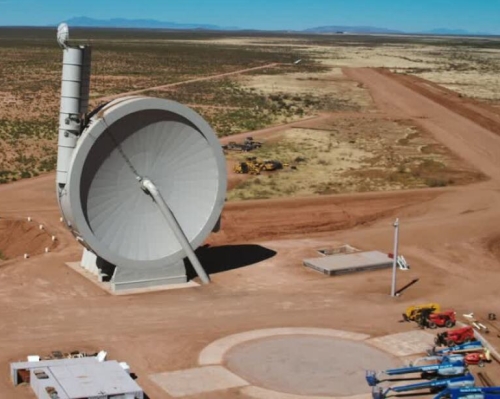
The British startup rocket company Orbex has signed a 50-year lease to operate its own launchpad at the Space Hub Sutherland spaceport in Scotland.

The company will lease Space Hub Sutherland from a local development agency for an initial period of 50 years with an option to extend for a further 25 years. Orbex will soon commence construction at the 10-acre launch site on the A’Mhoine peninsula in Sutherland. The bulk of the construction work will be contracted out to technology solutions company Jacobs, which also does a lot of work for NASA.

The company hopes to launch its Prime rocket in ’23. At present it is testing launch operations of a prototype on its launchpad. All told, Orbex has raised a little over $100 million in private investment capital.

0 comments

Mengtian module docks with China’s Tiangong-3 space station

Tiangong-3 station, when completed

The new Mengtian module has docked with the main port of China’s Tiangong-3 space station.

The graphic to the right shows the planned design of the station. Mengtian however is not yet in its side port as shown, but in the main docking port in line with the core module where a Shenzhou crew capsule is shown docked. At some point soon the astronauts on board will use a small robot arm to move Mengtian from the main port to its side port. (This system is very similar to one the Russian’s used on Mir.)

Furthermore, the large vertically oriented solar panels have not yet been installed on the station. These will likely need to be delivered, and require spacewalks to deploy.

0 comments

Falcon Heavy launches successfully for 1st time since 2019

Capitalism in space: SpaceX today successfully put a military reconnaissance satellite using its Falcon Heavy rocket, its first launch since 2019.

The two side boosters and core stage all made their first flight. The core stage was intentionally not recovered, as it needed to use all its fuel for getting the satellite to its orbit. The two side boosters successfully landed at SpaceX’s two landing sites at Cape Canaveral.

The leaders in the 2022 launch race:

50 SpaceX
47 China
18 Russia
8 Rocket Lab
7 ULA

American private enterprise now leads China 70 to 47, though it still trails the rest of the world combined 74 to 70.

This year’s 70 successful launches ties the previous high for the United States in a single year, set in 1966. With two months still left in the year, it looks like that record will be broken, by a lot.

9 comments

October 31, 2022 Quick space links

Courtesy of BtB’s string Jay, who has been sending them to me for the past week. Unfortunately, my isp decided to only send me about half my emails during that time, and I only discovered this today. Ugh, modern big corporations. They operate like badly run feudal plantations.

Thus, tonight’s quick links will catch up on some stories we missed from late last week.


  • Blue Origin delivers second BE-4 flightworthy engine to ULA
  • ULA can now install the engines in the first Vulcan rocket and begin testing. Whether it will be ready for its first flight early next year remains unknown. It is even more uncertain whether Blue Origin can ramp up its BE-4 assembly line so as to produce enough of these engines for all of the planned launches of the Vulcan as well as Blue Origin’s own as-yet-unflown New Glenn rocket.

10 comments

The knobby floor of a Martian crater

The knobby floor of a Martian crater

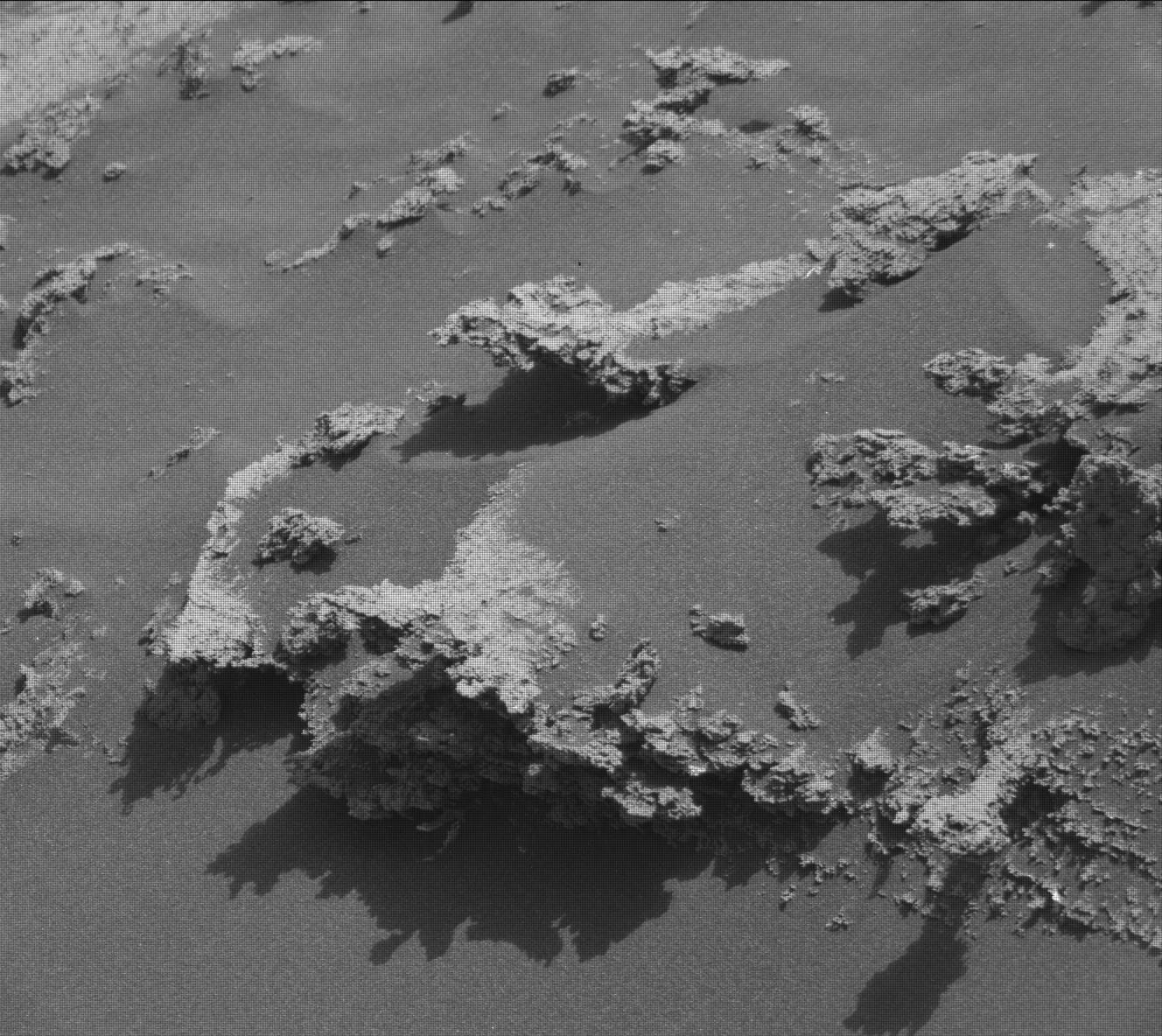
Cool image time! The picture to the right, rotated, cropped, reduced, and enhanced to post here, was taken on July 20, 2022 by the high resolution camera on Mars Reconnaissance Orbiter (MRO). It shows a small portion of the knobby floor of a 70-mile-wide ancient and eroded unnamed crater in the southern cratered highlands of Mars.

Why knobby? Usually such terrain on Mars signifies an very ancient and well eroded region of chaos terrain, its knobs the leftover worn remains of ancient mesas cut by eons of glacier flow.

If this is so, the location as shown in the overview map below suggests if there were ever any glaciers — or any near surface ice — at this location, it had to be a very long time ago.
» Read more

0 comments

CAPSTONE makes course correction, now on target for lunar orbital insertion on November 13th

Engineers have successfully overcome the valve issue that had caused the CAPSTONE lunar probe to tumble, and have made a subsequent mid-course correction that has put the spacecraft on target for entering lunar orbit on November 13, 2022, as planned.

The CAPSTONE spacecraft successfully completed a trajectory correction maneuver on Thursday, Oct. 27, teeing up the spacecraft’s arrival to lunar orbit on Nov. 13.

CAPSTONE is no longer in safe mode following an issue in early September that caused the spacecraft to spin. The team identified the most likely cause as a valve-related issue in one of the spacecraft’s eight thrusters. The mission team will design future maneuvers to work around the affected valve, including the two remaining trajectory correction maneuvers scheduled before CAPSTONE’s arrival to orbit at the Moon.

Though it appears the CAPSTONE team has figured out how to deal with that malfuncting valve, it is unclear what the long-term ramifications of that valve will be. If it is still leaking it likely means the mission will be shortened because of loss of fuel, as well as the need to use more to compensate.

1 comment

Today’s blacklist victim: Distinguished scientist and long-time journal editor forced to resign due to threats

Jose Domingo, blacklisted scientist
Dr. José Luis Domingo, blacklisted scientist

The modern dark age: Dr. José Luis Domingo, an often cited expert on toxicology and editor for the last seven years of the journal Food and Chemical Toxicology, has been forced to resign his position because of threats and slanders directed at him after he approved the publication of a peer-review paper that documented the potential harmful effects of the mRNA COVID shots.

About a month after the paper was published, Domingo said, he began receiving angry emails and messages. These included insults, calls to resign, demands to retract the paper, and even threats. One email asked him how he could sleep at night, knowing that the scientific paper that he had allowed to be published would lead to the death of millions of people.

The angry messages, he said, were filled with ad hominem attacks against him and against the paper’s co-authors, but did not specify their scientific objections to the contents of the paper.

…Since then, pro-vaccine factions have increased their personal campaign against him, going so far as to adding false information to the Wikipedia entry about him, as well as attacking the Wikipedia page of the journal itself. Both, he said, were negatively modified by pro-vaccination activists. Indeed, an Oct. 4 version of his page, accessed via internet archive, included a subheading entitled “Antivaccine controversy” that accused Domingo of “spreading disinformation during the pandemic.” That paragraph has since been removed.

Domingo even offered — in a gesture of open-mindedness and good will — to publish one of the more-detailed attack messages, if the writers would agree to peer review. They did agree, and then discovered that with peer-review you need to have some facts to back up your accusations. They did not, and their paper was rejected.

No matter. These individuals then found another journal, Stem Cell Reviews and Reports, to publish their attack essay, demanding once again that Domingo retract the paper while once again accusing him of causing the death of millions by its publication:
» Read more

10 comments

Distant interacting galaxies

Interacting galaxies
Click for original image.

Cool image time! The picture to the right, cropped and reduced to post here, was taken by the Hubble Space Telescope as part of a survey of known “weird and wonderful galaxies.” This particular pair is dubbed Arp 248, and is estimated to be about 200 million light years away.

Two spiral galaxies are viewed almost face-on; they are a mix of pale blue and yellow in colour, crossed by strands of dark red dust. They lie in the upper-left and lower-right corners. A long, faint streak of pale blue joins them, extending from an arm of one galaxy and crossing the field diagonally. A small spiral galaxy, orange in colour, is visible edge-on, left of the lower galaxy.

The connecting stream indicates that these galaxies are interacting with each other, gravity drawing stars and gas from the upper galaxy towards the lower.

0 comments

Al-Amal orbiter tracks unusual northern summer dust storm on Mars

Fig. 3 from Al-Amal paper
Click for full figure.

Scientists, using UAE’s Al-Amal Mars orbiter, have documented the occurrence of a rare high northern latitude summer dust storm whose origin appears linked to both a major canyon in the northern ice cap as well as the giant sand dune seas that surround that ice cap.

The EMM [instrument on Al-Amal] observed a distinct dust cloud on 10 September 2021. That was outside of the classical Martian dust storm season. The observed dust cloud is an arc-shaped dust storm, typically observed at the northern polar cap edge. This type of non-season dust storm is a well-known phenomenon, but this particular case is interesting because the dust cloud has frontal structure. A large atmospheric front is unusual in this location and season.

EMM’s unique observational coverage adds value to this observation, by providing a sequence of four camera images of the frontal dust cloud, separated by 2–3 hr. The frontal dust cloud shows very little movement over 7–8 hr, that is, it is quasi-stationary. We estimated the wind speed and direction by tracking internal motion of the dust cloud. In one case, the estimated wind is consistent with near-surface easterly winds at the polar cap edge.

The two images to the right are adapted from the paper’s figure 3. The yellow line in the top image indicates the location of the dust storm’s front (about 1,200 miles long), aligned with the canyon Chasma Boreale, marked by the black line, that cuts a 300-mile-long and 4,600-foot-deep gash into the North Pole ice cap.

The storm’s wind speeds were estimated very roughly to be about 16 feet per second, about 10 mph. In Mars’ thin atmosphere these winds would be so gentle that they would be almost imperceptible.

The storm front’s alignment with Chasma Boreale is intriguing, but the overview map below suggests another intriguing alignment.
» Read more

1 comment

Watching the launch of the final large module to China’s Tiangong-3 space station

UPDATE: The Mengtian module has been deployed, and is now proceeding to a rendezvous and docking within the next day or so. The core stage is in orbit, and we can only wait over the next few days to find out where it will hit the Earth.

The leaders in the 2022 launch race:

49 SpaceX
47 China
18 Russia
8 Rocket Lab
7 ULA

American private enterprise still leads China 69 to 47, though it now trails the rest of the world combined 74 to 69.

Original post:
—————-
The launch of the final large module for China’s Tiangong-3 space station is scheduled to occur at 12:37 am (Pacific) tonight.

The module is called Mengtian, and once moved to its permanent port will complete the station in its t-shape. The rocket is the Long March 5B, the core stage of which will reach orbit, and then within a week crash uncontrolled somewhere on Earth.

I have embedded the English live stream below. A lot of Chinese propaganda (though not much different from a NASA broadcast). As I understand it, the launch window is instantaneous, so if there are any holds the launch will be scrubbed for the day.

» Read more

4 comments

Stratolaunch’s giant Roc airplane flies for 1st time with Talon engineering vehicle attached

Test engineering vehicle attached below Roc
Test engineering vehicle attached on Roc

Stratolaunch yesterday successfully flew its giant Roc airplane with a Talon hypersonic engineering vehicle attached for the first time to its central fuselage.

The flight lasted just over five hours, reached an altitude of 23,000 feet, and was “focused on measuring the aerodynamic loads on the Talon-A vehicle while mated to Roc. The loads captured in flight will validate aerodynamic predictions to ensure the release mechanism will function as designed.”

The company will complete a series of captive carry flights in the coming months, culminating in a separation test of the TA-0 vehicle out over the Pacific Ocean in late 2022.

Even as these flight tests proceed, the company is building the actual Talon flight vehicles, designed as testbeds for doing hypersonic flight tests quickly and relatively cheaply. The plan is to have these flight vehicles ready for both military and commercial customers to fly them by ’23.

11 comments
1 34 35 36 37 38 192