December 19, 2023 Quick space links

Courtesy of BtB’s stringer Jay.


0 comments

Pushback? Deal between Republicans and Wisconsin University to shift away from DEI

Failure Theater!

Failure theater: In a deal worked out suddenly between the board of regents at the University of Wisconsin and the state legislature, the university will get $800 million for infrastructure improvements and pay raises in exchange for imposing some limited reductions in its Diversity, Inclusion, and Equity (DEI) programs.

The deal also requires UW system campuses to refrain from adding new DEI positions through December 2026. Administrators must also reassign at least one third of their current DEI-focused employees to roles dedicated to academic and student success. Mandatory DEI statements in admissions and hiring are also to be abolished under the deal, and efforts to fund a conservative professorship at UW-Madison must be launched, according to the terms.

You can read the actual language of this deal here [pdf]. The deal also requires the university to replace its Target of Opportunity Program (TOP) — which established systems to favor hiring minorities over others — with a new “alternative program focused on recruiting faculty (regardless of their identity or ethnic/racial background) who have demonstrated the ability to mentor ‘at risk’ and/or underrepresented students to achieve academic success and who have demonstrated academic and research excellence.”

Does this deal do what it appears to, reduce or eliminate the very racist DEI program at the University of Wisconsin? Hardly. » Read more

5 comments

A land of buttes on Mars

A land of buttes on Mars
Click for original image.

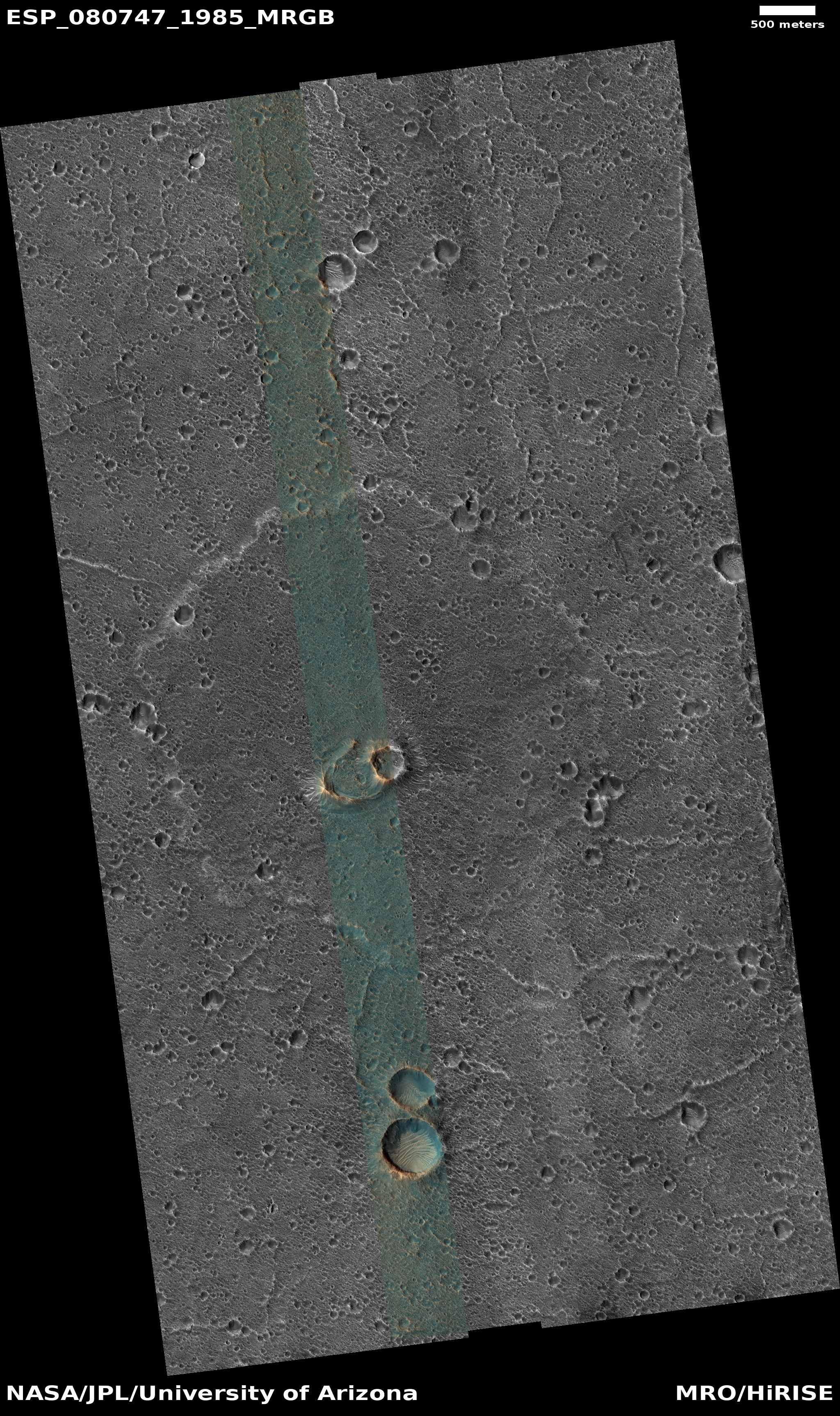
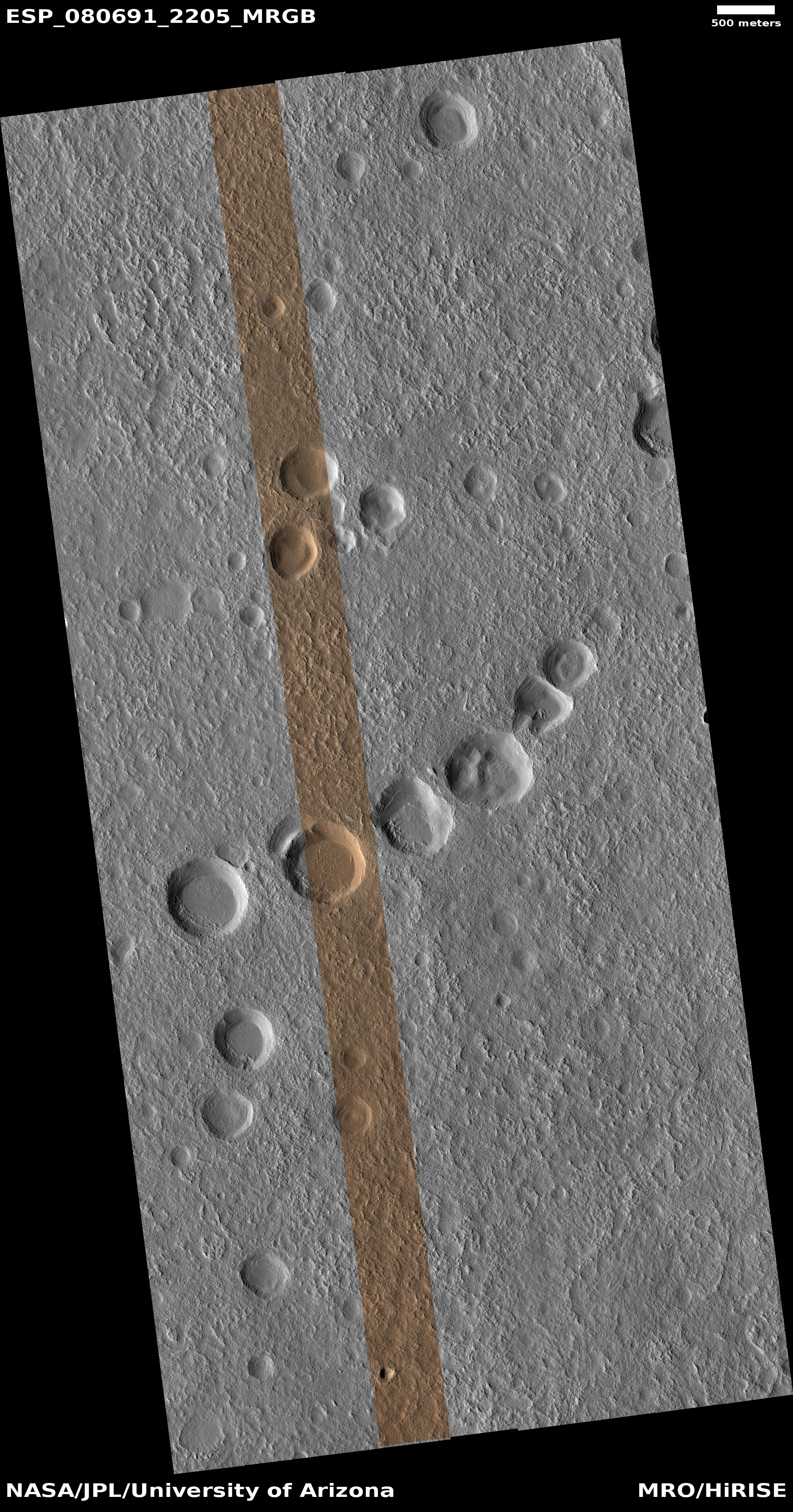
Cool image time! The picture to the right, cropped, reduced, and sharpened to post here, was taken on October 4, 2023 by the high resolution camera on Mars Reconnaissance Orbiter (MRO). Labeled a “terrain sample” by the science team, it was likely shot not as part of any specific research project but to fill a gap in the schedule so as to maintain the camera’s proper temperature. When the camera team has to do this they try to pick targets that are of some interest. Usually they succeed, considering the enormous gaps we presently have of Mars’ geological history.

This picture is no different. It shows a land of buttes and mesas, all ranging from 20 to 200 feet high, surrounded by canyons filled with ripple dunes of Martian dust. If you look at the floor of those canyons closely, you will notice that where there are no ripple dunes the ground is slightly higher and smooth. It is as if that ground was a kind of sandstone that was eroded away by wind into sand, which then formed the dunes.
» Read more

0 comments

Spain’s new space agency

Link here. The article provides a detailed description of the history leading up to the formation in March 2023 of Spain’s new space agency, Agencia Espacial Española (AEE) (the Spanish Space Agency in English).

It appears the goal was to consolidate Spain’s government space operations from eleven different agencies so as to better coordinate that government’s work with the nation’s burgeoning new commercial space sector.

By law, Spain has created the AEE without any increase in public spending. The new agency has been allocated an initial budget of 700 million euros per year, which was primarily drawn from funding for ESA [European Space Agency] participation, the CDTI, and INTA [two other Spanish agencies]. However, it is expected that the AEE will receive higher budgets in the future for the development of its own programs outside those directly linked to the ESA. The task of financing space activity public and private alike is of utmost importance, and one of the agency’s roles should be to create mechanisms for making investment attractive and effective, either directly or through public-private partnerships — a model that is producing excellent results in several countries around the world, like the United States. [emphasis mine]

It appears the goal is to emulate the policies followed by NASA in the past few years, buy services and products from the private sector rather than build these things within the government. If so, AEE will likely help jumpstart that new space industry. Whether it can stay focused on this goal, or shift into a typical government empire-building operation that sucks the life out of everything, will be its real fundamental test.

1 comment

Firefly schedules second launch in 2023

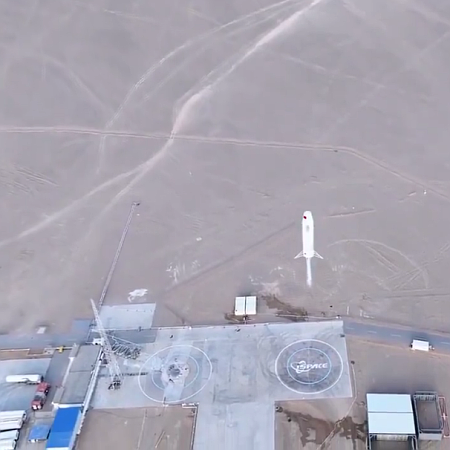
Firefly has now scheduled the second launch of its Alpha rocket in 2023, with a launch window of about 20 minutes on the morning of Decmeber 20, 2023.

The payload is a smallsat from Lockheed Martin testing new antenna technology, but the launch is for the Space Force. Like the previous September 15, 2023 launch, it is designed to test the ability of Firefly to get a payload into orbit quickly, from assembly to launch.

0 comments

Laser communication tests with Psyche have now included a cat video

Following up on the first tests in mid-November, engineers on December 11, 2023 downloaded a 15-second cat video from the asteroid probe Psyche at a distance of 19 million miles, demonstrating fast download speeds 10 to 100 times faster than the best radio transmissions.

The demo transmitted the 15-second test video via a cutting-edge instrument called a flight laser transceiver. The video signal took 101 seconds to reach Earth, sent at the system’s maximum bit rate of 267 megabits per second (Mbps). Capable of sending and receiving near-infrared signals, the instrument beamed an encoded near-infrared laser to the Hale Telescope at Caltech’s Palomar Observatory in San Diego County, California, where it was downloaded. Each frame from the looping video was then sent “live” to NASA’s Jet Propulsion Laboratory in Southern California, where the video was played in real time.

I have embedded that video below. More details about the information in that video can be found here.
» Read more

18 comments

China’s X-37B copy deploys six independent satellites

Four days after it was launched last week, China’s unnamed reuseable mini-shuttle, essentially a copy of the Space Force’s X-37B, deployed six independent small satellites that appear to be emitting a variety of signals.

The objects have been given letter names, A through F. Because their deployment occurred at different times they are in different orbits than the mini-shuttle, though all orbits cross at some point. The radio signals appear to be either simple beacons or signals of an as-yet undetermined nature.

0 comments

SpaceX launches 23 Starlink satellites

SpaceX tonight successfully launched another 23 Starlink satellites, its Falcon 9 rocket lifting off from Cape Canaveral.

The first stage completed its third flight, landing on a drone ship in the Atlantic.

The leaders in the 2023 launch race:

92 SpaceX
61 China
17 Russia
8 Rocket Lab
7 India

American private enterprise now leads China in successful launches 105 to 61, and the entire world combined 105 to 96. SpaceX now trails the rest of the world combined (excluding American companies) 92 to 96.

This was the 201st launch this year, the first time ever that the global launch industry has exceeded 200 launches. Before 2021, annual global launch totals were generally less than 100. It now looks like there is a good chance they will never again be as low as that. (I should have noted this at the 200th launch, but missed it.)

4 comments

Margarita Sipatova – All I Want For Christmas Is You

An evening pause: A bright cheery way to start the last week in the Christmas holiday season. CORRECTION: I have discovered that the performer here is not Mariah Carey, as listed in the video, but another singer doing a nice cover. I have corrected the post.

Hat tip Alton Blevins.

6 comments

December 18, 2023 Quick space links

Courtesy of BtB’s stringer Jay.


0 comments

What makes a Nazi?

The user's manual for today's pro-Hamas demonstrators
The user’s manual for today’s
pro-Hamas demonstrators

If you have any doubts that we live in a revised version of 1930s Germany, you need only open your eyes for only a few seconds and read these stories below. The list is hardly comprehensive, as it only provides a small sampling of the vicious, violent, and hateful demonstrations, riots, and violence that began after October 7th in support of the rape, torture, and murder by Hamas of more than 1,400 Israelis, many of whom were women and children, and have since morphed into an anti-Jewish compaign designed to intimidate and oppress Jews everywhere, merely because they are Jews.

The mob in front of the Israeli embassy in the third link above made very clear, in blunt chants, what all these pro-Hamas demonstrators want, as well as who they are:
» Read more

26 comments

The nearest star-forming region, as seen in infrared by Webb

The nearest star-forming region, as seen by Webb
Click for original image.

Time for another cool image on this somewhat quiet Monday. The false-color infrared image to the right, reduced and sharpened to post here, was taken by the Webb Space Telescope, and shows the Rho Ophiuchi star-forming region, the nearest to our solar system at a distance of about 460 light years.

It is a relatively small, quiet stellar nursery, but you’d never know it from Webb’s chaotic close-up. Jets bursting from young stars crisscross the image, impacting the surrounding interstellar gas and lighting up molecular hydrogen, shown in red. Some stars display the telltale shadow of a circumstellar disc, the makings of future planetary systems.

The young stars at the centre of many of these discs are similar in mass to the Sun or smaller. The heftiest in this image is the star S1, which appears amid a glowing cave it is carving out with its stellar winds in the lower half of the image. The lighter-coloured gas surrounding S1 consists of polycyclic aromatic hydrocarbons, a family of carbon-based molecules that are among the most common compounds found in space.

There are two features that are most compelling to me in this image. First, the red hydrogen jet that cuts across the entire right half of the image from top to bottom. At the top you can see how that jet is pushing material before it. Second, we have the cave-like structure surround S1, the central star. The yellowish cloud is almost like a hand cupped around that star.

6 comments
1 5 6 7 8 9 196