December 3, 2024 Quick space links

Courtesy of BtB’s stringer Jay. This post is also an open thread. I welcome my readers to post any comments or additional links relating to any space issues, even if unrelated to the links below.

  • Scientists create map of known gravitational waves
    This result, like the one just above, is about as certain and solid as liquid water, which is why neither was a full post on Behind the Black. The mainstream press might go ga-ga over both, but neither is very significant.
10 comments

Perseverance on the verge of leaving Jezero Crater

Looking up to Lookout Hill
Click for original image.

Overview map
Click for interactive map.

Since landing on Mars in 2021, the rover Perseverance has been exploring Jezero Crater, first the crater floor and then the delta that poured into the crater through a western gap.

Now, after three years of exploration and the drilling of 25 core samples, the science team is about to send Perseverance over the top of the crater’s western rim, to explore the very mountainous but potentially rich mining region beyond.

The blue dot on the overview map to the right indicates the rover’s present position, with the area covered by the panorama above, taken on November 26, 2024 by Perverance’s left navigation camera and cropped and annotated to post here, indicated by the yellow lines.

The red dotted line indicates the rover’s planned route. The black dotted line is a former plan that apparently has now been abandoned. It appears the science team really wants to check out Witch Hazel Hill, as well as reach the rim’s highest point to get views of its future travels. From an update posted yesterday:

Orbital views of Witch Hazel Hill suggest the area may contain layered and light-toned bedrock that likely record important information of the planet’s ancient climate. Prior to arriving at Witch Hazel Hill, the rover plans to pass through a high point known as Lookout Hill that will afford the team incredible views looking back into the crater, as well as get a glimpse westward of terrain far beyond Jezero.

The region beyond Jezero is hilly and rough. The views should be quite interesting.

1 comment

PLD obtains a new loan, this time for $11.6 million

The Spanish rocket startup PLD yesterday announced it has obtained a new $11.6 million loan that it plans to use to build its launch facility at the French-owned French Guiana spaceport.

The loan was issued by the Spanish governmment finance agency COFIDES, which comes on top of an earlier $43.8 million Spanish government grant. In addition, the company has gotten a $2.4 million grant from the European Commission, as well as a $1.37 million grant from the European Space Agency.

The company has also obtained a loan of $34 million from banks in Spain.

All told, the company has raised about $164 million, more than $58 million came from government agencies, with another $34 million from loans.

For whatever reason, PLD has found favor with the various governments in Europe, fueling its work. None of the other European rocket startups from Germany or Great Britain have been as lucky.

2 comments

Analysis of Chang’e-6’s lunar samples suggest the giant impact that caused Aitken Basin occurred 2.83 billion years ago

Chang'e-6's landing site
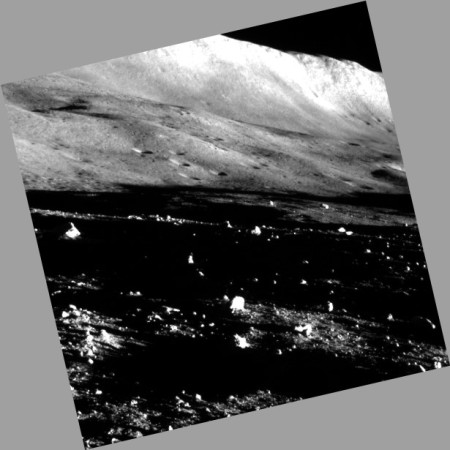
Click for original image of Chang’e-6 on the Moon

In a paper published in mid-November, Chinese scientists have concluded that — based on their analysis of the lunar samples returned by their Chang’e-6 spacecraft — the giant impact that created the 1,600-mile-wide South Pole-Aitken Basin on the Moon occurred about 2.83 billion years ago.

This conclusion is based both on the dating of the samples as well an analysis of the cratering rate on the Moon. It also suggests the landing site as well as Aitken basin were volcanically active for longer than previous predictions. Overall, scientists believe most volcanic activity on the Moon ceased around three billion years ago.

As noted in the paper, the near and far sides of the Moon are very different.

The Moon has a global dichotomy, with its near and far sides having different geomorphology, topography, chemical composition, crustal thickness, and evidence of volcanism. Volcanic eruptions flooded parts of the surface with lava, producing rocks known as mare basalts, which are more common on the nearside (4), where they cover ~30% of the surface compared to 2% of the farside.

The farside’s crust is also thicker, though under Aitken Basin the difference largely disappears.

This first precise dating for the far side is the first step for understanding why the Moon’s hemispheres are so different. Though many theories exist, none can be considered definitive because we so far have only one data point for the far side.

0 comments

The uncertainty of science: Star refuses to erupt when predicted

Based on records of two past eruptions approximately eighty years apart, astronomers had predicted that the binary star system T Coronae Borealis would erupt sometime in September 2024, brightening from magnitude 10 to as much as magnitude 2, making it one of the sky’s brighter stars for a short while.

That eruption however has so far not taken place.

“We know it has to happen,” astrophysicist Elizabeth Hays, who is watching T CrB every day using NASA’s Fermi gamma-ray space telescope, told Space.com in a recent interview. “We just can’t pin it down to the month.”

The unpredictability stems partly from limited historical records of T CrB’s outbursts. Only two such eruptions have been definitively observed in recent history: on May 12, 1866, when a star’s outburst briefly outshined all the stars in its constellation, reaching magnitude 2.0, and again on February 9, 1946, when it peaked at magnitude 3.0. These events appear to follow the star’s roughly 80-year cycle, suggesting that the next outburst may not occur until 2026. [emphasis mine]

The eruptions are thought to occur because the system’s denser white dwarf star pulls material from the lighter orbiting red giant. Over time that material accumulates on the surface of the white dwarf until it reaches critical mass, triggering a nuclear explosion that we see as the star’s brightening.

Astronomers have assumed this process is predictable, but in truth it really is not. For example, the star has brightened at other times, in 1938 and again in 2015, though not as much. These other brightenings suggest a great deal of uncertainty in the rate in which material accumulates, as well as how much is needed to trigger a nuclear burst.

Because of the possibility however of a burst at any time, astronomers have been poised eagerly now for months, observing the star regularly with the many orbiting telescopes that can observe it not only in optical wavelengths but in gamma, X-rays, and infrared. The latter capabilities didn’t exist in previous eruptions, and are now able to tell them things about the system that was impossible for earlier astronomers.

Assuming the eruption occurs at all. Despite the certainty of the astronomer’s quote highlighted above, there is no certainty here. This star system will do whatever it wants, despite the predictions of mere human beings.

10 comments

Varda wins $48 million Air Force contract

Varda's space capsule, on the ground in Utah
Varda’s first capsule on the ground in Utah.

The U.S. Air Force last week awarded the reusable orbiting capsule company Varda a four-year $48 million contract for placing experimental hypersonic payloads on the capsule for testing during its re-entry through the atmosphere.

The four-year deal with AFRL [Air Force Research Laboratory], announced on Nov. 26, leverages Varda’s W-Series reentry capsules as platforms to test payloads at hypersonic speeds. The spacecraft are built on Rocket Lab’s Photon satellite bus,

…Varda’s next mission, W-2, is scheduled for early 2025. This mission is designed to showcase the Varda Hypersonic Testbed vehicle. The capsule will carry an AFRL-developed spectrometer payload named OSPREE (Optical Sensing of Plasmas in the Reentry Environment) to collect critical data during atmospheric descent.

Up until now Varda’s customers have been entirely focused on using the capsule to produce pharmaceuticals in weightlessness for sale back on Earth. This new contract provides it another and initially unexpected way to make money on the capsule’s capabilities.

0 comments

China launches communications test satellite

China today successfully launched a communications satellite designed according to its state-run press to test new communication technologies, its Long March 3B rocket lifting off from its Xichang spaceport in southwest China.

No word on where the rocket’s lower stages and four strap-on boosters, all using toxic hypergolic fuels, crashed inside China.

The leaders in the 2024 launch race:

124 SpaceX
57 China
15 Russia
13 Rocket Lab

American private enterprise still leads the rest of the world combined in successful launches 143 to 85, while SpaceX by itself leads the entire world, including American companies, 124 to 104.

0 comments

The real proof that the American political scene is about to experience a new revolution

The Democratic Party for the past half century

While the conservative press is today going ga-ga over Joe Biden’s pardoning of his son Hunter yesterday — noting accurately that Biden’s action proved himself once again to be a liar and a fraud, having spent the last four years insisting he would never do such a thing while also insisting that “no one is above the law” — I think it more instructive to look at what some of the most rabid partisan leftists have been saying, before and after the election of Donald Trump.

You see, some of these partisan leftists are actually doing something I have not seen a partisan leftist do since before Bill Clinton was president — they are showing an ability to have an open mind.

Let’s begin with two members of a leftist podcast group dubbed the Young Turks that for years saw nothing good about any Republican and considering Donald Trump the epitomization of the devil himself. Anything Trump did was wrong. Everything Trump and the Republicans represented was evil and must be opposed blindly. During and after this presidential election campaign however two of the more noted members of this podcast, Ann Kasparian and Cenk Uygar, changed their tune, and did so in an astonishing way.

First there was Kasparian’s announcement in October that she has left the Democratic Party. Watch:
» Read more

36 comments

New stars shaped by old stars

New stars shaped by old stars
Click for original image.

Cool image time! The picture to the right, cropped, reduced, and sharpened to post here, was taken by the Hubble Space Telescope as part of a study focused on looking at star formation in nearby galaxies. From the caption:

Evidence of star formation is scattered all around NGC 1637, if you know where to look. The galaxy’s spiral arms are dotted with what appear to be pink clouds, many of which are accompanied by bright blue stars. The pinkish colour comes from hydrogen atoms that have been excited by ultraviolet light from young, massive stars. This contrasts with the warm yellow glow of the galaxy’s centre, which is home to a densely packed collection of older, redder stars.

The stars that set their birthplaces aglow are comparatively short-lived, and many of these stars will explode as supernovae just a few million years after they’re born. In 1999, NGC 1637 played host to a supernova, pithily named SN 1999EM, that was lauded as the brightest supernova seen that year. When a massive star expires as a supernova, the explosion outshines its entire home galaxy for a short time. While a supernova marks the end of a star’s life, it can also jump start the formation of new stars by compressing nearby clouds of gas, beginning the stellar lifecycle anew.

This galaxy is one worth keeping an eye on for supernovae, since every one of those blue stars has the potential of erupting.

1 comment

China completes first launch of its Long March 12 rocket

China today successfully launched for the first time its new Long March 12 rocket, lifting off from its coastal Wenchang spaceport and placing “two technology test satellites” into orbit.

The two-stage rocket, powered by burning kerosene and liquid oxygen, is notable as the first 3.8-metre-wide rocket launched so far by China, said Wu Jialin, an engineer with the Shanghai Academy of Spaceflight Technology under CASC, which developed the spacecraft.

Most Chinese rockets have a diameter of 3.35 meters, Wu told a press conference on site shortly after the launch was announced successful. “A wider body means the rocket can hold about 30 per cent more propellant, giving it much enhanced carrying capacity,” he said.

For comparison, the Falcon 9 has a diameter of 3.7 meters, though its payload fairing is wider. China intends to use this new rocket to launch its own large satellite constellations to compete with SpaceX.

The leaders in the 2024 launch race:

124 SpaceX
56 China
15 Russia
13 Rocket Lab

American private enterprise still leads the rest of the world combined in successful launches 143 to 84, while SpaceX by itself leads the entire world, including American companies, 124 to 103.

0 comments

Construction begins for 3rd spaceport in Scotland

Map of spaceports surrounding Norwegian Sea

Construction of a third spaceport in Scotland has now begun, its location on the northwest coast of the island of North Uist (as shown on the map to the right), with its plans to serve suborbital launches initially.

The Highlands and Islands Enterprise, a Scottish government agency focused on regional development, has allocated £947,000 for the construction of the site’s enabling infrastructure. Additionally, the Comhairle is contributing £675,000 from its 2023-2028 capital programme. The total cost of the enabling works project is estimated to be £2.6 million.

After the construction of the enabling infrastructure is complete, which is expected to occur by Spring 2025, a private sector operator will take over to complete the second phase of construction and manage the spaceport.

According to the Wikipedia page for this area on North Uist, the project was first proposed in 2019, and was then hoping to attract orbital launches. Subsequent opposition by activists slowed development and likely reduced the project from orbital to suborbital, at least for now.

0 comments
1 269 270 271 272 273 2,915