Another record-setting launch day worldwide

In what might be a record for the global launch industry, yesterday saw a total of four launches at four different spaceports worldwide.

That record might very well be matched today. Already three launches have already taken place, with one more scheduled.

First, India’s space agency ISRO successfully launched European Space Agency’s PROBA-XL solar telescope, its PSLV rocket lifting off from its Sriharikota spaceport on India’s eastern coast. This was India’s fourth launch in 2024.

Next, China launched what its state-run press merely described as a “group of satellites,” its Long March 6 rocket taking off from its Taiyuan spaceport in northern China. That state-run press also said nothing about where the rocket’s lower stages and four strap-on boosters crashed inside China. (UPDATE: More information about the payload can be found here. It appears to have been the third set of 18 satellites launched as part of China’s attempt to compete with Starlink.)

Then, SpaceX launched SXM-9, a new satellite for the constellation of the radio company Siruis-XM, its Falcon 9 lifting off from Kennedy in Florida. The first stage completed its nineteenth flight, landing on a drone ship in the Atlantic. As of posting the satellite had not yet been deployed.

If all goes as planned, the fourth flight today will be the first launch in more than two years of Avio’s Vega-C rocket, which has been grounded while the company redesigned and then redesigned again the engine nozzle of its upper stage. The launch is also one of the last that will be managed by Arianespace, which is giving up control to Avio over the next year. The live stream is here.

If successful, it will be the eighth launch worldwide in only two days, something that I am fairly certain has never been done before. In the past there simply weren’t enough independent entities and spaceports available to allow this number of launches in such a short period of time. What makes this record even more striking is that three of the eight launches were launched by one private American company, SpaceX.

The leaders in the 2024 launch race:

127 SpaceX
59 China
16 Russia
13 Rocket Lab

American private enterprise still leads the rest of the world combined in successful launches 146 to 89, while SpaceX by itself leads the entire world, including American companies, 127 to 108.

1 comment

Two more launches completed today

Since the first two launches earlier today, we have seen two more launches successfully completed.

First Russia placed a classified military payload into orbit, its Soyuz-2 rocket lifting off from its Plesetsk spaceport in northeast Russia. The fairings and first three stages all crashed inside Russia. No word if they landed near habitable areas, though the regions are generally sparsely inhabited.

Then SpaceX completed its second launch today, placing another 20 Starlink satellites into orbit, its Falcon 9 rocket lifting off from Vandenberg in California. Of the satellites thirteen were configured for direct-to-cell service. For the second time in the last week the company broadcast did not begin until after liftoff. In both cases the reason might be to avoid revealing any visuals of the rocket’s fairing, suggesting that SpaceX was using something different that it wanted to keep secret.

The first stage completed its twelfth flight, landing on a drone ship in the Pacific.

Not surprisingly, two of the launches previously scheduled for today have been postponed. The PSLV launch of a European solar telescope was delayed one day due to an issue detected with the payload’s propulsion system, while the first launch in two years of Arianespace’s Vega-C rocket was delayed because of an unspecified “mechanical issue.” At present Arianespace is targeting a launch for tomorrow.

The leaders in the 2024 launch race:

126 SpaceX
58 China
16 Russia
13 Rocket Lab

American private enterprise still leads the rest of the world combined in successful launches 145 to 87, while SpaceX by itself leads the entire world, including American companies, 126 to 106.

2 comments

December 4, 2024 Quick space links

Courtesy of BtB’s stringer Jay. This post is also an open thread. I welcome my readers to post any comments or additional links relating to any space issues, even if unrelated to the links below.

7 comments

The strange beginning of a 300-mile-long meandering canyon on Mars

Overview map

Today’s cool image will be unlike most cool images, in that we will begin not with the image but with the overview map to the right. The long meandering canyon at the center of this map is Nirgal Vallis, a 300-mile long canyon on Mars that eventually drains to the east into a much larger drainage system that runs south-to-north several thousand miles into the Martian northern lowland plains.

At first glance Nirgal Vallis invokes a river system. It starts in the west as several branches that combine to form a single major canyon meandering eastward until it enters that south-to-north system. To our Earth eyes, this canyon suggests it was carved by water flowing eastward, the many drainage routes combining as they flowed downhill.

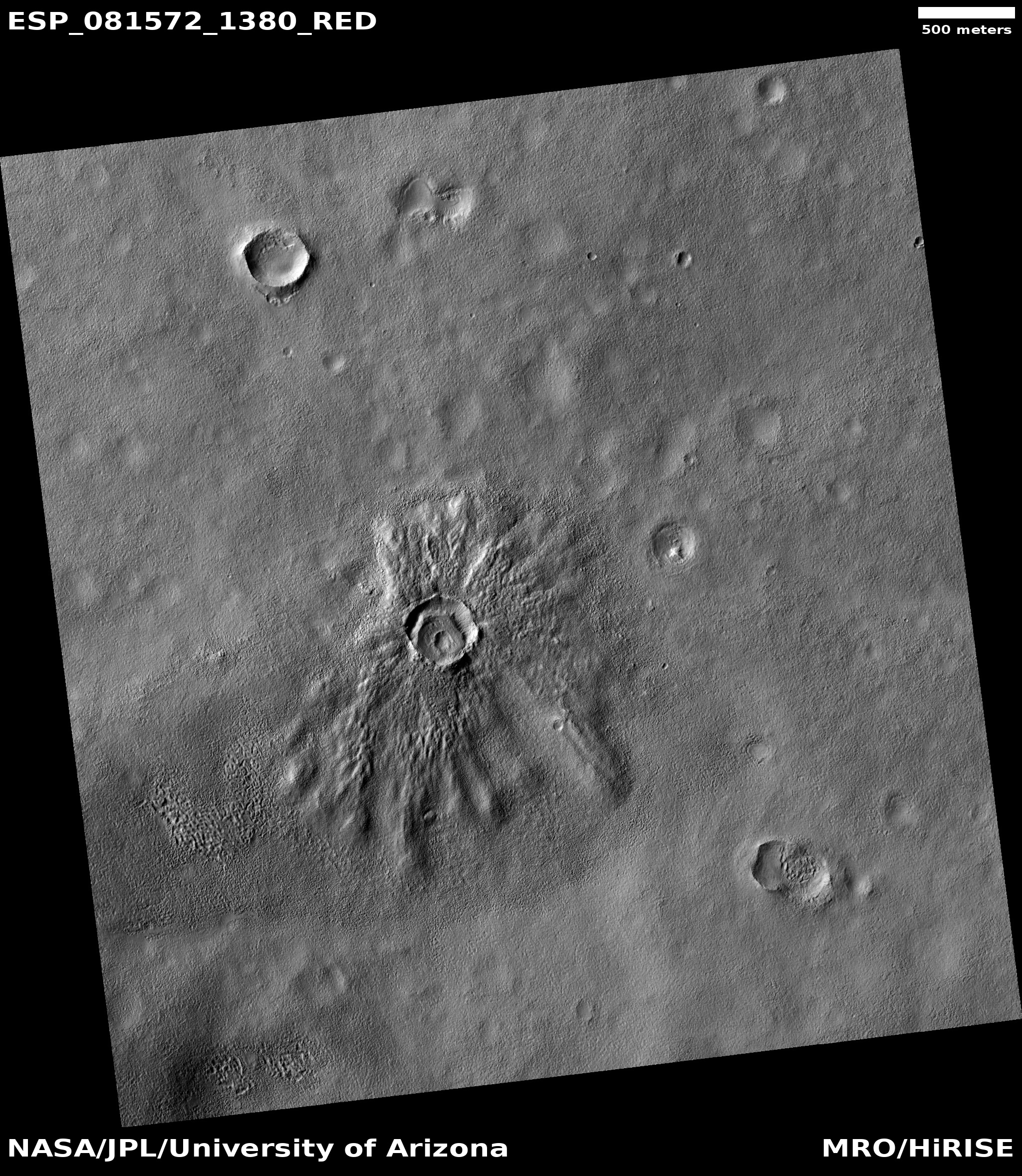
Today’s the cool image, its location indicated by the white dot, tells us however that liquid water might not have been what created this canyon.
» Read more

1 comment

Japan awards $32.5 million contract for lunar GPS-type satellite constellation to startup

Capitalism in space: As part of the multi-billion dollar fund the Japanese government has allocated to encourage private enterprise by new Japanese startups, its space agency JAXA has now awarded a $32.5 million development contract to the startup ArkEdge Space to design and fly a GPS-type satellite in orbit around the Moon, thus demonstrating the technology.

Under the agreement, ArkEdge Space will plan and design the mass production and operation of micro-satellite constellations to lead the development of a next-generation Lunar Navigation Satellite System (LNSS), a vital component to the International “LunaNet” initiative driven by National Aeronautics and Space Administration (NASA), European Space Agency (ESA) and JAXA. LunaNet seeks to establish essential infrastructure to support sustainable lunar exploration and foster the growth of the lunar economy.

The real significance of this contract award is that it signals JAXA’s growing shift from designing, building, and owning everything to simply becoming the customer who gets what it needs from the private sector. The Japanese government had established that fund for this express purpose, but JAXA has shown a reluctance to proceed, as it directly threatens its turf. This award indicates that reluctance is finally being pushed aside.

3 comments

Orbex gives up on the Sutherland spaceport, switches to SaxaVord

Map of spaceports surrounding Norwegian Sea
Spaceports surrounding the Norwegian Sea

In a very sudden decision, the rocket startup Orbex, based in Great Britain, has “paused” its long-delayed work to develop a launch facility at the Sutherland spaceport in northern Scotland and instead decided to launch its first rockets from the competing SaxaVord spaceport on the Shetland islands.

Orbex says it is halting construction work on the £20 million spaceport and instead is mothballing the project, which has received a £14.6 million public investment package. The space company, which was to have made the Sutherland Spaceport its home port, will now launch its rockets carrying commercial satellites from another north spaceport – SaxaVord on Unst, Shetland.

According to the company’s CEO, it will retain its 50-year lease at Sutherland to give it “flexibility to increase launch capacity in the future.”

The company had originally hoped to launch its Prime rocket from Sutherland in 2022, but has been faced with red tape from the Civil Aviation Authority (CAA), which has still not issued a launch licence, even though the application was submitted almost three years ago. Orbex has also faced lawfare opposition from local activists as well as a major local landowner, billionaire Anders Povlsen, who is also a major investor in SaxaVord.

That last detail might help explain this decision. In private talks Orbex might have learned that the red tape and opposition would disappear if it switched to SaxaVord. The timing is also suggestive, as only a few days ago construction started on a new spaceport in Scotland, located on the island of North Uist.

All told, Orbex might have decided that the stars were aligned against it at Sutherland, and it was better to move. It now hopes to complete the first test launch of its Prime rocket from SaxaVord next year.

1 comment

Two launches completed of the seven launches expected in the next 24 hours

Today will be one of the busiest ever at spaceports worldwide. Already we have had two launches, with five more expected by this time tomorrow.

First, China launched a radar satellite, its Kuaizhou-1A solid-fueled rocket lifting off from the Xichang spaceport in the southwest of China. No word on where the rocket’s lower stages crashed in China.

Next, SpaceX placed another 24 Starlink satellites into orbit, its Falcon 9 rocket lifting off from Cape Canaveral in Florida in the early morning hours. The first stage completed a record 24th flight, the most flights of any Falcon 9 booster so far, landing on a drone ship in the Atlantic Ocean.

And we are only getting started today. If all goes right, by this time tomorrow Russia will have done a military launch from its Plesetsk spaceport, Arianespace will have launched a Vega-C from French Guiana, SpaceX will have completed two more Falcon 9 launches from Vandenberg and Kennedy, and India will have launched its PSLV rocket from its Sriharikota spaceport.

The leaders in the 2024 launch race:

125 SpaceX
58 China
15 Russia
13 Rocket Lab

American private enterprise still leads the rest of the world combined in successful launches 144 to 86, while SpaceX by itself leads the entire world, including American companies, 125 to 105.

0 comments

SpaceX looking to raise more private investment capital

According to a report yesterday by Bloomberg, SpaceX is now in talks to raise more private investment capital, based on a new and vastly increased valuation of the company, from $255 billion to $350 billion.

A so-called tender or secondary offering, through which employees and some early shareholders can sell shares, provides investors in closely held companies such as SpaceX a way to generate liquidity.

The amount the company hopes to raise by this tender is at present not known. In the past decade the company has raised about $12 billion in private capital in order to fund development of both its Starship/Superheavy rocket as well as its Starlink internet constellation. The latter however is already generating about $9 billion in revenue annually in the past two years, more than enough to fund the projects.

7 comments

December 3, 2024 Quick space links

Courtesy of BtB’s stringer Jay. This post is also an open thread. I welcome my readers to post any comments or additional links relating to any space issues, even if unrelated to the links below.

  • Scientists create map of known gravitational waves
    This result, like the one just above, is about as certain and solid as liquid water, which is why neither was a full post on Behind the Black. The mainstream press might go ga-ga over both, but neither is very significant.
10 comments

PLD obtains a new loan, this time for $11.6 million

The Spanish rocket startup PLD yesterday announced it has obtained a new $11.6 million loan that it plans to use to build its launch facility at the French-owned French Guiana spaceport.

The loan was issued by the Spanish governmment finance agency COFIDES, which comes on top of an earlier $43.8 million Spanish government grant. In addition, the company has gotten a $2.4 million grant from the European Commission, as well as a $1.37 million grant from the European Space Agency.

The company has also obtained a loan of $34 million from banks in Spain.

All told, the company has raised about $164 million, more than $58 million came from government agencies, with another $34 million from loans.

For whatever reason, PLD has found favor with the various governments in Europe, fueling its work. None of the other European rocket startups from Germany or Great Britain have been as lucky.

2 comments
1 216 217 218 219 220 2,413