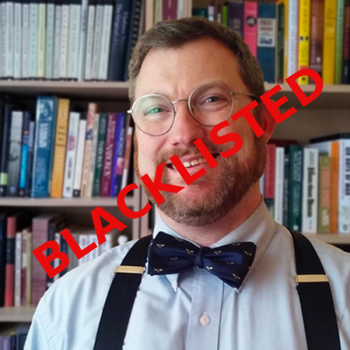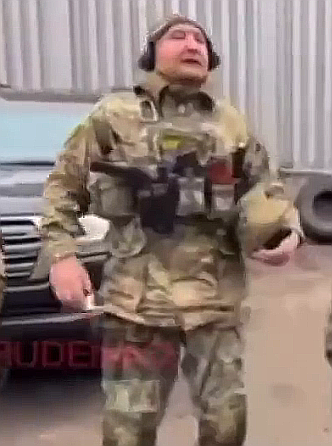
Dmitry Rogozin playing make-believe soldier
recently in the Ukraine
More details have now emerged about the explosion that injured former Roscosmos chief Dmitry Rogozin, including the fact that the attack, in Ukrainian occupied territory in Donetsk, also killed two.
The former head of Russia’s space agency was wounded when an artillery shell exploded as he celebrated his birthday in a hotel near the front line in Ukraine. Dmitry Rogozin, a flamboyant Russian politician who was once a deputy prime minister, was reportedly hit in the buttocks, head and back by shrapnel.
Two people were killed in the attack and several others were wounded, authorities in Donetsk said on Thursday, and Mr Rogozin said he was due to be operated on. Russian state news channel Rossiya 24 TV said the former space chief was celebrating his 59th birthday at the Shesh-Besh hotel and restaurant with several other separatist officials.
But Mr Rogozin insisted the incident took place during a “work meeting”.
Russian investigators think the shell came from a French-made Caesar self-propelled howitzer.
The criticism of Rogozin concerning this story has been quite ugly.
“A party 10 kilometres away from the front line with the Ceasar’s range of 40 kilometres? I would reprimand him for being childish,” [wrote Yuri Podolyaka, a prominent pro-Kremlin blogger.] “Two people have died in that restaurant, which, I think, is on his conscience.”
Rogozin’s path has been steadily downward since he was deputy prime minister of Russia’s defense department from 2011 to 2018. First he was demoted to head of Roscosmos, where he ended up losing Russia more than a half billion in income by his cancellation of the launch contract with OneWeb. Worse, that cancellation, and Rogozin’s confiscation of 36 OneWeb satellites, ended any chance of Russia getting any international business for years to come.
These actions caused him to be fired from Roscosmos in July, and shipped to the Ukraine (the modern equivalent of Siberia) to act as an envoy in the Russian-occupied territories. Once there, he did nothing to enhance his reputation. By holding this very public birthday party, at a public place so close to the front lines, was almost guaranteeing he and his party would be attacked.
I wish he quickly recovers from his injuries, but I also think Putin would be foolish to give this guy any further positions of authority.