Update on the status of Vulcan, Ariane-6, and New Glenn

Link here. This excellent article is focused on whether these three new rockets, none of which has yet completed its first test flight, will be able to meet their launch contract obligations with Amazon, which needs to launch at least 1,600 satellites of its Kuiper broadband constellation by July 2026 to meet its FCC license requirements. Those requirements also obligate Amazon to have the full constellation of about 3,200 satellites in orbit by July 2029.

The launch contracts to these three untried rockets was the largest such contract ever issued, involving 83 launches and billions of dollars.

To sum up where things stand in terms of the first test launch of each rocket:
» Read more

4 comments

Amazon investors sue company for not considering SpaceX as potential launch provider

In a lawsuit filed by Amazon investors, they claim that the company’s decision to give major and expensive launch contracts to Arianespace, ULA, and Blue Origin to put its planned 3,200 Kuiper satellite constellation into orbit but never even consider using SpaceX indicates a failure at due diligence for the shareholders as well as a possible conflict of interest.

The plaintiff’s biggest concern was the decision to give Blue Origin the contract.

The suit, filed by Amazon shareholders the Cleveland Bakers and Teamsters Pension Fund, alleges that the board spent less than 40 minutes approving the launch agreements for Amazon’s Project Kuiper mega-constellation, while not even considering leading launch company (and Blue Origin rival) SpaceX. “Amazon’s directors likely devoted barely an hour before blindly signing off on funneling […] Amazon’s money to Bezos’ unproven, struggling rocket company,” the suit says. The plaintiffs say the board failed to protect the negotiation process “from Bezos’ glaring conflict of interest.”

It appears these investors might have a point, as so far Amazon has paid these launch companies about $1.7 billion, with Blue Origin getting $585 million, though not one satellite has yet launched. Moreover, it appears from all counts that it will be very difficult for these companies — especially Blue Origin — to complete the required missions necessary to get into orbit half of Amazon’s constellation by 2026, as required by its FCC license.

6 comments

ULA completes dress rehearsal launch countdown and static fire test of Vulcan

ULA yesterday successfully completed a full dress rehearsal launch countdown new Vulcan rocket, including a short 2-second static fire test of the rocket’s two first stage BE-4 engines.

A Vulcan rocket fired its two BE-4 engines in a static-fire test called the Flight Readiness Firing (FRF) at 9:05 p.m. Eastern from Cape Canaveral’s Space Launch Complex 41. The engine start sequence started at T-4.88 seconds, ULA said in a statement an hour after the test, with the engines throttling up to their target level for two seconds before shutting down, concluding the six-second test.

The test appeared to go as planned. “Nominal run,” Tory Bruno, president and chief executive of ULA, tweeted moments after the test.

This dress rehearsal had originally been scheduled for late May, but issues on the rocket required ULA to scrub the launch and return the rocket to the assembly building.

There appear to be only three issues remaining before that first launch can occur. First there is the hydrogen leak that caused the destruction of the rocket’s Centaur upper stage during a static fire engine test in March. The company has apparently still not determined what action — if any — must be taken on this.

Second is whether the rocket’s primary payload, Astrobotic’s Peregrine lunar lander, is ready for launch. It appears it has completed all ground testing, but there were questions whether its software has been adjusted for a new landing site that NASA assigned it in February.

Third is scheduling. Peregrine’s monthly launch windows are only four to five days long each month. This limitation also has to be juggled with other ULA launches on the same launchpad, using its soon-to-be retired Atlas-5 rocket.

1 comment

FCC approves the first 3,000+ satellites in Amazon’s Kuiper constellation

FCC has now given Amazon its license to launch the first 3,236 satellites in its Kuiper internet constellation, including with that license new de-orbiting requirements that exceed the FCC’s actual statutory authority.

The Federal Communications Commission approved Amazon’s plan Feb. 8 to deploy and operate 3,236 broadband satellites, subject to conditions that include measures for avoiding collisions in low Earth orbit (LEO).

Amazon got initial FCC clearance for its Ka-band Project Kuiper constellation in 2020 on the condition that it secured regulatory approval for an updated orbital debris mitigation plan. The FCC said its conditional approval of this mitigation plan allows “Kuiper to begin deployment of its constellation in order to bring high-speed broadband connectivity to customers around the world.” The conditions include semi-annual reports that Kuiper must give the FCC to detail the collision avoidance maneuvers its satellites have made, whether any have lost the ability to steer away from objects, and other debris risk indicators.

In the order, the FCC also requires Kuiper to ensure plans to de-orbit satellites after their seven-year mission keep inhabitable space stations in addition to the International Space Station in mind.

According to the license, Amazon must launch 1,600 of these satellites by 2026.

The de-orbit requirements are part of the FCC’s recent regulatory power grab, and has no legal basis. The FCC’s statutory authority involves regulating the frequency of signals satellites use, as well as acting as a traffic cop to make sure the orbits of different satellites do not interfere with other satellites. Nowhere has Congress given it the right to determine the lifespan of satellites, or the method in which they are de-orbited.

Right now however we no longer live in a republic run by elected officials. In Washington it is the bureaucracy that is in charge, Congress being too weak, divided, and corrupt to defend its legal power. Thus, the FCC can easily grab new powers that it has no right to have.

3 comments

Is Amazon’s Kuiper Constellation project in trouble, or is it fleeing Seattle?

According to a on-going listing of open space-related jobs in Seattle, Amazon has almost completely ceased hiring in that city, even as it is about to launch the first prototype test satellites in its proposed internet Kuiper satellite constellation.

To see the decline, take a gander at the graph here.

The analyst at the first link also noted in a later tweet this fact about Amazon hiring in Seattle:

…Went from 189 at end of October to 14 yesterday (in WA state, not total). It’s unusual, at least in the nearly 3 years I’ve been monitoring. Could be due largely due to Amazon hiring freeze.

Amazon is required by its FCC license to get over 1,600 Kuiper satellites launched in the next 40 months. The first two are only scheduled for launch on the first Vulcan launch now targeting a late March liftoff. As test prototypes, they will have to be tested for a period of time in orbit, followed by an assessment that might require changes in the design and construction of later satellites. These satellites would then have to be launched at an unprecedented rate, almost faster than anything SpaceX has done with its Starlink constellation.

At the moment it thus seems impossible for Amazon to meet the FCC deadline.

That the company appears to have stopped hiring space-related positions in Seattle at this very moment makes that goal even more impossible. This hiring freeze thus suggests that management has decided that the Kuiper project is untenable and is quietly cutting it off at the knees.

Or it could be that the hiring freeze is instead an indication that Amazon is slowly shifting operations out of leftist and insane Washington state. If so, work on the Kuiper project, including hiring, might be going on elsewhere.

Regardless, the state of the Kuiper project continues to be tenuous and uncertain, at best.

Hat tip to Jay, BtB’s stringer.

4 comments

Today’s blacklisted American: Amazon blacklists book because it says something someone at Amazon doesn’t like

Book banned by Amazon
Banned by bookseller Amazon.

The modern dark age: Amazon has without explanation removed a book about Islam, The Islam in Islamic Terrorism: The Importance of Beliefs, Ideas, and Ideology and written by ex-Muslim Ibn Warraq, essentially blacklisting it from sale.

A search at Amazon confirms this fact. The book is no longer available there.

The publisher, New English Review, said this in its press release:

Amazon’s banning of the Warraq book follows on the heels of their earlier banning of another NER Press title, “Easy Meat: Inside Britain’s Grooming Gang Scandal” by Peter McLoughlin, which chronicles the actions, or rather the inaction, of the police, social services, justice system and government in the face of the widespread phenomenon of very young British girls being groomed and then pimped out and held in virtual sex slavery by gangs of grown men.

…As usual, no specific reason has been given for this latest book’s removal. NER Press appealed and that appeal was denied within two hours. “The Islam in Islamic Terrorism” had been on sale since May of 2017 and “Easy Meat” since March of 2016. Both had over 85% five-star ratings and both sold well. Mr. Warraq is the author of 17 books and “The Islam in Islamic Terrorism” was also translated into Korean.

Nor are these two books the only books Amazon has banned. » Read more

10 comments

ULA breaks ground on new facility in Alabama

ULA yesterday broke ground on the construction of a new facility in Alabama, where it will store its Vulcan rockets and build the fairings for that rocket.

The factory is scheduled to begin operations in 2024. According to ULA’S CEO, Tori Bruno, the facility will double the production rate for making Vulcan rockets, necessary to provide the launches that Amazon wants for its Kuiper internet constellation.

1 comment

Today’s blacklisted American: Amazon employees demand company blackball everyone who disagrees with them

The apparent goal of Amazon's woke employees
The apparent goal of Amazon’s woke employees

Persecution is now cool! Hundreds of Amazon employees have apparently signed a company-wide open letter demanding that the company immediately blacklist everyone who is anti-abortion while also blackballing every state that passes anti-abortion laws.

“As part of Amazon’s wide-reaching efforts toward a more inclusive and diverse workforce, we believe that Amazon cannot let this recent decision go unanswered,” the letter said. “We ask Amazon, the world’s best employer, to actively defend against this assault on our liberty.”

Among other actions, the authors are requesting that Amazon “allow employees of all genders the space and time to grieve, express their frustrations, and protest against this assault on our rights.” In addition, they want the company to “donate and match donations to bail funds” to help “women and pregnant people” seeking abortions in states with protections for pre-born babies.

It also demanded Amazon organize pro-abortion protests and donate money to the political organizations the letter signatories endorse.

Essentially, the letter calls for Amazon to focus its business entirely on leftwing political action rather than its central purpose of providing retail products to its customers. That such actions will cost the company money and possibly harm its profit line apparently does not matter to these employees.

The letter however went much farther. The cropped image from the letter below shows this:
» Read more

14 comments

Amazon to FCC: Consider limiting SpaceX’s Starlink constellation for our benefit

In a letter sent to the FCC last week, Amazon asked the agency to limit the size of SpaceX’s full constellation so that Amazon will be free to someday launch its own Kuiper constellation.

In the recent letter, Amazon recommends the FCC license a “subset of SpaceX’s proposed system” (as opposed to the whole fleet) to give the agency additional time to consider the “novel challenges” such a significant expansion might present. For example, Amazon believes hundreds to “more than 10,000” of SpaceX’s new satellites could be operating in the altitudes already approved for its Kuiper satellites, which could cause interference in the spectrum and “orbital overlap.” The company claims SpaceX has refused its requests for communication around these concerns as it has urged the FCC to approve its application. It also cites eight other satellite operations who have objected to the plan, including Dish Network, which is currently engaged in a public battle over radio frequencies with SpaceX.

Amazon’s concerns might carry more weight if the launch of its constellation was not so delayed. Both Amazon and SpaceX began development of their satellite constellations at about the same time. Yet, while SpaceX has already launched almost 3,000 satellites, and is providing its service to several hundred thousand customers, Amazon has yet to launch a single satellite.

Thus, though what Amazon is asking the FCC seems reasonable, it is also asking the FCC to block a competitor’s successful operation while it dilly-dallies along, accomplishing little.

This pattern from Amazon fits the pattern of all of Jeff Bezos’s space-related projects: Big promises, little action, and when competitors get things done sue or demand the government play favorites. Sure does not seem to me to be a good long-term business plan.

3 comments

The battlelines and alliances shift over big satellite constellations in space

Two stories today show that the competition for frequency use and orbital territory in space are shifting, partly because of international politics and partly due to changes in technology.

First the harsh conflict between OneWeb and Starlink over the positioning and frequency use of their constellations in orbit now appears to have vanished.

The companies have written a joint letter to the U.S. Federal Communications Commission (FCC), declaring harmony in low Earth orbit (LEO) for spectrum coordination between their respective current and next generation broadband constellations.

In the letter, which is dated June 13, SpaceX and OneWeb request that the FCC disregard previously filed dissenting comments regarding spectrum coordination in LEO. SpaceX and OneWeb both submitted proposals for their first-generation internet constellations to the FCC in 2016, followed by a second round of proposals in 2020 for each company’s next-generation broadband satellites. Simultaneously, both SpaceX and OneWeb submitted complaints with the FCC in an attempt to get a leg up on each other. Now, it seems the companies are operating on friendlier terms.

The article I think correctly speculates that this new-found cooperation probably resulted from OneWeb’s need to use SpaceX Falcon 9 rockets to get its satellites in orbit, caused by Russia’s confiscation of 36 OneWeb satellites in response to Europen sanctions over the Ukraine War. During the launch negotiations I am sure SpaceX demanded both iron out their differences relating to the satellite constellations. While SpaceX might have been able to gain some advantages in that negotiation due to its strong position, I also suspect that OneWeb has not been hurt in any major way.

In the second story, SpaceX ramped up its opposition to a Dish 5G system in a wavelength used by its Starlink satellties.
» Read more

4 comments

Astronomers: Shut down satellite companies so we don’t have to adapt!

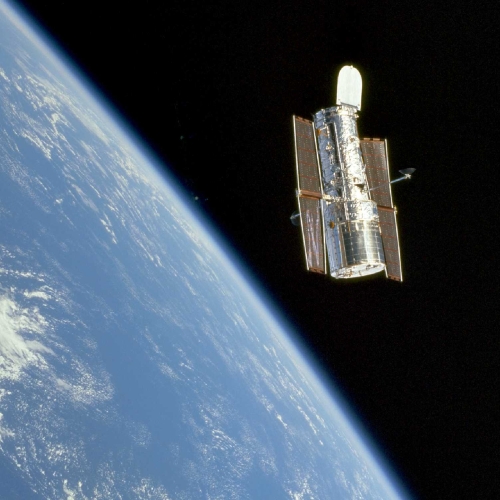
The Hubble Space Telescope
Space-based astronomy, a concept apparently alien to astronomers

In an article published today in Nature, the astronomy community continued its crybaby complaining of the last three years about the interference posed to their ground-based telescopes by the tens of thousands of small satellites scheduled for launch in the next few years.

These quotes typify the apparent attitude of astronomers:

“This is an unsustainable trajectory,” says Meredith Rawls, an astronomer at the University of Washington in Seattle. “At the moment, our science is fine. But at what point will we miss a discovery?”

…“It’s really quite horrifying,” says Samantha Lawler, an astronomer at the University of Regina in Canada.

…The growing threat of satellite constellations adds to other degradations of the night sky such as light pollution, says Karlie Noon, a PhD candidate in astronomy and an Indigeneous research associate at Australian National University in Canberra. “In the same way that our lands were colonized, our skies are now being colonized,” she says. “And this isn’t just Indigenous people.” She points out that companies have launched satellites without necessarily consulting the scientific community. [emphasis mine]

Oh the horror. Scientists weren’t consulted! The nerve of these companies!

In response, astronomers have decided their only solution is to enlist the UN to shut down these satellite companies.
» Read more

12 comments

Amazon announces launch agreements with Blue Origin, Arianespace, and ULA

Capitalism in space: Amazon today announced major multi-launch agreements with Blue Origin, Arianespace, and ULA to launch its 3,000+ Kuiper satellite constellation.

According to the press release, ULA won 38 launches using its new Vulcan-Centaur rocket (not yet flown), Arianespace won 18 launches using its new Ariane-6 rocket (not yet flown), and Blue Origin won 12 launches using its new New Glenn rocket (not yet flown), with an option for 15 more. The ULA deal is in addition to a previous launch contract of nine launches using the Atlas-5 rocket.

In addition, Amazon hopes to launch two prototype satellites later this year using ABL’s smallsat RS1 rocket (not yet flown).

Overall, this Amazon launch announcement might be the largest launch contract deal ever. However, the company’s reliance on unproven rockets means it will also likely face some delays and failures in its early stages. That the press release makes no mention of any schedule for launches illustrates this fact starkly. All four rockets have already seen major delays. with the three biggest (Vulcan-Centaur, New Glenn, Ariane 6) now more than two years behind schedule, and the likelihood of their first launch occurring in 2022 increasingly unlikely.

14 comments

Amazon picks rocket startup ABL to launch 1st two prototype Kuiper satellites

Capitalism in space: Amazon has chosen the smallsat startup rocket company ABL to launch its first two prototype Kuiper satellites, with that launch targeted for ’22.

KuiperSat-1 and KuiperSat-2 will reach orbit via the RS1, a new rocket developed by California-based ABL Space Systems. Amazon also announced today that it has signed a multi-launch deal with ABL to provide these early Project Kuiper launches.

The 88-foot-tall (27 meters) RS1 is capable of launching 2,975 pounds (1,350 kilograms) of payload to LEO, according to its ABL specifications page. ABL is charging $12 million for each launch of the two-stage rocket. The RS1 has not flown yet, but ABL has said that it aims to conduct a debut launch from Alaska’s Pacific Spaceport Complex before the end of 2021.

Earlier this year, Amazon announced that it had signed a deal with United Launch Alliance (ULA), whose Atlas V rocket will loft operational Project Kuiper craft on nine different launches.

Does anyone notice what rocket company has not won these contracts, even though its owner is also Amazon’s founder and biggest shareholder? That’s right, as far as I can tell, Blue Origin’s New Glenn rocket has apparently not won any contracts to launch Amazon’s Kuiper satellites. Notice also that the deal with ULA uses its Atlas-5 rocket, not its new Vulcan rocket, even though ULA wants Vulcan to replace the Atlas-5 beginning in ’22.

Since both New Glenn and Vulcan depend on Blue Origin’s troubled BE-4 rocket engine, these contracts strongly suggest that the engine’s technical problems have not yet been solved, and that neither rocket will be flying in ’22 as both companies have promised.

14 comments

Amazon protests SpaceX’s Starlink plan to FCC

Amazon on August 25, 2021 filed a protest with the FCC against SpaceX’s proposed expansion of its Starlink constellation that would allow almost 30,000 satellites to be launched.

“Should the Commission depart from its rules and precedent and endorse the approach of applying for multiple, mutually exclusive configurations, the consequences will extend far beyond the SpaceX Amendment,” wrote Mariah Shuman, corporate counsel for Amazon’s broadband megaconstellation venture Project Kuiper, in an Aug. 25 letter to the FCC. “However inefficient this strategy might be for the Commission and parties responding to applications, other prospective licensees will surely see the benefit in maximizing their optionality by describing multiple configurations in their license applications.”

Shuman asked the FCC to “dismiss SpaceX’s Amendment, and invite SpaceX to resubmit its amendment after settling on a single configuration for its Gen2 System.”

It appears Amazon does not want the FCC to approve multiple proposed satellite configurations put forth by SpaceX in a single application. Instead, it wants the FCC to force SpaceX to pick one, and submit that alone. It also appears that doing what Amazon requests would be more in line with past FCC policy.

While Amazon might have a point, the optics once again make another Jeff Bezos’ company look ugly, more interested in using the courts to stymie its competitors than actually launching anything. Amazon’s Kuiper internet constellation was first proposed in early 2019. More than two years have passed and none of its more than 3200 satellites have launched — not even one test satellite — with no clear indication yet on when launches will finally begin.

SpaceX began testing its Starlink system in 2018, and already has about 1,700 operational satellites in orbit. The comparison between the two companies is stark, and not favorable to Amazon.

In fact, Elon Musk was not shy in taking advantage of these optics to note them quite sharply in a tweet yesterday, saying, “Turns out Besos [sic] retired in order to pursue a full-time job filing lawsuits against SpaceX.”

Amazon is not Blue Origin, but both companies were founded by Bezos, and it appears right now that both prefer court battles to rocket engineering.

3 comments

Facebook gets out of satellite business; “sells” its employees to Amazon

Capitalism in space: Facebook has now apparently abandoned a project to launch its own communications satellites and instead has made a deal with Amazon whereby it sold its satellite division to the Bezos-founded company, where they joined Amazon’s Kuiper communications satellite project.

Over the past year, Amazon has revealed details about Project Kuiper’s antenna design, selected United Launch Alliance’s Atlas V rocket for the initial satellite launches, and acquired still more office space for Kuiper employees in Redmond.

According to The Information, the employees who came to Kuiper from Facebook in April are based in the Los Angeles area. They are said to include physicists as well as optical, prototyping, mechanical and software engineers who have worked on aeronautical systems and wireless networks. One of the employees, Jin Bains, was formerly Facebook’s head of Southern California connectivity and is now described on his LinkedIn page as a director on the Project Kuiper team.

The Information reported that Amazon paid Facebook as part of the deal for the employee switchover, but did not provide further details. “It’s not unheard of for big companies to buy groups of employees from one another, just as they often buy small startups to beef up staff in various parts of their business,” The Information’s Sarah Krouse and Sylvia Varnham O’Regan explained. [emphasis mine]

This deal reveals a number of immediate facts, as well as one long term troubling one. First, it indicates as mentioned Facebook’s abandonment of its space ambitions.

Second, it suggests that Amazon might finally be recognizing that the people running its Kuiper satellite project are taking far too long to get it off the ground. Though proposed approximately the same time as SpaceX’s Starlink constellation, Kuiper remains unlaunched with no launches even scheduled, while SpaceX has more than 1,500 satellites in orbit, has been providing test service to customers in selected areas, and is about to become operational globally. This difference is achievement might be explained by this fact: The person Amazon hired to run its Kuiper project was someone Elon Musk fired in 2018 from his Starlink project because that person was taking too long to get it built and launched.

The new hires suggest that Amazon might have finally recognized this issue.

Finally, the long term troubling fact.
» Read more

7 comments

Today’s blacklisted American: Right-of-center books banned by Amazon

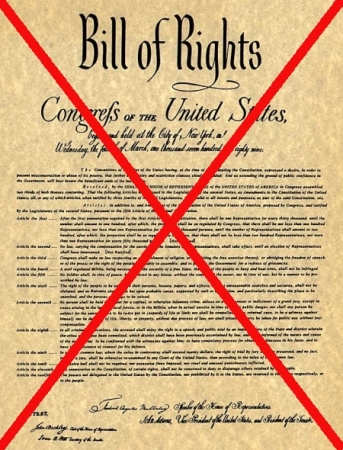
The Bill of Rights cancelled at Amazon
No first amendment on Amazon.

Blacklists are back and Amazon’s got ’em: Yesterday my blacklist column noted how Amazon has blackballed the live stream of a film biography of Supreme Court Justice Clarence Thomas.

That however is not the only example of Amazon’s anti-free speech agenda and its desire to silence conservative thought. In recent months book authors and publishers have repeatedly discovered that Amazon has been either banning outright their books, or shadow-banning them from searches so that potential customers cannot find them.

The link gives about a number of examples, but a quick internet search finds numerous others (see for example here, here, and here).

Only rarely will Amazon admit to this censorship, and when it does, it does so by claiming vague rules about preventing “hate speech,” even though this giant online store has done nothing to remove books and products promoting Islamic terrorism, Nazi paraphernalia, and Antifa-supporting materials.
» Read more

5 comments

Today’s blacklisted American: Supreme Court Justice Clarence Thomas

Clarence Thomas: Banned at amazon
Supreme Court Justice Clarence Thomas:
Blackballed by Amazon Prime.

Blacklists are back and Amazon’s got ’em: During Black History month in February, Amazon decided it would no longer live stream on Amazon Prime the documentary on the life of Supreme Court justice Clarence Thomas, Created Equal: Clarence Thomas in His Own Words.

In the midst of Black History Month, Amazon pulled a critically acclaimed and popular documentary on conservative Justice Clarence Thomas, the only black justice currently serving on the Supreme Court, from its streaming platform. The documentary, “Created Equal: Clarence Thomas in His Own Words,” is “currently unavailable to watch in your location,” the website reads when the title is clicked. The outage appears to be nationwide, as reported by Breitbart.

Amazon appeared to drop the PBS documentary, while still promoting a wide range of films including “All In: The Fight for Democracy” with Stacey Abrams and two movies on widely discredited activist Anita Hill.

That was in February, a time period when Americans of all stripes are supposed to celebrate the achievements of all blacks, no matter their politics. Amazon however for reasons that remain unexplained removed the Thomas documentary at that very moment, and has not reinstated it to this day. You can buy the dvd at Amazon, but you cannot watch it on Amazon’s live streaming service, even though the film’s maker, Michael Pack, was never offered an explanation for its removal.
» Read more

7 comments

China creates company to build mega-satellite constellation

The new colonial movement: Late last month China officially created a company to build its own mega-satellite constellation, consisting of 13,000 satellites to provide internet access globally, to compete with the commercial constellations being built by SpaceX, OneWeb, and (someday) Amazon.

Spectrum allocation filings submitted to the International Telecommunication Union (ITU) by China in September last year revealed plans to construct two similarly named “GW” [Guowang] low Earth orbit constellations totaling 12,992 satellites. The filings indicate plans for GW to consist of sub-constellations ranging from 500-1,145 kilometers in altitude with inclinations between 30-85 degrees. The satellites would operate across a range of frequency bands.

Currently no details have been released on the contractors to be involved in the constellation. Notably the China Satellite Network Group will exist independent from and parallel to China’s main space contractors, the China Aerospace Science and Technology Corp. (CASC), and the China Aerospace Science and Industry Corporation (CASIC).

The apparent independence of China Satellite Network Group from CASC and CASIC indicates that other actors, such as other state-owned enterprises and commercial sector space companies could be involved in the construction of the constellation.

Not only does the creation of this company suggest a power-struggle within China’s government, it illustrates the intensifying competition internationally over space. While commercial satellite constellations like SpaceX and OneWeb will be able to provide their services to China, they will also be outside the control of that nation’s dictatorship. If their citizens use them they will have free access to information, something that China’s leaders refuse to allow.

Thus, the political decision in China to build their own constellation. It will also give China the ability to exert its influence worldwide by offering an alternative to the commercial western constellations, one that other dictators can control as well.

Expect more whining from astronomers about how this constellation of satellites will add to their woes. Instead of whining, might they finally decide to at last consider building in-space telescopes, where there is no atmosphere to fog their view and no satellites blocking their vision?

1 comment

Amazon signs ULA’s Atlas 5 for first 9 Kuiper satellite launches

Capitalism in space: Amazon today announced that it has signed a launch contract with ULA to use its Atlas 5 rocket for the first 9 Kuiper satellite launches.

The announcement did not say when these flights will take place, nor how many Kuiper satellites will be on each. Amazon’s license with the FAA requires that it launch half its 3,200 satellite constellation by ’26. Also ULA intends to retire the Atlas 5 in only a few years, replacing it with its Vulcan rocket. This suggests that the launches will occur in the next three years.

They better. Starlink is already going operational, and OneWeb is about to. Plus several other internet constellations are in the pipeline. If Amazon wishes to compete it needs to get those satellites in orbit as quickly as possible. Internet customers don’t generally change their servers easily, tending to stick with whom they’ve got. If Starlink and OneWeb scoop up all the best low-hanging internet fruit Amazon will find itself facing an uphill battle getting customers.

The article revealed one tidbit of interest. Rajeev Badyal, Amazon’s VP of technology for the Kuiper project, was one of the managers Elon Musk fired from his Starlink project in 2018 after realizing that that management team was moving far too slowly for his tastes. It appears Jeff Bezos then hired Badyal to run Kuiper.

1 comment

Today’s blacklisted American: the David Horowitz Freedom Center and its webpage FrontPage

Today's modern witch hunt
Burn witches: What the Southern Poverty Law Center
does to ordinary conservatives.

They’re coming for you next: The conservative David Horowitz Freedom Center and its publication FrontPage Magazine has found itself repeatedly blackballed by various major companies, simply because the center stands for freedom and the principles of western civilization.

In just the past couple of years, MasterCard temporally shut us down, one of our local banks closed our account due to our “controversial positions on issues,” and a brokerage firm closed our account for “unknown reasons.” Amazon will not allow the Freedom Center, a 501 c3 IRS designated nonprofit, to participate in their Amazon Smiles charity campaign because of the SPLC’s [Southern Poverty Law Center] designation of the Center has a “hate group” and now Disqus, the largest networked community platform on the Internet, has canceled our service.

The last example from Disqus involved that company’s sudden decision to cease providing the FrontPage website its commenting service.
» Read more

13 comments
1 2 3 4