Two overnight launches

The beat goes on: Since yesterday there were two more successful rocket launches, from India and SpaceX.

First, SpaceX last night launched its fourth Bandwagon mission carrying 18 mid-sized smallsat payloads, its Falcon 9 rocket lifting off from Cape Canaveral in Florida. The first stage completed its third flight, landing back at Cape Canaveral. The fairings completed their 11th and 13th flights respectively.

Bandwagon rideshare missions are dedicated missions by SpaceX. SpaceX’s SmallSat Rideshare Program provides small satellite operators with regularly scheduled, dedicated Falcon 9 rideshare missions to mid-inclination orbits for ESPA-class payloads, starting at $300,000 per mission and including up to 50kg of payload mass.

Among these payloads two were most notable, a South Korean military surveillance satellite and a demo module for the space station startup Vast. With the latter, the company will use this unmanned orbiting prototype to test operations to prepare for the launch in the spring of its full-sized manned demo station, Haven-1.

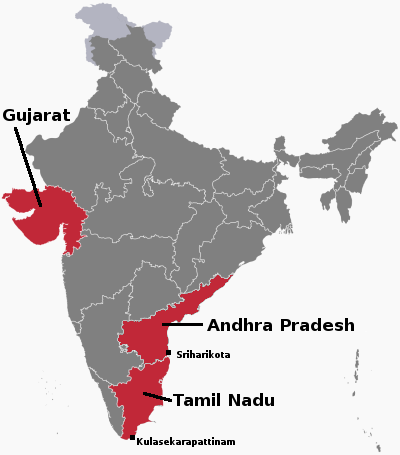
Next India’s space agency ISRO today launched its largest rocket, LVM3, lifted off from its Sriharikota spaceport, carrying the heaviest payload India had yet launched, a government communications satellite.

It appears the LVM-M3 has finally be given a real name. Previously ISRO called it the Geosynchronous Launch Vehicle (GSLV). When it was upgraded to a more powerful version intended for India’s manned program, the name was revised to LVM3 (Launch Vehicle Mark 3). News reports today referred to the rocket now as Bahubali, calling it a “nickname.”

In all of ISRO’s missions the agency routinely uses very generic official names, but appears to eventually accept nicknames that the press uses, such as Chandrayaan for its moon missions, Mangalyaan for its Mars orbiter, Gaganyaan for its manned missions, and now Bahubali for this rocket. Increasingly however the Modi government seems to be pushing to use these names instead of those generic titles.

This was India’s third launch in 2025. The leaders in the 2025 launch race:

143 SpaceX (a new annual record)
66 China
13 Russia
13 Rocket Lab

SpaceX now leads the rest of the world in successful launches, 143 to 109.

4 comments

SpaceX launches 28 more Starlink satellites

SpaceX this afternoon successfully placed another 28 Starlink satellites into orbit, its Falcon 9 rocket lifting off form Vandenberg Space Force Base in California.

The first stage (Booster 1063) completed its 29th flight, landing on a drone ship in the Pacific. With this flight this booster has now flown more times than the space shuttle Columbia, as shown below in the rankings for the most reused launch vehicles:

39 Discovery space shuttle
33 Atlantis space shuttle
31 Falcon 9 booster B1067
29 Falcon 9 booster B1071
29 Falcon 9 booster B1063
28 Columbia space shuttle
27 Falcon 9 booster B1069

Sources here and here.

The leaders in the 2025 launch race:

142 SpaceX (a new annual record)
66 China
13 Russia
13 Rocket Lab

SpaceX now leads the rest of the world in successful launches, 142 to 108.

5 comments

Two former NASA administrators express wildly different opinions on NASA’s Artemis lunar program

At a symposium yesterday in Alabama, former NASA administrators Charles Bolden and Jim Bridenstine expressed strong opinions about the state of NASA’s Artemis lunar program and the chances of it getting humans back to Moon before the end of Trump’s term in office and before China.

What was surprising was how different those opinions were, and who said what. Strangely, the two men took positions that appeared to be fundamentally different than the presidents they represented.

Charles Bolden
Charles Bolden

Charles Bolden was administrator during Barack Obama’s presidency. Though that administration supported the transition to capitalism, it also was generally unenthusiastic about space exploration. Obama tasked Bolden with making NASA a Muslim outreach program, and in proposing a new goal for NASA he picked going to an asteroid, something no one in NASA or the space industry thought sensible. Not surprisingly, it never happened.

Bolden’s comments about Artemis however was surprisingly in line with what I have been proposing since December 2024, de-emphasize any effort to get back to the Moon and instead work to build up a thriving and very robust competitive space industry in low Earth orbit:

Duffy’s current messaging is insisting it’ll be accomplished before Trump’s term ends in January 2029, but Bolden isn’t buying it. “We cannot make it if we say we’ve got to do it by the end of the term or we’re going to do it before the Chinese. That doesn’t help industry.

Instead the focus needs to be on what we’re trying to accomplish. “We may not make it by 2030, but that’s okay with me as long as we get there in 2031 better than they are with what they have. That’s what’s most important. That we live up to what we said we were going to do and we deliver for the rest of the world. Because the Chinese are not going to bring the rest of the world with them to the Moon. They don’t operate that way.” [emphasis mine]

In other words, the federal government should focus on helping that space industry grow, because a vibrant space industry will make colonizing the Moon and Mars far easier. And forget about fake deadlines. They don’t happen, and only act to distort what you are trying to accomplish.

Meanwhile, Jim Bridenstine, NASA administrator during Trump’s first term, continued to lambast SpaceX’s Starship lunar lander contract, saying it wasn’t getting the job done on time, and in order to beat the Chinese he demanded instead that the government begin a big government-controlled project to build a lander instead.
» Read more

25 comments

SpaceX: Starship will be going to the Moon, with or without NASA

Artist's rending of Starships on the Moon
SpaceX’s artist’s rending of Starships on the Moon.
Click for original.

In what appears to be a direct response to the claim by NASA’s interim administrator Sean Duffy that SpaceX is “behind” in developing a manned lunar lander version of Starship, SpaceX today posted a detailed update of the status that project, noting pointedly the following in the update’s conclusion:

NASA selected Starship in 2021 to serve as the lander for the Artemis III mission and return humans to the Moon for the first time since Apollo. That selection was made through fair and open competition which determined that SpaceX’s bid utilizing Starship had the highest technical and management ratings while being the lowest cost by a wide margin. This was followed by a second selection [Blue Origin’s Blue Moon lander] to serve as the lander for Artemis IV, moving beyond initial demonstrations to lay the groundwork that will ensure that humanity’s return to the Moon is permanent.

Starship continues to simultaneously be the fastest path to returning humans to the surface of the Moon and a core enabler of the Artemis program’s goal to establish a permanent, sustainable presence on the lunar surface. SpaceX shares the goal of returning to the Moon as expeditiously as possible, approaching the mission with the same alacrity and commitment that returned human spaceflight capability to America under NASA’s Commercial Crew program.

The update then provides a list of the testing and engineering work that SpaceX has been doing on the Starship lunar lander, including full scale drop tests simulating lunar gravity, qualification of the docking ports, and the construction of a full scale mock-up of the Starship cabin to test its systems.

A close list of the work done is actually not that impressive, but at the same time this is not surprising. SpaceX is now mostly focused on getting Starship into orbit, proving it can be refueled there, and proving it can fly for long enough to get to the Moon. This part of the update was most exciting, as it confirms what I have suspected for next year’s flight program:
» Read more

52 comments

AST SpaceMobile signs 10-year deal with Saudi Arabia

The American satellite startup AST Spacemobile yesterday signed a ten year $175 million deal with Saudi Arabia’s telecommunications company STC to use is Bluebird satellite constellation provide its phone-to-satellite service to Saudi Arabia.

AST SpaceMobile will integrate its space-based cellular broadband connectivity with stc’s terrestrial infrastructure to expand mobile coverage across Saudi Arabia, as well as select countries in the Middle East and Africa. The partnership aims to eliminate connectivity gaps by delivering 5G and 4G LTE services directly to standard mobile phones without the need of any specialized software or device support or updates, for consumers, enterprises, and government sectors, ensuring seamless voice and broadband access

Under this agreement, the first in the region for AST SpaceMobile, the company will build three ground gateways in Saudi Arabia and establish a Network Operations Center (NOC) in Riyadh to support the network’s operations and service quality. These key infrastructure developments will be instrumental in providing seamless connectivity across the region.

In many ways, this company is the only one that is succeeding in a direct competition with SpaceX. Both companies are launching satellites designed to act as orbiting cell towers for smart phones. Both are now operational to about the same extent. And both are winning contracts in the U.S. and internationally.

With rocketry however no one else is even close to SpaceX. It is a decade since it introduced reusability in rockets, and still no one else has done it. And as for its Starlink internet satellite constellation, only now, five years after that constellation’s first launch, are other satellite constellations beginning to launch. Its 5,000-plus constellation exceeds all other constellations combined.

AST is not only competing with SpaceX, it might even be winning. For that the company deserves great kudos indeed.

1 comment

Lawsuit against Amazon for favoring Blue Origin over SpaceX to launch Kuiper satellites gets new hearing

The lawsuit originally filed in 2023 against Amazon because it favored other less reliable rockets, including Blue Origin’s forever-delayed New Glenn, instead of using SpaceX to launch its Kuiper constellation of satellites, got a new hearing yesterday after the suit was dismissed in February.

The suit is now being pursued a pension fund that apparently invested in the Kuiper constellation, and claims Jeff Bezos used his influence to convince Amazon to avoid using SpaceX when it signed launch contracts with ULA, Arianespace, and Blue Origin in 2022, even though none of those rockets were even operational at the time. Even now they appear unable to meet Amazon’s launch requirements.

Amazon has until 2026 to send up the first 1,600 satellites and three more years to launch the next batch. That broader backdrop barely came up during the appeal proceedings, which zoomed in on allegations that the board made no effort to oversee self-dealing by Bezos as he directed billions from Amazon to his own rocket company, Blue Origin, despite SpaceX’s superior capabilities.

Vivek Upadhya, counsel for the pension fund, stressed the “billions of dollars flowing directly from Amazon to a company owned and controlled by Amazon’s CEO and chairman.” The sheer scale of the conflict of interest made the Blue Origin contract “a truly exceptional transaction” requiring attentive board supervision, regardless of the actual role Bezos played in negotiations, according to Upadhya. “Delaware law doesn’t require that directors harbor some innate suspicion” before taking steps to manage conflicts, but the board “failed to lift a finger,” he said.

Following the filing of the 2023 lawsuit, Amazon signed SpaceX to a three-launch contract, which SpaceX has now completed. Meanwhile, only ULA has managed any of the other launches, three also. As for Arianespace and Blue Origin, it is not clear when either will begin doing any Kuiper launches.

It does appear Amazon’s board played favorites here, and did so in a way that was harmful to the company’s bottom line. Whether this can be proved to the satisfaction of the court however is very uncertain.

0 comments

SpaceX launches 29 Starlink satellites

SpaceX once again broke its annual record for successful launches today, placing 29 Starlink satellites into orbit, its Falcon 9 rocket lifting off from Cape Canaveral in Florida.

The first stage completed its 15th flight, landing on a drone ship in the Atlantic.

The leaders in the 2025 launch race:

141 SpaceX (a new record)
65 China
13 Russia
13 Rocket Lab

SpaceX now leads the rest of the world in successful launches, 141 to 107. The U.S. launch total in 2025, now 159, is also a new record.

5 comments

Blue Origin officials provide update on their lunar lander program

2023 artist rendering of the manned Blue Moon lander

Link here. According to the article, the company is presently stacking its first unmanned version of its Blue Moon lander, dubbed Blue Moon Mark 1, scheduled for launch now next year.

The 8.1-meter-tall cargo lander will help with ongoing development of their crewed lander, named Blue Moon Mk. 2, which is 15.3 meters tall. Both are powered by Blue Origin’s BE-7 engines, which are being tested on stands in Alabama, Texas and Washington.

…“A big milestone for you to look out for online is that Mk. 1 is three modules that are being stacked as we speak: aft, forward and mid. And once it is stacked in its finished configuration, we will be barging it over to NASA Johnson Space Center Chamber A to do a full up thermal vac campaign,” said [Jacqueline Cortese, Blue Origin’s Senior Director of Civil Space]. “So when you see that on its boat, you will know that big things are happening.”

Both versions of the lander are powered by a combination of liquid hydrogen and liquid oxygen. A key difference though is that Mk.1 can be launched to the Moon with a single launch of Blue Origin’s New Glenn rocket while Mk. 2 requires orbital refueling. [emphasis mine]

The highlighted sentence above is important because it illustrates the absurdity of the comments last week by interim NASA administrator Sean Duffy, claiming SpaceX’s program to make Starship a manned lunar lander is “behind”, forcing him to open up the competition to Blue Origin, who might get it done sooner.

One of the big issues used against SpaceX is that Starship will need to be refueled once in orbit to work as a lunar lander, and that technology needs to be developed and tested. The problem with this criticism is that, as noted above, Blue Origin’s manned lunar lander also needs to be refueled.
» Read more

11 comments

Startup semi-conductor manufacturer Besxar signs deal to use SpaceX’s Falcon 9 first stage as production platform during its short flight

In what appears to be first, the startup Besxar has signed a deal with SpaceX to fly what it calls its Fabships on the first stage of the Falcon 9 in order to take advantage of the extreme vacuum of space to produce better semi-conductors.

Fabships will be integrated on Falcon 9 first stage boosters and retrieved post launch after the rocket safely returns to land. The campaign marks the first-ever reusable payload program to launch on a SpaceX rocket and will accelerate Besxar’s path toward building the world’s first orbital semiconductor foundry. This flight campaign will debut Besxar’s “Clipper-class” Fabship, engineered for short-duration, quick-turnaround sorties that enable rapid iteration and demonstrate the first phase in Besxar’s broader vision to establish scalable semiconductor production in orbit.

Besxar is pioneering a new class of orbital manufacturing, using the ultra-high vacuum (UHV) of space to produce ultra-pure substrates and precursor materials—the foundational building blocks for AI data centers, quantum computing, nuclear systems, next-generation defense systems, and directed-energy applications. By manufacturing in orbit, Besxar can achieve purity levels and yield efficiencies impossible on Earth, effectively doubling the chip cost-efficiency for next-generation AI workloads.

The deal is for twelve flights, with the first occurring as soon as this year. The deal not only allows Besxar an opportunity to produce a better product it can sell, it gives SpaceX another avenue for profits. It is in fact surprising that SpaceX has not done more deals like this, especially with its Dragon cargo capsule. There is a whole cottage industry now developing using returnable capsules for in-space manufacturing — led by Varda. That SpaceX hasn’t offered Dragon as yet is puzzling. It is possible Dragon is simply too expensive and large at this time, based on the nascent state of this industry. Once investors see profits from the smaller new capsules like Varda’s they will look at Dragon as an option.

7 comments

SpaceX settles Cards Against Humanity lawsuit against it

Though no monetary numbers have been released, its appears Cards Against Humanity (CAH) has settled its $15 million lawsuit with SpaceX, instigated when the company illegally stored equipment on a piece of land CAH had purchased in 2017 in an effort to block Trump’s border wall.

Per AP, according to Texas court records, a settlement was finalized last month, prior to the upcoming Nov. 3 jury trial marked on the calendar. SpaceX owns other land plots in the Brownsville, Texas area in Cameron County, but apparently had no right to use this patch.

“The upside is that SpaceX has removed their construction equipment from our land and we’re able to work with a local landscaping company to restore the land to its natural state: devoid of space garbage and pointless border walls,” CAH wrote in a recent message to customers. “Were we hoping to be able to pay all our fans? Sure. But we did warn them they would probably only be able to get like $2 or most likely nothing.”

Based on a somewhat childish and obscene statement from CAH describing the settlement, it got little additional money from SpaceX. The company admitted its trespass, agreed to pay for the restoration, but agreed to nothing else. In response, CAH says it will issue a free new set of cards “all about Musk” to those who donated to buy the land. The tone of CAH suggests the cards will be equally childish and obscene.

As for the border wall, if the Trump administration decides it wants to build it across this piece of land, CAH’s ownership won’t make any difference. The Trump administration will simply initiate eminent domain proceedings to take the land.

2 comments

Voyager Space buys satellite electric propulsion company Exoterra

Voyager Space announced yesterday that it has acquired Exoterra, a company that specializes in building electric propulsion engines for satellites.

ExoTerra’s proprietary technology delivers precise maneuvering, extended lifetimes and high efficiency delta-V – essential for spacecraft across national defense architecture layers that must be able to reposition, avoid threats and sustain mission advantage.

…ExoTerra’s Halo thruster technology is proven aboard DARPA Blackjack ACES spacecraft and the company recently supplied York Space Systems with 21 propulsion modules for the Space Development Agency Transport Layer. The company also has contracts with commercial companies and organizations such as NASA.

Voyager Space began as a space station startup, acting as the lead company in the consortium building the Starlab station. Since then it has diversified its operations to make money in other space-related areas. This acquisition appears aimed at increasing Voyager’s ability to win contracts in connection with the military’s Golden Dome project.

5 comments

SpaceX launches another 28 Starlink satellites

SpaceX yesterday afternoon added another 28 Starlink satellites to its constellation, its Falcon 9 rocket lifting off from Vandenberg in California.

The first stage completed its 17th flight, landing on a drone ship in the Pacific. This launch — as will every SpaceX launch for the rest of the year — also set a new annual launch record for both American and SpaceX.

The leaders in the 2025 launch race:

140 SpaceX
65 China
13 Russia
13 Rocket Lab

SpaceX now leads the rest of the world in successful launches, 140 to 107.

0 comments
1 38 39 40 41 42 677