Update on upcoming first launch of Relativity’s Terran-1 rocket

Link here. Relativity has been doing longer and longer static fire tests on the launchpad, building to what could be the first every full duration static fire test of a rocket, on the launchpad.

A pair of spin-start tests on Terran 1’s first stage was completed on July 18 and 21 of this year. This was followed by hot fire tests, which not only started the nine Aeon 1 engines but allowed them to reach full thrust before shutdown. The first of these hot fire tests occurred on July 27 and lasted six seconds.

Once complete engine ignition was achieved, the next goal was to work toward firing the first stage for the full duration that will be needed during the flight from liftoff to stage separation. This type of “mission duty cycle” test is usually done on dedicated test stands rather than on the launch pad, but the test stand being used in place of the launch mount at SLC-16 enabled Relativity to streamline operations and complete long-duration firings on the launch pad. “To our knowledge, no other company has ever actually done a full flight duration test on the actual launch mount, or launch pad, at Cape Canaveral,” said Relativity CEO Tim Ellis, in an August interview with NASASpaceflight.

.

Once this test is completed, the rocket will be rolled back to its assembly building for check-outs, and if all is well will then be returned to the launchpad for its actual launch. No date has been set for that launch, but if it occurs before SpaceX’s Starship orbital launch, it will be the first methane-fueled rocket to reach orbit.

2 comments

India buying land for new spaceport on India’s southern tip

Kulasekarapattinam

The Indian government has now acquired about 80% of the land it needs for new spaceport on that country’s southern tip.

The new spaceport will be built in Tamil Nadu’s southern region. The new spaceport at Kulasekarapattinam will have some advantages over India’s current and only spaceport at Sriharikota.

Rockets launching into polar orbit from Sriharikota, Andhra Pradesh, must perform a turn manoeuvre to avoid flying over Sri Lanka. This necessitates the use of fuel and reduces the mass that can be carried into orbit. While this has little effect on large rockets, it has a negative impact on the capacity of small rockets such as the SSLV (Small Satellite Launch Vehicle) and those built by Indian start-ups.

A launch from Kulasekarapattinam will allow for a direct flight path to the polar regions (without having to fly over and around Sri Lanka), saving fuel and payload capacity.

Sriharikota’s location is much farther north, beyond the top of the map to the right. It appears this new spaceport is aimed at attracting new private smallsat rocket companies.

0 comments

SpaceX and the Ukraine resolve funding issues for Starlink terminals

According to a Ukrainian official, the Ukraine has worked out a method to pay for another 10,000 Starlink terminals by obtaining funding from several European nations.

Ukraine’s deputy prime minister Mykhailo Fedorov has announced that over 10,000 additional Starlink terminals will be sent to Ukraine in the coming months, confirming that issues regarding how to fund the country’s critical satellite internet service have been resolved.

The governments of several European Union countries are ready to share payment said Fedorov (who is also Ukraine’s minister for digital transformation) in an interview with Bloomberg, affirming that “As of now all financial issues have been resolved.” Fedorov did not publicly identify which governments are contributing towards the payments but confirmed that there’s currently no contract in place and that Ukraine will need to find additional funding by spring 2023.

Elon Musk had threatened to end Starlink support without some form of payment. It appears his threat, which was almost immediately retracted, forced some action by these governments.

1 comment

Virgin Orbit finally receives launch license from British bureaucracy

We’re here to help you! The UK’s Civil Aviation Authority has finally issued a license to Virgin Orbit to launch nine satellites from a Cornwall airport.

The launch date however has not yet been set, because it appears licenses for the nine satellites still need to be issued, though according to the article at the link, approval appears “imminent.”

The press release from the UK Space Agency brags about the speed in which this license was issued:

The UK Civil Aviation Authority granted the licences within 15 months, well within the expected timescales for these types of licences, putting the UK’s regulatory framework on a competitive footing with other international space regulators.

Hogwash. If the licensing process for every commercial launch in the UK is going to take this long, rocket companies are going to quickly find other places to launch from.

2 comments

Launch failure for Arianespace’s Vega-C rocket

The second launch of Arianespace’s Vega-C rocket, an upgrade from the Vega rocket that has launched previously, failed yesterday when a problem with the second stage occurred at 2 minutes 27 seconds into the flight.

Designated Vega Vehicle 22 (VV22), the rocket was the second Vega flight of the year and Arianespace’s fifth mission of 2022. VV22 was originally set to launch in November 2022, but a component in the upper composite in the payload fairing needed to be replaced. The launch failure occurred during stage 2 flight, with CEO Stephane Israel citing an “underpressure” indicated during that stage’s burn.

I have embedded video of the launch below, cued to T-30 seconds, just before launch. The rocket was carrying two Earth observation satellites built by Airbus.

The rocket itself has four stages, with the failure occurring when the second stage clearly did not maintain the rocket’s correct path. Though it appeared to be working, it was not providing enough power, so instead of continuing upward into space, the rocket fell back into the atmosphere.
» Read more

2 comments

Rocket Lab reschedules first Wallops launch to January

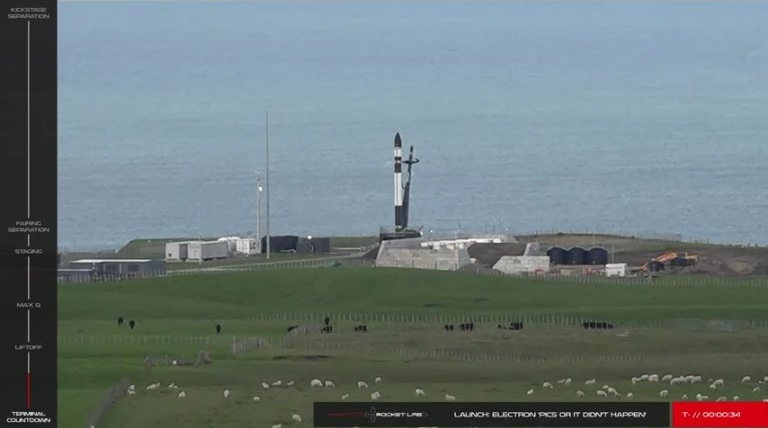
Having had to scrub the launch on December 18th and December 19th due of weather, Rocket Lab has now officially rescheduled its first Wallops launch to January.

The move of the planned launch window from December 2022 to early 2023 was driven by weather and the additional time that the National Aeronautics and Space Administration (NASA) at Wallops and the Federal Aviation Administration (FAA) required to complete essential regulatory documentation for launch. The delay in documentation left only two days in the originally scheduled 14-day launch window and both of those final remaining days were unsuitable for launch due to bad weather. The Mid-Atlantic Regional Spaceport within NASA’s Wallops Flight Facility is now closed for launch activity for the remainder of the December due to holiday airspace restrictions, preventing further launch attempts in 2022.

Rocket Lab originally wanted to launch from Wallops two years ago, but has been repeatedly stymied by government red tape. At that time the company wanted to use the software of its own flight termination system, a system that it has successfully used in New Zealand more than two dozen times, including several times where launch failures actually required the system to destroy the rocket. NASA said no, and instead insisted on spending two years apparently creating its own software which also requires the added presence of NASA officials during launch.

5 comments

Weather forces Rocket Lab to scrub first launch from Wallops

High altitude winds yesterday forced Rocket Lab to scrub its first Electron launch attempt from Wallops Island in Virginia yesterday.

The weather also forced the company to cancel a launch attempt today.

Teams are now evaluating the next possible launch window while coordinating with holiday travel airspace restrictions. The flight will lift off from Rocket Lab’s Launch Complex-2 (LC-2) at NASA’s Wallops Flight Facility in Virginia.

This could mean that Rocket Lab will not be able to launch before the end of the year. The company very much wishes to do this, however, as it would give it ten launches in 2022, as well as a launch pace of one per month for most of the year.

This first launch from Wallops is also important, as it would give Rocket Lab three launchpads, including one in the U.S. for launching classified military payloads. It had hoped to launch from Wallops two years ago, but red tape at NASA delayed the launch.

2 comments

South Korean rocket startup to launch suborbital test rocket

Innospace, a South Korean rocket startup, hopes tomorrow to complete the first suborbital launch of its Hanbit-TLV test rocket from Brazil.

The Sejong-based company aims to develop Korea’s first private commercial satellite launcher, the Hanbit-Nano, with data collected from the test launch. Hanbit-Nano will be a two-stage rocket equipped with a 15-ton-thrust hybrid engine, powered by solid fuel and liquid oxidizer.

Originally scheduled for 6 a.m., Monday, the test launch of the Hanbit-TLV rocket was delayed by a day due to unexpected rain and inclement weather. Innospace said that the launch window is open until Wednesday.

The launch will also be a significant event for Brazil’s Alcântara Launch Center, which is trying to attract commercial rocket companies to use it.

0 comments

L3Harris to buy Aerojet Rocketdyne for $4.7 billion.

The space and defense contractor L3Harris Technologies has announced a deal to buy Aerojet Rocketdyne for $4.7 billion.

L3Harris is buying Aerojet at $58 per share in an all-cash transaction. Aerojet shares traded at $54.89 on Dec. 16. The deal is expected to close in 2023, pending regulatory approvals.

Aerojet Rocketdyne, based in Sacramento, California, manufactures rocket engines and propulsion systems for space vehicles, ballistic missiles and military tactical weapons. The company generates approximately $2.3 billion in annual revenue. L3Harris, headquartered in Melbourne, Florida, is a global defense and aerospace firm with $17 billion in annual revenue.

This deal could in the end save Aerojet, which in recent years has had problems both making and selling its rocket engines, while facing increasing competition from many new rocket engine startups. As an old space company, its engines have tended to be too expensive, and often produced behind schedule. L3Harris now has the opportunity to clean house and streamline operations there, thus making the engines it produces more competitive in the emerging new space market.

1 comment

Former SpaceX manager quits UK startup Skyrora after only six months

Only six months after he took the job as chief operating officer at the British rocket startup Skyrora, former SpaceX manager of its mission and launch operations Lee Rosen has quit the company.

A Skyrora spokesman said Mr Rosen had left for “personal reasons” and planned to return to California.

It is the latest blow to the space venture that is hoping to use a rocket base on the Shetland islands to fire small satellites into space. The company’s first suborbital launch test of its Skylark L rocket from a pad in Iceland failed, with the rocket crashing into the Norwegian ocean about 500 metres from the coast. The company blamed the failure on a “software related anomaly”.

Rosen’s quick exit from the company could suggest something is not quite right there, or it could simply be the job was not right for him. We do not know. The article however also provides this tidbit about this British rocket startup:

Skyrora was founded by Ukranian entrepreneur Volodymyr Levykin, a former executive at now defunct dating empire Cupid PLC. Its investors include Ukrainian internet entrepreneur Max Polyakov, according to a report by Snopes. Mr Polyakov is a shareholder at Hong Kong-based Digitroom Holdings, which owns a stake in Skyrora.

Polyakov was the billionaire who bought Firefly when it was bankrupt, He resurrected it, and then was forced to sell out by the State Department.

0 comments

Temperature in leaking Soyuz capsule drops

According to Russia’s state-run press TASS, the temperature in its leaking Soyuz capsule on ISS has now dropped to between 50 to 54 degrees Fahrenheit.

The language of the report suggests this temperature drop was the result of actions by Russia’s mission control, but that is decidedly unclear. With the thermal control system now depressurized, the capsule’s temperature could fluctuate a lot, depending on whether it is in shadow or sunlight, a condition dependent on the overall orientation of ISS itself.

A second TASS report today said that two Russian working groups are reviewing the data, and will decide around December 27th what the next step will be, including the possibility of launching a Soyuz capsule unmanned to replace this capsule.

“I believe that at the end of December, somewhere on the 27th [of December], specialists – and now two working groups have been set up – will decide on how we will resolve this situation,” [Yuri Borisov] the Roscosmos head, said in an interview with the daily Izvestia.

There is plenty of time for making decisions and “there is no hurry,” Borisov stressed.

What Borisov was really saying is that there is no reason to panic, but action must be taken without unnecessary delay.

5 comments

North Korea releases two images taken during suborbital missile test

North Korea images of South Korea

North Korea today released two images of two South Korean cities that it claims were taken from space during a suborbital satellite test flight this past weekend.

The North’s official Korean Central News Agency also released low-resolution, black-and-white photos showing a space view of the South Korean capital [Seoul] and Incheon, a city just west of Seoul, in an apparent attempt to show the North is pushing to acquire a surveillance tool to monitor its rival.

The rocket carrying the test satellite was launched Sunday to assess the satellite’s photography and data transmission systems, KCNA said.

Those pictures are at the right, at the resolution released. Though poor compared to most satellite reconnaissance, the photos suggest that the control systems of the rocket and camera worked, pointing it properly.

North Korea continues to push its missile and rocket program hard, this year launching a record number of missiles. According to the article, analysis of the image showing the launch suggests yesterday’s test was a liquid-fueled rocket, meaning North Korea is truly working towards an orbital rocket.

4 comments
1 249 250 251 252 253 785