China begins construction of commercial spaceport

The new colonial movement: China’s state-run press today announced the ground-breaking of a spaceport on the southern island of Hainan that will be dedicated to launches by that country’s pseudo-commercial companies.

The location is in Wenchang City, the same location of the country’s Wenchang spaceport used to launch government’s newest Long March rockets. While it isn’t clear from the Chinese news report, this new facility is likely at the same location.

Though China touts this as a commercial facility for private commercial launch companies, everything in China is still controlled and owned by the government. Nothing will happen at this new site that China’s military does not approve.

0 comments

Rocket Lab to launch twice in 10 days for NRO

Capitalism in space: Rocket Lab announced yesterday that its next two launches, scheduled for July 12th and July 22nd, will demonstrate the ability of the company to quickly launch reconnaissance satellites for the National Reconnaissance Office (NRO).

The NROL-162 and NROL-199 missions will carry national security payloads designed, built, and operated by the National Reconnaissance Office in partnership with the Australian Department of Defence as part of a broad range of cooperative satellite activities with Australia. The satellites will support the NRO to provide critical information to government agencies and decision makers monitoring international issues.

These twin missions will be a demonstration of responsive launch under NRO’s Rapid Acquisition of a Small Rocket (RASR) contract for launching small satellite through a streamlined, commercial approach, and are the third and fourth missions contracted to Rocket Lab by the NRO under the contract.

Several federal military agencies have been testing this capability with almost all the new rocket companies, from the large, such as SpaceX, to the small, such as Rocket Lab and Astra.

4 comments

Engineers propose flying gliders on Mars

Proposed sailplane flights in Valles Marineris
Proposed sailplane flights in Valles Marineris. Click for full image.

Engineers at the University of Arizona are developing a prototype sailplane that they think could fly for long distances on Mars at higher altitudes than a helicopter and not be reliant on solar batteries.

Using dynamic soaring, the sailplane utilises increases in horizontal wind speed with gaining altitude to continue flying long distances. It’s the same process albatrosses use to fly long distances without flapping their wings and expending crucial energy.

After lifting themselves up into fast, high-altitude air, albatrosses then turn their bodies to descend rapidly into regions of slower, low-altitude air. With the force of gravity providing downward acceleration, the albatross uses this momentum to slingshot itself back to higher altitudes. Continuously repeating this process enables albatross and other seabird species to cover thousands of kilometres of ocean, flap-free.

It’s the inspiration for the sailplane’s own propulsion system, enabling it to cover the canyons and volcanoes dotted across the red planet currently inaccessible to Mars rovers.

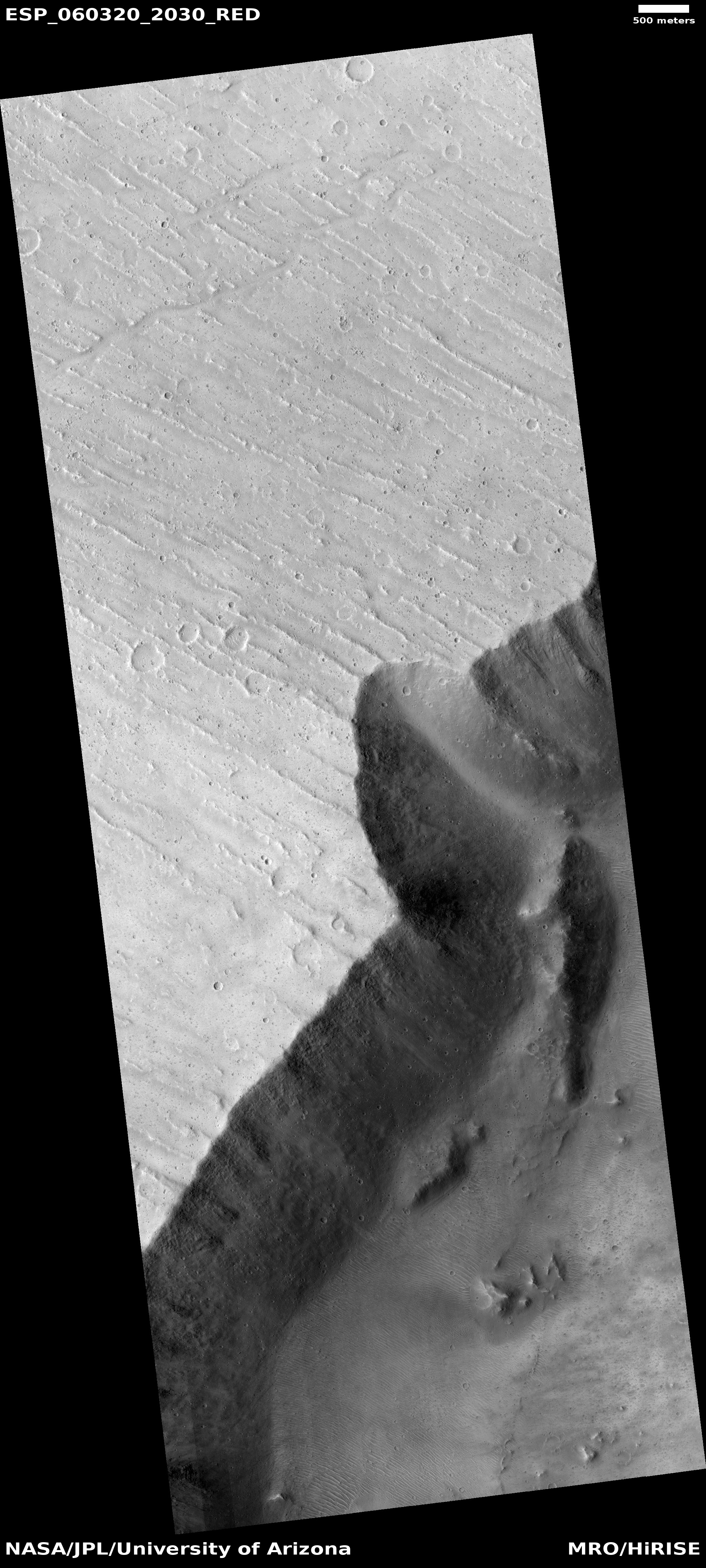
The graphic above, figure 1 from the engineers’ research paper, shows one possible sailplane mission, deploying two gliders, one to observe the canyon wall and a second to survey the canyon floor. Both would become a weather station upon landing. While the paper doesn’t state a Mars location for this concept, the graphic strikes a strong resemblance to the section of Valles Marineris where scientists have recently taken “Mars Helicopter” high resolution images using Mars Reconnaissance Orbiter (MRO). This paper and those images might be related, or they could be illustrating the general interest by many scientists for this Mars’ location.

Regardless, the engineers are now planning test flights at 15,000 feet elevation, an elevation that will most closely simulate the atmosphere of Mars, on Earth.

8 comments

Engineers lose contact with CAPSTONE on its way to Moon

Shortly after the spacecraft was successfully deployed from its Proton upper stage on yesterday, engineers lost contact with the spacecraft as it headed towards the Moon.

“The spacecraft team currently is working to understand the cause and re-establish contact. The team has good trajectory data for the spacecraft based on the first full and second partial ground station pass with the Deep Space Network,” NASA spokesperson Sarah Frazier wrote in an emailed statement today (July 5).

“If needed, the mission has enough fuel to delay the initial post-separation trajectory correction maneuver for several days,” Frazier added. “Additional updates will be provided as soon as possible.”

The spacecraft will not arrive in lunar orbit until November, but along the way it needs to do a number of course corrections. Thus, there is some time pressure to reestablishing communications. That task now falls with the private company Advanced Space, which won a contract to operate the spacecraft for NASA.

UPDATE: More details are provided by the operators of the spacecraft, Advanced Space press, here. Though they canceled a course correction burn today, they apparently have plenty of time to do it, since the probe is already on a course to reach lunar orbit. The burn was simply intended to increase the accuracy of the trajectory.

9 comments

Europe’s new long term space strategy calls for its own independent and competing manned program

Figure 6 from the Terrae Novae policy paper

The new colonial movement: The European Space Agency (ESA) yesterday unveiled a new roadmap for its future space effort, aimed primarily in developing an independent space program capable of launching its own astronauts and taking them to both the Moon and Mars.

The program is dubbed Terrae Novae (“New Worlds”) and aims to put European astronauts on other worlds using its own rockets and landers by the 2030s. The graphic to the right, figure 6 from the policy paper, illustrates this long term goal.

From the full document [pdf]:
» Read more

3 comments

ArianeGroup chosen by Europe to develop reusable rockets

The new colonial movement: The European Commission, which makes the major decisions for the European Space Agency, has chosen the European commercial company ArianeGroup to run two programs designed to produce that continent’s first reusable rocket.

From the press release [pdf]:

The SALTO project will facilitate the first flight tests of the Themis reusable stage demonstrator in Kiruna, Sweden. The ENLIGHTEN project will speed up the development and introduction of reusable engine technologies.

The main goal of SALTO will be to develop the kind of vertical landing technology that SpaceX now does routinely. ENLIGHTEN in turn will develop rocket engines using either methane or hydrogen as the fuel. The total budget allocated for both is just under 50 million euros, which seems quite small. The press release also made no mention of a schedule for accomplishing these tasks.

3 comments

Scientists: Comet 67P/C-G’s make-up matches the rest of the solar system

A detailed review of the archived data from the Rosetta mission that studied Comet 67P/Churyumov-Gerasimenko closely in 2014-2016 now strongly suggests that the comet’s overall make-up closely matches the rest of the solar system.

“It turned out that, on average, [the comet’s] complex organics budget is identical to the soluble part of meteoritic organic matter”, explains [Nora Hänni of the University of Bern] and adds: “Moreover, apart from the relative amount of hydrogen atoms, the molecular budget of [comet 67P/C-G] also strongly resembles the organic material raining down on Saturn from its innermost ring, as detected by the INMS mass spectrometer onboard NASA’s Cassini spacecraft”.

“We do not only find similarities of the organic reservoirs in the Solar System, but many of [comet 67P/C-G]’s organic molecules are also present in molecular clouds, the birthplaces of new stars”, complements Prof. Dr. Susanne Wampfler, astrophysicist at the Center for Space and Habitability (CSH) at the University of Bern and co-author of the publication. “Our findings are consistent with and support the scenario of a shared presolar origin of the different reservoirs of Solar System organics, confirming that comets indeed carry material from the times long before our Solar System emerged.”

These results are not unexpected, but having those expectations confirmed was one of the main scientific goals of the Rosetta mission. Now, almost a decade later, the results are in.

1 comment

Sunspot update: For the first time in 2022, sunspot activity eases

With the year half over, the Sun in June did something it had not done since the start of the year: The number of sunspots seen daily on the Sun’s visible hemisphere actually declined from the month before.

I know this because, as I do every month, I have posted below NOAA’s monthly update of its graph tracking the number of sunspots on the Sun’s Earth-facing hemisphere, with some addition details added to provide a larger context.

» Read more

1 comment

The new damage on Curiosity’s wheels

Comparing a Curiosity wheel from January to June 2022
To see the original images, go here and here.

On June 23, 2022 the Curiosity team provided a major update on the rover’s status on Mars, noting that because of new damage discovered on one of wheels, they were increasing the frequency of their wheel checks from once every 1000 meters of travel to once every 500 meters.

The team discovered that the left middle wheel had damaged one of its grousers, the zig-zagging treads along Curiosity’s wheels. This particular wheel already had four broken grousers, so now five of its 19 grousers are broken.

The previously damaged grousers attracted attention online recently because some of the metal “skin” between them appears to have fallen out of the wheel in the past few months, leaving a gap.

The photo comparison to the right might be showing that specific wheel, or not. The top image was taken January 11, 2022, and when compared then with an image taken six months earlier showed little change. Thus, in January 2022 it seemed the wheels were holding up well as Curiosity traveled into the mountains.

The new image at the bottom, taken June 3, 2022, shows new damage (as indicated by the plus sign) which had occurred sometime in the past six months. During that time the rover had attempted to cross the incredibly rough ground of the Greenheugh Pediment, and had been forced to retreat because the ground was too rough.

This most recent wheel survey in June thus confirms that the decision to retreat was a wise one. It appears that while the rover’s wheels can take the general roughness of the terrain in the foothills of Mount Sharp, the Greenheugh Pediment was beyond the wheels’ capabilities.

1 comment

Rocket Lab’s Photon completes course corrections, deploys CAPSTONE to Moon

Capitalism in space: Rocket Lab’s Photon upper stage successfully completed its seventh engine burn, putting NASA’s cubesat test lunar orbital on a path toward the Moon.

Following its launch on June 28, CAPSTONE orbited Earth attached to Rocket Lab’s Photon upper stage, which maneuvered CAPSTONE into position for its journey to the Moon. Over the past six days, Photon’s engines fired seven times at key moments to raise the orbit’s highest point to around 810,000 miles from Earth before releasing the CAPSTONE CubeSat on its ballistic lunar transfer trajectory to the Moon. The spacecraft is now being flown by the teams at Advanced Space and Terran Orbital. [emphasis mine]

From here on out CAPSTONE will use its own tiny thrusters to do any course corrections as it heads for an arrival in lunar orbit on November 13, 2022.

The highlighted words in the quote above are significant in and of themselves. The spacecraft is not being operated by NASA. In fact, other than paying for it, NASA has little to do with CAPSTONE. It was designed and built by Terran Orbital. It was launched by Rocket Lab. And it is now being controlled by Advanced Space, a private commercial company focused on providing in-space operations for others.

6 comments

One of Perseverance’s two wind sensors damaged by wind-blown material

According to the principal investigator for Perseverance’s two wind sensors, one was recently damaged by a wind-blown tiny pebble.

Pebbles carried aloft by strong Red Planet gusts recently damaged one of the wind sensors, but MEDA can still keep track of wind at its landing area in Jezero Crater, albeit with decreased sensitivity, José Antonio Rodriguez Manfredi, principal investigator of MEDA, told Space.com. “Right now, the sensor is diminished in its capabilities, but it still provides speed and direction magnitudes,” Rodriguez Manfredi, a scientist at the Spanish Astrobiology Center in Madrid, wrote in an e-mail. “The whole team is now re-tuning the retrieval procedure to get more accuracy from the undamaged detector readings.”

…Like all instruments on Perseverance, the wind sensor was designed with redundancy and protection in mind, Rodriguez Manfredi noted. “But of course, there is a limit to everything.” And for an instrument like MEDA, the limit is more challenging, since the sensors must be exposed to environmental conditions in order to record wind parameters. But when stronger-than-anticipated winds lifted larger pebbles than expected, the combination resulted in damage to some of the detector elements.

The term “pebble” implies a larger-sized particle than what probably hit the sensor. I suspect the “pebble” was no more than one or two millimeters in diameter, at the most.

1 comment
1 435 436 437 438 439 1,353