New Horizons completes another course correction before flyby

On December 2 New Horizons successfully completed another engine burn to refine its course for its January 1, 2019 flyby of the Kuiper Belt object Ultima Thule.

The maneuver was designed to keep New Horizons on track toward its ideal arrival time and closest distance to Ultima, just 2,200 miles (3,500 kilometers) at 12:33 a.m. EST on Jan. 1. At the time of the burn New Horizons was 4.03 billon miles (6.48 billion kilometers) from Earth and just 40 million miles (64 million kilometers) from Ultima – less than half the distance between Earth and the Sun. From that far away, the radio signals carrying data from the spacecraft needed six hours, at light speed, to reach home.

The team is analyzing whether to conduct up to three other course-correction maneuvers to home in on Ultima Thule.

The distance to Ultima Thule is still too much to produce detailed images. New Horizons however is going very fast, so in the coming three weeks this will change drastically, and for the better.

0 comments

China launches lunar rover/lander Chang’e-4; Saudi satellites

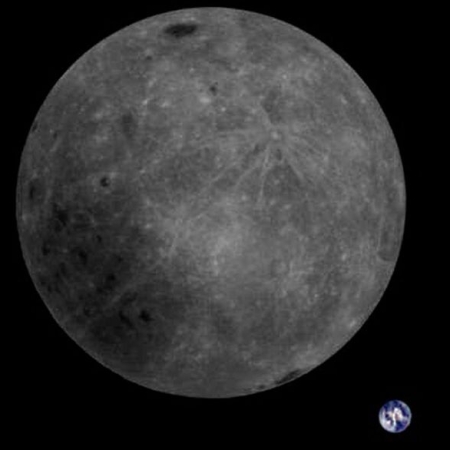
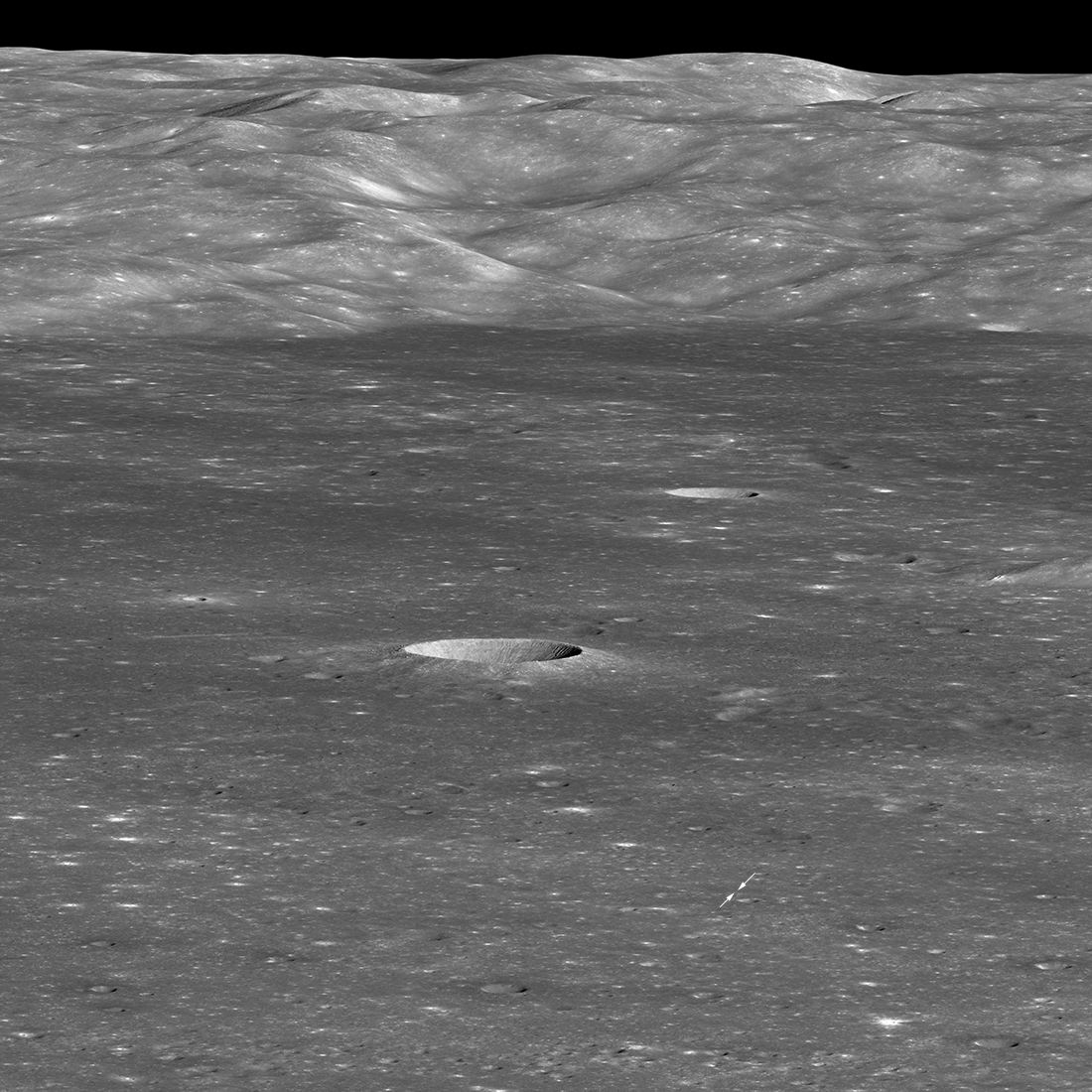
Using its Long March 3B rocket, China on December 7 successfully launched its Chang’e-4 rover/lander, aimed at being the first probe to land on the Moon’s far side.

It will take the probe five days to reach the Moon and land.

The same day China also launched two Earth observation satellites for Saudi Arabia, using its Long March 2D rocket.

The leaders in the 2018 launch standings:

35 China
20 SpaceX
13 Russia
10 Europe (Arianespace)

China has widened its lead over the U.S. 35 to 32 in the national rankings. China also looks like it is going to come close to meeting its prediction of 40 launches for 2018.

0 comments

InSight tests its robot arm

InSight has unfolded its robot arm and is beginning to use it to photograph the surrounding area to figure out where to place the spacecraft’s ground-sensing instruments.

With a reach of nearly 6 feet (2 meters), the arm will be used to pick up science instruments from the lander’s deck, gently setting them on the Martian surface at Elysium Planitia, the lava plain where InSight touched down on Nov. 26.

But first, the arm will use its Instrument Deployment Camera, located on its elbow, to take photos of the terrain in front of the lander. These images will help mission team members determine where to set InSight’s seismometer and heat flow probe – the only instruments ever to be robotically placed on the surface of another planet.

They are proceeding carefully, so actually deployment might not occur for several months, just make everything goes well.

0 comments

BepiColombo tests its ion engines

The joint European/Japanese mission BepiColombo has begun testing its ion engine thrusters for the first time in space as it heads to Mercury.

Testing took place during a unique window, in which BepiColombo remained in continuous view of ground-based antennas and communications between the spacecraft and those controlling it could be constantly maintained. This was the only chance to check in detail the functioning of this fundamental part of the spacecraft, as when routine firing begins in mid-December, the position of the spacecraft will mean its antennas will not be pointing at Earth, making it less visible to operators at mission control.

They have so far successfully tested two of the four engines.

0 comments

SpaceX sees no schedule impact from first stage landing failure

Capitalism in space: SpaceX officials expect the first stage landing failure during yesterday’s launch to have little impact on the schedule of upcoming launches.

They also indicated that the cause of the landing failure had something to do with a malfunction in the stage’s grid fins. More important however was this tidbit about the second stage:

Koenigsmann also revealed at the briefing that the rocket’s upper stage, which successfully placed the Dragon cargo spacecraft in orbit, used redesigned composite-overwrapped pressure vessels (COPVs) used to store helium to pressurize the stage’s propellant tanks. SpaceX redesigned those COPVs after a September 2016 pad explosion in order to meet NASA safety requirements for future commercial crew missions.

NASA requires SpaceX to perform at least seven launches with the redesigned COPVs before the agency will allow its astronauts to fly on the vehicle. Koenigsmann said he believed this was the second launch to use the redesigned COPVs, after the launch of the Es’hail-2 communications satellite Nov. 15.

SpaceX appears very unconcerned about getting those remaining five flights, which illustrates their expectation that 2019 will have a substantial number of launches in the first half of the year, prior to the tentative June launch date for the first manned Dragon mission.

1 comment

The vast southern highlands of Mars

Small section of Rocky Highlands

Rocky highlands

Cool image time! This week the Mars Reconnaissance Orbiter (MRO) science team made available its monthly release of new images taken by the high resolution camera on Mars Reconnaissance Orbiter (MRO). The image above is just a small cropped section from one of those new images, released under the name “Rocky Highlands.” The image on the right is a cropped and reduced section of the full photograph, with the white box indicating the small section above. If you click on either you can see the full resolution uncropped photograph and explore its complex and rough terrain.

What should immediately strike you looking at the small inset section above is the difficulty anyone is going to have traversing this country. There are no flat areas. Every inch seems to be a broken and shattered collection of ridges, pits, craters, or rippled dunes. And the inset above is only a tiny representation of the entire image, all of which shows the same kind of badlands.

This forbidding place is located in the southern highlands of Mars, north of Hellas Basin and south of the transition zone that drops down to the northern lowland plains. The white cross on the map below indicates the image location, with green representing the transition zone, blue the northern plains, and red/orange the southern highlands..
» Read more

4 comments

Falcon 9 launches Dragon; 1st stage return fails

SpaceX’s Falcon 9 rocket today successfully launched a Dragon cargo capsule to ISS.

Unfortunately, a problem with the first stage had it fail to land on its target landing pad, instead landing in the ocean. This failure is the first in quite some time for a SpaceX first stage. It was the first failure however of their Block 5 first stages, which might impact the manned Dragon launch schedule set for this coming year.

The leaders in the 2018 launch race:

33 China
20 SpaceX
13 Russia
10 Europe (Arianespace)
8 ULA

This SpaceX launch was the 100th successful rocket launch for 2018, the first time the global rocket industry has reached the century figure since 1991, before the fall of the Soviet Union. As SpaceX’s 20th launch this year it sets a new record for launches by a private company. In fact, this total exceeds the average number of launches for the entire U.S. from 2001 to 2016, and clearly demonstrates how SpaceX has not only become the world’s dominate launch company, its effort to foster competition into the launch industry has served to energize it, for everyone.

In the national rankings, China continues to lead the U.S. 33 to 32.

23 comments

Ariane 5 launches two satellites

Arianespace yesterday successfully placed a South Korean weather satellite and an Indian communications satellite into orbit using its Ariane 5 rocket.

The Indian satellite was initially supposed to launch in the spring, but ISRO pulled it back to India just after its arrival in French Guiana to do more checks on it because of the failure of another satellite using similar components.

The leaders in the 2018 launch race:

33 China
19 SpaceX
13 Russia
10 Europe (Arianespace)
8 ULA

Arianespace had predicted it would do 14 launches this year. As this launch is described as its last 2018 launch, it appears they have fallen short of that prediction.

These standings will be updated later today, assuming SpaceX’s Dragon launch to ISS goes off as scheduled.

2 comments

The cameras that saved Hubble

Link here. It is the 25th anniversary this week of the space shuttle mission that installed the two cameras that fixed the mirror issue on the Hubble Space Telescope, and the press release at the link provides a nice short overview of that mission, and what was involved to make it happen.

Of course, for a much more detailed look at this story, you could also buy and read A Universe in a Mirror. There are a lot of very fascinating stories that no single press release can possibly mention that I described with glee in writing this book.

0 comments

SpaceX recovers fairings from ocean

Capitalism in space: In its launch on December 3, SpaceX was unable to catch either half of the Falcon 9’s fairings as they floated down by parachute. However, both halves were recovered, and the company plans to try to dry them out and reuse them.

The recovery ship, Mr. Steven, failed to catch either in its giant net. Since both fairings however landed gently in the ocean, and were quickly recovered, the article notes that SpaceX is now considering a change in its method of recover. The method of landing appears to have the fairing halves almost act like small boats, thus protecting the delicate equipment on their interiors. It appears they have increased their waterproofing, and may now only need to get them out of the water quickly to make then reusable.

Posted from the West Bank city of Modi’in Ilit.

2 comments

The basement of Mars

Hellas Basin ripples

Cool image time! The photo on the right, cropped and reduced to post here, was taken by the high resolution camera of Mars Reconnaissance Orbiter (MRO) on May 2, 2018, and shows some very strange ripples and erosion features in one of the lowest elevation locations on Mars, inside Hellas Basin. If you click on the image you can see the full photograph, at full resolution. There are a lot of strange features here, so make sure you take a look at it. The ripples highlighted in the image are between what appear to be three lower basins, and seem to my eye to be ridges created as liquid ebbed and flowed in the basins, depositing material at the shoreline at repeatedly higher and lower levels.

hellas basin

This particular location is not only in Hellas Basin, but it is also located in the deepest part of Hellas, a curved valley located in the basin’s northwest quadrant, as shown by the darker areas in the overview image to the right. The red boxes are other MRO high resolution images, with the cross indicating where this image is located.

This is the basement of Mars, what could be called its own Death Valley. The difference however is that unlike Death Valley, conditions here could be more amendable to life, as the lower elevation means the atmosphere is thicker. The ripples also suggest that liquid water might have once been here, a supposition supported by other low area images of Hellas Basin, most of which show a flattish dappled surface that to me resembles what one would think a dry seafloor bed would look like. The image in this second link also shows what looks like ghost craters that over time became partly buried, something one would also expect to happen if they were at the bottom of a lake, though this could also happen over time on Mars with wind erosion and the movement of dust.

It is also possible that these features come from lava events, so please take my theorizing here with a great big grain of salt. At the same time, recent results have found evidence of paleo lakes scattered all along the eastern rim of the basin, reinforcing the possibility that these were water filled lakes once as well.

Nonetheless, the ripples in the first image above are truly fascinating, as it is clear that at the highest peaks erosion has ripped those peaks away, leaving behind a hollow shaped by the ripples themselves. These features remind me of some cave features I have seen, where mud gets piled but by water flow, and then is over time covered with a crust of harder calcite flowstone. Later, water then washes out the mud underneath, leaving the curved flowstone blanket hanging in the air.

Here in Hellas Basin it looks like something similar has happened, except that at these peaks the outside crust got broken away, allowing wind to slowly suck out the material underneath, leaving these ripple-shaped pits. Whether it was liquid water or lava that helped create these features, the geology left behind is both beautiful and intriguing. I wonder at the chemical make-up of the crust as well as the materials below. And I especially wonder if there are water sources buried within Hellas Basin.

0 comments

Falcon 9 first stage successfully flies for the third time

Capitalism in space: During a successful launch today of 64 smallsats, SpaceX successfully landed for the third time the rocket’s first stage.

This first stage flew twice before, in May and August. With this flight it is primed for a fourth flight, I will bet sometime in the next two months.

SpaceX was also going to try to recover half of the fairing, but as I write this there is no word yet on that effort. Also, the deployment of the 64 smallsats will start momentarily and take more than an hour. During the live stream, which you can watch as a replay at the link, it was very clear that one of SpaceX’s commercial goals with this launch was to promote the Falcon 9 as an affordable and viable vehicle for launching smallsats. SpaceX is anticipating the growth of that business, and wants to encourage smallsat manufacturers to buy their services. As I like to say, the competition is heating up.

The leaders in the 2018 launch race:

33 China
19 SpaceX
13 Russia
9 Europe (Arianespace)
8 ULA

China remains ahead of the U.S. in the national rankings, 33 to 31.

Update: What I neglected to mention, partly because I was writing this post while traveling, is that with SpaceX launch the company set a new annual record for the most launches in a year, which is also the record for the most launches in a year by any private company, ever.

9 comments

OSIRIS-REx at Bennu

OSIRIS-REx has successfully completed its last maneuver engine burn to place it in proximity orbit around the asteroid Bennu.

The link takes you to the live NASA stream, which has been a bit hokey. This event is actually not that visually exciting, a bunch of engineers staring at computer screens awaiting data back from the spacecraft indicating that all has occurred as planned. In fact, some felt a bit staged, though the actual event was really happening.

The OSIRIS-REx team has released relatively little data so far, compared to most NASA missions. There will be a press conference in a week when they say they will release more information. I guess we will have to wait until then.

Update: the live stream has shifted to the docking of the manned Soyuz capsule at ISS, which is in itself a more riveting event than OSIRIS-REx’s last engine burn.

0 comments

Russian Soyuz successfully launches three astronauts

A Russian Soyuz rocket today successfully launched three astronauts on a mission to ISS, less than two months after an early launch had resulted in a launch abort.

Hopefully by the end of 2019 American astronauts will no longer have to rely on Russian rockets for their access to space.

The leaders in the 2018 launch race:

33 China
18 SpaceX
13 Russia
9 Europe (Arianespace)
8 ULA

China remains ahead of the U.S. in the national rankings, 33 to 30.

All these numbers will change repeatedly in the next few days, as their are a number of launches scheduled, including a SpaceX launch later today, when they will attempt, for the first time, to reuse a first stage for the third time.

0 comments

NASA commits $2.6 billion for commercial lunar exploration

NASA today announced that it has committed $2.6 billion over the next ten years to buy delivery services to the Moon for its unmanned scientific missions, provided from nine different private companies.

The companies selected — Astrobotic Technology, Deep Space Systems, Draper, Firefly Aerospace, Intuitive Machines, Lockheed Martin Space, Masten Space Systems, Moon Express, Orbit Beyond — cover a range of companies from the well established to new companies not yet proven. This announcement essentially permits them all to bid on providing NASA delivery services to the moon for small unmanned probes. The press release states that:

These companies will be able to bid on delivering science and technology payloads for NASA, including payload integration and operations, launching from Earth and landing on the surface of the Moon. NASA expects to be one of many customers that will use these commercial landing services.

More information here. UPDATE: Doug Messier has published the press releases from most of the above companies, describing their individual projects, and I have added links to each.

The program appears modeled after NASA commercial cargo and crew programs, whereby the companies will own and control the orbiters, landers, and rovers they build, allowing them to market them to others for profit. It also appears designed to keep costs low, as did commercial cargo program. NASA is merely the customer.

This is good news. It suggests that the American space industry is continuing to transition away from big government programs, controlling everything, to a robust private industry that is in charge with the government merely one out of many customers.

0 comments

More ice cliffs found on Mars!

Another ice cliff

In my review of the November image download from the high resolution camera on Mars Reconnaissance Orbiter (MRO), I am, as a cave explorer and cartographer, naturally attracted to any image with “pit” in the title. The image to the right, cropped, rotated and reduced to post here, was released with the title “Pit in Mid-Latitude Mantle”. That immediately caught my eye, and in looking at it I was at first unimpressed. The three apparent collapses are interesting in that they all have south-facing sharp cliffs, but other than that I wasn’t sure why they were of interest.

Then I took at look at this image’s location. It is somewhat far south on Mars, at latitude -60 degrees, sitting south of Hellas Basin, the deepest basin on Mars. This location is in the same general area where scientists announced in January the discovery of eight cliffs with visible exposed ice layers. The white horizontal bar below Hellas Basin on the map below and to the right shows the region where seven of those ice cliffs were located. To quote the January press release:

The location of known ice scarps on Mars

These eight scarps, with slopes as steep as 55 degrees, reveal new information about the internal layered structure of previously detected underground ice sheets in Mars’ middle latitudes.

The ice was likely deposited as snow long ago. The deposits are exposed in cross section as relatively pure water ice, capped by a layer one to two yards (or meters) thick of ice-cemented rock and dust. They hold clues about Mars’ climate history. They also may make frozen water more accessible than previously thought to future robotic or human exploration missions.

Researchers who located and studied the scarp sites with the High Resolution Imaging Science Experiment (HiRISE) camera on MRO reported the findings today in the journal Science. The sites are in both northern and southern hemispheres of Mars, at latitudes from about 55 to 58 degrees, equivalent on Earth to Scotland or the tip of South America. “There is shallow ground ice under roughly a third of the Martian surface, which records the recent history of Mars,” said the study’s lead author, Colin Dundas of the U.S. Geological Survey’s Astrogeology Science Center in Flagstaff, Arizona. “What we’ve seen here are cross-sections through the ice that give us a 3-D view with more detail than ever before.”

In an email correspondence today with Dr. Dundas, he confirmed that the image to the right was of ice cliffs not included in the January paper. The image was a follow-up of an earlier MRO image and was taken to confirm the ice cliff’s existence.

What I noticed in reviewing the January paper was that these three new ice scarps were actually outside the white bar on the map above, located at -60.7 degrees latitude, 83.5 degrees longitude.
» Read more

0 comments

Electric cars routinely transmit info to Chinese government

The Big Green government: Manufacturers of electric cars design the cars so that they routinely transmit information about the car’s status and position to the Chinese government.

More than 200 manufacturers, including Tesla, Volkswagen, BMW, Daimler, Ford, General Motors, Nissan, Mitsubishi and U.S.-listed electric vehicle start-up NIO, transmit position information and dozens of other data points to government-backed [Chinese] monitoring centers, The Associated Press has found. Generally, it happens without car owners’ knowledge.

The automakers say they are merely complying with local laws, which apply only to alternative energy vehicles. Chinese officials say the data is used for analytics to improve public safety, facilitate industrial development and infrastructure planning, and to prevent fraud in subsidy programs.

Outside of China the information is also gathered, but by private companies. Car owners can opt out, but that seems to me to be the unethical way to arrange this. Owners should instead be asked if they want to opt in.

In fact, the gathering of this data, privately or by governments, without the permission of the car owner, is entirely unethical and immoral. That these companies and their managers see nothing wrong with this is another illustration of the abandonment of morality in modern culture. It is also another reason why I want my hi-tech equipment to be as dumb as possible. Above all, I do not want it linked electronically beyond itself.

22 comments

Blue Origin reveals more details about New Glenn

Capitalism in space: Blue Origin’s release of a payload user guide has provided space geeks a wealth of new information about the design of its New Glenn orbital rocket.

Numerous other items of interest are mentioned on the Guide, with launch vehicle specific elements such as a large common bulkhead being employed on the second stage and common tooling on the second stage and that is also aluminum orthogrid material in its construction. The rocket will use autogenous pressurization for both stages.

The large 7 meter fairing has the ability to launch very large payloads such as space telescopes, but also dual payloads – not unlike Ariane 5 regularly conducts.

The Guide refines some performance numbers, with 1060 kN (240,000 lb) total thrust cited for the second stage, which is slightly down from the 125,000 lb per BE-3U – the second stage engine-performance previously stated by Blue Origin’s online resources.

The article at the link also provides some updates on the status of the construction of the rocket’s launchpad, landing barge, and manufacturing facility.

0 comments
1 468 469 470 471 472 814