Texas legislature gives Starbase power to close Boca Chica beaches

The Texas legislature this week approved language that now gives the new government of Starbase the power to close the road to Boca Chica’s beaches, taking that power from the local county.

House Bill 5246 revises the power and duties of the Texas Space Commission and the Texas Aerospace Research and Space Economy Consortium. A conference committee report of the bill added a section that allows the Space Commission to coordinate with a city to temporarily close a highway or venue for public safety purposes.

In South Texas, that will give the Starbase city commissioners the authority to approve those closures which would affect State Highway 4, a road that runs through Starbase and leads to the beach, as well as the beach itself.

As is usual for the particular news outlet at the link, it magnifies the opposition to SpaceX, amplifying the size of the several tiny leftist activist organizations that have been trying to shut down SpaceX at Boca Chica since the day Elon Musk announced he was now voting Republican. In reality, that opposition is nil. The region is thrilled by the wealth and jobs that SpaceX is bringing to the area, and is willing do help it grow in all ways. This action by the state legislature only reflects that support.

I must also note that the opposition in the legislature came entirely from the Democratic Party, once again taking the 20% side of an 80-20 issue.

Hat tip to radio host Robert Pratt of Pratt on Texas.

5 comments

Trump’s NASA budget cuts and rejection of Jared Isaacman for NASA administrator signal a very bright future for American space

To most Americans interested in space exploration, my headline above must seem extremely counter-intuitive. For decades Americans have seen NASA as our space program, with any cuts at NASA seen as hindering that effort. Similarly, Isaacman, a businessman and private astronaut who has personally paid for two flights in space, had initially been nominated by Trump to become NASA administrator expressly because of that commercial space background. For Trump to reject such a person now seems at the surface incredibly damaging to NASA’s recent effort to work with the private sector.

All of that seems true, but it really is not. Both of these actions by Trump are simply what may be the last acts in the major change that has been engulfing the American space industry now for the past decade.

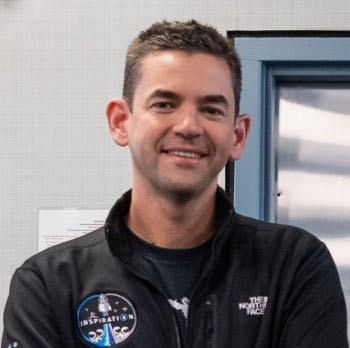
Jared Isaacman

Jared Isaacman during his spacewalk
Jared Isaacman during his spacewalk in September 2024

First, let’s consider Isaacman. Before Trump had nominated him for NASA administrator, he had been a free American doing exactly what he wanted to do. As a very wealthy and successful businessman, he had decided to use that wealth to not only fly in space — fulfilling a personal dream — but to also use those flights to raise money for St. Jude’s Children’s hospital, whose work he considered priceless and wanted supported. He ended up flying two space missions, becoming the first private citizen to do a spacewalk, while also raising more than $200 million for St. Jude’s.

Isaacman’s second flight was also the first in what he hoped would be his own long term manned space program, which he dubbed Polaris. The first mission did this spacewalk from a SpaceX capsule. The second would hopefully do a repair mission to Hubble, or if rejected by NASA some other work in orbit. And the third would fly in SpaceX’s Starship around the Moon.

As this program was funded entirely by Isaacman and used no government funds, it was generally free from criticism. If anything, Americans hailed it as ambitious and courageous. He was following his own American dream, and doing it on his own dime.

This history however made him appear on the surface to be a perfect choice for NASA administrator under Trump, especially in a time where America’s space effort is shifting more and more to the private sector.

Everything changed however once Trump nominated him. He had to suspend his private Polaris program. He had to kow-tow to politicians, telling them what they wanted to hear. And he was no longer his own boss.
» Read more

21 comments

Proposed Australian spaceport changes name

Proposed Australian spaceports
Proposed Australian spaceports.
Click for original image.

A proposed Australian spaceport company that was previously called Equatorial Launch Australia and was forced to shift its location because of red tape has apparently changed its name to Space Centre Australia and named its proposed spaceport the Atakani Space Centre.

It is also possible there was a major shake-up in management, but this is unclear from available sources.

The map to the right shows the location where Atakani is planned, on Cape York in Queensland. Previously this company hoped to build the spaceport to the west in the Northern Territory, but local bureaucracy made that impossible.

Right now the company hopes to open for launches by 2029.

5 comments

Trump is withdrawing Jared Isaacman’s nomination for NASA administrator

Jared Isaacman
Jared Isaacman

According to numerous reports in various news outlets today and first revealed at Semafor, President Trump has informed Jared Isaacman that he is withdrawing his nomination for NASA administrator.

The White House is pulling the nomination of Jared Isaacman to be the next NASA administrator, just days before he was set to receive a confirmation vote in the Senate, according to three people familiar with the matter and confirmed by the administration.

It must be emphasized that many of these stories speculate absurdly about the reasons for this decision, such as the Washington Post suggestion, underlined by conservative reporter Laura Loomer, that it was Isaacman’s links with Elon Musk that caused this decision, implying that Trump as problems with Musk, something that seems blatantly wrong based on Trump’s positive and many public expressions of support for Musk.

The Semafor story however indicated the most likely reason for this decision, by quoting one White House spokeswoman:

“It’s essential that the next leader of NASA is in complete alignment with President Trump’s America First agenda and a replacement will be announced directly by President Trump soon,” said Liz Huston, a spokesperson for the White House.

This statement confirms something I sensed in March, before anyone else. I noted Isaacman’s past support for Democratic Party candidates and his apparent support in his companies for DEI, and wondered if the delay in getting him confirmed was due to headwinds in the White House and Republican Party over these issues. As I noted then:

These facts suggest to me that within both the Trump administration and among Republican in the Senate there are now second thoughts about Isaacman. Trump’s experience in his first administration, with federal appointees constantly sabotaging his efforts behind his back, has made him very determined to only bring people into his second administration he is certain to trust. Isaacman’s long support for the Democratic Party as well as DEI could be the reason the administration is delaying his confirmation.

More recently Isaacman has publicly expressed some concerns about the budget cuts at NASA proposed by the White House. Those tweets could have been the final blow to his nomination.

For Isaacman, this simply means that he can resume his own private Polaris space program, and align it with Musk’s parallel private Starship program to send humans to Mars, with both entirely without any government funding.

49 comments

In demanding an investigation by SpaceX into the Starship failure on this week’s test flight, the FAA puffs up its chest and pounds it like a chimpanzee

My heart be still: As reported in numerous propaganda media outlets today, the FAA has announced that it is demanding an investigation by SpaceX into the fuel leaks that caused Starship to tumble and then burn up in an uncontrolled manner as it came down in its designated landing zone in the Indian Ocean. From the FAA’s statement:

The FAA is requiring SpaceX to conduct a mishap investigation for the Starship Flight 9 mission that launched on May 27 from Starbase, Texas. All Starship vehicle and Super Heavy booster debris landed within the designated hazard areas. There are no reports of public injury or damage to public property. The mishap investigation is focused only on the loss of the Starship vehicle which did not complete its launch or reentry as planned.

This FAA demand for an investigation is meaningless and not news, because SpaceX doesn’t need the FAA to require it. Does anything think SpaceX wasn’t going to do an investigation without an order from the FAA?

Nor will the FAA’s demand change anything. Once SpaceX completes and submits its investigation, the FAA will approve it immediately. No one at the FAA is qualified to question it. The FAA might participate in that investigation as an outside observer and add some value, but in the end the investigation and subsequent actions are entirely in SpaceX’s hands.

The FAA also admits that even though Starship came back out of orbit in an uncontrolled manner, breaking up over the Indian Ocean, it did so exactly as the mission’s contingency plans intended. No one was hurt. Nothing was damaged on the ground. And all the debris fell within the designated landing zone. From the FAA’s legal perspective, there is nothing to investigate, since its only responsibility is to limit harm to the public. SpaceX did what was requested, most admirably. The FAA admits as much in not requiring a mishap investigation of the Superheavy failure.

That the propaganda press is trying to make a big deal about this is a joke. These press reports are merely more propaganda attempting to pump up the importance of government power while denigrating anything to do with Elon Musk.

8 comments

The Highway Man – Driving the world’s longest overwater Bridge

An evening pause: If you haven’t done crossed the Lake Pontchartrain Causeway in Louisiana, than this video will allow you to experience it.

And a drive like this is a great way to start the weekend.

Hat tip Wayne DeVette.

3 comments

Supreme Court unanimously rules the federal government’s regulatory overuse of environmental impact statements is wrong

In a ruling that will have wide-ranging impacts across multiple industries, including rocketry, the Supreme Court yesterday ruled 8-0 that the mission creep expansion of federal government’s regulatory use of environmental impact statements (EIS) to hinder all new construction projects is incorrect and must stop.

The case involved a planned railroad in Utah, that had gotten all its permits for construction, including approval of its environmental impact statement, but was then stymied by lawsuits by political activist groups that claimed the impact statement, issued under the National Environmental Policy Act (NEPA), had not considered the impact of the industries the railroads would serve, including impacts far from the railroad’s location itself.

This is a perfect example of the broad expansion of NEPA that has been imposed in the last two decades by federal bureaucracy working hand-in-glove with these leftist political groups.

The Supreme Court, including all of the Democratic Party appointees, said enough!

In its majority opinion, authored by Justice Brett Kavanaugh, the Court clarified that under NEPA the STB “did not need to evaluate potential environmental impacts of the separate upstream and downstream projects.” The Court concluded that the “proper judicial approach for NEPA cases is straightforward: Courts should review an agency’s EIS to check that it addresses the environmental effects of the project at hand. The EIS need not address the effects of separate projects.”

This statement “is particularly significant for infrastructure projects, such as pipelines or transmission lines, and should help reduce NEPA’s burdens (at least at the margins),” wrote Jonathan Adler, a law professor at the Case Western Reserve University School of Law, in The Volokh Conspiracy. “The opinion will also likely hamper any future efforts, perhaps by Democratic administrations, to expand or restore more fulsome (and burdensome) NEPA requirements.”

The article notes (and confirms) what I have been writing now for the past five years in connection with the FAA’s demand that rocket companies require new impact statements every time they revise their operations, even when those changes are relatively minor.

This point could reduce one of the largest delays caused by NEPA: litigation. Since its passage in 1969, NEPA has been weaponized by environmental groups to stunt disfavored projects—which has disproportionately impacted clean energy projects. On average, these challenges delay a permitted project’s start time by 4.2 years, according to The Breakthrough Institute.

The increased threat of litigation has forced federal agencies to better cover their bases, leading to longer and more expensive environmental reviews. With courts deferring more to agency decisions, litigation could be settled more quickly.

This ruling is an excellent move in the right direction, but no one should assume it will be followed honestly by the next Democrat who sits in the White House. Just as Biden expanded red tape by simple forcing the FAA to slow-walk its launch licensing process, future presidents could do the same.

Nor should be expect the lawsuits by these luddite leftists to cease. They will find other legal challenges and will push those instead.

The real solution is to reduce the bureaucracy’s size entirely, so there won’t be paper-pushers for these petty dictators to utilize for their authoritarian purposes. Eliminating or simplifying these environmental regulations would help as well, giving the activists fewer handles on which to hang their lawsuits.

7 comments

SES cleared by the United Kingdom to buy Intelsat

The long-established Luxembour satellite company SES has now gotten regulatory approval from the United Kingdom to buy another long-established satellite company, Intelsat, with the purchase price €2.8 billion.

SES’s €2.8 billion acquisition of Intelsat was cleared by the UK’s competition regulator, in a move that will create a satellite giant to better compete with Elon Musk’s Starlink. The Competition and Markets Authority decided on the basis of “the information currently available to it,” to not subject the deal to an in-depth probe, it said in a statement on Friday.

The deal still needs to be approved by the European Union, which has set June 10th as the deadline for a decision.

This merger is because these older satellite companies are presently losing in competition with the many new low-orbit satellite constellations by new companies, led mostly by Starlink. By merging they hope to compete better.

1 comment

SpaceX launches GPS satellite for military

SpaceX this morning successfully placed a military GPS satellite into orbit, its Falcon 9 rocket lifting off from Cape Canaveral in Florida.

The first stage completed its fourth flight, landing on a drone ship in the Atlantic. As of posting the satellite has not yet been deployed.

This was the second military GPS launch that the Space Force has taken from ULA and its Vulcan rocket and given to SpaceX instead. Even though Vulcan was certified in late March by the military for these kinds of military launches, delays in getting Vulcan operational forced the Space Force to find another more reliable launch provider. Even now, two months after that certification, ULA has still not announced a launch schedule for this rocket. The company in December 2024 had predicted it would launch 20 times in 2025, with 16 of those launches being by Vulcan. The year is almost half over now and ULA has only launched once, using an Atlas 5 rocket.

The leaders in the 2025 launch race:

66 SpaceX
32 China
6 Rocket Lab
6 Russia

SpaceX now leads the rest of the world in successful launches, 66 to 51.

0 comments

SpaceX: We are targeting 170 launches in 2025

According to a statement by a SpaceX official during a telephone press conference on May 28, 2025, the company is now hoping to complete 170 total launches in 2025.

“We’re targeting 170 launches by the end of the year,” Anne Mason, director of national security space launch at SpaceX, said during a call with reporters on Wednesday (May 28).

…”I always find it amazing that this cadence has become somewhat normal,” Mason added during Wednesday’s call, which served to preview SpaceX’s planned Friday (May 30) launch of the GPS III SV08 satellite for the U.S. Space Force. “But if we look back just five years ago, in 2020 when we launched roughly 25 times, which is still a healthy rate at twice a month, and now launching on average every two to three days — I think this demonstrates how Falcon’s reusability and reliability, plus the hard work and dedication of the SpaceX team, has been critical to supporting assured access to space,” she said.

Last year SpaceX set a record of 137 successful orbital launches, a number that also exceeded what the entire world had accomplished yearly for most of the space age since Sputnik in 1957. This new goal however appears to be a reduction from its earlier hopes. Near the start of the year SpaceX officials had predicted it would complete 180 launches.

There is also the possibility that Mason above was only referring to Falcon 9 and Falcon Heavy launches, and not counting the test flights of Starship and Superheavy.

Either way, SpaceX continues to prove that freedom and private enterprise can do far more than government, and do it faster and cheaper as well.

2 comments

Northrop Grumman invests $50 million in Firefly and new rocket

Northrop Grumman and the rocket startup Firefly announced yesterday that the former has invested $50 million in the latter in order to develop a fully new rocket, dubbed Eclipse, with capabilities allowing it to compete with SpaceX for customers.

“Firefly is incredibly grateful for Northrop Grumman’s investment that further solidifies our first-of-its-kind partnership to build the first stage of Antares 330 and jointly develop Eclipse,” said Jason Kim, CEO of Firefly Aerospace. “…With a 16 metric ton to orbit capability, Eclipse is a sweet spot for programs like NSSL Lane 1 and a natural fit to launch proliferated constellations in LEO, MEO, GEO, and TLI.”

Built upon Northrop Grumman’s Antares and Firefly’s Alpha rocket, Eclipse offers a significant leap in power, performance, production cadence, and payload capacity. The launch vehicle retains the flight-proven avionics from the Antares program with additional upgrades, including a larger 5.4 meter payload fairing. Eclipse also utilizes the same first stage Firefly is developing for Antares 330 and retains scaled-up versions of Alpha’s propulsion systems and carbon composite structures, allowing the team to rapidly build and test Eclipse with significant production efficiencies and economies of scale.

The companies say that because of its reliance on already proven launch rockets, they hope Eclipse’s first launch will take place in 2026 from Wallops Island.

As I noted yesterday, the demand for launch services — especially for heavier payloads — presently exceeds the supply, as already established rocket companies ULA and Blue Origin have so far failed to deliver as promised. Rocket Lab is developing its medium-lift Neutron expressly to grab this market. It now appears Northrop Grumman wants a share as well, and is partnering with Firefly to get it.

If all goes as planned this partnership will soon have two rockets to offer customers, the Antares 330 and Eclipse.

2 comments
1 65 66 67 68 69 684