Chandrayaan-2 successfully puts itself in route to the Moon

Chandrayaan-2 today successfully completed its last Earth perigee burn, raising its orbital apogee so that it will enter the Moon’s gravitational sphere of influence on August 20th.

Chandrayaan-2 will approach Moon on August 20, 2019 and the spacecraft’s liquid engine will be fired again to insert the spacecraft into a lunar orbit. Following this, there will be further four orbit maneuvers to make the spacecraft enter into its final orbit passing over the lunar poles at a distance of about 100 km from the Moon’s surface.

…Subsequently, Vikram lander will separate from the orbiter on September 02, 2019. Two orbit maneuvers will be performed on the lander before the initiation of powered descent to make a soft landing on the lunar surface on September 07, 2019.

Vikram will be doing the hardest part, the landing.

0 comments

India’s new smallsat rocket gets its first launch contract

The new colonial movement: India today signed its first customer for its new and still untested SSLV rocket, designed to provide orbital launch services for the burgeoning smallsat market.

Spaceflight announced Aug. 6 that it will purchase the first commercial launch a new Indian vehicle scheduled to make its debut later this year. Spaceflight said it will launch payloads for an undisclosed U.S. satellite constellation customer on a flight of the Small Satellite Launch Vehicle (SSLV), a derivative of the existing, larger Polar Satellite Launch Vehicle (PSLV). The launch is scheduled for later this year and will be the second for the SSLV after a demonstration launch expected no earlier than September.

While the companies didn’t announce the customer for the mission, a July 25 filing with the Federal Communications Commission by Earth imaging company BlackSky Global sought a license for four of its satellites it said would launch on the SSLV in November 2019. The applications said the satellites would be deployed into two orbital planes, consistent with Spaceflight’s announcement.

While this Indian rocket is hardly a private operation, it has no military component, as do the new Chinese smallsat companies. ISRO, India’s space agency, is wholly civilian with no apparent ties to its military, as far as I know. Its goal is to purely make money and grab market share.

At the same time, the use of government funds to develop this rocket gives India the same advantage that China’s smallsat companies have over the privately funded rockets from the U.S. It allows them to set lower prices and undercut the competition.

0 comments

First images from Chandrayaan-2

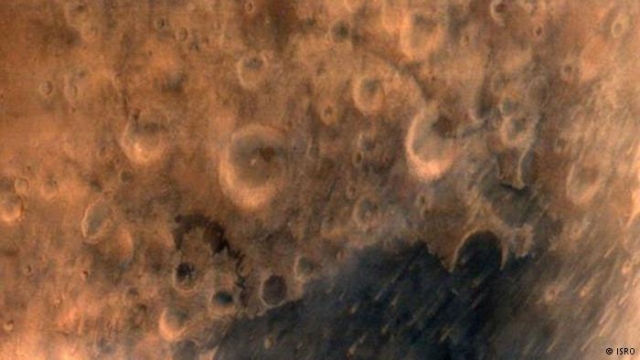
Earth from Chandrayaan-2

India yesterday released the first images taken by its lunar orbiter/lander/rover Chandrayaan-2, taken from Earth orbit of the Earth.

The image on the right is one example, and was taken mostly for engineering purposes. All the images (available here) demonstrates that the spacecraft’s camera is working properly, and it can orient itself accurately.

They now hope to put the spacecraft into lunar orbit on August 20th, with the landing attempt set for September 7th, after they have lowered that lunar orbit sufficiently.

0 comments

Chandrayaan-2 successfully completes 4th orbit burn

The new colonial movement: India’s lunar orbiter/lander/rover Chandrayaan-2 today successfully completed its fourth engine burn, this time raising its orbital apogee to 89,472 kilometers (55,595 miles).

The next burn is scheduled for August 6, when the spacecraft’s orbit brings it back down to its perigee.

By September they expect to raise that apogee high enough so that it is within the Moon’s gravitational sphere of influence, when they will be able to put it the spacecraft into lunar orbit.

0 comments

Chandrayaan-2 completes third orbit maneuver

Chandrayaan-2 has completed its third engine burn to raise the apogee of its orbit to 71K.

The next burn is set for August 2, when the spacecraft returns to its orbital low point, the perigee. As it raises its orbit each time the time between burns gets extended because the orbit gets longer. By September however the apogee will put the spacecraft in the Moon’s gravitational field of influence, and when Chandrayaan-2 reaches that apogee engineers will then fire its engines again to slow it down and enter lunar orbit.

0 comments

Chandayaan-2 completes first orbit burn

India’s lunar orbiter/lander/rover Chandrayaan-2 yesterday completed its first orbital engine burn, raising its apogee, the high point in its orbit, 6,000 kilometers to about 51,000.

This boost meant that Isro scientists have to perform one less manoeuvre in the Earth orbit than what was planned earlier. According to the path chalked out for Chandrayaan-2 before the launch, the on-board propulsion systems were to be fired six times in Earth orbit – five times to raise the apogee and once to raise the perigee. Now, only four more “burns”, or firing of the propulsion system, will be needed on July 26 and 29, and August 2 and 6, to reach the final orbit of 233.2 x 143,953km.

…With a final boost on On August 14, Chandrayaan-2 will escape Earth’s orbit and begin its seven-day journey towards the moon. The spacecraft is scheduled to reach the moon orbit on August 20.

Once in lunar orbit they plan four more burns to lower the spacecraft to a 100 kilometer circular orbit, where the lander/rover will release and begin their own lowering process aimed for a September 7 landing.

0 comments

India successfully launches Chandrayaan-2

The new colonial movement: India yesterday successfully launched its lunar orbiter/lander/rover Chandrayaan-2 into orbit.

India’s Geosynchronous Satellite Launch Vehicle GSLV MkIII-M1, successfully launched the 3840 kg Chandrayaan-2 spacecraft into an earth orbit today (July 22, 2019). The spacecraft is now revolving round the earth with a perigee (nearest point to Earth) of 169.7 km and an apogee (farthest point to Earth) of 45,475 km. Today’s flight marks the first operational flight of the GSLV Mk III.

They will slowly raise the spacecraft’s apogee over the next two months to bring it into the Moon’s gravitational sphere of influence, when they will begin lowering the orbit leading to a separation of the lander/rover for a September 7 landing near the Moon’s south pole.

This was the third launch of the upgraded GSLV Mark III. With this launch India now has an operational rocket it can use to launch its astronauts into space in 2022.

The leaders in the 2019 launch race:

9 China
9 Russia
8 SpaceX
5 Europe (Arianespace)
4 India

The U.S. continues to lead in the national rankings, 14 to 9.

0 comments

India reschedules Chandrayaan-2 launch

The new colonial movement: India’s space agency ISRO have rescheduled the launch of Chandrayaan-2 lunar orbiter/lander/rover now for July 22, 2019.

The new launch date apparently requires a very short launch window.

July 15 had offered the most comfortable launch window of 10 minutes for the Mission. But Isro has managed to successfully launch several satellites within one-minute windows in the past. However, delaying beyond July 31 could have potentially reduced the Orbiter’s life around the Moon.

0 comments

Chandrayaan-2 launch scrub caused by leak in helium bottle

Engineers today announced that the July 14 scrub of India’s Chandrayaan-2 lunar orbiter/lander/rover was caused by a leak in a helium bottle in the GSLV rocket.

“The good news is that we can fix the leak without dismantling the rocket, since there is an access door to the gas bottle which is atop the oxygen tank,” a senior scientist told TOI. “The bad news is that unless we ascertain the reason for the leak, there is a probability of the problem recurring.” Not having to dismantle means Chandrayaan-2 may be able to fly before the end of the July launch window, but a final failure analysis will be available only in a day or two.

Sources told TOI that the leak wasn’t serious enough to impair the flight, but Isro decided to apply “abundant caution,” given the importance of the Rs 978-crore project that would make India only the fourth country – after the US, Russia and China – to land a craft on the lunar surface.

I am willing to bet that if their investigation does not pinpoint the cause of the leak in the next few days, they will stand down from the July launch window. This mission, as well as proving the reliability of their GSLV rocket, are both too important to risk on an unknown and unsolved engineering issue.

0 comments
1 20 21 22 23 24 42