Blue Origin shuts down New Shepard suborbital tourist flights

Blue Origin yesterday announced it is “pausing” the suborbital tourist flights of its New Shepard spacecraft for no less than two years.

Blue Origin today announced it will pause its New Shepard flights and shift resources to further accelerate development of the company’s human lunar capabilities. The decision reflects Blue Origin’s commitment to the nation’s goal of returning to the Moon and establishing a permanent, sustained lunar presence.

Those “lunar capabilites” not only include its lunar landers, both manned and unmanned, but its New Glenn rocket, which it wants to sell to NASA to use for these missions. Both need more attention. In addition, it could be the company’s CEO, David Limp, wants to allocate more resources to the company’s Orbital Reef space station proposal, which has been sitting dead in the water for the past year-plus. All these projects have been very slow to get out of the starting gate, partly because of the very leisurely culture that Blue Origin’s previous CEO installed, and partly because the company has put out too many projects it is not focusing well on finishing.

There is also likely a third reason: New Shepard was not making a profit. While the company has been flying it quite regularly in recent months, it does not appear it could ever recover its costs. Moreover, I suspect the demand for these short suborbital tourist flights has diminished with advent of orbital tourism and the soon-to-arrive multiple commercial space stations.

15 comments

Comet K1/Atlas has broken apart, not interstellar Comet 3I/Atlas

the end of Comet K1/Atlas

CORRECTION: The image to the right is not that of interstellar Comet 3I/Atlas, as I reported earlier today. I misread the Gemini Telescope release. This is comet K1/Atlas, another comet from our own solar system that made its close approach to the Sun in October, when it broke up.

The the latest image from the Gemini North Telescope in Hawaii shows at least four sections slowly drifting apart.

The picture to the right, cropped to post here, was taken on December 6, 2025. Gemini’s previous image, taken in November 11th, shows about the same number of objects, but clustered much more closely together.

It appears that as the comet made its closest approach, the stress was too great. This is not surprising, as it happens to many comets that get too close to the Sun.

Sorry for the error and hat tip to reader Tom Laskowski for letting me know. I need to look at the names of comets named after the ATLAS telescope, as they are very similar and most are NOT interstellar comet 3I/Atlas.

8 comments

China launches Algerian satellite

China today successfully placed an Algerian “remote sensing” satellite into orbit, its Long March 2C rocket lifting off from its Jiuquan spaceport in northwest China.

No word on where the rocket’s lower stages, using very toxic hypergolic fuels, crashed inside China. China’s state-run press also said little about the satellite, other than claiming it would be used for “land planning and disaster prevention and mitigation.” This however doesn’t match what “remote sensing” satellites usually do, which is military surveillance.

The 2026 launch race:

13 SpaceX
6 China
2 Rocket Lab

2 comments

Rumors: Musk is considering merging SpaceX with xAI and Tesla

According to a bunch of unconfirmed stories today from different news outlets, Elon Musk is considering merging SpaceX with xAI and Tesla as part of the initial public offering (IPO) of SpaceX that the company is contemplating for sometime this summer.

Reuters reports that Musk wants to merge xAI — his very valuable AI company that has already merged with the company that used to be called Twitter — into SpaceX, his very valuable rocket company. And Bloomberg reports that SpaceX is also considering a merger with Tesla, citing people familiar with the matter.

The SpaceX-xAI tie-up could help Musk build data centers in space. “The combination would bring Musk’s rockets, Starlink satellites, the X social media platform and ​Grok AI chatbot under one roof,” the Reuters report says. Then again, Reuters also says it doesn’t know several key details about the theoretical deal, including “its ‌primary rationale.”

None of this is confirmed, but Musk has not denied it either. If so, this IPO would be the largest ever in the history of the stock markets, by many magnitudes. As noted at the link, xAI is raising gigantic amounts of capital. SpaceX in turn is expected to do even better in its IPO, as a single entity. Tesla is in far less demand, but this merger could be a way to reshape that company to give it a better future. It has already said it is beginning the transition from electronic cars to robots and other autonomous machines.

Whether such a merger will help SpaceX or Musk in his goal of building a Mars colony remains decidedly uncertain. A publicly traded stock company does not have the freedom of action that SpaceX now has as privately owned company.

16 comments

Russian defunct military satellite breaks up in graveyard orbit

A Russian defunct military geosynchronous satellite that was launched in 2014 and spent a decade spying on other geosynchronous satellites only to be moved to a graveyard orbit in 2025 when its fuel ran out apparently broke apart earlier today.

The Swiss company S2A systems, which specializes in tracking orbital objects, captured the moment the spacecraft began disintegrating. I have embedded that footage below, though it really is far less exciting than it sounds.

The debris poses a very small risk to other geosynchronous satellites, which orbit at about 22,000 miles elevation where there is too little atmosphere to decay orbits. The graveyard orbit is several hundred miles higher.
» Read more

11 comments

FAA moves forward on its environmental assessment of SpaceX’s proposal to launch Starship/Superheavy from Kennedy Space Center

Proposed Starship/Superheavy launchsites at Kennedy and Cape Canaveral
Proposed Starship/Superheavy launchsites at
Kennedy (LC-39A) and Cape Canaveral (SLC-37)

While NASA has already determined that Starship/Superheavy launches from the Kennedy Space Center in Florida will have no significant impact on the environment, the FAA has not yet completed its own environmental impact statement.

Last week it released a preliminary summary [pdf] of its impact statement, revealing that it has reduced its final options to either approving SpaceX’s request to do as many as 44 launches per year, or to reject any changes — the “no action alternative” — which would block all Starship/Superheavy launches at Kennedy.

The overall tone of this summary suggests strongly that the FAA is almost certainly going to approve SpaceX’s request, allowing as many as 44 launches per year from launchpad LC-39A, as shown on the map to the right. As it notes in describing the “no action alternative”:

SpaceX would not launch Starship-Super Heavy from LC-39A. NASA would not develop, implement, or approve agreements with SpaceX associated with Starship-Super Heavy operations at LC-39A. The No Action Alternative would not meet the purpose and need. [emphasis mine]

In other words, rejecting SpaceX’s request would not fulfill the FAA’s obligation to serve the public. It would also not fulfill the FAA’s obligation to serve a fellow government agency, NASA, which has already approved this SpaceX request in a 2019 environmental assessment.

It appears a final decision by the FAA is imminent. A nice summary of this FAA document can be found here, which notes that if approved, it will give SpaceX license approval to launch Starship/Superheavy as much as 146 times per year, from its launchpads at Boca Chica, Kennedy, and Cape Canaveral. Note too that this FAA assessment is independent of the Air Force’s environment assessment, which has already approved 76 launches per year at the SLC-37 launchpad.

6 comments

Orbex failure occurred partly because UK government withheld promised funding

Prime rocket prototype on launchpad
The prototype of Orbex’s never-launched Prime rocket,
on the launchpad in 2022

It appears the government of the United Kingdom contributed to the bankruptcy and sale of the British rocket startup Orbex in more than one way.

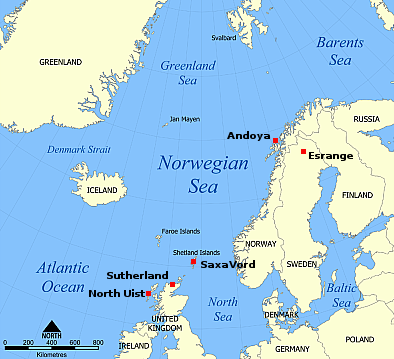
Orbex had hoped to do its first launch from the proposed Sutherland spaceport on the north coast of Scotland in 2022, but was blocked for four years because of red tape. First, the UK’s Civil Aviation Authority would not issue the spaceport and launch licenses. Second, local opposition delayed approvals as well. Those delays ate into the company’s resources, until it became entirely dependent on grants from the UK government (some through the European Space Agency) to keep it afloat.

Orbex’s problems were further compounded when it became clear in 2024 that the Sutherland spaceport would never get clearance. Orbex then switched to the Saxavord spaceport in the Shetland Islands, but this forced more delays because the company had no facilities there. It had already spent a fortune building everything for Sutherland.

A new report today says that it was finally forced to shut down and sell its assets to the French startup The Exploration Company because the UK government had withheld some of that promised funding.

News of the potential sale came just a month after a European Space Agency document confirmed that €112 million of €144 million UK government funding, earmarked for the European Launcher Challenge (ELC) scheme, was still “to be distributed”.

As a result, Orbex received just €34.9 million from the scheme – one-fifth of the €169 million awarded to each of its rivals by European governments.

That shortfall equates to about $160 million, a substantial amount of cash. While it is perfectly reasonable for the UK government to withheld these funds if it thinks the money would be badly spent, none of this government funding would not have been necessary at all if the UK government had simply issued the launch permits in a timely manner, allowing Orbex to launch and earn revenue.

As I noted early, congratulations to the United Kingdom, the place where rocket companies go to die! This is now the second such company killed by UK red tape and government incompetence, the first being Virgin Orbit.

8 comments

Russian official says Soyuz launchpad repair likely delayed

According to the Russian official in charge of ground infrastructure at Roscosmos, the repair of Russia’s only Soyuz launchpad for launching Progress and Soyuz capsules to ISS might not be completed by late March, as Roscosmos has previously promised.

It appears the winter weather at Baikonur is causing issues. In addition:

Barmin explained that the new service platform had to be assembled from components manufactured at different times and sometimes mismatching each other, requiring on-site modifications. For example, the core of the spare platform was manufactured in 1977 in accordance with a different set of blueprints for a planned-but-never-implemented refurbishment of another Soyuz pad, Barmin said. When it was shipped from an arsenal in the city of Tambov to Baikonur, the set of hardware was incomplete, requiring it to be complemented with parts from other sources and with newly manufactured elements.

It also appears the Russian government is going to make scapegoats of the workers who handled the launch platform during the November 2025 launch. It has placed them under criminal investigation. The managers, whom according to one report demanded the launch take place even though these workers could not get the platform properly fastened in place, appear to have been cleared of wrong-doing.

Until this pad is repaired, Russia has no way to launch any manned missions. Nor can it send cargo to ISS.

The decision to scapegoat the workers will further hinder work, as it will certainly damage morale. Such an approach also helps explain why there has been several cases of sabotage of Soyuz and Progress capsules while they are being prepped for launch.

5 comments

NASA delays Artemis-2 wet dress rehearsal countdown due to weather

NASA today announced it is delaying until February 2, 2026 the wet dress rehearsal countdown of its Artemis-2 mission due to weather concerns.

NASA is targeting Monday, Feb. 2, as the tanking day for the upcoming Artemis II wet dress rehearsal at the agency’s Kennedy Space Center in Florida, as a result of weather. With this change, the first potential opportunity to launch is no earlier than Sunday, Feb. 8.

Over the past several days, engineers have been closely monitoring conditions as cold weather and winds move through Florida. Managers have assessed hardware capabilities against the projected forecast given the rare arctic outbreak affecting the state and decided to change the timeline. Teams and preparations at the launch pad remain ready for the wet dress rehearsal. However, adjusting the timeline for the test will position NASA for success during the rehearsal, as the expected weather this weekend would violate launch conditions.

I had previously said this dress rehearsal countdown would include the astronauts inside Orion. This was incorrect. The astronauts are in quarantine in preparation for the actual mission. Orion will be unmanned during the rehearsal countdown.

6 comments

Two American launches this evening

Two American companies, Rocket Lab and SpaceX, successfully completed launches during the evening of January 29-30.

First, Rocket Lab today (January 30th in New Zealand) placed a South Korean test smallsat, its Electron rocket lifting off from one of its two launchpads in New Zealand. The satellite is the first of a planned mass-produced constellation to provide precise observations of the Korean peninsula.

Next, SpaceX placed another 29 Starlink satellites into orbit, its Falcon 9 rocket lifting off from Cape Canaveral in the early morning hours. The first stage completed fifth flight, landing on a drone ship in the Atlantic.

The 2026 launch race:

13 SpaceX
5 China
2 Rocket Lab

1 comment

Varda capsule successfully returns to Earth after nine weeks in orbit

Varda's W-5 capsule after landing today
Varda’s W-5 capsule after landing today

The orbiting capsule startup Varda today successfully returned to Earth its W-5 capsule after nine weeks in orbit, landing in Australia’s Koonibba Test Range, operated by the commercial spaceport startup Southern Launch.

W-5 launched in November 2025, Varda’s fourth launch last year, and spent 9 weeks in orbit. The mission was funded through the Prometheus program, a partnership between the Air Force Research Laboratory (AFRL) and commercial space entities.

…The W-5 mission is the first reentry of Varda’s in-house developed satellite bus, designed specifically to meet the rigorous demands of both long-duration orbital pharmaceutical processing and high-velocity reentry. The W-5 flight was also equipped with an in-house manufactured heatshield, made in Varda’s El Segundo headquarters from C-PICA (Conformal Phenolic Impregnated Carbon Ablator).

…The W-5 capsule carried a specialized payload for the U.S. Navy, focusing on data collection during reentry. Varda’s ability to provide fixed-cost, routine reentry offers the Department of War a unique, cost-effective platform for iterative testing of hypersonic flight characteristics. The Varda capsules endure extreme environments when they reenter at speeds exceeding Mach 25.

While previous capsules had used their time in orbit testing the manufacture of products like pharmaceuticals, this mission was used by the Air Force to test hypersonic missile sensors and equipment during the high-speed re-entry.

Varda’s earlier capsules had used a satellite bus (that provides power and control) built by Rocket Lab. With this capsule it is now capable of building its entire capsule. It is also ramping up its launch pace, with plans to launch as many as 20 capsules through ’28.

3 comments

Pluto’s mountains of ice surrounded by a sea of frozen nitrogen

Ice mountains floating in nitrogen sea on Pluto
Click for original image.

Cool image time! Though we only have a limited archive of high resolution pictures of Pluto that were taken when New Horizons did its close fly-by of the planet in July 2015, it is worthwhile sometimes to take a second look at some of those images. The picture to the right, cropped and annotated to post here, was taken during that July 14, 2015 fly-by, and shows a mountainous region dubbed Al-Idrisi Montes on the shore of a white frozen ocean. The red dotted line indicates a large trench that separates the Al-Idrisi mountains from the mountainous region to the west.

Sounds similar to an arctic shoreline here on Earth, doesn’t it? Not in the least. Those mountains, ranging from 600 to 9,000 feet high, are made of frozen ice, which on Pluto are as hard as granite due to the endless cold. And the white frozen ocean is frozen nitrogen, broken into polygon shaped blocks. Even stranger: those ice mountains might even be floating in that nitrogen sea! A paper from 2019 [pdf] looked at the New Horizons data and concluded as follows:

Evidence suggests that the Al-Idrisi mountains may have been uplifted by the formation of
the western trench feature. Solid state convection appears to be our best supposition as to how the Al-Idrisi Montes reached their heights.

In other words, as that large trench/depression formed, convection (the bubbles you see when you simmer tomato sauce) pushed these mountains of ice upward to float above the “sea level” of that nitrogen sea.

At least, that’s one hypothesis. The scientists who wrote this paper admit their “our hypothesis still remains in need of study and this trench-mountain system warrants serious further research.” In other words, we simply don’t know enough to have a definitive understanding of the geology of this extremely alien planet.

3 comments
1 37 38 39 40 41 1,328