OneWeb agrees with SpaceX: Dish’s ground-based plans a frequency threat

Capitalism in space: In a filing with the FCC, OneWeb has come out in full agreement with its competitor SpaceX, stating that Dish’s proposal to use the 12 GHz wavelength would threaten its satellite communications.

In a letter to the Federal Communications Commission, OneWeb urged the regulator to reject a request from satellite broadcaster Dish Network and spectrum holder RS Access to run two-way mobile services in the band. If approved, “it would leave significant areas of the United States unusable by the otherwise ubiquitous NGSO [fixed satellite service] user terminals,” wrote Kimberly Baum, OneWeb’s vice president of spectrum engineering and strategy.

To connect user terminals, the SpaceX-owned Starlink and OneWeb megaconstellations use a satellite downlink band that extends from 10.7 GHz to 12.7 GHz. The analysis from OneWeb is the latest in a string of studies assessing how a high-power mobile network in the 12.2-12.7 GHz band would impact NGSO services.

Though the FCC has not yet made a final decision, it has already rejected Dish network’s request to block SpaceX’s use with Starlink of these wavelengths.

0 comments

Superheavy prototype #7 explodes during tanking test

Capitalism in space: SpaceX’s Superheavy prototype #7 exploded yesterday during a tanking test in Boca Chica, Texas.

I have embedded the video of the explosion below, cued to just before it occurred.

According to Musk, the engineering teams are presently assessing damage. The booster itself appeared relatively intact afterward, though leaning slightly to one side.

At a minimum this incident will delay the orbital launch attempt, especially if booster #7 must be replaced with booster #8, already being prepped in the assembly building nearby.

» Read more

28 comments

SpaceX launches another 46 Starlink satellites

Capitalism in space: Using its Falcon 9 rocket, SpaceX today successfully launched another 46 Starlink satellites from Vandenberg Space Force Base in California.

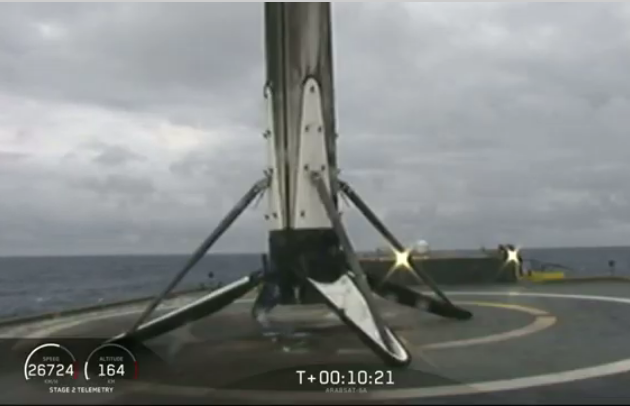
The first stage completed its sixth flight, landing on the drone ship in the Pacific.

A minor note: SpaceX has clearly decided to simplify these broadcasts. Each is now starting much closer to launch, and the announcers have reduced their narration to the absolute minimum. Overall, this seems a wise policy, because though these live streams are good advertising, most of the people listening at this point do not need detailed explanations of everything. If anything, too much chatter is annoying, and as always less is more.

The leaders in the 2022 launch race:

29 SpaceX
21 China
9 Russia
4 Rocket Lab
4 ULA

The U.S. now leads China 41 to 21 in the national rankings, and the entire world combined 41 to 36. The forty-one launches in just over half of ’22 beats the U.S.’s total for the whole year just two years ago.

1 comment

Elon Musk gives a tutorial on the Raptor-2 engine

Tim Dodd of Everyday Astronaut on Friday released another video from his most recent tour of Starbase at Boca Chica with Elon Musk. I have embedded it below.

Essentially, this 41 minute video is Elon Musk giving us a tutorial on how SpaceX simplified and improved its Raptor engines from its first iteration to the present Raptor-2. He does this while standing in front of a long row of finished Raptor-2s, all meant for installation in the seventh prototype of Superheavy, the booster now on the launchpad with those engines installed and being prepared for its first static fire test prior to the orbital flight.

Musk revealed two interesting factoids during this video. First SpaceX blew up approximately 20 to 30 Raptor engines during the development phase, and melted the chambers on another 50. All of this was perfectly acceptable, because they designed engine manufacture so that a high production rate was built in. As Musk noted, “A high production rate solves many ills.” Losing engines during testing and development was no big deal because they were able to quickly replace them, with revisions and upgrades.

Secondly, Musk claimed that the Raptor-2 engine has a 99% efficiency, a level of efficiency that is unheard of in any engine for any purpose ever. I wonder if that claim will hold up as new companies and engineers work to beat SpaceX in the coming centuries.

» Read more

13 comments

Dish Network condemns Starlink and SpaceX study

Constellation wars! In an apparent response to the FCC’s decision last week to reject the Dish network’s request that the agency block Starlink from using the 12GHz frequency band so that Dish could use it, Dish (as part of a coalition) now claims that SpaceX’s study on the use of that band is “scientifically and logically flawed” and used “cherry-picked” data.

While the FCC had rejected Dish’s blocking request, it also said it was still studying whether Starlink’s orbital system and Dish’s ground-based system could both use the frequency at the same time. Today’s statement is obviously Dish’s effort to influence that FCC study.

The coalition’s full statement also said this about the request by Starlink to its customers to send their own comments to the FCC:

In addition to this manipulated filing, Starlink has initiated a public misinformation campaign by falsely telling customers and the public that coexistence is not possible in the band among Starlink and 5G services – despite nationwide data proving otherwise. This tactic, which is commonly used by Elon Musk, is not only disingenuous, but it promulgates an anti-5G narrative that is harmful to American consumers who deserve greater competition, connectivity options and innovation. It also stands to threaten America’s global leadership in the 5G and technology sector as other countries outpace the nation in delivering next-generation services.

This constellation war has hardly begun. Expect politicians to soon get involved, both pro and con, prompted by campaign contributions from the commercial players (which when paid to ordinary we call it “bribes”).

Meanwhile, SpaceX announced yesterday that Starlink is now offering its service to boat owners, though the service is hardly cheap.

Starlink Maritime costs $5,000 per month, plus an initial $10,000 fee that covers two high-performance satellite dishes. It promises to deliver download speeds of 350 Mbps. Regular Starlink internet costs $110 per month, along with $599 for the necessary hardware.

3 comments

SpaceX launches another 53 Starlink satellites

Capitalism in space: Earlier this morning SpaceX successfully launched 53 Starlink satellites, using its Falcon 9 rocket.

The first stage was flying its thirteenth flight, and supposedly landed successfully, though the stage’s video cut off just before landing, the drone ship video did not show it on the pad, and the confirmation of that landing was very late. It is possible it landed on a spot that the camera did not show, or that the landing occurred in the ocean and the stage was lost. We shall have to wait and see.

The leaders in the 2022 launch race:

28 SpaceX
21 China
8 Russia
4 Rocket Lab
4 ULA

The U.S. now leads China 40 to 21 in the national rankings, and the entire world combined 40 to 35.

3 comments

FCC approves Starlink for moving vehicles; rejects DISH’s request to use Starlink wavelength

The FCC made two decisions yesterday that were both favorable to SpaceX’s Starlink satellite constellation.

First, it gave Starlink permission to provide service on moving vehicles such as cars, trucks, boats, and aircraft. Second, it rejected a DISH network request to use a wavelength in its ground-based system that is presently being used by both Starlink and OneWeb satellites.

This decision will continue the shift in communications from high-orbit/ground-based to low-orbit satellite constellations.

1 comment

Amazon to FCC: Consider limiting SpaceX’s Starlink constellation for our benefit

In a letter sent to the FCC last week, Amazon asked the agency to limit the size of SpaceX’s full constellation so that Amazon will be free to someday launch its own Kuiper constellation.

In the recent letter, Amazon recommends the FCC license a “subset of SpaceX’s proposed system” (as opposed to the whole fleet) to give the agency additional time to consider the “novel challenges” such a significant expansion might present. For example, Amazon believes hundreds to “more than 10,000” of SpaceX’s new satellites could be operating in the altitudes already approved for its Kuiper satellites, which could cause interference in the spectrum and “orbital overlap.” The company claims SpaceX has refused its requests for communication around these concerns as it has urged the FCC to approve its application. It also cites eight other satellite operations who have objected to the plan, including Dish Network, which is currently engaged in a public battle over radio frequencies with SpaceX.

Amazon’s concerns might carry more weight if the launch of its constellation was not so delayed. Both Amazon and SpaceX began development of their satellite constellations at about the same time. Yet, while SpaceX has already launched almost 3,000 satellites, and is providing its service to several hundred thousand customers, Amazon has yet to launch a single satellite.

Thus, though what Amazon is asking the FCC seems reasonable, it is also asking the FCC to block a competitor’s successful operation while it dilly-dallies along, accomplishing little.

This pattern from Amazon fits the pattern of all of Jeff Bezos’s space-related projects: Big promises, little action, and when competitors get things done sue or demand the government play favorites. Sure does not seem to me to be a good long-term business plan.

3 comments

SpaceX launches SES communications satellite

Capitalism in space: SpaceX today successfully launched a SES communications satellite, using its Falcon 9 rocket.

The first stage, making its second flight, successfully landed on a drone ship in the Atlantic. As of this writing, the satellite itself has not yet been deployed.

The leaders in the 2022 launch race:

27 SpaceX
21 China
8 Russia
4 Rocket Lab

American private enterprise now leads China 37 to 21 in the national rankings, and the entire world combined 37 to 34.

0 comments

SpaceX preps for final engine tests before first orbital Starship/Superheavy flight

Capitalism in space: Having moved its 7th prototype Superheavy booster to the launch pad in Boca Chica even as its installs the six Raptor engines on the 24th prototype of Starship, SpaceX is now about to begin the final engines tests prior to the first orbital Starship/Superheavy flight.

For the first time the chopstick arms on the launch tower were used to lift and place the Superheavy booster onto the pad. It is expected that static fire tests of its 33 Raptor engines could begin within the next few weeks.

The orbital Starship meanwhile is still in the assembly building, where engineers are installing its own six Raptor engines.

Though SpaceX has not made public the exact schedule of tests leading to launch, it is expected that the company will do a short static fire test program with Superheavy alone, and then do a follow-up short series of tests once the Starship prototype is stacked on top. Based on past history, if the tests show no problems SpaceX will quickly move to launch. Though there have been indications that it is targeting July, it would not be surprising if that date slips to August.

The race between Starship and SLS for which will get into orbit first appears to be tightening.

13 comments

NASA now targeting late August launch of SLS

NASA officials today confirmed that they are satisfied with the results from this week’s incomplete dress rehearsal countdown of the SLS rocket, and are targeting a late August launch of SLS.

NASA officials have reviewed the data collected during the test run and decided that a leaky hydrogen valve was not significant enough to force a delay in the launch of Artemis I, an uncrewed mission planning to orbit the moon and return to Earth. It’s the first step toward putting humans back on the moon for the first time since Apollo 17 in 1972.

“The team is now ready to take the next step and prepare for launch,” said NASA’s deputy associate administrator Tom Whitmeyer.

NASA officials said they will roll the massive Space Launch System rocket back to the Vehicle Assembly Building, where the valve’s faulty seal will be replaced. Rollback is slated for Friday July 1, though weather concerns could push that back.

SLS won the five-plus year race with the Webb telescope on which would have the most delays and launch last. Now the race will be between SLS and SpaceX’s Starship/Superheavy. Which will launch first this summer? In a rational world, SLS should win hands down. It has been in development since 2004, while Starship only began design work in 2017.

This is not a rational world, however, and SLS’s long gestation had little to do with designing a rocket and everything to do with politics and a corrupt Congress and an incompetent NASA. The rocket that has come out of this is thus difficult to operate and incredibly cumbersome. Its components have also not been tested thoroughly.

SpaceX meanwhile has been designing and building its heavy-lift rocket with only one goal: the rocket must be efficient to operate.

I predict Starship will reach orbit first, though if it doesn’t it most likely will be because SpaceX finds it needs to do more ground tests and revisions, not because SLS has surged ahead. And regardless, Starship will likely fly many times in the next three years, while SLS will only get off the ground once.

More important, the chances of SLS and Orion working perfectly throughout that that lunar orbit mission seem almost impossible, based on track record during the past eighteen years of both programs. Expect some issues to crop up, first during the launch countdown, forcing several scrubs, and then during the mission itself. None might be mortal, but all will raise questions whether it would be wise to put humans on this rocket and capsule on its next flight, and attempt to take them to the Moon.

2 comments

NASA blocks Starship/Superheavy launches at SpaceX’s new Florida launchpad

Capitalism in space: NASA officials revealed yesterday that it will not allow any Starship/Superheavy launches at SpaceX’s new Florida launchpad, at least for the moment, because of the threat a launchpad failure might have on the launchpad SpaceX uses to launch manned Falcon 9 missions to ISS.

The NASA statement said the agency “is responsible for ensuring SpaceX remains compliant with the requirements of the property agreement for the use of Launch Complex 39A.”

“These requirements include those related to construction, safety and environmental conditions,” the statement said. “At this time, NASA has only provided approval to build. Additional review for hazards, operational impacts and supportability will be required prior to a launch.”

The new Starship launchpad is 1,000 feet away from pad 39A, which is SpaceX’s manned Dragon launchpad. NASA management thinks this is too close. However, the managers have also not ruled out future launches, only that they wish to do a thorough review of the issue with SpaceX.

Because NASA and the federal government is also relying on Starship to land its astronauts on the Moon, it can’t block Starship flights outright. It could be however that this issue might shift Starship operations back to Boca Chica, after federal government opposition there forced SpaceX to shift more operations to Florida.

In other words, the government wants its cake and eat it to. Some factions within the Biden administration and the Washington bureaucracy want to block Starship, others want it to fly. The result is a tug-of war, with SpaceX in the middle.

16 comments
1 93 94 95 96 97 234