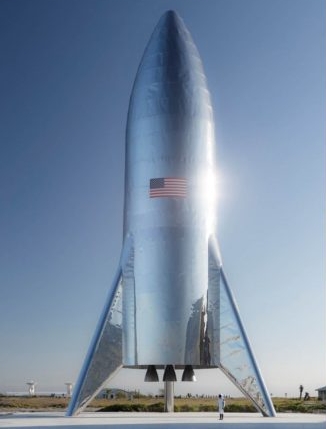
Musk shakes up Raptor engine development

Capitalism in space: Based on all the reports I’ve read, Elon Musk this past weekend did a major shake-up of the management that was running the Raptor engine development, apparently focused on the need to be able to mass produce these engines at a very high rate to allow numerous test flights in the coming year.

More here, including this company email from Musk:

Unfortunately, the Raptor production crisis is much worse than it had seemed a few weeks ago. As we have dug into the issues following the exiting of prior senior management, they have unfortunately turned out to be far more severe than was reported. There is no way to sugarcoat this.

I was going to take this weekend off, as my first weekend off in a long time, but instead, I will be on the Raptor line all night and through the weekend.

The management shakeup was as follows:

This ‘senior management’ that left is likely referring to Will Heltsley, former SpaceX senior vice president of propulsion. As CNBC reported, he left Raptor production due to a lack of progress. In addition, former SpaceX vice president of mission and launch operation Lee Rosen and senior director of mission and launch operations Rick Lim have left the company. Raptor engine production is now being led by Jacob Mackenzie, who has been with the company for over six years.

The reports imply that the engine itself is in trouble, but I do not think that is the issue. Instead, as Musk has said many times, more important than developing new technology is developing the efficient manufacturing processes that will allow the company to take advantage of that technology. It appears the manufacturing part of Raptor had not been covered well by the now disposed management.

SpaceX not only needs a working reliable Raptor engine, it needs to be able to mass produce them in the hundreds, quickly. This is the challenge that apparently the previous management failed to face. Musk is now refocusing Raptor development around this need.

29 comments

Scientists: NASA needs to catch up to SpaceX for using its Starship for future manned and unmanned missions

In a white paper [pdf] submitted to the committee presently writing the next decadal survey for NASA’s planetary science program, a large group of well-recognized planetary scientists essentially pleads with NASA to recognize the gigantic possibilities created by SpaceX’s Starship spacecraft for future manned and unmanned exploration, and rethink its management style.

The capabilities of the Starship vehicle to transport unprecedented quantities of cargo and crew to the lunar and Martian surface will require a new support structure within NASA to enable the NASA planetary science community to participate and provide payloads for these flights. SpaceX envisions an accelerated schedule for flights, but NASA’s traditional schedule for selecting and flying planetary payloads is not necessarily consistent with this timeline.

For example, SpaceX is aggressively developing Starship for initial orbital flights, after which they intend to fly uncrewed flights to the Moon and conduct initial test flights to Mars at the earliest Mars mission opportunity, potentially as soon as 2022, or failing that in the 2024 window. Since the launch window is significantly less restricted for the Moon, it is likely that the first Starship landings will be on the lunar surface. (Even in the case of a first Starship launch to Mars, during its six-month trip to the Red Planet it would be feasible to send a Starship to land on the lunar surface prior to the Mars landing).

In order to take advantage of these opportunities, a new funding program within NASA is needed to provide the opportunity for members of the community (within and outside of NASA) to fly robotic payloads on these flights. … In order to be successful given the flight schedule for SpaceX missions, this funding program must be nimble enough to select proposals for funding and make grants within just a few months after proposal submission.

In other words, NASA’s way of doing things when it comes to planetary exploration is simply too slow and cumbersome to take full advantage of Starship’s capabilities.

I found this white paper through this article at Teslarati, which focuses more on what SpaceX plans to do in its manned planetary exploration using Starship. The paper however is less about what SpaceX will do and more about the need for NASA and the planetary community that has depended on the agency for decades to undergo a paradigm shift. With Starship, missions to the Moon and Mars will no longer be very constrained in terms of weight. Nor will launch schedules be slow and far between. Rather than plan a few billion dollar NASA unmanned missions taking a decade to plan and launch, using Starship NASA could have many planetary missions launching fast and for relatively little cost, with far greater capabilities.

The scientists recognize this, and wrote their paper in an effort to make NASA’s hide-bound management recognize it as well.

What I suspect is going to happen is that the scientists will eventually bypass NASA entirely. Because of the lowered cost provided by Starship, they will find other funding sources, many private, to finance planetary missions. Those other sources will also be much more capable than NASA for reacting quickly to Starship’s fast timetable and gigantic capabilities.

Things are going to get really really exciting in the next few years.

14 comments

Musk lays out Starship testing plan

Capitalism in space: In a meeting in Washington today, Elon Musk laid out SpaceX’s upcoming testing plan for developing its Starship/Superheavy heavy-lift reusable rocket.

“We’ve completed the first orbital booster and first orbital ship, and we’ll be complete with the launch pad and launch tower later this month, and then we’ll do a bunch of tests in December, and hopefully launch in January,” Musk said. “There’s a lot of risk associated with this first launch, so I would not say it is likely to be successful, but I think we’ll make a lot of progress,” musk said. “We’ve also built a factory for making a lot of these vehicles. So this is not a case for just one or two. We’re aiming to make a great many.

“We intend to do hopefully a dozen launches next year, maybe more,” Musk said. “And if we’re successful with it being fully reusable, that means we build up the fleet just as we are with the Falcon 9 booster, which is reused.”

Musk says the cost of a Starship launch will eventually fall below the cost of a Falcon 9 rocket flight, which a SpaceX manager said last year can fall below $30 million with reused parts.

“Basically, we intend to complete the test flight program next year, which means it’s probably ready for valuable payloads that are not for testing, but actual real payloads, in 2023.”

According to this schedule 2022 will be devoted to refining the rocket to make it dependable, and 2023 will be used to fly unmanned cargo flights to prove it out for later manned flights.

SpaceX will also likely develop in parallel the various expected versions of Starship, including the refueling ship, the manned lunar lander, and ships used for point-to-point transportation on Earth.

17 comments

FAA targets finalizing Starship environmental report by end of year

The FAA today announced that it hopes to complete the permit process for SpaceX’s Starship operations at Boca Chica by the end of this year.

If you go to the link you will see a table that shows the agency’s overall plan. The table also suggests that extensions in the permitting process are also possible, though it appears the FAA is working now to avoid this.

I say excellent. I also say I will believe it when I see it. I want the FAA to show me my skepticism of this bureaucratic process is not justified. I want it to prove to me that there is no politics working in the background to slow the process.

Remember, after six months of work the FAA’s draft reassessment approved SpaceX’s Starship operations. To now delay or reject that approval will require a some heavy outside pressure, since the majority of the comments received by the the FAA during the comment period were favorable to the project.

1 comment

SpaceX completes Starship static fire test with all six engines

Capitalism in space: SpaceX today successfully completed a short static fire test of Starship prototype #20 using all six orbital engines.

Though this prototype has previously completed static fire tests, those used only two engines. This test was the first using all the engines that will fly on the spacecraft’s first orbital flight.

When that flight will occur remains uncertain. Elon Musk has said it could fly as early as this month. First however the FAA must give final approval of its environmental reassessment of SpaceX’s Boca Chica spaceport. The agency has released a preliminary draft approval, but that is not yet finalized, with no clear date on when an approval will be issued.

8 comments

NASA admits manned lunar landing can’t happen before ’25

NASA administrator Bill Nelson admitted today that the goal of landing Americans back on the Moon by 2024 was impossible, and that the agency has now delayed that target date one year to 2025.

Nelson attempted to blame the delay on Blue Origin’s lawsuit against NASA for its award of the manned lunar lander contract to SpaceX.

He blamed the shifting timeline on a lawsuit over the agency’s moon lander, to be built by SpaceX, and delays with NASA’s Orion capsule, which is to fly astronauts to lunar orbit. “We’ve lost nearly seven months in litigation, and that likely has pushed the first human landing likely to no earlier than 2025,” Mr. Nelson said, adding that NASA will need to have more detailed discussions with SpaceX to set a more specific timeline.

This however is a bald-faced lie. The Trump 2024 deadline was never realistic. Moreover, delays in SLS and Orion have been continuous and ongoing for years, all of which made a ’24 landing quite difficult and if attempted extremely unsafe. Even as it is, trying this mission by ’25 is risky, especially if it depends on SLS. Moreover, as the article notes, how SLS, Orion, and SpaceX’s Starship will team up to get this mission — designed by a committee — to and from the Moon remains exceedingly unclear.

With great confidence I predict that if the lunar mission depends on SLS in any manner, it will not launch in ’25 either.

9 comments

Court denies Blue Origin’s suit against NASA lunar lander contract award to SpaceX

The U.S. Court of Federal Claims yesterday denied Blue Origin’s suit against NASA’s lunar lander contract award to SpaceX’s Starship spacecraft.

NASA has immediately said it “will resume work with SpaceX under the Option A contract as soon as possible.”

I guess Blue Origin might have to consider the idea of actually building stuff now.

9 comments

Holes in snowy ice on Mars?

Holes in snowy ice on Mars?
Click for full image.

Cool image time! Today we return to the regions surrounding Milankovic Crater in the high northern latitudes of Mars. The photo to the right, cropped and reduced to post here, was taken on June 1, 2021 by the high resolution camera on Mars Reconnaissance Orbiter (MRO). It shows a spray of impact craters where the bolides apparently landed in relatively soft material. The location itself is about 10 miles to the southeast of the 74-mile-wide crater, and sits within its rim ejecta blanket.

The label for the image says this is showing “crater modification,” which suggests that the rimless nature of these craters became so after their creation. This location, at 54 north latitude, is in a region of Mars where scientists have found a lot of evidence of near surface ice. For example, within Mikankovic Crater itself they have identified numerous scarps with clearly seen pure ice layers.

If ice is close to the surface here, then the ground could be like soft snow on Earth, especially because Mars’ lighter gravity would not compress that ice as much. Think about what happens when you toss pebbles into soft snow. They fall through, and leave behind holes not unlike the ones we see in this picture. Later, sunlight would begin to modify the holes so that their edges grow outward, once again exactly as we see here.

The overview map below as always gives some context, which in this case has less to do with Mars but with Elon Musk and Starship.
» Read more

0 comments

Musk: Starship orbital flight could happen as soon as next month

Capitalism in space: Elon Musk today announced that SpaceX will be ready to launch the first orbital flight of Starship as soon as one month from now.

“If all goes well, Starship will be ready for its first orbital launch attempt next month, pending regulatory approval,” Musk tweeted today [emphasis mine]

Musk’s tweet came one day after the FAA completed its public hearings on its environment reassessment of SpaceX’s operations in Boca Chica. Before the agency can approve that reassessment it has to digest the comments, then to hold an “industry workshop” on this reassessment.

Thus, while SpaceX is ready to go, our lumbering, oppressive government is not. As I’ve written before, I fully expect there to be pressure from the Biden administration and NASA to slow walk that government approval so that Starship does not launch before February 2022, when SLS is now scheduled for its first launch. Having SpaceX get its heavy lift rocket into orbit before NASA would be very embarrassing, considering that SpaceX has spent about a third the time and about a tenth the money getting it done.

I hope I am wrong, but this is what I expect from the corrupt federal government we now have.

37 comments

Senate committee: NASA must choose two companies to build manned lunar lander

We’re here to help you! Despite offering NASA only $100 million more for the program, the Senate Appropriations committee has directed the agency to award a second manned lunar lander contract, in addition to the one it gave SpaceX in April.

On Tuesday (Oct. 18), the Senate Appropriations Committee — the largest U.S. Senate committee that oversees all discretionary spending legislation in the Senate — released a draft report of nine appropriations bills for the fiscal year 2022 which included funding for NASA, according to SpaceNews.

The appropriators, in the report, state that NASA’s HLS program is not underfunded, despite the agency’s previous claims to the contrary. As shown in the report, the bill includes $24.83 billion for NASA, which is just slightly more than the $24.8 billion that NASA requested, and a $100 million increase in funding for HLS.

“NASA’s rhetoric of blaming Congress and this Committee for the lack of resources needed to support two HLS teams rings hollow,” the report states. The committee added that “having at least two teams providing services using the Gateway should be the end goal of the current development program,” referencing NASA’s Gateway, a planned lunar space station.

It might be possible for the increase in funding to cover a second contract, if that contract was awarded to Blue Origin. Jeff Bezos has made it clear that he would be willing to waive as much as $2 billion of the price for the contract, using his own ample funds to make up the difference. Whether that is enough to build it, with the $100 million the Senate appropriated, is unclear.

This bill of course has to pass the Senate, be approved as written by the House, and then signed by the President. These directives and budget changes thus might not end up in the final appropriations bill.

3 comments

First FAA hearing on Starship environmental assessment dominated by supporters

Capitalism in space: The FAA yesterday conducted its first of two virtual public hearings to allow public comment on its proposed environmental assessment that would allow SpaceX to launch orbital Starship missions from Boca Chica, Texas>

According to the story at the link, the comments were dominated by supporters, interspersed with the typical small number of anti-development environmental activists.

Over the course of more than three hours on Monday, members of the public who had registered in advance were given three minutes each to deliver their oral public comments on Starship and the draft. Most were in favor of SpaceX, though many positive comments appeared to originate from outside of Texas. A smaller number of people also voiced concerns about impacts on local ecosystems and species near Boca Chica.

The second hearing is scheduled for tomorrow.

1 comment

NASA document: Starship orbital flight in March ’22

Starship orbital flight date?
Click for full image.

According to a NASA proposal to observe and measure the temperatures on Starship’s thermal protection during its return to Earth from orbit, that flight is now tentatively scheduled for March ’22.

The graphic to the right highlights the pertinent language in the poster presentation.

It must be noted that the poster might not be telling us when Starship will first launch, but when the designers of the camera system will be ready to film. The two are different. Still, the slowdown in flight testing at Boca Chica by SpaceX since July suggests there may be some truth to this date. That date also seems more reasonable now in connection with the FAA’s regulatory pace, which still needs to provide the final approval of SpaceX’s environmental reassessment of its Boca Chica launch site.

It also seems to me that the March ’22 date would be very convenient for NASA, as it almost certainly guarantees that Starship will reach orbit after SLS, thus avoiding for the agency a very big public relations embarrassment. I would not be surprised at all if the Biden administration and NASA’s top administrators, led by Bill Nelson, are purposely pressuring the FAA to make sure that Starship orbital flight is delayed until after the first SLS test flight, now expected in the January/February time frame.

There is also the possibility that SpaceX’s targeted launch dates were unrealistically optimistic. The company had a lot of work it needed to do prior to launch on its orbital launch facility at Boca Chica, and that work could not go forward while test flights and static fire tests were taking place. Pausing those tests has allowed the launch facility work to move forward aggressively.

10 comments
1 25 26 27 28 29 44