NASA announces crew and flight plan for Artemis-3 Earth orbit mission next year

Artemis logo

NASA today unveiled both the four-person crew that will fly its Artemis-3 Earth orbit mission next year as well as the mission’s basic plan, assuming both SpaceX and Blue Origin can get their respective lunar landers ready in time.

Crew assignments are as follows:

  • NASA astronaut Randy Bresnik, commander
  • ESA (European Space Agency) astronaut Luca Parmitano, pilot
  • NASA astronaut Frank Rubio, mission specialist
  • NASA astronaut Andre Douglas, mission specialist

… NASA astronaut Bob Hines was named as a backup crew member.

Except for Douglas, all are veterans.

The mission details were also announced:

Artemis III includes launching the world’s most powerful rockets in short order. Blue Origin’s lander pathfinder, which is able to stay in orbit for multiple weeks, will launch first and await the crew. NASA will send the astronauts aboard Orion by SLS to orbit Earth, before rendezvousing in space with the company’s lander test article and spending about two days docked together for tests and technology demonstrations, including entering the lander.

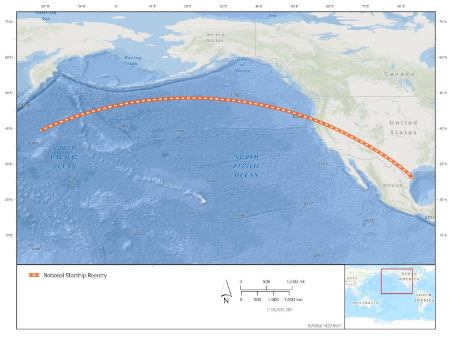
After completing docked operations with Blue Origin, Orion will detach and await Starship. SpaceX’s Starship pathfinder will launch and meet up with Orion to spend about a day connected for checkouts and testing. After that, Orion and its crew will undock and return home, splashing safely down in the Pacific Ocean where a team from the U.S. Navy and NASA will recover the astronauts.

In total, the crew is expected to remain in space for about two weeks, with exact mission length to be determined in real-time based on launch, rendezvous, and docked operations.

All of this assumes that New Glenn has been fixed and is operational by late 2027 and can launch the Blue Moon Mark-2 manned lunar lander. It also assumes the lunar lander version of Starship is ready and operational and man-rated. It also assumes NASA can get SLS stacked and ready for launch much faster than previously expected.

All are big assumptions.

Other issues: Orion will be testing its docking system and its newly redesigned heat shield for the first time, with humans on board. As the return will be from low Earth orbit, the stress on the heat shield will be relatively light, reducing the risk considerably. Similarly, if the docking system fails they simply won’t dock, and can return to Earth instead. Both should work, however, as neither is cutting edge technology.

26 comments

Update on SpaceX preparations at Boca Chica for next Starship/Superheavy test flight

Link here. The key news is that SpaceX has moved Superheavy prototype #20 — the booster that will carry Starship prototype #40 on the 13th orbital test flight — to the test stand to begin tank and engine tests.

Cryogenic testing on B20 will focus on verifying the structural integrity of the liquid oxygen and methane tanks under extreme cold temperatures, while also checking the performance of internal systems, including COPVs, piping, valves, and sensors. This phase is critical for ensuring the booster can safely handle propellant loads before any engine firings.

Based on the article’s overall estimate of what still needs to be done, it is projecting a July-August time frame for the 13th flight. While that will be only two to three months after the 12th flight, significantly less than the seven months between the 11th and 12th flights, it still is longer than required. In order to get Starship certified for a manned Artemis-3 Earth orbit mission next year, a lot of test flights will have to occur in quick succession, on a monthly basis. For the lunar missions the company also has to start flying refueling missions in Earth orbit, which will require the launch of multiple Starships within several weeks.

SpaceX has indicated in intends to do that refueling mission before the end of the year. To do that however this 13th flight must fly in the summer and largely achieve most of its engineering goals.

0 comments

Giant SpaceX barge for transporting Starship/Superheavy arrives in Texas

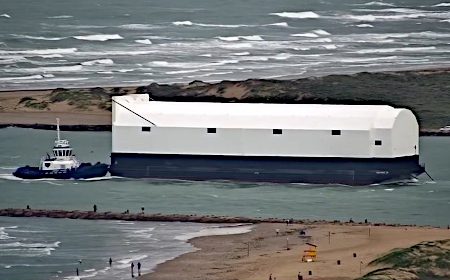
SpaceX's Starship barge
For scale, note the tiny people watching on
shore. Click for source.

The giant specially designed barge that SpaceX plans to use to transport Starships and Superheavys from Boca Chica to Florida, dubbed “You’ll Thank Me Later”, arrived in Texas last week.

Avid Space, a Starbase streaming outlet part of Labpadre, captured the barge’s arrival, posting images, of which the one to the right is a screen capture. From the first link:

The retrofitted barge Marmac 31, nicknamed “You’ll Thank Me Later” by Elon Musk’s space firm, arrived at the Port of Brownsville last week. It will be used to carry Starship megarockets built at Starbase to Florida and eventually other destinations.

The Starbase-headquartered company has said it would use barges to float the rockets to Florida for launches from there until the Starship factory that it’s building at NASA’s Kennedy Space Center is complete. The company has been in talks with port officials about a 50-year lease for an 83-acre site that would be used as a terminal for the 400-foot-long rockets. Those negotiations are ongoing.

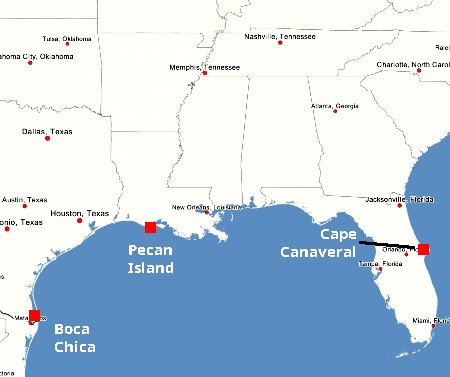
This barge’s arrival in Texas not only makes Starship launches from Florida more likely in the near future, it gives SpaceX the option to buy other launch sites along the Gulf coast, such as that rumored purchase in Louisiana.

10 comments

FAA grounds Starship/Superheavy pending completion of SpaceX’s investigation

According to an announcement yesterday by the Federal Aviation Administration (FAA), Starship and Superheavy are presently grounded pending the completion of SpaceX’s investigation of the engine failures in the Superheavy booster.

After a thorough assessment of the operation, the FAA has determined the May 22 SpaceX Starship Flight 12 launch resulted in a mishap. The mishap involved the Super Heavy booster as it flew back to the Gulf of America after stage separation. There are no reports of public injury or damage to public property. 

The FAA is requiring SpaceX to conduct a mishap investigation. The FAA will oversee the SpaceX-led investigation, be involved in every step of the process, and approve SpaceX’s final report, including any corrective actions.

The propaganda press will make of more this than it should. Based on the FAA’s procedures since Trump took over from Biden, the agency is not going to slow things down. It mostly just observes closely the investigation after any mishap, and as soon as the company is itself satisfied with the solution and has instigated its planned fixes, the FAA issues its stamp of approval and allows flights to proceed immediately.

For example, it acted in this manner for the Starship/Superheavy tests in 2025. It also did the same for Blue Origin in its investigation of its recent New Glenn failure. In both cases there were no delays waiting for the agency to retype the company’s conclusions. The approval was immediate. Expect the same now.

3 comments

A review of what happened and what’s next for Starship/Superheavy

Link here. This article is a very nice and thorough review of what happened during SpaceX’s 12th test flight of Starship/Superheavy last week. What I like about it most is that it outlines what happened with very little speculation. No one outside of SpaceX is in a position to do this properly, and some speculation has been I think over the top. The article at the link avoids this.

It also provides a quick and reasonable summary about what is likely to happen next:

Next up will be Booster 20 and Ship 40 for Flight 13. This mission may launch in the July-August timeframe, pending testing and any mitigation efforts relating to the issues found during Flight 12. The launch pad appears to be in good shape, removing it from being a potential bottleneck to Booster 20’s Static Fire test, although that is not expected for weeks.

The article also provided this added news item that SpaceX revealed during last week’s test flight that has mostly fallen under the radar among news outlets (including here):

SpaceX also revealed plans for a lunar Starlink constellation using laser-linked relay satellites and confirmed that Fram2 commander Chun Wang has signed up for Starship’s first crewed interplanetary mission — a two-year Mars flyby. Wang will first fly with Dennis and Akiko Tito on the previously contracted crewed lunar flyby, potentially as early as 2034.

That’s two Starship missions apparently paid for by Wang, one around the Moon followed by a Mars fly-by. With the lunar fly-by targeting 2034, the Mars fly-by is likely a decade away, at the earliest.

7 comments

SpaceX completes a largely successful 12th orbital test flight of Starship/Superheavy

Starship and Superheavy in flight

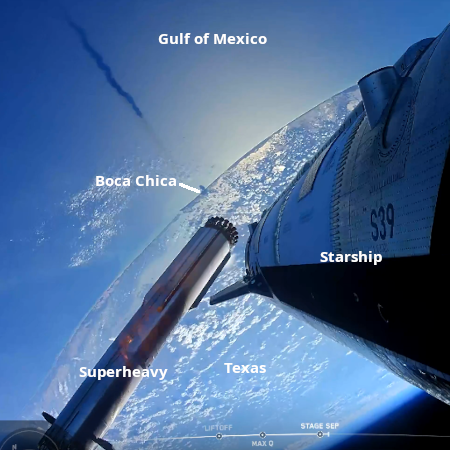
SpaceX today successfully completed its 12th orbital test flight of Starship/Superheavy, with Superheavy lifting off and getting Starship into its preliminary flight path and Starship then firing its engines and getting into a workable orbit that naturally decayed over the Indian Ocean.

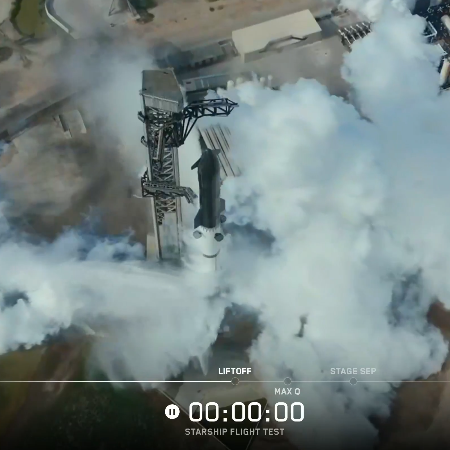
There were issues with several Raptor-3 engines, being used in flight on both Superheavy and Starship for the first time. During launch one Superheavy Raptor-3 engines cut off prematurely, forcing the other 32 engines to compensate for the loss. Then, after stage separation (shown in the screen capture to the right) Superheavy’s boost back burn cut off prematurely. As a result, the booster did not come down off the coast for a soft vertical splashdown as planned, but came down in the Gulf, mostly uncontrolled. It did successfully fire some engines for the landing burn, but that splashdown was hard.

As for Starship, it also had one engine shut down prematurely, requiring the other five engines to burn about 90 seconds longer to get the ship up to an acceptable orbit. Because of these engine issues, the engineering team decided to forgo a test restart of one Raptor-3 engine.

Starship then successfully deployed 20 dummy Starlink satellites, followed by two operational Starlink satellites that were modified expressly to provide visual observations of Starship and its heat shield while it is space. Only a few minutes later engineers were able to broadcast those observations, showing Starship as seen from nearby.

Starship then successfully executed its planned maneuver leading to a soft splashdown in the Indian Ocean.

Overall this sets the stage for a quick follow-up. Expect new test flights over the summer and fall, coming almost monthly. The company has made it clear it wants to do a two-week refueling mission with two Starship before the end of the year, as well as begin using Starship to deploy the bigger upgraded Starlink version 3 satellites.

Though this flight did not complete a full orbit, the rocket got Starship into an acceptable orbital path, allowing it to do most of the orbital testing desired. I consider this a success for the 2026 launch race:

60 SpaceX
28 China
8 Russia
7 Rocket Lab

For the third straight year SpaceX leads the entire world combined in total launches, 60 to 51.

40 comments

Watching SpaceX’s 12th Starship/Superheavy orbital test flight

After yesterday’s scrub, SpaceX has now rescheduled the 12th test orbital launch of Starship/Superheavy for later today, with a launch window opening at 5:30 pm (Central).

The upcoming flight will debut the next generation Starship and Super Heavy vehicles, powered by the next evolution of the Raptor engine and launching from a newly designed pad at Starbase.

The flight test’s primary goal will be to demonstrate each of these new pieces in the flight environment for the first time, with each element of the Starship architecture featuring significant redesigns to enable full and rapid reuse that incorporate learnings from years of development and test.

I have once again embedded below several different live streams of the flight.
» Read more

17 comments

Starship/Superheavy launch scrubbed at T-40 seconds

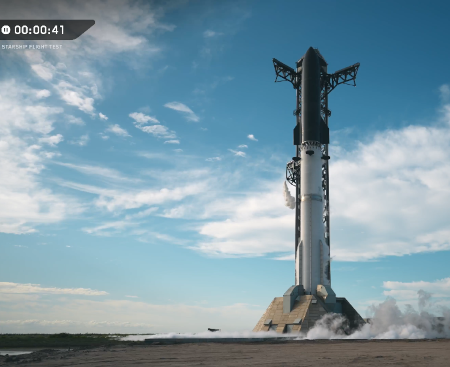
Starship at that hold today

Though SpaceX mission controllers tried several times to restart the countdown when it went into an automatic hold at T-40 seconds due to some technical issues, they eventually decided to scrub the Starship/Superheavy launch today.

At present they expect to try again tomorrow, with a launch window opening at 5:30 pm (central). Expect updates later today or tomorrow.

One trivia fact noted during today’s broadcast. With its new more powerful Raptor-3 engines, Superheavy produces about 18 million pounds of thrust at launch. That is more than twice that of either the Saturn-5 rocket (seven million pounds) or the SLS rocket (8.8 million pounds). And remember, everything about Starship/Superheavy is intended to be reused, with Superheavy already proving its ability to do so.

23 comments

Watching SpaceX’s 12th Starship/Superheavy orbital test flight today

Assuming all goes as planned, SpaceX intends to launch its new upgraded Starship/Superheavy rocket later today, with a launch window opening at 5:30 pm (Central).

The upcoming flight will debut the next generation Starship and Super Heavy vehicles, powered by the next evolution of the Raptor engine and launching from a newly designed pad at Starbase.

The flight test’s primary goal will be to demonstrate each of these new pieces in the flight environment for the first time, with each element of the Starship architecture featuring significant redesigns to enable full and rapid reuse that incorporate learnings from years of development and test.

I have embedded below several different live streams of the flight, including a link to SpaceX’s live feed on X. That SpaceX live feed however will only go live at 4:43 pm (Central). The other feeds are using Youtube, and either will go live sooner or are able to be on stand-by awaiting the beginning of the feeds.
» Read more

14 comments

BUMPED: 12th Starship/Superheavy test delayed another day to May 21, 2026

UPDATE: One day after its announcement below, SpaceX announced another one day delay. The 12th Starship/Superheavy launch is now targeting May 21, 2026, with a launch window beginning at 5:30 pm (Central).

Original post:
———————
SpaceX earlier today announced a revised launch date for the 12th Starship/Superheavy orbital test flight, delayed one day from May 19, 2026 to May 20, 2026, with a launch window opening at 5:30 pm (Central).

No reason was given. I suspect weather might have played a factor, but it is also possible that some technical issues required a short delay.

Either way, the link to the X live feed will be posted here once it goes live. I will also embed it on Behind the Black once it goes live.

33 comments

The 12th Starship/Superheavy test orbital flight now scheduled for May 19, 2026

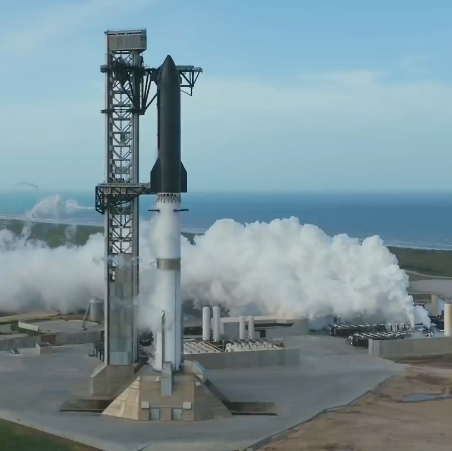
Starship/Superheavy (version 3) on launchpad

SpaceX yesterday announced that the 12th orbital test flight of its Starship/Superheavy rocket is now scheduled for May 19, 2026, with a launch window opening at 5:30 pm (Central).

The mission will be also be the first flight of what SpaceX calls Version 3 of both the booster and the spaceship, will include the first use of the Raptor-3 engine, and the first use of a completely redesigned launchpad.

The flight test’s primary goal will be to demonstrate each of these new pieces in the flight environment for the first time, with each element of the Starship architecture featuring significant redesigns to enable full and rapid reuse that incorporate learnings from years of development and test.

The booster’s primary test objective will be executing a successful launch, ascent, stage separation, boostback burn, and landing burn at an offshore landing point in the Gulf of America. As this is the first flight test of a significantly redesigned vehicle, the booster will not attempt a return to the launch site for catch.

The Starship upper stage will target multiple in-space and reentry objectives, including the deployment of 22 Starlink simulators, similar in size to next-generation Starlink satellites. The last two satellites deployed will scan Starship’s heat shield and transmit imagery down to operators to test methods of analyzing Starship’s heat shield readiness for return to launch site on future missions. Several tiles on Starship have been painted white to simulate missing tiles and serve as imaging targets in the test. The Starlink simulators will be on the same suborbital trajectory as Starship. A relight of a single Raptor engine while in space is also planned.

As an added potential test-to-failure, the company has also removed a single heat shield tile to test how Starship performs under this failure scenerio. The flight plan will be the same as the previous flights, designed to come down in the Indian Ocean.

A detailed description about the upgrades to Starship, Superheavy, and the ground systems can be found here.

The company will broadcast the launch live, which I will embed on Behind the Black once available.

16 comments

Two lawsuits against SpaceX, claiming company operations damage local homes

Starship and Superheavy during ascent
Starship and Superheavy ascending during October test flight.

SEE UPDATE BELOW for info on 2nd lawsuit.
—————————-
In what appears to be another frivolous lawsuit aimed at SpaceX, about 80 homeowners located from five to ten miles away from SpaceX’s Starbase launch site at Boca Chica have now sued the company, claiming Starship launches have damaged their homes.

The 53 homes are in small towns between 5 and 10 miles from SpaceX’s launch complex near Boca Chica Beach outside Brownsville with 43 in Port Isabel and the others in Laguna Vista, Laguna Heights and South Padre Island.

The lawsuit doesn’t describe the specific damage incurred by each homeowner, but there have been reports of houses shaking, items falling off shelves and broken windows after previous launches and landings of Starship, the world’s largest and most powerful rocket.

“SpaceX has repeatedly subjected the surrounding areas to extraordinary amounts of acoustic energy including noise, vibrations, and sonic booms,” it said of the flights, which can produce multiple sonic booms in addition to the sustained noise of launch, depending on the mission. Starship operations have subjected the plaintiffs’ homes “to repeated intense and damaging acoustic events,” the lawsuit said. [emphasis mine]

In other words, the launches are noisy, and might have caused some things to fall off shelves and might have broken windows. Note too that in Florida the safety zone around launches is three miles, and comparable rockets to Superheavy/Starship (Saturn-1B, Saturn-5, the Space Shuttle and SLS) have repeatedly launched there without causing any noticeable damage. I myself watched a shuttle launch from five miles away and found the sound of the launch actually disappointing. It certainly wasn’t going to cause damage to anything at that distance.

This lawsuit therefore appears simply to be a case of some lawyer trying to blackmail a big company for some ready cash. Its origin might also stem from the insane leftwing hate of Musk because he had to gall to support the election of Donald Trump in 2024. Note too that the author of the article at the link, Brandon Lingle, seems to be one of those insane anti-Musk haters, as he never has anything good to say about SpaceX, and treats all environmentalists like saints.

UPDATE: It appears the same law firm behind the lawsuit above has filed a second lawsuit for 80 other landowners in the vicinity of SpaceX’s MacGregor test site near Waco, claiming the static fire engine tests there are causing them unspecified problems as well. As with the lawsuit above, it appears the claims are mostly an attempt to squeeze money from SpaceX, with some of that effort fueled by anti-Musk hatred.

12 comments

A cool crater in Starship’s prime candidate zone on Mars

Overview map

Crater in the Starship landing zone on Mars
Click for original image.

Cool image time! The picture to the right, rotated, cropped, reduced, and enhanced to post here, was taken on August 16, 2025 by the high resolution camera on Mars Reconnaissance Orbiter (MRO). In mid-March it was featured as a captioned image by MRO’s science team. From their caption:

When they form, impact craters dig up material from below the surface and throw it outwards into what geologists call an ejecta blanket. The fastest ejected material travels the furthest so material from different depths can end up at different distances from the crater.

This HiRISE image shows a pedestal crater in Arcadia Planitia that has material of different brightness and color at various distances from the crater. This could tell us more about the material that’s buried below the surface here, but the situation is complex.

The caption however fails to mention the most interesting two aspects of this crater’s ejecta blanket. One, it suggests strongly that there was a lot of near surface ice at impact that melted to produce this splash apron.

Second, and even more intriguing, the 3,100-foot-wide unnamed crater is located smack dab in the middle of the candidate landing zone on Mars for SpaceX’s Starship spacecraft, as shown by the overview map above. The white dot marks the location of this crater, while the red dots mark the four prime landing sites, as suggested by scientists in a 2021 paper [pdf], based on conclusions drawn from two workshops organized by SpaceX and these scientists. The other dots are other MRO images of this region, and include a number of potential secondary landing sites.

This zone is in the northern lowland plains of Mars, in a mid-latitude region where near-surface ice is plentiful. The splash apron of this crater provides further evidence of that near surface ice.

1 comment

Vast unveils a proposed docking port more than 3x larger than standard space station ports

Vast's larger port compared to standard ports now used at ISS
Click for short movie.

The space station startup Vast yesterday unveiled its proposed Large Docking Adapter, designed to provide a docking port more than three times wider than the standard space station ports presently used on ISS.

The image to the right provides an clear comparison. The two smaller ports on the left are presently used on ISS. Vast’s new port is on the right.

Vast, the company developing next-generation space stations, announced today at the 41st Space Symposium the Large Docking Adapter, including its current development, its availability for purchase, and Vast’s plans to open-source its interface.

Future space stations will use larger modules, have greater overall mass, and dock with a new generation of bigger crewed vehicles. New docking standards and universal hardware are required for the future generation of space vehicles and habitats. The Large Docking Adapter is engineered to support higher mass and increased structural demands while enabling varying types of modules and vehicles to dock together. By open-sourcing the interface, slated for May 2026, Vast is intending to encourage industry-wide collaboration and accelerate the development of interoperable space systems.

Animations of the adapter at this Vast website suggest strongly that the company wants to encourage SpaceX to use the adapter on Starship. Since the company is releasing the design as open-source, it also wants everyone to use it as the standard.

Such a port could also be used on a variety of other spacecraft designs presently under development, and if used would enhance their capabilities significantly.

12 comments

Update on Superheavy/Starship: Both ships doing final static fire testing

Link here. The report includes a lot of very interesting information about how SpaceX is evolving its launch platforms and the tank farms that fuel the stages in order to make them operate more efficiently. For example:

In the past, on Pad 1, SpaceX had only four Liquid Oxygen (LOX) Pumps and six subcoolers, and three Liquid Methane (LCH4) Pumps with three subcoolers. This setup allowed SpaceX to start booster load at T-41:15 on Flight 11.

On Pad 2, SpaceX has five pumps and about 10 subcoolers worth of capacity on the LOX side, and four pumps alongside about six subcoolers worth of capacity on the LCH4 side. With these upgrades, along with larger supply lines, SpaceX can now load a full booster within 30 minutes, and each LOX ring takes only about 90 seconds to load. This now means SpaceX can load the Superheavy booster faster than a Falcon 9 and carry over 10 times the propellant. [emphasis mine]

Many of the tests have been more to prove out the fueling systems and launchpad than to test Superheavy.

Other tests however have been to prove out the new Raptor-3 engine. The company have increased the number of engines step by step so that the next test will be the first to test all 33 engines. I suspect that test will also be the full dress rehearsal countdown prior to launch.

Starship meanwhile is undergoing testing on the company’s nearby Massey test stand, the one that I think was rebuilt after an explosion last year.

Stay tuned. It appears the next and 12th orbital test flight will not be long in coming.

6 comments

Update on SpaceX’s Starship/Superheavy launchpad improvements at Boca Chica

Link here. The article provides many details about the design improvements and testing that SpaceX is doing at the Boca Chica launchpad prior to the next Starship/Superheavy orbital test flight, now expected sometime in mid-May.

All the improvements appear designed to allow for quicker reuse of the pad, including protecting it better when both Starship and Superheavy return to be captured by the chopstick towers. For example:

On the tower, work has progressed on the Ship Quick Disconnect (SQD) arm, which connects to the Starship upper stage for propellant loading. This week, technicians added steel reinforcements to the lower side of the arm’s shoulder section. These additions are believed to strengthen the structure while enabling the arm to retract more quickly during launch.

A faster swing-out reduces the risk of damage from the intense exhaust plume of Super Heavy’s 33 Raptor engines at liftoff. This improvement should minimize post-launch refurbishment and contribute to a higher launch cadence. The core work on the SQD arm itself appears largely complete, and scaffolding may soon be removed as final preparations continue.

Other work includes a new tower roof structure to protect it from the rocket’s engine exhaust, and other work on the pad itself to facilitate faster fueling. These additions have been accompanied by testing to make sure they work.

All this work appears intended to make it possible to launch frequently once the next test launch is completed.

10 comments

SpaceX delays next Starship/Superheavy orbital test flight by about a month

According to a tweet by Elon Musk today, the 12th orbital test flight of Starship/Superheavy is not going to happen in mid-April as previously hoped.

Instead, it is now pushed back to early to mid-May.

Next flight of Starship and first flight of V3 ship & booster is 4 to 6 weeks away.

In his tweet, “V3” refers to the third version of both Starship and Superheavy, incorporating many upgrades learned from the first eleven test flights. Version three will also be the first to use SpaceX’s Raptor-3 engine, the most powerful rocket engine ever built but with a much simplified design.

It is not clear what has caused this delay. The last test flight was in October 2025, which means there will be eight month gap between test launches, a much longer gap than desired by the company. Part of the delay was because the company was building a whole new launchpad for the rocket. Also, there were two tank failures during static fire tests of Superheavy that needed investigation and as well as pad repairs.

Still, time is marching on. SpaceX needs to launch this rocket, and begin doing it at a much faster pace. It can no longer complain about red tape, as under Trump that issue has been squashed quite effectively.

19 comments

Update on SpaceX’s preparations for the 12th orbital test flight of Starship/Superheavy

Link here. The testing has apparently verified the fueling system of Superheavy at the new launchpad.

Starship Flight 12 took another step toward launch, with Booster 19 completing an initial test campaign on the newly commissioned Pad 2 at Starbase, Texas. Culminating in a short Static Fire test, the series of tests was a first for Pad 2, the Block 3/V3 Super Heavy Booster, and for the upgraded Raptor 3 outside of single engine testing.

As the inaugural vehicle to undergo operations on this pad, B19’s campaign served as both a booster qualification test and a commissioning milestone for the expanded launch infrastructure, paving the way for a long-awaited static fire test of its Raptor 3 engines.

Lots of details worth reading. Ground testing will now shift to Starship. All in all, it does appear that an early April launch is likely.

4 comments

SpaceX now targeting early April for next Starship/Superheavy test flight

Based on a tweet posted by Elon Musk on March 7, 2026, SpaceX now targeting early April for next and 12th Starship/Superheavy test orbital flight.

According to this update at nasaspaceflight.com, the Superheavy booster, the 19th prototype and the first version 3 booster, is now on the launchpad for final checks.

On March 8, Booster 19 left Mega Bay 1 and rolled down Highway 4 towards the launch site and Pad 2. This is the start of pad commissioning and booster engine testing for Block 3.

Booster 19 is mounted on Pad 2 to conduct multiple tests over the coming days. This will likely include ambient pressure testing, tanking tests with Liquid Oxygen (LOX) and Liquid Methane (LCH4), spin primes, and eventually a static fire, maybe even a couple of static fires. These tests are not only to help test the booster but also to test all of the pad systems.

While crews have run operations with the Pad 2 tank farm many times, they have never loaded an actual booster with propellant. With a booster finally on the pad, this will help in the final commissioning process.

For these initial pad and booster check-outs, #19 does not have all 33 engines installed. It appears the company wants to test the launchpad fueling system first, with the minimum number of engines needed.

Meanwhile, the Starship prototype that will fly, #39 in the series, is in the assembly building after completing its own series of tanking and launchpad tests.

I want to highlight two numbers — 19 and 39 — in order to illustrate how SpaceX does things versus NASA. Not only has SpaceX already completed eleven test flights of Starship/Superheavy, it has tested or flown 19 and 39 prototypes of each, in one manner or another. The company has a very rich history of hardware and testing as it ramps up towards operational flights. This practically guarantees that those operational flights will not only occur relatively soon, they will be relatively safe and robust.

This was all done in less than a decade, though most of the testing of those prototypes has occurred in the last six years.

NASA meanwhile began work on SLS about fifteen years ago, and has built two rockets total, and so far flown only one. Though the agency did a lot of tests of pieces of the rocket, it flew only one test launch, in 2022. SLS’s design is so cumbersome and expensive, the agency could not afford to fly it multiple times. Thus, much of its testing was done on computer screens, in simulations.

Which rocket would you want to fly on when both are operational?

9 comments

A realistic plan to send a spacecraft to interstellar Comet 3I/Atlas

Scientists have devised a mission profile that could actually get a spacecraft close to Comet 3I/Atlas sometime around 2085.

…the team found that an intercept could be achieved via a Solar Oberth maneuver, but the launch would have to occur in 2035 to achieve optimal alignment between Earth, Jupiter and 3I/ATLAS. The flight duration would be 50 years (though Hibberd notes that this could be reduced marginally). “2035 is optimal because the alignments of the celestial bodies involved (i.e. the Earth, Jupiter, Sun, and 3I/ATLAS) are the most propitious to reach 3I/ATLAS with a minimum Solar Oberth propulsion requirement from the probe, a minimum performance requirement for the launch vehicle, and a minimum flight time to the target,” he said.

The Solar Oberth maneuver has the spacecraft fire its engines at the moment it is zipping past the Sun at its closest and fastest, taking full advantage of that gravitational velocity.

You can read their paper here [pdf] As they note in their conclusion, this entire mission is based on using “a Starship Block 3 upper stage fully-refuelled in Low Earth Orbit.” It assumes that by 2035 Starship will be flying routinely and cheaply, and could be purchased at a reasonable cost for such a mission.

Or maybe donated in the name of science by some billionaire who happens to care about making the human race multi-planetary. Know anyone?

Personally, I wonder it this mission profile could be adapted to reach the first known interstellar object, Oumuamua. 3I/Atlas appears to simply be a comet. Though a visit would be of value it would not Earth-shaking. Oumuamua however was not a comet, but more importantly it was strange in every way. Though astronomers in 2019 declared based on the available data that it was definitely not an alien spaceship, that conclusion remains very uncertain. As I wrote at the time:

…for anyone to assume there is any certainty to this conclusion would be a grave mistake. It is merely the best guess, based on the available but somewhat limited data. The data however does not preclude more exotic explanations. Nothing is certain.

To me this object should get top priority.

Hat tip BtB’s stringer Jay.

11 comments
1 2 3 27