
SLS core stage arrives in Florida

The core stage of NASA’s SLS rocket has arrived in Florida and has now begun the processing to get it ready for launch anywhere from six to ten months from now.

Approximately six months of work is anticipated to finish assembly and complete a long series of tests and checkouts of SLS and the Orion spacecraft it will send to the Moon, but current forecasts of this first-time integration work estimate closer to ten months to complete the necessary operations. After the vehicle is put together, weeks and weeks of testing to make sure SLS and Orion are properly talking to each other, as well as the EGS ground infrastructure, will follow.

…Recent schedules showed the remainder of work to reach launch readiness extending for ten months once the core stage arrived. That time includes six months of operations to the “work to” launch readiness and four months of “risk factor”. The “work to” launch readiness date, which would still have to synchronize to a lunar launch window, is currently early-November 2021. With risk factored in, a date of early-March 2022 is derived.

NASA has not yet changed that November ’21 target for launch, though all reports strongly suggest it cannot be met.

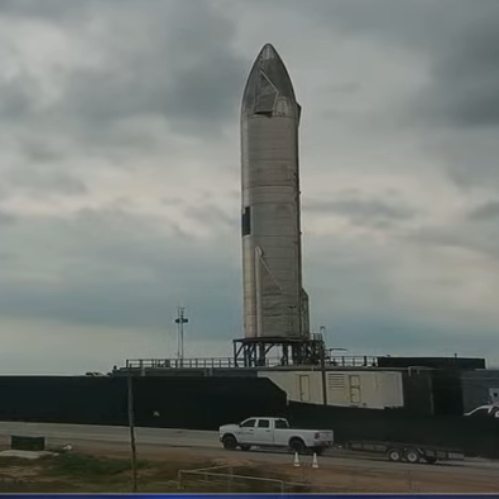
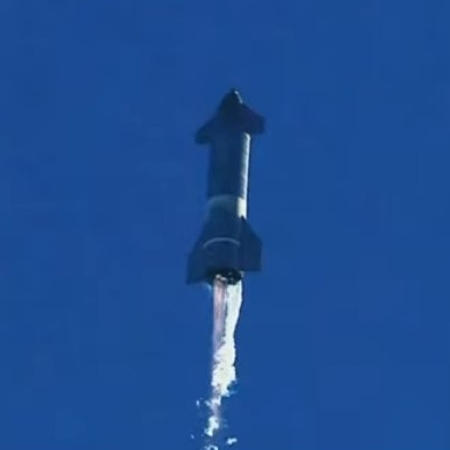
Regardless, even if they can get this thing launched by November, the long prep time shows once again how cumbersome and inefficient this rocket would be if anyone tried to use it to explore space. NASA says that after this first launch the prep time will be shorter, but even if it is trimmed to three months (the best estimate I’ve seen) it simply isn’t good enough. SpaceX has already demonstrated that is can fly two different Starship prototypes in less than thirty days (with #10 flying March 3rd and #11 flying March 30th). The company’s goal is many flights frequently, and it so far is proving that this goal will be achievable. And it will do it placing more payload in orbit for pennies (compared to the cost of SLS).

I still predict that there is a better than 50% chance that the first orbital launch of Starship/Superheavy will occur before SLS, even though the former began actual hardware development only two years ago.

I also think that we are now in the final stages of the entire SLS program. As with all similar big NASA-led rocket projects started since the mid-1980s, it will die stillborn. The previous projects never even got built after spending billions on blueprints and powerpoint presentations. SLS will likely get at least two flights (assuming nothing goes wrong with the first). After that NASA and the federal government will shut it down because by that time there will be far better and cheaper options available.
2 comments

NASA suspends Starship lunar lander contract award due to protests

Because of the protests filed by both Blue Origin and Dynetics, NASA has temporarily suspended the contract with SpaceX for using its Starship spaceship for manned lunar landings.

NASA now has told SpaceX to stop work until GAO determines the outcome. A NASA spokesperson provided this statement to SpacePolicyOnline.com this afternoon. “Pursuant to the GAO protests, NASA instructed SpaceX that progress on the HLS contract has been suspended until GAO resolves all outstanding litigation related to this procurement.” The issuance of the stop work order was first reported by Space News.

GAO has 100 days — until August 4, 2021 — to make a decision.

The odds are very likely that the GAO will reject both protests, but not certain. Meanwhile expect SpaceX to continue development of Starship regardless, as they already have about $6 billion in private investment capital in the bank for this project.

I also will predict that should GAO accept the protests and force NASA to reopen the bids, neither Blue Origin nor Dynetics will be able to make an offer that matches SpaceX anyway. And if they do win a contract, I predict that SpaceX will still launch and land on the Moon before them, based on their track records versus SpaceX’s.

3 comments

FAA approves next three Starship test flights with prototype #15

Capitalism in space: In a statement today the FAA announced that it has approved next three test flights of SpaceX’s Starship prototype #15.

From the statement:

The FAA has authorized the next three launches or the SpaceX Starship prototype. The agency approved multiple launches because SpaceX is making few changes on the launch vehicle and relied on the FAA’s approved methodology to calculate the risk to the public. The FAA authorized the launches on Wednesday, April 28.

This likely means that SpaceX will try a flight tomorrow.

3 comments

Starship prototype #15 completes 2nd static fire test, waits FAA approval for flight

Capitalism in space: SpaceX’s 15th Starship prototype completed its second static fire test in three days yesterday, and is presently poised to do its first test flight.

The scheduled road closures in Boca Chica suggest that they are aiming for either April 30th, May 1st, or May 2nd. However, it also appears they are awaiting FAA approval, which could be why they did a second static fire test. They can’t fly so rather than do nothing they reconfigured that second static fire to test the landing burn.

Musk returned to Twitter to state that this was a header tank test and that all looked good. This could mean Monday’s test was a launch static fire while Tuesday’s test was more of a landing burn static fire as the header tanks are used to supply landing propellants.

It also appears that SpaceX has had its flight application sitting at the FAA for about a week, with no action. Thus, it is the federal bureaucracy that appears to be slowing things down at this moment.

0 comments

Dynetics has joined Blue Origin in protesting Starship contract by NASA

Capitalism in space? Dynetics today joined Blue Origin in protesting NASA’s decision to award SpaceX the sole contract for building a manned lunar lander, using its Starship spacecraft.

Though the company’s protest did not going into specifics, it appears that Dynetics main complaint is the decision to not award two companies a contract, as originally planned. Even so, these factors make Dynetics bid quite problematic:

Of the three bidders, Dynetics was the lowest ranked. It had a technical rating of “Marginal,” one step below the “Acceptable” that Blue Origin and SpaceX received. Its Management rating of “Very Good” was the same as Blue Origin but one step below SpaceX’s “Outstanding.”

In the source selection statement, Kathy Lueders, NASA associate administrator for human exploration and operations, said the Dynetics lander “suffered from a number of serious drawbacks” that increased risk. The lander was overweight, which at this early stage of development “calls into question the feasibility of Dynetics’ mission architecture and its ability to successfully close its mission as proposed,” she wrote. The evaluation also questioned the maturity of the technology for performing in-space cryogenic fluid transfer required to refuel the lander, as the company planned.

Lueders concluded that “while Dynetics’ proposal does have some meritorious technical and management attributes, it is overall of limited merit and is only somewhat in alignment with the objectives as set forth in this solicitation.” The document only stated that Dynetics’ proposal had a price “significantly higher” than Blue Origin’s proposal, which in turn was significantly higher than SpaceX’s winning bid of $2.89 billion. Blue Origin disclosed in its protest that it bid $5.99 billion. [emphasis mine]

So, Dynetics proposed to build an overweight lander and do it at the highest price. If anything this protest enhances Blue Origin’s protest. It certainly doesn’t do much for Dynetics.

In fact, a good metaphor for the bidding here would be to imagine three vacuum cleaner salesman arriving at your door, all at the same time. One salesman, Mr. Newbie Dynetics, offers you a vacuum cleaner (as yet unbuilt in any form) that as presently designed will only be able to suck in about two-thirds of the dirt on your floor, and demands you pay $800 for it. The second salesman, Jeff “Blue” Origin, says his design (also unbuilt) is far better because they’ve done some successful tests of a tiny handheld prototype, and in addition he’ll only charge you $599 for it.

Neither Newbie or Jeff have any financing, so you will have to foot the entire bill.

The third salesman, Elon Starship, shows up with a full size prototype that while it has some problems, actually functions, and has been tested a number of times already. He also has more than two thirds of his development already financed by others, and only wants to charge you $289.

Who would you pick?

Since I know my readers are neither elected officials nor government officials in Washington and therefore know how to use their brains intelligently, I suspect I know.

We shall soon find out just how smart or dumb those elected officials or government officials in Washington really are.

16 comments

Starship prototype #15 completes static fire test

Capitalism in space: SpaceX’s fifteenth Starship prototype successfully completed a static fire test yesterday, and the company is now hoping to do its first test flight this week, possibly as early as tomorrow.

Meanwhile, preparations continue for the first test launch of a Superheavy prototype, as well construction at Boca Chica of the orbital launchpad.

The Orbital Launch Site is a hive of activity, with work ranging from the installation of large GSE (Ground Support Equipment) tanks to continued work on the launch mount and launch and integration tower.

The latter has now started to rise into the air next to the mount, which is yet to receive its launch table.

When finished, the tower will be the tallest structure in the region, at nearly 152 meters — towering over the 120 meter tall, fully integrated Starship/Super Heavy stack. The Tower will eventually host a crane and, as crazy as it initially sounded when Elon revealed it, arms designed to catch the returning booster.

It is not yet clear what the test schedule for Superheavy will be leading to that first orbital launch. They will likely fly a prototype on a hop first, then fly it with Starship stacked above. SpaceX however has not said exactly what its plans are, and even if it had, the company has been quite willing to revise those plans should it decide a change is advisable.

0 comments

Blue Origin protests Starship contract award for lunar lander

Blue Origin today filed a protest with the Government Accountability Office (GAO) of NASA’s decision to award SpaceX’s Starship the sole contract for building a manned lunar lander, claiming the agency “moved the goalposts” during the award process.

Blue Origin says in the GAO protest that its “National Team,” which included Draper, Lockheed Martin and Northrop Grumman, bid $5.99 billion for the HLS [Human Landing System] award, slightly more than double SpaceX’s bid. However, it argues that it was not given the opportunity to revise that bid when NASA concluded that the funding available would not allow it to select two bidders, as originally anticipated. NASA requested $3.3 billion for HLS in its fiscal year 2021 budget proposal but received only $850 million in an omnibus appropriations bill passed in December 2020. [emphasis mine]

The highlighted words kind of say it all. Blue Origin’s National Team put in a very high bid. Why should they have any expectation of winning?

Moreover, their track record, especially Blue Origin’s (the leader of the team), pales in comparison to SpaceX.
» Read more

11 comments

Starship prototype #15 readying for flight, possibly tomorrow

Starship #15 on launchpad
Screen capture from Labpadre launchpad live stream.

Capitalism in space: SpaceX’s 15th prototype of its Starship upper stage, is preparing to do a static fire test today, with its first test flight possibly as soon as tomorrow, though at present the FAA has not given its approval.

They have done tank tests already, and installed three upgraded Raptor engines yesterday. This spacecraft is a major upgrade from the previous prototypes, and SpaceX probably plans to eventually fly it higher and farther than the previous prototypes. Though no details about those flight plans has yet been released, the first flight will almost certainly repeat the previous flights, going up about ten miles, flipping sideways to simulate a controlled atmospheric descent, and then uprighting itself and landing vertical on the landing pad. Hopefully the upgrades will result in the first truly clean landing with this prototype.

Though the FAA under the Biden administration has seemed eager to flex its bureaucratic muscles and slow development, that NASA has chosen this vehicle as the one that will take astronauts to and from the Moon will put pressure on it to not slow things down too much.

4 comments

SpaceX wins competition to build Artemis manned lunar lander, using Starship

Starship prototype #8 on first flight test
Starship prototype #8 on its first flight test,
December 2020

Capitalism in space: NASA has just announced that it has chosen SpaceX to build the Artemis manned lunar lander, using Starship.

The award, a $2.9 billion fixed price contract, also requires SpaceX to complete an unmanned demo lunar landing with Starship that also returns to Earth, before it lands NASA astronauts on the Moon. The contract also still retains the goal to get this to happen by 2024, though NASA official emphasized that they will only launch when ready.

After these flights the agency says it will open bidding again to the entire industry, which means that others are now being challenged to come up with something that can beat SpaceX in the future.

Nonetheless, the contract award was a surprise, as NASA originally intended to pick two teams to provide redundancy and encourage competition. Instead, the agency completely bypassed lunar landers proposed by Dynetics and a team led by Blue Origin that included Lockheed Martin and Draper.

Even more significantly, though NASA explained in the telecon that they still plan to use SLS and Orion to bring astronauts to Gateway, who will then be picked up by Starship for the landing, this decision is a major rejection of the Space Launch System (SLS), since Starship will not use it to get to the Moon, while the other two landers required it.

In fact, this decision practically makes SLS unnecessary in the Artemis program, as NASA has also awarded SpaceX the contract for supplying cargo to the Lunar Gateway station as well as launching its first two modules, using Dragon capsules and Falcon Heavy. SLS is still slated to launch Orion to Gateway, but Starship can replace Orion as well, since Starship is being designed to carry people from Earth to the Moon. This makes SLS and Orion essentially unneeded, easily abandoned once Starship starts flying.

NASA’s decision also means the Biden administration is willing to use its clout to push for Starship over SLS in Congress, which has favored SLS for years because of the pork it brings to their states and congressional districts. They apparently think that Congress is now ready to risk the end of SLS if it comes with a new program that actually accomplishes something. These developments firmly confirm my sense from February that the political winds are bending away from SLS.

This decision is also a major blow to Blue Origin and the older big space companies that Jeff Bezos’ company partnered with. Their dependence on the very costly and cumbersome SLS rocket meant that their ability to launch on a schedule and cost desired by NASA was severely limited. NASA looked at the numbers, and decided the time was right to go with a more radical system. As was noted by one NASA official during the press teleconference, “NASA is now more open to innovation.”

Based on the details announced during the announcement, NASA was especially drawn to Starship’s payload capability to bring a large payload to the Moon, at the same time it brings humans there as well. It also appears SpaceX’s recent track record of success also added weight to their bid.

53 comments

SpaceX raises another $1.16 billion in private capital

Capitalism in space: In a regulatory filing yesterday SpaceX revealed that it raised another $1.16 billion in private investment capital in just the past two months.

This follows two other recent financing rounds since August of last year in which SpaceX raised almost $3 billion. That makes $4 billion raised in eight months. All told, I think this brings the total private investment capital SpaceX has raised in the past two years to approximately $6 billion, all for building both the Starlink satellite constellation and the Starship/Superheavy rocket.

Not only does this give SpaceX ample cash to build both, it signals the growing faith big money investors have in the company’s plans. They have bought into Elon Musk’s dreams because he has proven that his dreams deliver, not only in exciting space ventures but in profits.

This fund-raising success also tells us that even if Starship does not reach orbit before SLS, it will very soon eclipse it entirely. It has the money now to get built, and the way SpaceX builds things, it will get built fast.

0 comments

Starship #11 debris fuels environmentalist opposition

They’re coming for you next: The debris that fell as far as five and a half miles away when SpaceX’s Starship #11 prototype exploded just before landing on March 30th has increased the already vocal opposition from various environmentalist activists of the space project.

Environmental organizations such as the Sierra Club, the Friends of Wildlife Corridor, and concerned citizens in the environmental research field have expressed their dissent about the SpaceX activities at Boca Chica.

Chris Sandoval, a science teacher in Brownsville with degrees in Wildlife and Fisheries and Ecotoxicology, has put forth a research paper explaining the possible effects of SpaceX activity in the surrounding natural habitats and economic consequences as a result of their expansion in the region.

Sandoval says research would show that contamination from rocket fluids would harm wildlife in the surrounding area. “Contaminants such as those of hydrocarbons are able to kill aquatic life, both vertebrate and invertebrate, at very low concentrations, especially when it’s in a semi-enclosed area as the Lagunas are,” explained Sandoval.

And yet, none of these claims seem to apply to the government-run spaceports in Florida and California, both of which are also surrounded by wildlife refuges. Why is that? Why do these environmentalists have a particular opposition to the spaceport of this private company, but none or little opposition to the government’s? Could it be that what they really oppose is private enterprise, and are using the environment as a tool to destroy it?

I should add, according to the U.S. Fish and Wildlife Service that manages this refuge, SpaceX has been working closely with them on mitigating the damage, which in the end I suspect will be quite minimal. The ecology is far stronger than these environmentalist like to portray it. What SpaceX did hardly compares to the damage a hurricane would cause, and that is not an unusual event at this Gulf coast location.

Whether this environmental opposition to SpaceX will result in any major delays or obstacles remains to be seen. Under a Trump administration I would not be too concerned. Under today’s Democratic Party Biden administration, who knows? The tendency of Democrats is to regulate, and to use their power to squeeze others. So far that has not yet happened aggressively in connection to SpaceX, though there have been signs that the Biden administration is interested in increasing the regulatory roadblocks SpaceX must face. We will only have to wait and see.

Above all this increases the urgency for SpaceX to shift as soon as possible its Starship and Super Heavy test flights to the two oil-rigs it purchased and are refitting as floating launch and landing platforms. Once the bulk of those test flights are far away, out in the ocean, the political clout of these protesters will be minimized.

16 comments

Starship and Super Heavy update

Link here. The fifteenth Starship prototype has now been moved to its launchpad, which you can see here, while further work continues on Starship prototypes #16-20, the first Super Heavy prototypes, #1 and #2, and the orbital launchpad.

Starship #15 sports many changes in design from #11, and is expected to do its first test flight sometime in the coming weeks. As for the first Super Heavy prototype, it will be used to test some ground operations as well as the prototype itself, on the ground. Prototype #2 will hopefully make the first Super Heavy hop.

The construction of a full orbital launchpad lends great weight to SpaceX’s goal of making the first orbital flight before the end of the year.

Meanwhile, SpaceX has likely tightened security at this Boca Chica facility after a youtuber sneaked onto the site recently and posted video of himself wandering around the base of Starship #11, unmolested. He has since removed that video, but another youtuber grabbed it and has re-posted it for you to watch.

2 comments
1 29 30 31 32 33 44