SpaceX to FAA: Let us launch Starship/Superheavy before you complete the red-tape for the previous flight

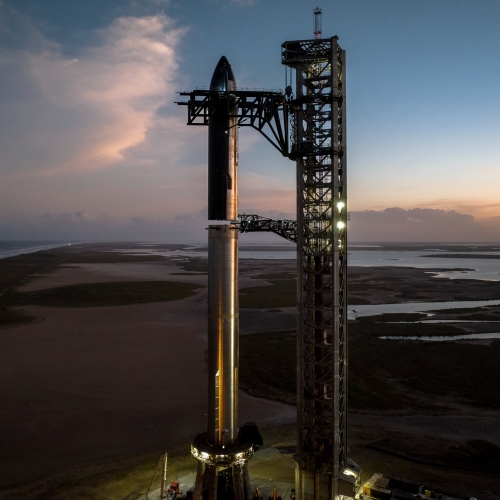
Superheavy/Starship lifting off on March 14, 2024

According to the FAA, SpaceX has officially asked the FAA to allow it to launch the next Starship/Superheavy test orbital launch before the agency officially completes its mishap investigation into the previous flight in March.

In a statement sent to ValleyCentral, the FAA stated that on April 5, SpaceX requested the FAA make a “public safety determination” as part of the Starship flight test mishap. “If the FAA agrees no public safety issues were involved in the mishap, the operator may return to flight while the mishap investigation remains open, provided all other license requirements are met.”

With this modification in place, SpaceX would be able to launch the fourth Starship test flight while the mishap investigation of the third flight is still open.

When these requests are received, the FAA evaluates safety-critical systems, the nature of the consequences of the mishap, adequacy of existing flight analysis, safety organization performance and environmental factors, the statement added. The FAA stated it is reviewing the request and will be “guided by data and safety at every step of the process.”

What does this request tell us? First, as expected SpaceX has completed its own investigation into the March launch and installed the upgrades it considers necessary. Second, the FAA however has not, even though the FAA has absolutely no competence in this matter. It is merely retyping the SpaceX report.

Third, SpaceX now realizes that the FAA will not have finished that retyping when SpaceX is ready to launch sometime in the next three weeks. Rather than sit and wait, as it did on the previous two test launches, it wants the FAA to recognize reality and let it proceed. Why wait when the FAA is literally contributing nothing to the process?

Will the FAA do so? I suspect there are people in the FAA who would very much like to. I also know that there are others both in the FAA and higher up the command chain (mostly in the White House) that like the idea of slowing SpaceX down, mostly for petty political reasons. We should not be surprised if those higher ups use their clout and insist the FAA reject this request.

If so, the fourth test launch of Starship/Superheavy will likely be further delayed, though by how much is unclear. Shortly after the March test launch I predicted that the next flight would occur in the June/July timeframe, not early May as SpaceX was then predicting, and the delay will be mostly because of FAA red tape. It now appears that prediction will be correct.

6 comments

FAA schedules first three public meetings for Starship/Superheavy impact statement review

The FAA has now scheduled the first three public meetings as part of its new environmental impact statement review of SpaceX’s proposed construction plans at Cape Canaveral.

The in-person open houses will feature information stations where the FAA will “provide information describing the purpose of the scoping meetings, project schedule, opportunities for public involvement, proposed action and alternatives summary, and environmental resource area summary. Fact sheets will be made available containing similar information,” the project website says.

“At any time during the meetings, the public will have the opportunity to provide verbal comments to a court reporter or written comments via a written comment form at one of several commenting stations,” the website says.

It appears that SpaceX is proposing two different options for establishing an additional launchpad for Superheavy/Starship. Its preferred option is to refurbish pad LC-37, which was most recenly used by ULA to launch its Delta-4 Heavy in April. A second option is to develop a new pad entirely, dubbed LC-50.

Though the FAA claims this new impact statement is necessary because SpaceX has upped the planned annual Superheavy/Starship launches from 24 to 44, that claim is bogus. The difference is not that significant, and more important, rockets have been launching from these pads now for almost three-quarters of a century, and the environment has not only not been harmed by that activity, the wildlife surrounding the cape has prospered tremendously by the creation of a large zone where no development can occur.

That history is the real impact statement, and it proves the new red tape is unecessary. What the FAA (and the Air Force) are now doing is simply lawfare against SpaceX.

5 comments

Another Starship/Superheavy update

Link here. The report details the extensive work being done by SpaceX engineers and construction crews at Boca Chica, not only upgrading and testing the 30th Starship and 11th Superheavy prototypes that will fly on the fourth orbital test flight but also improving and expanding the launch facilities there.

A static fire test of both vehicles could happen in the next week or so, though this remains uncertain.

Though it appears that SpaceX will be ready to fly by mid- to late-May, the key factor on when that fourth test flight occurs remains this:

…there is still no news on when Flight 3’s mishap investigation will be completed.

That investigation is being conducted by SpaceX. Once submitted to the FAA that agency will have to review it and issue its own conclusions (essentially rubber-stamping it), something that is guaranteed to take time. In the past it took the FAA from two to seven months to do this rubberstamping, with the time shortening after each flight. There have been indications that it hopes to reduce that time even further with this and later flights. We should therefore expect it to take anywhere from one to four weeks this time.

Thus, a May launch remains unlikely, as I predicted from the get-go. Expect the launch to occur in June, which though delayed will still be an improvement over the FAA’s past red-tape approval processes.

2 comments

The plan for SpaceX’s first demo in-orbit refueling mission of Starship

Link here The details come from a presentation at a public meeting by Amit Kshatriya, Deputy Associate Administrator of NASA’s Moon to Mars program, with this the key takeaway:

Kshatriya then expanded the discussion beyond the next few Starship flights and talked about the required technologies for a fuel depot in orbit and the in-orbit capabilities needed to transfer fuel. “We need an instance of the ship that is essentially long, has the endurance to stay in orbit long enough for the sequence to work.

“So, we need a ship that has at least three to four weeks of endurance in orbit. That endurance is gained through augmented power system capability, augmented battery capacity, full insulation of the cryogenic systems, vacuum jacketing of all the lines, et cetera, to make sure that the cryogens that are being stored or are meant to be stored don’t boil off.”

The challenges of a cryogenic ship in orbit include the need to prevent boil-off from the stack. To facilitate the journey to the Moon’s surface, Starship will have to be refueled. For this, the company plans to refuel a depot in low-Earth orbit (LEO), which would be resupplied by several tanker Starships. The HLS Starship would then dock with this depot before departing for the Moon.

To prove this system will require a Starship test flight that lasts several weeks in orbit, to prove the capability needed for a lunar mission. It will also require a refueling mission that will require several Starship/Superheavy launches, one to put the fuel depot into orbit, several more to fuel that depot, and a final launch of Starship for its refueling and endurance test.

According to the update, SpaceX is still aiming to be ready of the upcoming fourth Superheavy/Starship demo orbital flight in the first two weeks. The NASA official claimed it would occur no later than the end of May. I see that as a confirmation that NASA really doesn’t expect the FAA to issue a launch permit when SpaceX is ready, and that the permit might not arrive in time for a May launch. This statement is meant to soften the blow when the launch finally gets delayed into June, or later.

Whether the many required later Starship launches as described above can get FAA approval quick enough to prove out this system soon enough to meet NASA’s 2026 present target date for its manned lunar landing seems very unlikely. Moreover, even if it does it will be a major challenge for SpaceX to meet this schedule.

7 comments

Update on SpaceX’s preparations for the 4th test flight of Superheavy/Starship

Link here. The article is definitely worth reading, as it tells us that SpaceX is pushing hard to be ready to launch in early May, as Musk has promised. The article also thinks SpaceX will be able to ramp up later launches to one every two months.

The article however is I think being naively optimistic about this timeline, because it naively assumes the FAA will quickly approve the launch licenses to meet that schedule. I guarantee the FAA won’t, as it has taken it one to four months after SpaceX was ready to launch to approve the licenses for the previous launches. The length of that approval process has shrunk each time, but FAA still made Space X wait each time, for no reason.

Making that schedule even more unlikely is SpaceX’s desire to do as many as nine test launches per year at Boca Chica. While the company could certainly do this, the environment reassessment issued in 2022 limits it to only five launches per year. It needs a waiver from the FAA and the Biden administration,
a waiver no one should expect considering the Biden administrations hostility to Musk.

20 comments

Activists file lawsuit to prevent land swap at Boca Chica

The same collection of activists who have been waging lawfare against SpaceX’s Boca Chica rocket facility have now filed a new lawsuit, this time against the Texas Parks and Wildlife Commission (TPWD) in order to block an approved land swap that gives SpaceX 43 acres of a Boca Chica state park in exchange for receiving 477 acres nearby.

The South Texas Environmental Justice Network, the Carrizo Comecrudo Tribe of Texas, and Save RGV banded together for a lawsuit filed in the District Court of Travis County on April 3. The suit alleges that Texas Parks and Wildlife violated statutory requirements for the proposal, including the requirement to consider alternatives to giving away public park land; the requirement to ensure the minimization of harm to the public park land; and the requirement to consider the best interests of the local community and TPWD.

These jokers represent very few people in south Texas. Worse, the so-called “Carrizo Comecrudo Tribe of Texas” was in Mexico, not Texas, when it existed. The corporation that exists now is a front for filing these lawsuits, taking advantage of the numerous DEI regulations that now exist to favor such minorities.

That the commission approved the swap unanimously, despite heavy pressure from these groups, illustrates the larger support in Texas for what SpaceX is doing. Expect the Texas courts to endorse that support as well. All these suits will do is delay, delay, delay.

3 comments

Musk provides update to his Boca Chica crew

The candidate landing zone on Mars for Starship

Elon Musk yesterday gave a 44-minute update on Starship/Superheavy to his team in Boca Chica, outlining what he now expects in the next two years as well as in the next two decades.

You can watch his presentation here. Musk began by once again describing his fundamental goal behind the company, to make the human race multi-planetary, for its own survival, and that Mars is at this time the best choice for doing so. He then provided some details about the on-going development of Starship/Superheavy:

  • SpaceX will be ready to launch 4th test flight in early May
  • There is an 80-90% chance they will attempt a tower landing of Superheavy, caught by its chopstick arms, by the end of this year
  • Starship will require at least two precision ocean landings before they attempt a tower landing
  • To provide tower redundancy for these test landings, by next year they will have 2 towers at Boca Chica, 2 at Cape Canaveral, with Cape Canaveral operational by next year
  • In 2024 they hope to build 6 Superheavys and Starships for test flights
  • By 2025 they plan to test full refueling of Starship in orbit
  • The third iteration of Starship/Superheavy will be capable of placing 200 tons in orbit
  • That third iteration will cost less to launch than Falcon 1, $2-3 million
  • To make a base on Mars self-sufficient quickly, he anticipates sending large fleets of Starships every two years, everytime the flight window to Mars opens.
  • The preferred landing sites will be in the low mid-latitudes, 30-40 degrees, with elevations two kilometers below the Martian “sea level”, to take advantage of a thick atmosphere.
  • If all goes as planned, Musk expects SpaceX to establish a Mars colony in about two decades

That next-to-last bullet point fits perfectly with the region north of Amazonis Planitia, as shown on the map above, where SpaceX has requested numerous images from the high resolution camera on Mars Reconnaissance Orbiter (MRO). It is two kilometers below the “sea level” of Mars. It is at a latitude either on or close to 40 degrees north latitude. It is a region that orbital data says has lots of very near-surface ice. And it is flat, making those first landings relatively safe.

10 comments

South Texas booming due to arrival of SpaceX

Link here. The article details the major tourism and industry dollars that have come into existence in the Brownsville region since SpaceX established its Boca Chica launch facility, including major development now underway to cater to the tourist business of travelers eager to get a close look at a Starship/Superheavy launch.

The article gives a sense of the reality on the ground. While the anti-Musk activist groups sue SpaceX in their attempt to shut down Starship/Superheavy development, claiming it is harming the region, stories like this put the lie to those claims.

Hat tip to Robert Pratt of Pratt on Texas.

7 comments

SpaceX’s next Superheavy/Starship launch, according to SpaceX

According to SpaceX’s CEO, Gwynne Shotwell, the company hopes to be ready to fly its fourth orbital test flight of Superheavy/Starship in about six weeks, and will not attempt to deploy any Starlink satellites, as I speculated earlier this week.

“We’ll figure out what happened on both stages,” she said, not discussing what may have gone wrong with either, “and get back to flight hopefully in about six weeks,” or early May. She added that the company doesn’t expect to deploy Starlink satellites on the next Starship launch, as some had speculated. “Things are still in trade, but I think we’re really going to focus on getting reentry right and making sure we can land these things where we want to land them.”

The story however provided one very important tidbit of information about the launch license process from the FAA. Kelvin Coleman, FAA associate administrator for commercial space transportation, noted that after the second test flight in November 2023 “the company completed that report in several weeks.”

That statement confirms my conclusion in late December that SpaceX had been ready to launch in early January, but couldn’t do it because the FAA had to spend another two months rewriting SpaceX’s investigation report.

We should therefore not be surprised if the same thing happens on the next test flight. Shotwell says SpaceX hopes to be ready to launch in early May. That means it will likely submit its report to the FAA around then. Expect the agency to then spend at least one to two months retyping the report, as it has done now after both the first and second flights.

Based on this information, we should now expect the fourth flight to occur sometime in the June-July timeframe, with July more likely.

I am sure that the people at the FAA want to move as quickly as possible. I am also sure their bosses in the White House are demanding they dot every “i” and cross every “t”, with meticulous care, so that things cannot move as fast as desired. That has been the pattern since Joe Biden took office, and I have seen no evidence of that changing now.

8 comments

What to expect on the next few Starship/Superheavy test launches

Superheavy/Starship lifting off on March 14, 2024

As noted last week by Eric Berger after the third orbital test launch of SpaceX’s Superheavy/Starship rocket on March 14, 2024, this rocket is presently only a few short steps to becoming an operational expendable rocket that can put 100 to 150 metric tons into orbit for about the cost of a Falcon Heavy launch.

To completely achieve this status SpaceX will still have to accomplish several additional engineering goals during the next few test flights, beyond what it has been done so far. This is what I predict therefore for the next test flight, number four:

Superheavy

SpaceX will once again attempt to softly bring Superheavy down over the ocean in the Gulf of Mexico, hovering the stage vertically over the surface for a few seconds to demonstrate it could do the same once it eventually comes down next to the launch tower so that the chopsticks can grab it. To do this the company will have to figure out what went wrong on last week’s flight, when the stage began to tumble as it dropped below 100 kilometers altitude. It also appeared to be unable to fire its engines as planned.

An even more important achievement on this third flight however will be a third straight successful hot fire stage separation, sending Starship on its way to orbit as planned. If Superheavy can do this for the third time, it will prove without doubt that the rocket stage is now capable of doing its number one job, launching payloads. Reusability can follow later.

Starship
» Read more

18 comments

SpaceX’s Superheavy/Starship successfully launches

Superheavy/Starship lifting off today

Early this morning SpaceX successfully launched its Superheavy/Starship heavy-lift rocket on its third orbital test flight.

The flight achieved almost all of its test goals, and far exceeded what was accomplished on the previous test launch in November.

First, Superheavy appeared to operate perfectly through launch, putting Starship into its correct near-orbit trajectory. The hot-fire stage separation, where Starship begins firing its engines before separation, worked as planned for the second straight time. Superheavy then refired some of its engines so as to target its correct landing zone in the Gulf of Mexico. As it approached the ocean surface, however, it started to tumble, and though some engines appeared to light for the landing burn, something went wrong and the stage was lost.

Next, Starship continued on its coast phase, during which engineers apparently tested opening and closing the payload doors as well as demonstrating a propellant transfer between two tanks. It also appeared that the engineering team was testing a variety of orientation modes for Starship. First it flew oriented stable to the Earth’s horizon. Then it appeared they placed the spacecraft in barbeque mode, where a spacecraft is placed in a steady roll in order to evenly distribute the heat on its surface.

For reasons not yet explained, the team cancelled the refire test in orbit of its Raptor engines. As the orbit chosen was low, the atmosphere still slowed the spacecraft down so that its de-orbit would still occur over the Indian Ocean.

As Starship started to descend it appeared its flaps were working successfully to control its orientation. It also appeared the heat shield tiles were working, as shown in the picture below. As Starship entered the thicker part of the atmosphere however, some tiles could be seen flying away from the ship and the spacecraft began to tumble. At an altitude of about 65 kilometers signal was lost.
» Read more

45 comments

SpaceX announces launch time tomorrow for 3rd Superheavy/Starship launch

UPDATE: The FAA has now amended [pdf] SpaceX’s launch license to approve tomorrow’s Superheavy/Starship launch.

Original post:
————————-
SpaceX has sent out email notices and now revised its Starship/Superheavy webpage to reflect a target launch time for the third Superheavy/Starship launch tomorrow, March 14, 2024, at 7 am (Central).

The third flight test of Starship is targeted to launch Thursday, March 14. The 110-minute test window opens at 7:00 a.m. CT.

A live webcast of the flight test will begin about 30 minutes before liftoff, which you can watch here and on X @SpaceX. As is the case with all developmental testing, the schedule is dynamic and likely to change, so be sure to stay tuned to our X account for updates.

I have not yet received a notice from the FAA, announcing the approval of a launch license, but SpaceX’s announcement likely signals that the approval has been given. As I noted yesterday, this approval was likely given as close to the launch as possible to help preclude any legal action by the various leftist activist groups that want to stop Elon Musk, stop SpaceX, and stop any grand human achievement. Their dislike and alienation with success is so deep that such tactics are now necessary to stymie them and allow such achievements to proceed.

A youtube live stream will also be available here. If the flight succeeds in getting Starship into orbit, it will attempt to open and close its payload door, attempt a propellant transfer test, and then attempt the first in-space relight of a Raptor engine in order to bring it down controlled in the Indian Ocean.

5 comments
1 10 11 12 13 14 27