November 23, 2022 Quick space links

Courtesy of Jay, BtB’s stringer, trolling Tweeter so you don’t have to.


  • Ground-based images of ISS and Tiangong-3, side-by-side
  • Jay correctly notes, “The scale is off, the picture shows Tiangong-3 as larger than what it is.” Comparing the Russian modules on ISS with Tiangong-3’s modules, I estimate that Tiangong-3 is about 30% smaller than shown.


  • UK to build the new lander for ESA’s Franklin Mars rover
  • The launch of this long delayed rover is now targeting ’28. It was originally supposed to launch in ’20, was first delayed until ’22 because of parachute issues, then was delayed again when Europe and Russia ended their space partnership due to the Ukraine War.

2 comments

Today’s blacklisted American includes anyone at a Vermont high school who dares say a boy is a boy

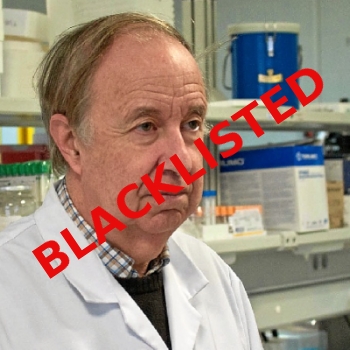
Blake Allen, punished for being a normal high school girl

We now return for the third time to the saga of Randolph Union High School in Vermont, a place where apparently you are not allowed to state the simple biological fact that a boy is a boy and a girl is a girl. Worse, you must allow boys to enter a girls’ dressing room and ogle them freely, and if you dare challenge this absurdity, you will be fired or suspended.

This craziness began in late September, when a boy claiming to be a girl (because he wanted to play on the girls volleyball team) entered the girls dressing room and watched the girls change, much to their discomfort. When the girls complained to school officials, the officials immediately banned those girls from using their own dressing room, reserving it now solely to this one boy.

The story became even more insane when the local television station, WCAX, decided to censor itself. It had covered this story with reasonable accuracy when the story broke. In mid-October however it decided that its job was publishing the agenda of the queer community, not reporting the news, and it censored its own story, removing it from the internet. (You can still watch it here however.)

Meanwhile, school officials have continued their track record of insanity. These officials not only locked the girls from their own locker room, they suspended one girl, Blake Allen, because she had been the most outspoken of all, appearing in that censored WCAX story. As part of her punishment, school officials demanded she admit 2+2=5 in a “reflective essay.”
» Read more

10 comments

Hungary to pay $100 million to Axiom for astronaut mission to ISS

Hungary has budgeted $100 million to fly a Hungarian astronaut on a 30 day mission to ISS, arranged as a private mission though the American space company Axiom.

“This is a program which is being carried out with the cooperation of the American company Axiom Space and its extent is $100 million,” said [Péter Szijjártó, Hungarian foreign minister,] of the initiative. “This will end up in a 30-day-long research mission of a Hungarian astronaut with three other astronauts at the end of 2024 or beginning of 2025, depending on what time NASA confirms access to the International Space Station.”

NASA has yet to award missions to Axiom Space beyond its Ax-2 mission scheduled for the spring of 2023, but is evaluating proposals for two private astronaut missions that could include an Axiom Space flight in that timeframe.

It is clear that negotiations for arranging this mission between Axiom, NASA, and Hungary are on-going. Based on Szijjártó’s description, it is possible that the Hungarian astronaut could fly on a dedicated private Axiom mission to ISS, with two other paying passengers and an Axiom commander, or fly as an extra passenger on a normal ISS crew rotation flight. Furthermore, the ’24 or ’25 launch date suggests the vehicle might not be a Dragon capsule. By that time Boeing’s Starliner should be operational, thus giving Axiom and NASA an alternative. That time frame also corresponds to about when Axiom hopes to launch and dock its own module to ISS.

Nor is Hungary the only foreign country that has signed a deal with Axiom for a manned flight. Both Turkey and Saudi Arabia have agreements as well.

All told, the biggest obstacle right now to this new market is the number of ports on ISS. It seems Axiom has a strong incentive to get its own module launched and attached to ISS as soon as possible, if only to increase the docking ports available for these flights.

1 comment

Frozen glacial eddies on Mars?

Overview map

Frozen glacial eddies on Mars?
Click for full image.

Cool image time! The photo to the right, cropped, reduced, and enhanced to post here, was taken on August 26, 2022 by the high resolution camera on Mars Reconnaissance Orbiter (MRO). Though the science team labels this image vaguely as showing “Features in Mamers Valles,” the features are likely glacial ice since this location is at the western end of the 2,000-mile-long northern mid-latitude strip I dub glacier country, where glacial features are seen everywhere.

The white dot marks this picture’s location in Mamers Valles, as shown on the overview map above. This particular Martian channel, that meanders in a wildly random manner (including a few sharp ninety degree turns), is theorized [pdf] by some scientists to have formed not by surface flows but by a subterranean drainage that created voids. On the surface the voids caused sagging, collapses, and the eventual formation of the surface channel.

Under such conditions, any ice in the channel would not necessarily have a clear flow direction, thus providing an explanation (though hardly certain) of the eddy-like shape of these features.

1 comment

Webb makes its first detailed survey of an exoplanet’s atmosphere

Astronomers have now completed the first detailed survey of an exoplanet’s atmosphere using the Webb Space Telescope, looking at a gas giant about one third the mass of Jupiter about 700 light years away.

Using three of its instruments, JWST was able to observe light from the planet’s star as it filtered through WASP-39b’s atmosphere, a process known as transmission spectroscopy. This allowed a team of more than 300 astronomers to detect water, carbon monoxide, sodium, potassium and more in the planet’s atmosphere, in addition to the carbon dioxide. The gives the planet a similar composition to Saturn, although it has no detectable rings.

The team were also surprised to detect sulfur dioxide, which had appeared as a mysterious bump in early observation data. Its presence suggests a photochemical reaction is taking place in the atmosphere as light from the star hits it, similar to how our Sun produces ozone in Earth’s atmosphere. In WASP-39b’s case, light from its star, slightly smaller than the Sun, splits water in its atmosphere into hydrogen and hydroxide, which reacts with hydrogen sulfide to produce sulfur dioxide.

The data also suggested the clouds in the atmosphere are patchy, and that the planet’s formation process was not exactly as predicted.

These observations are part of a program to study 70 exoplanets during Webb’s first year of operation, using its infrared capabilities to get spectroscopy not possible in other wavelengths.

0 comments

First commercial passenger spacewalk on Dragon will involve depressurizing entire spacecraft

According to an interview to Space.com by the four crew members on next year’s private manned Dragon flight financed by Jared Isaacman, the spacewalk, the first involving commercial passengers, will include all four passengers, since Dragon will not have an airlock and will be depressurized entirely when the hatch opens.

“We’ve collectively taken the position that we’re all going for an EVA,” Isaacman said, adding that the spacecraft cabin is to be depressurized in a hard vacuum. “Whether you’re sticking your head outside, you are doing an EVA. We are contemplating two people on the outside of the vehicle,” Isaacman said, “and two would be inside making sure that everything is going correct.”

To accommodate the spacewalk, this Crew Dragon will not be outfitted with a transparent dome, as was the case for the Inspiration4 mission.

The mission is presenting targeting March ’23 for launch.

8 comments

France, Germany, and Italy agree on allowing competition from European rocket startups

Capitalism in space: France, Germany, and Italy yesterday signed an agreement [pdf] whereby they agreed to push European policy-makers to allow competition from independent European rocket startups for launch contracts.

At least, this is what I think they have agreed to. I have read the article and the agreement several times, and remain somewhat unsure of their intent. The agreement is couched in the typical bureaucratic language specifically designed to obscure meaning. The article does little to clarify things.

It appears this is the key language in the agreement:

The proposed acknowledgement of operational European NewSpace micro and mini launch systems for ESA satellite launch service procurements, upon its adoption by Council, would effectively represent a first step towards an evolution of the launch service procurement policy for ESA missions as referred to in the ESA Council Resolution adopted in 2005.

What I gather is that these three countries no longer want European launch contract awards limited to the Arianespace rockets Ariane-6 and Vega-C. They want bidding opened to all European rocket startups, and they want the elimination of rules that require all contracts distributed by quota to European countries.

Germany already has three commercial rocket startups on the verge of their first launch, and apparently wants the European Space Agency to stop favoring Arianespace in launch contracts. That France and Italy are going along with this is significant, since Ariane-6 is dominated by French developers and Vega-C is dominated by Italian developers.

2 comments

Controllers lose contact with Orion for almost an hour

NASA engineers unexpectedly lost all contact with Orion for 47 minutes just after midnight last night.

NASA’s Mission Control Center at the agency’s Johnson Space Center in Houston unexpectedly lost data to and from the spacecraft at 12:09 a.m. CST for 47 minutes while reconfiguring the communication link between Orion and Deep Space Network overnight. The reconfiguration has been conducted successfully several times in the last few days, and the team is investigating the cause of the loss of signal. The team resolved the issue with a reconfiguration on the ground side.

At present the loss of signal caused no issues with the spacecraft. However, its cause has not yet been pinpointed.

2 comments

SpaceX successfully launches communications satellite for Eutelsat

SpaceX tonight successfully launched a geosynchronous communications satellite for Eutelsat. This was the third launch that SpaceX has done for this European company, which previously had traditionally been launched by Arianespace. Because of the delays and higher cost to use Arianespace’s new Ariane 6 rocket, the company chose to go with SpaceX instead.

The first stage, which had flown ten times previously, successfully completed its eleventh flight, but was not recovered because all of its fuel was needed to get the satellite to its proper orbit.

The leaders in the 2022 launch race:

53 SpaceX
52 China
19 Russia
9 Rocket Lab
8 ULA

The U.S. now leads China 77 to 52 in the national rankings, but trails the rest of the world combined 80 to 77.

26 comments

Dick Cavett – Burt Lancaster in the circus

An evening pause: This interview of Burt Lancaster on the Dick Cavett Show took place on July 21, 1969 (the day after Neil Armstrong took that first step on the Moon).

I could not help noting how humble and gracious Lancaster seemed. He might have been one of the world’s most charismatic actors, but he surely did not appear full of himself. The second part of this interview can be watched here.

Hat tip Cotour.

0 comments

November 22, 2022 Quick space links

Courtesy of BtB’s stringer Jay.


2 comments
1 20 21 22 23 24 192