North Korea launches spy satellite

In its third attempt this year to launch a spy satellite, North Korea today succeeded at last, its new Chollima-1 rocket lifting off from Sohae spaceport on the country’s western coast and placing in orbit what is probably a relatively primitive spy satellite with a limited lifespan.

Though launched on the coast, the flight path crossed over North Korea, with drop zones for the rocket’s lower stages in the Yellow and East China seas. The previous two launch failures (in May and August) did the same, with South Korea salvaging stages and the satellite from the first failure. The data recovered suggested the spy satellite was of “no military utility” according to the South Korean military.

As usual, U.S. and South Korean officials condemned the launch, calling it a violation of UN sanctions. Note too that this was not North Korea’s first successful launch, having managed launches in 2012 and 2016 previously, with a different rocket.

Because this was North Korea’s first success in 2023, the leader broad in the 2023 launch race remains unchanged:

86 SpaceX
52 China
14 Russia
7 Rocket Lab
7 India

However, the launch was the 180th in 2023, setting a new global record for the launches in a single year, eclipsing the record set last year. Since Sputnik in 1957 the average number of successful launches globally was generally less than a hundred. This year it is very possible the world will double that average, almost entirely because of American private enterprise, which leads China 98 to 52 in successful launches, and the entire world combined 98 to 82. SpaceX by itself still leads the rest of the world (excluding American companies) 86 to 82.

2 comments

SpaceX launches 23 more Starlink satellites

SpaceX early last night continued its campaign to reach 100 launches in 2023, its Falcon 9 rocket launching for the third time in just over four days, lifting off from Cape Canaveral carrying 23 more Starlink satellites into orbit.

The first stage completed its fifteenth launch, landing on a drone ship in the Atlantic.

The leaders in the 2023 launch race:

86 SpaceX
52 China
14 Russia
7 Rocket Lab
7 India

American private enterprise now leads China 98 to 52 in successful launches, and the entire world combined 98 to 81. SpaceX by itself is now leads the rest of the world (excluding American companies) 86 to 81.

With this launch, the number of successful orbital launches in 2023 now matches the record total of 179 set last year. With a little more than five weeks to go, expect that number to top 200 before the year is out, especially because China has historically tended to launch a lot of rockets in December.

3 comments

November 21, 2023 Quick space links

Courtesy of BtB’s stringer Jay.


7 comments

Ancient volcanic vent on Mars

Volcanic vent on Mars
Click for original image.

Cool image time! The picture to the right, rotated, cropped, reduced, and sharpened to post here, was taken on May 28, 2023 by the high resolution camera on Mars Reconnaissance Orbiter (MRO).

The picture label describes it as a “Low Shield Vent and Pit Northeast of Arsia Mons,” suggesting these depressions are volcanic in nature. We know the pit in the lower left is not an impact crater because it has no raised rim of ejecta. Instead, it looks like a collapsed sinkhole, formed when the ceiling above a void could no longer support its weight. Similar, the trench to the northeast is aligned with the downhill grade to the northeast, with its features suggesting a vent draining in that direction.

The ample dust inside the trench and pit suggest that it has been a very long time since this vent was active. Research suggests volcanic activity last occurred in this region from 10 to 300 million years ago, so that gives us a rough estimate of this vent’s age. Since then any dust that is blown into it will tend to become trapped there.
» Read more

0 comments

Will libertarian Javier Milei actually be able to institute his revolution in Argentina?

The victory of libertarian and outsider Javier Milei in Argentina this past weekend has been met with joyous approval on the right and outright horror on the left. Both expect Milei to immediately begin imposing his radical anti-government polices that will eliminate whole agencies of Argentina’s federal government.

This video by Paul Joseph Watson I think provides an excellent summary of Milei’s agenda. Though Watson sees the agenda from a wholly conservative perspective, he also covers the wide range of Milei’s goals and ideas quite nicely.

After Milei’s election many other news sources did the same, describing his goals in detail. Practically none however took a close look at the reality of Argentina’s new government, and how that reality might impringe on Milei’s plans.

You see, Argentina still has a constitutional government with a federal legislature made up of a Chamber of Deputies (its House of Representatives) and a Senate. Any analysis of Milei’s future plans has got to consider the political make-up of these bodies.

And yet, though I searched hard, I could find almost news reports that discussed that make-up in any way. Politico, NPR, and CNN didn’t mention it all. The only mainstream source I could find that even mentioned the make-up of that legislature was Reuters, but it did so in a short paragraph near the end of its report, with few details.

So, though this is not my area of expertise, I decided to try to find out, both for myself and my readers.
» Read more

7 comments

North Korea announces it will attempt orbital launch of spy satellite this week

North Korea has announced that it will make a third attempt to place a spy satellite into orbit this week, lifting off anytime between November 22nd and December 1st, with drop zones of the rocket’s lower stages over the Yellow and East China seas.

The North initially planed to make the third launch attempt in October following two botched launches — in August and May. But it did not press ahead with the plan last month, raising speculation that it might need more preparation time.

As expected, South Korea has protested. It is also likely gearing up to attempt to recover as much debris from the launch as possible, as it did successfully on the previous launches.

0 comments

High altitude balloon company World View will not go public

The high altitude balloon company World View has ended its negotiations, begun early this year, with a venture capital investment firm to merge and make its stock public.

In a Nov. 17 statement, World View and Leo Holdings Corp II announced they were canceling plans announced in January to merge. The decision to end the merger was mutual, the companies said.

The companies did not give a specific reason for calling off the deal. “Over the course of 2023, World View received strong interest from potential investors,” the companies stated. “However, given challenging market conditions, World View and Leo jointly determined that it was the best course of action at this time to not proceed with their previously announced transaction.”

There could be a lot of good and bad reasons this deal fell through. Mostly likely World View officials saw the generally negative consequences experienced by other space startups that went public in this manner in the past few years, and decided it better to hold off.

0 comments

Rocket engine startup Ursa Major enters solid-rocket motor business

Recognizing a desperate need of the military to ramp up production of solid rocket motors after much of its missile stockpile has been depleted by President Biden’s large gifts to the Ukraine, the rocket engine startup Ursa Major has now announced it is entering solid-rocket motor business.

Describing the solid rocket motor [SRM] market as “plagued by a broken supply chain and an overextended industrial base,” the Colorado startup today announced its plans to use its 3D printing techniques developed for liquid rocket engines to speed production of solid-fuel propulsion systems. Ursa Major has received several contracts from the Air Force Research Laboratory for its work on a new rocket engine for heavy space launch vehicles, as well as a hypersonic engine.

“Traditional SRM providers rely on production lines that are difficult to re-tool, expensive to ramp up, and dependent on a significant workforce to operate,” the company said in a press release touting its “new approach” to manufacturing, dubbed Lynx. “Ursa Major is offering a new way to scale production of SRMs,” Ursa Major CEO Joe Laurienti said in the press release. “Lynx meets the defense industry’s need for a faster, cheaper, scalable, and flexible SRM production process that results in better-performing solid rocket motors.”

The article also notes that at present the military is dependent on only two companies for new solid rockets, Northrop Grumman and Aerojet Rocketdyne (now L3Harris). The article also notes that it could take anywhere from five to eighteen years for these companies to replenish the depleted stocks.

The bottleneck however has brought several new players into the field, with the military eager to issue contracts to these new players. This decision by Ursa Major is thus a very good one.

1 comment

India now plans robotic lunar sample return mission

Following the successful landing of Vikram on the Moon, officials of India’s space agency ISRO have announced it is considering a much more ambitious follow-up, Chandrayaan-4, that will not only land on the lunar surface with a much larger rover, it will also dig up some samples and return them to Earth.

The spacecraft will travel to the moon, land, collect samples, and then connect to another module in space. The module will then return to Earth orbit. As the two modules approach Earth, they will separate, with one part returning to Earth and the other will keep orbiting the planet. Desai described the mission as ambitious, stating, “Hopefully, in the next five to seven years, we will meet the challenge of bringing samples from the moon.”

For return to Earth, Desai said that the mission would need two launch vehicles containing four modules (Transfer module, Lander Module, Ascender Module and Re-entry module). RM and TM would be Parked in the lunar orbit and two will go down from which Ascender Module will get separated from lander module and would collect the sample.

If India does this mission, while also completing its first manned mission during that time frame, it will place itself in direct competition with China and the U.S., and in fact will be getting close to matching both in capabilities.

1 comment

Musk: Next Starship/Superheavy test launch could happen in only 3 to 4 weeks

Superheavy & Starship, on their way
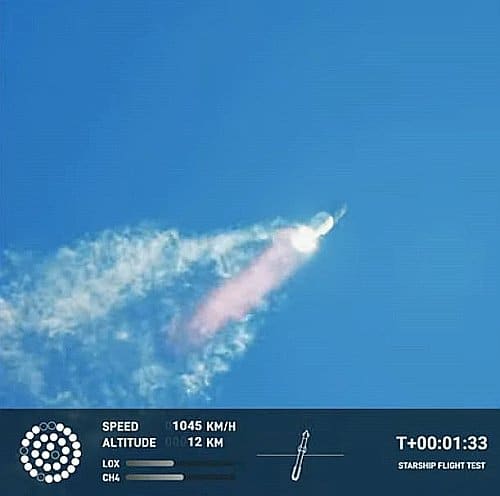
Superheavy & Starship, shortly after liftoff on November 18th

In a tweet on November 19, 2023, Elon Musk revealed that SpaceX could be ready for its next Starship/Superheavy test launch in only a matter of weeks, assuming federal red tape doesn’t get in the way.

Starship Flight 3 hardware should be ready to fly in 3 to 4 weeks. There are three ships in final production in the high bay (as can be seen from the highway).

In reporting on the second test launch on November 18, 2023, I noted that with prototypes ready to go SpaceX could probably launch within a month. Musk has now confirmed that assessment.

I also predicted that the FAA and Fish & Wildlife would not allow such a thing, and though they will determine there is no reason not to launch again, they will not issue a launch licence until the February/April time frame.

I want this prediction clearly on the record. It is important for the public to know the source of these delays.

It is also important for the press to apply pressure on these government paper pushers so they don’t feel encouraged in their intransigence. When I made a similar (and wholly accurate) prediction in May about the second launch, many in the press criticized that prediction (directly and indirectly) for daring to say bad things about government regulators. Now it appears that others in the press are no longer so naive, and are willing to note the slowness of the licensing process.

The regulators might not want to stand in the way and are simply following procedure. The press however mustn’t treat them gently. It must hold their feet to the fire to make sure they don’t take their time doing so.

Moreover, we have seen fewer headlines claiming falsely that the rocket “blew up” or “exploded.” Instead, a large percentage of the press now got it right and noted the mission’s success and that the destruction was not an accident but part of the self-destruct system.

After the last launch I lambasted the press for getting these facts wrong. Maybe holding their feet to the fire forced a reassessment and better reporting this time around.

21 comments
1 19 20 21 22 23 196