InSight’s power levels rise very slightly

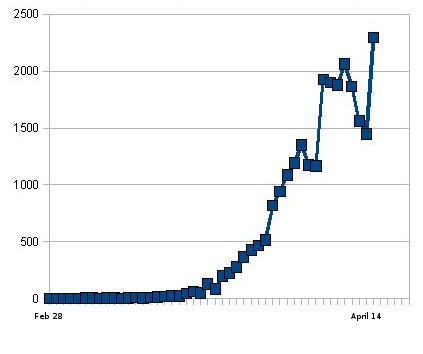
InSight's power level through October 8, 2022

In a status report issued today, the science team for the InSight lander on Mars noted a slight increase in the amount of power produced daily by its solar panels. The graph to the right indicates that increase.

On October 8, 2022, InSight was generating an average of 300 watt-hours of energy per Martian day, or sol – an increase after a sharp decline last week from 430 watt-hours per sol to a low of 275 watt-hours per sol.

It appears that the atmosphere has begun to clear from the very large dust storm that occurred more than two thousand miles away. Despite that distance, the storm apparently reduced the available light above InSight significantly, and could take months to clear.

0 comments

October 10, 2022 Quick space links

Courtesy of BtB’s very own stringer Jay, trolling Twitter so none of us have to.


  • ULA gets one BE-4 engine, the 2nd expected in November
  • The company is targeting its first static fire tests of its Vulcan rocket in December, with the first launch in “early 2023”. Don’t bet on it. I expect ULA will not be able to get off the ground before March.


2 comments

Icebergs of Martian lava

Icebergs of Martian lava
Click for full image.

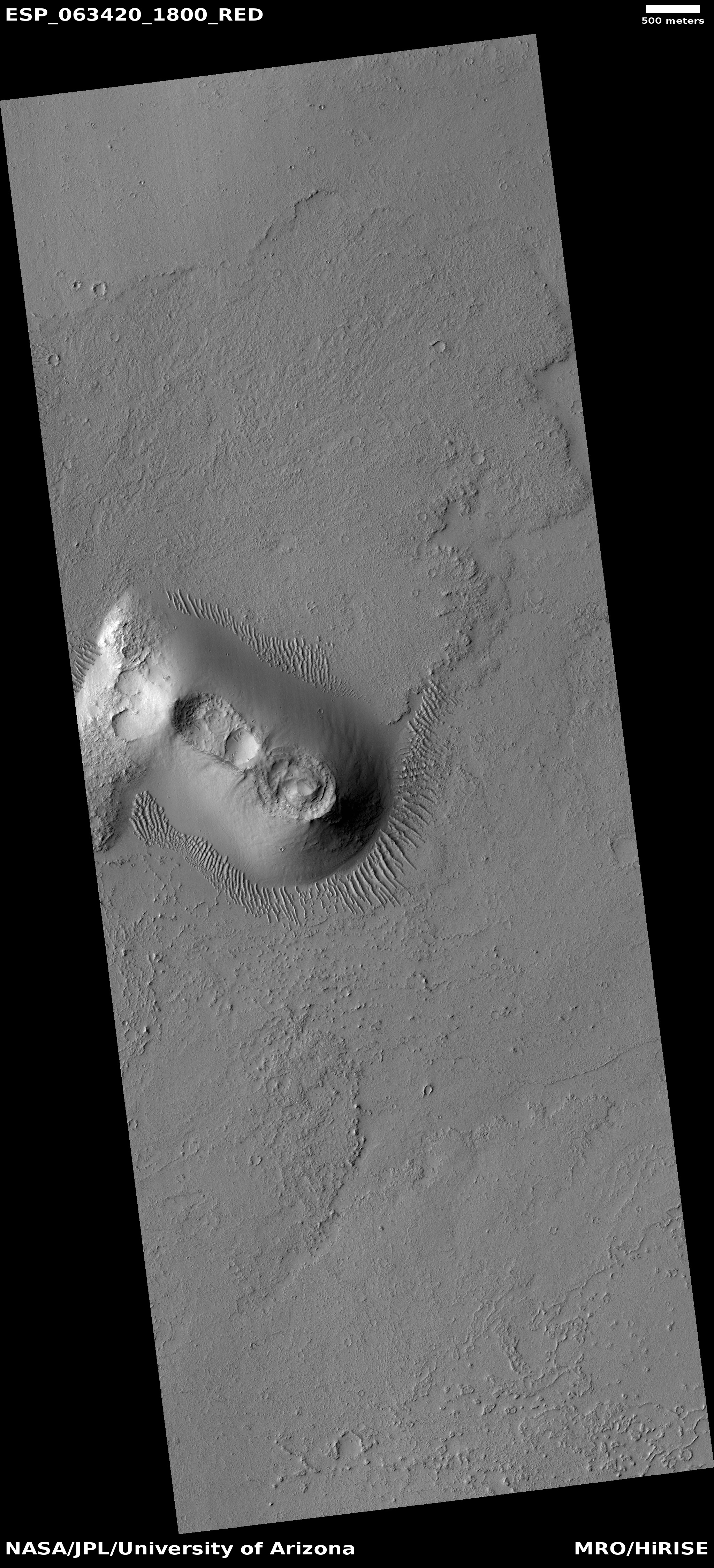
Cool image time! The photo to the right, cropped, reduced, and enhanced to post here, was taken on July 24, 2022 by the high resolution camera on Mars Reconnaissance Orbiter (MRO). The scientists label this “platy-ridged lava” but to my eye this more resembles lava ice bergs trapped within a now frozen lava stream flowing I think from the northeast to the southwest.

My guess that the flow follows that direction is based on two bits of data. First, the shape of the lava ice flows suggests vaguely a flow to the southwest. The wiggling black ridges inside the streams suggest that these flows occurred in two parts, a stronger wide flow that narrowed as the lava on the edges hardened. When the edges solidified the interior flow scraped against it, forming the wiggling ridges.

Second, the location of this image, as shown on the overview map below, strongly suggests the lava streams flowed to the southwest.
» Read more

1 comment

New computer simulation of theorized impact that created the Moon

The uncertainty of science: Before I even begin to describe this story, I must emphasize that it is pure science fiction. As much as it is founded on known data, that data is simply not sufficient to tell us exactly how the Moon was created. The data merely points to many hundreds of possibilities, of which the model below is simply one:

Computer programmers using a supercomputer at a United Kingdom university have created a new simulation of the theorized impact of a Mars-sized body to the Earth that some believe created the Moon, and determined it was possible for that impact to have created the Moon quickly, within hours.

You can read the research paper here.

The fun part of this story is to watch the video of this simulation, which I have embedded below. Whether it describes what actually happened is pure speculation, and in fact cannot be confirmed in any way at all.

It is intriguing, nonetheless.
» Read more

4 comments

Soyuz-2 launches new Russian GPS-type satellite

Russia early today launched another satellite for its Glonass GPS-type constellation, using its Soyuz-2 rocket lifting off from its Plesetsk launch site.

After the Soviet Union fell in 1991, Russia’s Glonass constellation withered, with the country for years unable to replace the satellites as they aged and died. Only after free enterprise was encouraged in the 1990s and 2000s and the economy began to boom did the Russian government finally have enough tax dollars to begin launching replacements.

The Russian invasion of the Ukraine will certainly put a crimp in this recovery. As has Putin’s policy of using the government to nationalize many industries, such as its aerospace sector.

The leaders in the 2022 launch race:

46 SpaceX
43 China
13 Russia
8 Rocket Lab
7 ULA

American private enterprise still leads China 66 to 43 in the national rankings, and the entire globe combined 66 to 64.

6 comments

China launches solar science telescope

China today used its Long March 2D rocket to launch its first solar science telescope, Advanced Space-borne Solar Observatory (ASO-S), also known as Kuafu-1.

The probe, which was first proposed in 1976 (!), has a four year nominal mission and is designed to monitor the Sun as goes through its next sunspot maximum. More information can be found here.

The leaders in the 2022 launch race:

46 SpaceX
43 China
12 Russia
8 Rocket Lab
7 ULA

American private enterprise still leads China 66 to 43 in the national rankings, and the entire globe combined 66 to 63.

5 comments

SpaceX launches two Intelsat communications satellites

Capitalism in space: SpaceX today successfully launched two Intelsat communications satellites using its Falcon 9 rocket.

The first stage completed its fourteenth flight, landing successfully on a drone ship in the Atlantic.

The leaders in the 2022 launch race:

46 SpaceX
42 China
12 Russia
8 Rocket Lab
7 ULA

American private enterprise now leads China 66 to 42 in the national rankings, and the entire globe combined 66 to 62.

9 comments

InSight shut down temporarily because of lack of power

InSight's power levels over recent time

Because a dust storm has caused a further decline in the power being generated by InSight’s solar panels, the science team has decided to put the lander into safe mode for the next two weeks in the hope that the air will then clear, allowing its power levels to rise.

The graph to the right shows that drop. From the press release:

By Monday, Oct. 3, the storm had grown large enough and was lofting so much dust that the thickness of the dusty haze in the Martian atmosphere had increased by nearly 40% around InSight. With less sunlight reaching the lander’s panels, its energy fell from 425 watt-hours per Martian day, or sol, to just 275 watt-hours per sol.

InSight’s seismometer has been operating for about 24 hours every other Martian day. But the drop in solar power does not leave enough energy to completely charge the batteries every sol. At the current rate of discharge, the lander would be able to operate only for several weeks. So to conserve energy, the mission will turn off InSight’s seismometer for the next two weeks.

The real problem however is the dust covering the solar panels. If that dust gets thicker due to this storm, the lander will not recover when they power it up in two weeks. It will still generate electricity at this low number, making future operations likely impossible.

11 comments

Engineers regain full control of CAPSTONE

After a month of careful tests and analysis, engineers today successfully regained full control of the CAPSTONE lunar orbiter, on its way to the Moon.

The most likely cause of the anomaly was identified as a valve related issue on one of the spacecraft’s eight (8) thrusters. The partially open valve resulted in thrust from the associated thruster whenever the propulsion system was pressurized. To attempt a recovery from this condition, the mission team conducted multiple tests on the vehicle and evaluated extensive telemetry and simulation data and then formulated a plan for attempting recovery of the vehicle’s full 3-axis control.

This recovery sequence was uploaded to the spacecraft yesterday (Thursday) and was executed early this morning (Friday 10/7). Initial telemetry and observation data after the recovery attempt points to a successful recovery of the system which has now regained 3-axis attitude control. The updated spacecraft attitude has oriented the spacecraft solar arrays to the Sun and implemented an orientation for the downlink antennas which significantly improves data downlink performance as compared to the pre-recovery attitude.

The spacecraft is not out of the woods yet. The engineers still need to figure out how to do future course corrections with “the possible presence of a valve that remains partially open.”

Nonetheless, that they have successfully regained full control means they have a very good handle on the issue, which bodes well for the lunar orbital insertion maneuver on November 13, 2022.

2 comments

October 7, 2022 Quick space links

Thanks to BtB’s stringer Jay, who trolls Twitter so I don’t have to.


  • UK bureaucracy questions Viasat’s takeover of Inmarsat
  • I covered this in August, but now the UK’s Competition and Markets Authority (CMA) is setting a deadline, October 13, for the companies to explain why their merger won’t destroy Starlink. Otherwise it will initiate a full probe, blocking the merger.

    Typical government stupidity. There is no way this merged company will destroy Starlink. If anything, these companies are merging to survive the competition from Starlink.


1 comment

Thick flow exiting dramatic canyon on Mars

Thick flow into Mamers Valles on Mars
Click for full image.

Cool image time! The photo to the right, cropped and reduced to post here, was taken on July 24, 2022 by the high resolution camera on Mars Reconnaissance Orbiter (MRO). It shows what the scientists label as a “viscous flow” that has apparently carved the wide curving canyon as it slowly flows into open country to the south.

I would estimate the height of that canyon wall to be around 3,000 feet, though this is a very rough guess. I also image a trail switchbacking up the nose of that canyon wall would make for a truly stupendous hiking experience.

The flow filling the canyon floor appears very glacial, which is not surprising as this canyon is at 37 degrees north latitude, in the mid-latitude band where many glacial features are found. The overview map below provides some more detailed context.
» Read more

2 comments
1 562 563 564 565 566 2,413