October 2, 2024 Zimmerman/Batchelor podcast
Embedded below the fold in two parts.
To listen to all of John Batchelor’s podcasts, go here.
» Read more
Embedded below the fold in two parts.
To listen to all of John Batchelor’s podcasts, go here.
» Read more
An evening pause: Performed live 1977. The filmwork leaves a lot to be desired, and the sound might not come from this particular performance. No matter. Just listen to the music.
Hat tip Judd Clark.
On Christmas Eve 1968 three Americans became the first humans to visit another world. What they did to celebrate was unexpected and profound, and will be remembered throughout all human history. Genesis: the Story of Apollo 8, Robert Zimmerman's classic history of humanity's first journey to another world, tells that story, and it is now available as both an ebook and an audiobook, both with a foreword by Valerie Anders and a new introduction by Robert Zimmerman.
The print edition can be purchased at Amazon or any other book seller. If you want an autographed copy the price is $60 for the hardback and $45 for the paperback, plus $8 shipping for each. Go here for purchasing details. The ebook is available everywhere for $5.99 (before discount) at amazon, or direct from my ebook publisher, ebookit. If you buy it from ebookit you don't support the big tech companies and the author gets a bigger cut much sooner.
"Not simply about one mission, [Genesis] is also the history of America's quest for the moon... Zimmerman has done a masterful job of tying disparate events together into a solid account of one of America's greatest human triumphs."--San Antonio Express-News
Courtesy of BtB’s stringer Jay. This post is also an open thread. I welcome my readers to post any comments or additional links relating to any space issues, even if unrelated to the links below.
The launch is presently scheduled for 2025 on a Falcon Heavy rocket.
It is flying 300 million miles farther out each year.
Now all Europe has to do is launch some deep space probes.
This isn’t really news, as the agency has been saying this for quite some time. If anything, the story hints that the mission will likely be delayed until early next year.
And if you believe him I have bridge in Brooklyn I could sell you cheap!
As it is the start of the month, it is time another monthly sunspot update, in which I provide some context and analysis to NOAA’s most recent update of its monthly graph tracking the number of sunspots on the Sun’s Earth-facing hemisphere.
After several months in which the number of sunspots rose considerably each month, in September the sunspot count crashed, dropping precipitously to levels closer to the various predictions of solar scientists, but still far above what they had all expected at this time of the solar maximum.
Now available in hardback and paperback as well as ebook!
From the press release: In this ground-breaking new history of early America, historian Robert Zimmerman not only exposes the lie behind The New York Times 1619 Project that falsely claims slavery is central to the history of the United States, he also provides profound lessons about the nature of human societies, lessons important for Americans today as well as for all future settlers on Mars and elsewhere in space.
“Zimmerman’s ground-breaking history provides every future generation the basic framework for establishing new societies on other worlds. We would be wise to heed what he says.” —Robert Zubrin, founder of the Mars Society.
All editions are available at Amazon, Barnes & Noble, and all book vendors, with the ebook priced at $5.99 before discount. All editions can also be purchased direct from the ebook publisher, ebookit, in which case you don't support the big tech companies and the author gets a bigger cut much sooner.
Autographed printed copies are also available at discount directly from the author (hardback $29.95; paperback $14.95; Shipping cost for either: $6.00). Just send an email to zimmerman @ nasw dot org.
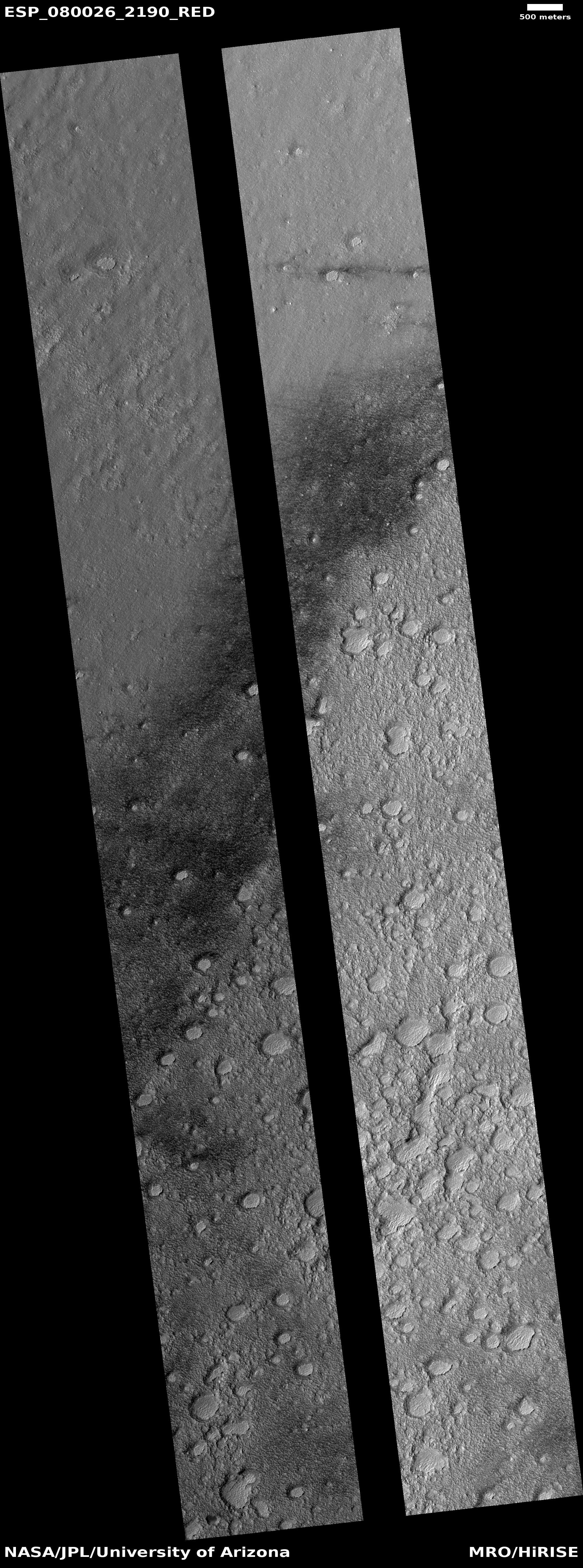
Cool image time! The picture to the right, rotated, cropped, and sharpened to post here, was taken on July 29, 2024 by the high resolution camera on Mars Reconnaissance Orbiter (MRO). It shows a section at the Martian south pole at the very high latitude of 87 degrees south, only about 100 miles from the pole itself.
The label for this picture is “possible water ice and mesas,” suggesting we are looking at an ice cap of water that is partly sublimated away.
In truth, things are much more complicated. It was summer when this photo was taken. Note the drainage in the lower right and the dark spidery lines there. In the winter on Mars atmospheric carbon dioxide falls as snow and coats the poles to about 60 degrees latitude with a thin mantle of dry ice. In the spring this mantle sublimates away, but does so in an counter-intuitive manner. The sublimation first occurs at the mantle’s base, and the trapped gas flows up until it finds a weak spot in the mantle and cracks through, spewing out and deposting dark splotches of dust.
At the south pole this upward flow always follows the same paths, producing the dark spidery patterns we see here. In the case of the drainage in the lower right, this is a drainage of gas eastward until it pops out at the slope, causing that depression to become darkly stained.
This is only part of the story of this complex geology, however.
» Read more
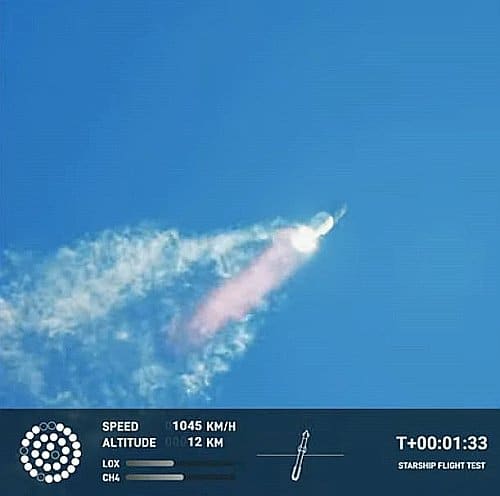
A US Coast Guard announcement issued today includes a notice to mariners of a rocket launch window at Boca Chica from October 12th to October 19th, suggesting that SpaceX has gotten an update from the FAA that a launch license will be issued for those dates, more than a month earlier than previously predicted by the FAA.
It must be emphasized that this notice is from the Coast Guard, not the FAA. The FAA has said nothing new about SpaceX’s launch license application. This notice suggests several possiblilites, all or none of which may be true:
1. The FAA has told SpaceX privately that it expects to issue that license in time for a launch in two weeks, and SpaceX then moved quickly to get the Coast Guard in line.
2. SpaceX and the Coast Guard are working together to increase the pressure on the FAA to get out of the way.
3. The public condemnations of the FAA by SpaceX in the past few weeks have worked to force that agency to back off its hardnosed regulatory over-reach.
All of this is wild speculation. For all we know, this Coast Guard notice is something it always issues prior to major static fire tests at Boca Chica. We shall have to wait to get a better sense of what is happening.
Hat tip to reader Steve Richter.
Leaving Earth: Space Stations, Rival Superpowers, and the Quest for Interplanetary Travel, can be purchased as an ebook everywhere for only $3.99 (before discount) at amazon, Barnes & Noble, all ebook vendors, or direct from my ebook publisher, ebookit.
If you buy it from ebookit you don't support the big oppressive tech companies and I get a bigger cut much sooner.
"Leaving Earth is one of the best and certainly the most comprehensive summary of our drive into space that I have ever read. It will be invaluable to future scholars because it will tell them how the next chapter of human history opened." -- Arthur C. Clarke
Using the spectroscopy from the Webb Space Telescope, scientists have now detected jets of carbon dioxide and carbon monoxide spewing from the very active asteroid 29P/Schwassmann-Wachmann-1 (29P).
Based on the data gathered by Webb, the team created a 3D model of the jets to understand their orientation and origin. They found through their modeling efforts that the jets were emitted from different regions on the centaur’s nucleus, even though the nucleus itself cannot be resolved by Webb. The jets’ angles suggest the possibility that the nucleus may be an aggregate of distinct objects with different compositions; however, other scenarios can’t yet be excluded.
The graphic to the right illustrates the modeling of these jets. That the center of this two-lobed asteroid could have been created from distinct objects suggests a very complex formation process, since those objects would have had to have formed themselves in different locations in the solar system and then somehow come together.
The European Space Agency (ESA) has awarded a Polish rocket startup, dubbed SpaceForest, €2.4 million to upgrade its suborbital Perun rocket that the company has test launched twice in last year.
Perun runs on modified paraffin, commonly used as candle wax, and so its propellant is non-toxic. The rocket can be launched on a mobile launch pad, allowing for easy deployment at launch facilities around Europe. Last year, SpaceForest launched two full-scale models of its Perun rocket that flew to 22 km and 13 km altitude from the coastal town of Ustka, Poland, on the Baltic Sea.
This company is now the second Polish rocket startup to have successfully tested its rocket. The Łukasiewicz Institute of Aviation has completed suborbital test flights of its ILR-33 Amber 2K rocket, and has a deal to fly its next test from Norway’s commercial Andoya spaceport.
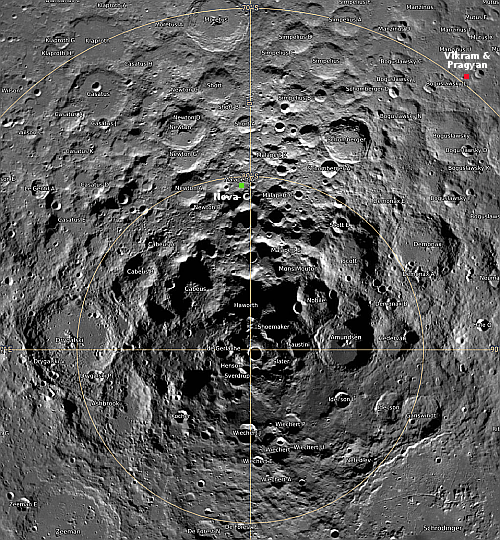
India’s space agency ISRO yesterday unveiled its design concept for its Chandrayaan-4 lunar sample return mission, requiring two launches and five modules that will dock in Earth orbit before traveling to the Moon.
“After two launches, the stacks will be docked together in elliptical Earth orbit to form an integrated stack. Subsequent to docking, the Integrated Stack will perform the first set of Earth-bound manoeuvres with the PM propulsion system. Once the PM is depleted, it gets jettisoned from the Integrated stack,” Isro said Tuesday.
The integrated stack then performs all the manoeuvres to achieve the lunar orbit, such that the orbit plane has the pre-determined landing site. In the final lunar orbit, the descender module and ascender module get separated from the transfer module and re-entry module. The descender and ascender modules then undergo powered descent to achieve a soft landing on the lunar surface.
Both a robot arm and a drill will then grab samples, deposit them separately in the ascender, which will then launch and redock with the stack. It will then take the re-entry module back toward Earth, where it will be released prior to its return.
This plan is essentially the same as the first proposal last year, but with many more added details.
A landing site has apparently not yet been chosen.
The orbital tug startup Impulse Space announced yesterday that it has raised $150 million in private investment capital, money it will use to develop its planned two tugs, dubbed Mira and Helios.
So far the company, founded by former SpaceX engineer Tom Mueller, has only flown one mission, a demo mission of Mira last year that had some communications and software problems but was still declared a success.
Both Mira and Helios use chemical propulsion systems that offer large amounts of delta-v, or change in velocity, that can be provided quickly. Impulse said when it announced Helios that the vehicle could take a five-ton satellite from low Earth orbit to geostationary orbit in less than a day.
It hopes to fly an upgraded version of Mira late next year, and the first Helios mission in 2026.
Using spectroscopic data from the Webb Space Telescope, scientists have detected both carbon dioxide and hydrogen peroxide on the surface of Pluto’s moon Charon, adding these chemicals to the previously detected water ice and ammonia-bearing chemicals that give the planet its gray and red colors.
The team compared the spectroscopic observations with laboratory measurements and detailed spectral models of the surface, concluding that carbon dioxide is present primarily as a surface veneer on a water ice-rich subsurface. “Our preferred interpretation is that the upper layer of carbon dioxide originates from the interior and has been exposed to the surface through cratering events. Carbon dioxide is known to be present in regions of the protoplanetary disk from which the Pluto system formed,” Protopapa said.
The presence of hydrogen peroxide on the surface of Charon clearly indicates that the water ice-rich surface is altered by solar ultraviolet light and energetic particles from the solar wind and galactic cosmic rays. Hydrogen peroxide forms from oxygen and hydrogen atoms originating from the breakup of water ice due to incoming ions, electrons or photons.
The theory proposing the dry ice comes from the interior is interesting, but there simply is not enough data to take it very seriously at this point.
According to Russia’s state-run press, the first launch of its new Soyuz-5 rocket will not occur in 2025 as previously predicted, but has been delayed to 2026.
No reason for the delay was given, but I suspect it is because Russia has still been unable to negotiate a deal with Kazakhstan for the use of the planned launchpad at Baikonur. In 2023 Kazakhstan seized control of the Soyuz-5 launchpad, and has apparently so far refused to agree to a new deal for allowing Russia to use it.
These negotiating delays with Kazakhstan are not the Soyuz-5 rocket’s only issues. Russia first announced the rocket in 2015, with its first launch planned for 2022. Thus, long before Kazakhstan retook its launchpad in 2023 the project was behind schedule. Other plans in 2019 to launch it from the former commercial Sea Launch platform that Russia took over have come to nothing.
Kazakhstan’s unwillingness to negotiate almost certainly stems from Russia’s invasion of the Ukraine. It now fears Russia, and is very reluctant to give it more control of Kazakhstan’s assets.