Starship prototype #15 completes static fire test

Capitalism in space: SpaceX’s fifteenth Starship prototype successfully completed a static fire test yesterday, and the company is now hoping to do its first test flight this week, possibly as early as tomorrow.

Meanwhile, preparations continue for the first test launch of a Superheavy prototype, as well construction at Boca Chica of the orbital launchpad.

The Orbital Launch Site is a hive of activity, with work ranging from the installation of large GSE (Ground Support Equipment) tanks to continued work on the launch mount and launch and integration tower.

The latter has now started to rise into the air next to the mount, which is yet to receive its launch table.

When finished, the tower will be the tallest structure in the region, at nearly 152 meters — towering over the 120 meter tall, fully integrated Starship/Super Heavy stack. The Tower will eventually host a crane and, as crazy as it initially sounded when Elon revealed it, arms designed to catch the returning booster.

It is not yet clear what the test schedule for Superheavy will be leading to that first orbital launch. They will likely fly a prototype on a hop first, then fly it with Starship stacked above. SpaceX however has not said exactly what its plans are, and even if it had, the company has been quite willing to revise those plans should it decide a change is advisable.


0 comments

The commercial history of Russia’s Proton rocket

Doug Messier at Parabolic Arc today published a detailed launch history of Russia’s Proton rocket, outlining its commercial rise beginning in the 1990s and its fall in the 2010s with the arrival of SpaceX.

The fading of Proton reflected strong competition from SpaceX’s reusable Falcon 9 rocket, which captured an increasing percentage of commercial launches with significantly lower prices.

There was also a global shift away from Proton’s bread and butter, the geosynchronous communications satellite, toward large constellations deployed into low and medium Earth orbits.

Proton’s reputation was also damaged by serious quality control problems that affected the entire Russian launch industry. Proton suffered 9 launch failures and one partial failure in the 10 years between 2006 and 2015. The booster was left grounded for as long as a year at a time. Insurance rates for Proton flights soared.

Proton appears to still have six launches on its manifest, but the shift in Russia to its Angara rocket likely means the end of Proton’s long history, begun at the very beginnings of the space age in the 1960s, is in sight.

3 comments

Genesis cover

On Christmas Eve 1968 three Americans became the first humans to visit another world. What they did to celebrate was unexpected and profound, and will be remembered throughout all human history. Genesis: the Story of Apollo 8, Robert Zimmerman's classic history of humanity's first journey to another world, tells that story, and it is now available as both an ebook and an audiobook, both with a foreword by Valerie Anders and a new introduction by Robert Zimmerman.

The print edition can be purchased at Amazon or any other book seller. If you want an autographed copy the price is $60 for the hardback and $45 for the paperback, plus $8 shipping for each. Go here for purchasing details. The ebook is available everywhere for $5.99 (before discount) at amazon, or direct from my ebook publisher, ebookit. If you buy it from ebookit you don't support the big tech companies and the author gets a bigger cut much sooner.


The audiobook is also available at all these vendors, and is also free with a 30-day trial membership to Audible.
 

"Not simply about one mission, [Genesis] is also the history of America's quest for the moon... Zimmerman has done a masterful job of tying disparate events together into a solid account of one of America's greatest human triumphs."--San Antonio Express-News

SpaceX leases bigger space at LA port for processing Falcon 9 boosters after launch

Capitalism in space: According to the mayor of Los Angeles, SpaceX has signed a new lease for more space at the city’s port, taking over the facilities no longer used by Sea Launch’s floating launch platform that is now in Russia.

News of the port lease broke on April 26th with a tweet from the mayor of Long Beach, California after the Port of Long Beach (POLB) Commission voted to approve SpaceX’s 24-month sublease with an effective start date of May 1st, 2021. From 2014 to 2020, a massive floating rocket launch complex and associated service ships once used by SeaLaunch called POLB’s Pier 16 home while mothballed and the company left behind a decent amount of infrastructure when it vacated the facility last year.

That includes a ~5600 square meter (~65,000 sq ft) warehouse and office space formerly used to process SeaLaunch payloads and Ukrainian Zenit rockets, as well as a pier and dock space generally optimized for loading and unloading large rockets from rocket transport ships. In other words, Pier 16 is a perfect fit for SpaceX’s needs.

SpaceX has twice before signed similar leases and then canceled them. Now it appears the deal is more firm, as the company appears to be gearing up for regular Starlink satellite launches from Vandenberg, requiring a bigger need in LA for processing Falcon 9 first stage boosters after launch.

I wonder too if this deal might be in connection with Starship and the two used floating oil rigs that SpaceX now owns and is refitting as Superheavy/Starship launch and landing pads. This LA facility would be ideal for these ocean platforms before and after launch.

8 comments

China launches nine satellites using Long March 6 rocket

China today used its Long March 6 rocket, designed to launch small satellites, to place what the country’s state-run media describes as “nine commercial satellites.”

Two satellites apparently are aimed at Earth observation, while the others are testing various satellite designs.

The leaders in the 2021 launch race:

11 SpaceX
9 China
7 Russia
2 Rocket Lab

The U.S. still leads China 16 to 9 in the national rankings.

0 comments

Conscious Choice cover

Now available in hardback and paperback as well as ebook!

From the press release: In this ground-breaking new history of early America, historian Robert Zimmerman not only exposes the lie behind The New York Times 1619 Project that falsely claims slavery is central to the history of the United States, he also provides profound lessons about the nature of human societies, lessons important for Americans today as well as for all future settlers on Mars and elsewhere in space.

 
Conscious Choice: The origins of slavery in America and why it matters today and for our future in outer space, is a riveting page-turning story that documents how slavery slowly became pervasive in the southern British colonies of North America, colonies founded by a people and culture that not only did not allow slavery but in every way were hostile to the practice.  
Conscious Choice does more however. In telling the tragic history of the Virginia colony and the rise of slavery there, Zimmerman lays out the proper path for creating healthy societies in places like the Moon and Mars.


“Zimmerman’s ground-breaking history provides every future generation the basic framework for establishing new societies on other worlds. We would be wise to heed what he says.” —Robert Zubrin, founder of the Mars Society.


All editions are available at Amazon, Barnes & Noble, and all book vendors, with the ebook priced at $5.99 before discount. All editions can also be purchased direct from the ebook publisher, ebookit, in which case you don't support the big tech companies and the author gets a bigger cut much sooner.


Autographed printed copies are also available at discount directly from the author (hardback $29.95; paperback $14.95; Shipping cost for either: $6.00). Just send an email to zimmerman @ nasw dot org.

German smallsat rocket startup wins launch contract

Capitalism in space: The German smallsat rocket startup company Isar Aerospace has won its first launch contract, to place an Airbus Earth observation satellite using its new Spectrum rocket.

Isar is one of three new German rocket companies competing for the smallsat market that all hope to launch for the first time next year.

Along with Rocket Factory Augsburg and HyImpulse Technologies, the three startups are competing as part of the German Space Agency DLR’s microlauncher competition.

The competition, which is being run in conjunction with ESA [European Space Agency], will award one of the three startups with 11 million euros ($13 million) in funding later this year. The funding is to be used to support a qualification flight that will carry a payload for a university or research institution for free. A second prize of 11 million euros in funding will then be awarded in 2022 as the final stage of the competition.

In evaluating the three startups, the DLR panel of judges will examine the technical aspects and commercial feasibility of each launcher. As a result, each startup’s success in securing funding and signing launch contracts will play a role in their chance of winning the competition.

Rocket Factory has also won a launch contract, with that commercial launch set for 2024.

Note how ESA is shifting its approach. Previously it focused its commercial effort entirely within the government-controlled Arianespace company. Now it is awarding competitive contracts to independent private companies. It appears that the ESA, like NASA, is adopting the recommendations put forth in my policy paper Capitalism in Space. It no longer wants to be the company but is instead acting as a customer looking for a product to buy.

Hopefully more than one of these three German companies will succeed, so that the competition will increase. That in turn will force prices down while encouraging greater innovation.

0 comments

Blue Origin protests Starship contract award for lunar lander

Blue Origin today filed a protest with the Government Accountability Office (GAO) of NASA’s decision to award SpaceX’s Starship the sole contract for building a manned lunar lander, claiming the agency “moved the goalposts” during the award process.

Blue Origin says in the GAO protest that its “National Team,” which included Draper, Lockheed Martin and Northrop Grumman, bid $5.99 billion for the HLS [Human Landing System] award, slightly more than double SpaceX’s bid. However, it argues that it was not given the opportunity to revise that bid when NASA concluded that the funding available would not allow it to select two bidders, as originally anticipated. NASA requested $3.3 billion for HLS in its fiscal year 2021 budget proposal but received only $850 million in an omnibus appropriations bill passed in December 2020. [emphasis mine]

The highlighted words kind of say it all. Blue Origin’s National Team put in a very high bid. Why should they have any expectation of winning?

Moreover, their track record, especially Blue Origin’s (the leader of the team), pales in comparison to SpaceX.
» Read more

11 comments

Leaving Earth cover

Leaving Earth: Space Stations, Rival Superpowers, and the Quest for Interplanetary Travel, can be purchased as an ebook everywhere for only $3.99 (before discount) at amazon, Barnes & Noble, all ebook vendors, or direct from my ebook publisher, ebookit.

If you buy it from ebookit you don't support the big oppressive tech companies and I get a bigger cut much sooner.


Winner of the 2003 Eugene M. Emme Award of the American Astronautical Society.

 
"Leaving Earth is one of the best and certainly the most comprehensive summary of our drive into space that I have ever read. It will be invaluable to future scholars because it will tell them how the next chapter of human history opened." -- Arthur C. Clarke

John Woodfield RC Gliders

An evening pause: Seems appropriate with Ingenuity flying about on Mars. From the youtube webpage:

This was the maiden flight of my latest design. It was a bit of a mash-up, using existing wings and tail from old models. It weighs 1.5kg and was flying in about 7-10mph of wind. I feel it will be happier in about 5mph. The all-moving tail needs changing slightly as it developed some serious flutter if I picked up too much airspeed.

Hat tip Cotour.

5 comments

ULA’s Delta-4 Heavy successfully launches NRO spy satellite

ULA today successfully used its most powerful rocket, the Delta-4 Heavy, to place a National Reconnaissance Office (NRO) surveillance satellite into orbit.

ULA now only has three Delta-4 Heavy’s in its inventory. After those launch the rocket will be retired, to be replaced by the most powerful versions of its new Vulcan rocket.

The leaders in the 2021 launch race:

11 SpaceX
8 China
7 Russia
2 Rocket Lab

The U.S. now leads China 16 to 8 in the national rankings.

5 comments

Today’s blacklisted American: There are now so many that an online database now exists

They’re coming for you next: Because of the epidemic of blacklisting and oppression that has been sweeping the United States in the past four months, a new online database now exists to track and document them all, with the total now almost 200 people long.

The site’s home page lists the following reasons for getting blackballed, all of which are absurdly unjust and intolerant:
» Read more

11 comments

Study: increase in seasonal Martian streaks after 2018 global dust storm suggests dust not water is their cause

Map of Mars showing location of new linneae after 2018 global dust storm
Click for full image.

The uncertainty of science: A just-published survey of Mars following the 2018 global dust storm found that there was a significant increase in the seasonal dark streaks that scientists call recurring slope lineae, providing more evidence that these streaks are not caused by some form of water seepage but instead are related to some dry process.

The map to the right is figure 2 from that paper. The white dots show the candidate lineae that appeared following the 2018 global dust storm. About half were new streaks, not seen previously.

From the paper’s conclusion:
» Read more

2 comments

The devastating epidemic that simply wasn’t devastating

It is now more than a year since the arrival of the coronavirus in the United States and the panicky wave of fear it brought to our governments and many of our citizens, shutting down whole states, bankrupting millions of businesses, and shuttering schools for practically a whole year. In the process our governments have demanded we change how we live in fundamental ways, from no longer gathering together in any social setting to wearing masks wherever we go, inside or out.

Was that reaction correct? Readers of my website know that I never believed it rational, and that it was an entirely out-of-proportion response to what was really nothing more than a new variation of the flu.

Well, we now have some data that reveals the actual scale of the COVID-19 epidemic, as shown by the CDC graph below:
» Read more

52 comments

Bill Nelson: now an advocate of private commercial space?

Though this is certainly not a firm rule, I rarely pay much attention to the nomination hearings in the Senate that take place whenever a new administration from another party takes over and nominates a new set of Washington apparatchiks to run various government agencies. Almost always, you can glean most of what you need to know by reading the nominee’s opening statement as well as later news reports. Saves a lot of time.

Last week came the nomination hearing of former senator Bill Nelson as NASA’s new administrator. As I had expected, based on all reports the hearing was a lovefest, with almost all questions friendly and enthusiastic. This is generally what happens when a Democrat gets nominated, as the Democrats have no reason to oppose the nominee and the Republicans generally don’t play “we oppose all Democrats, no matter what.” It also always happens when the nominee is a former member of that exclusive senatorial club, as Bill Nelson was.

The first news reports also mentioned that Nelson seemed surprisingly enthusiastic towards commercial space, given his past hostility towards it. This report by Mark Whittington today at The Hill provides a much deeper look, and notes that, as his report’s headline states, Nelson is now “a born-again” believer in the idea of capitalism in space, with NASA now merely being the customer. This is a major change from his position when he was a senator, when he tried repeatedly to strangle commercial space and give its money to SLS.

Nelson also announced that he was totally committed to continuing the Artemis program and timetable as laid out by the Trump administration:
» Read more

8 comments

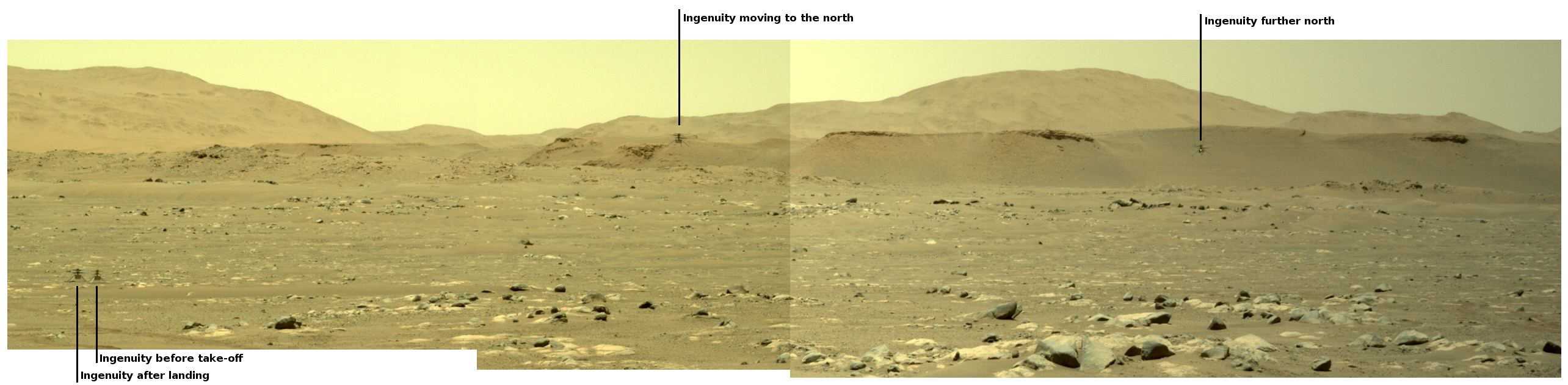
Ingenuity completes third flight!

Low resolution montage showing Ingenuity's third flight on Mars, April 25, 2021
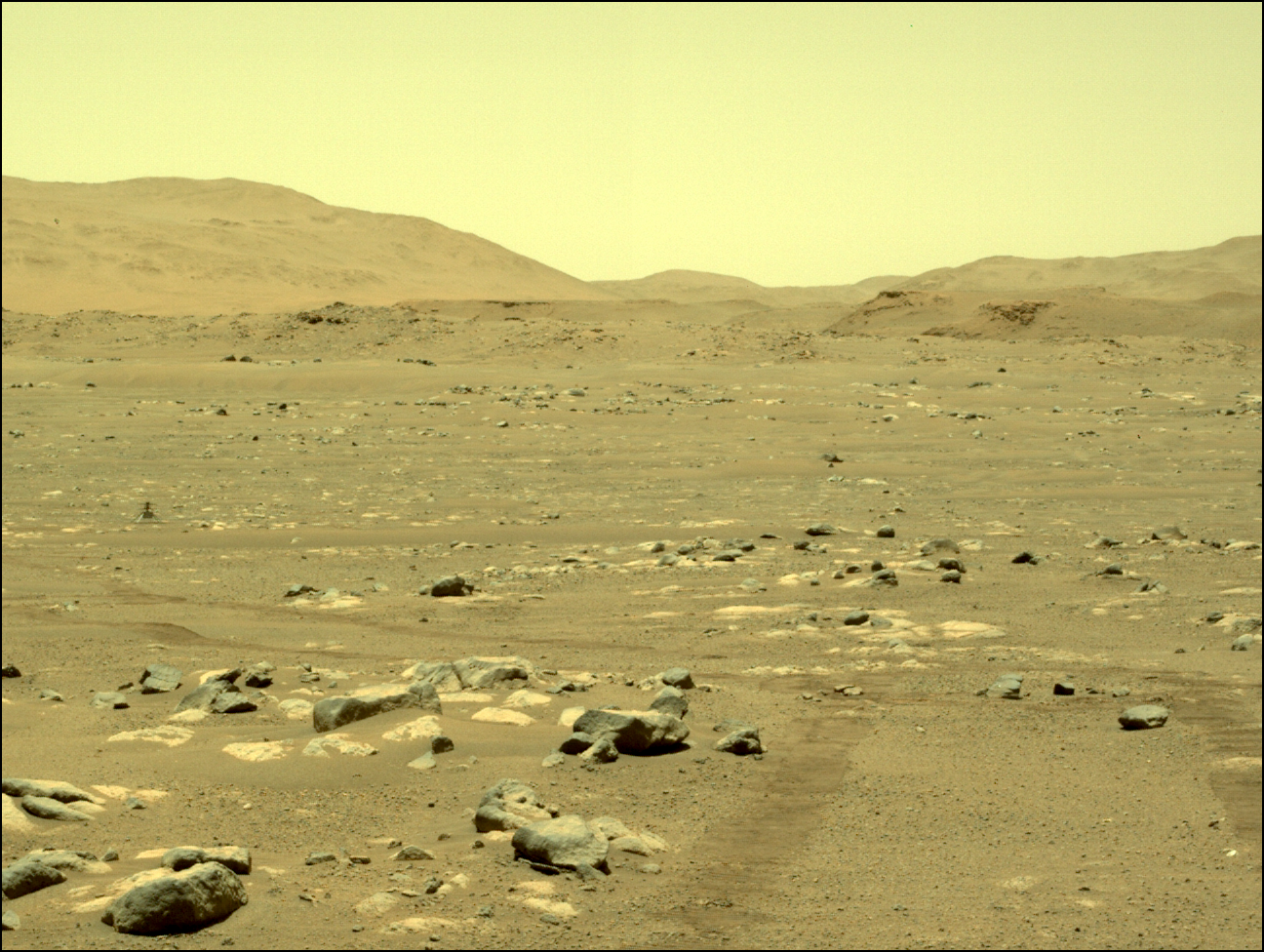
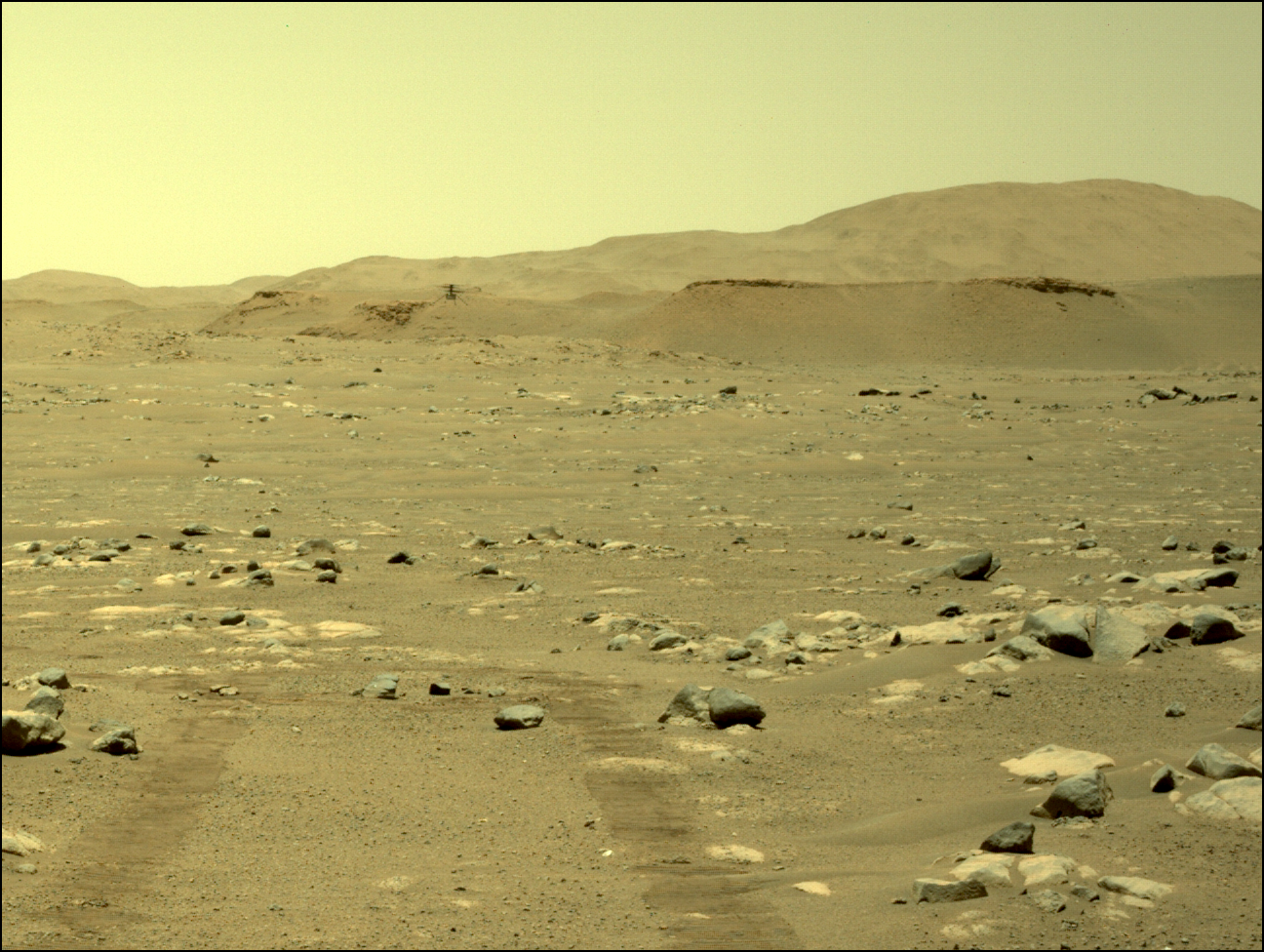
Click for full resolution. Individual images can be found, in sequence, here, here, here, and here.

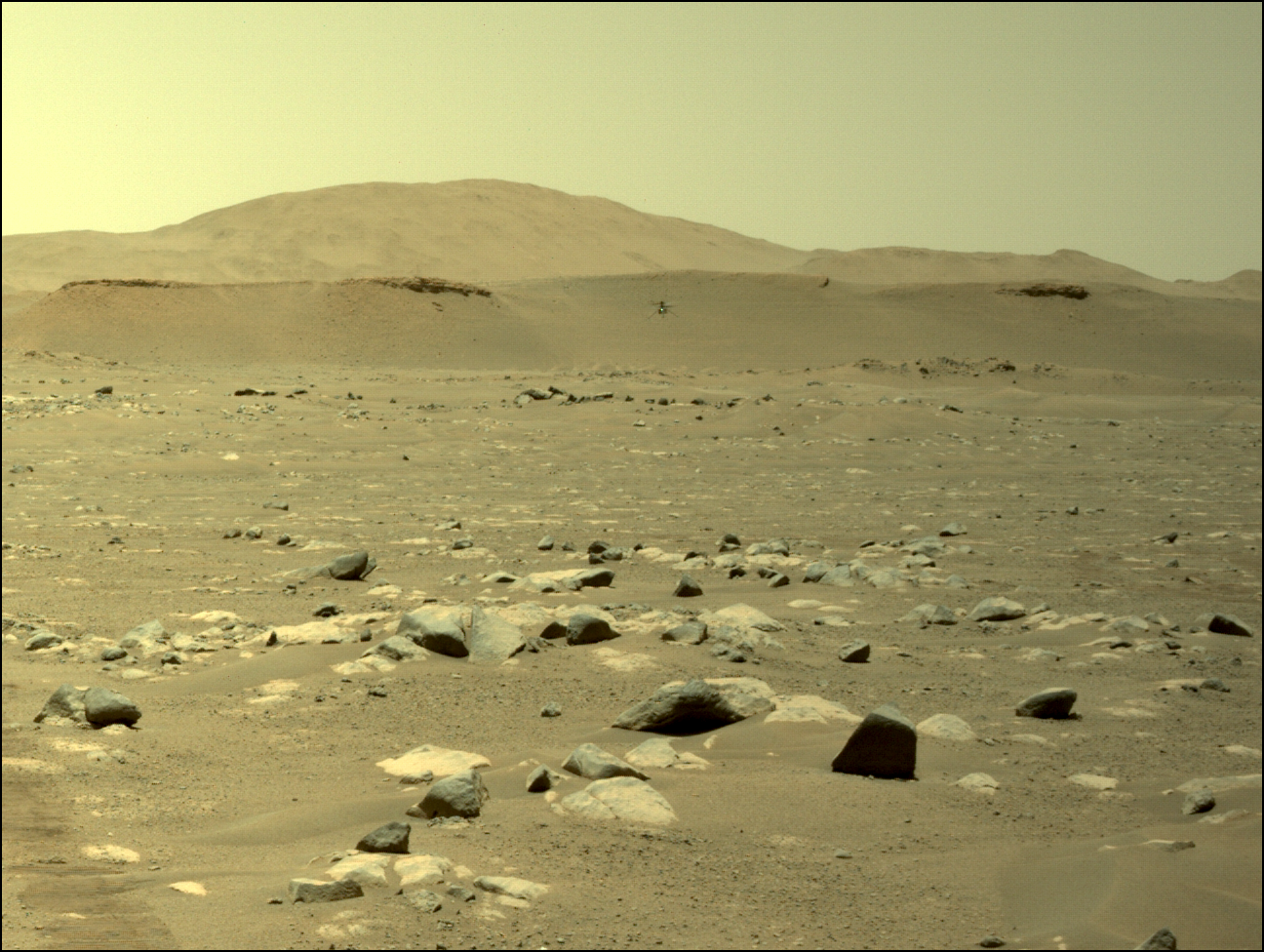
Early today Ingenuity successfully completed its third flight on Mars, traveling a considerable distance north from its taken-off point and then returning almost exactly to that point, as shown by the montage of four Perseverance navigation images above.

You will want to look at the high resolution montage, as the details are much clearer. The large mountains in the background are the rim of Jezero Crater. The smaller plateau in front of these mountains and much closer is the edge of the delta that Perseverance will explore.

According to this NASA press release:

The helicopter took off at 4:31 a.m. EDT (1:31 a.m. PDT), or 12:33 p.m. local Mars time, rising 16 feet (5 meters) – the same altitude as its second flight. Then it zipped downrange 164 feet (50 meters), just over half the length of a football field, reaching a top speed of 6.6 feet per second (2 meters per second).

I have embedded below the fold video of the helicopter’s take off, flight to the north, and then return and landing, created from Perseverance images. Because the camera did not pan the helicopter moves off frame for the middle part of its flight. In the coming days I expect they will assemble a video showing the entire flight.

The fourth flight is now only days away.
» Read more

2 comments

Soyuz-2 rocket launches 36 more OneWeb satellites

Capitalism in space: Russia’s Soyuz-2 rocket today successfully launched from its Vostochny spaceport another 36 more OneWeb satellites, raising that internet constellation to 182 satellites of a planned 650 satellites.

The constellation will take 20 Soyuz launches to finish, and like other competitor services such as Starlink, is designed to provide high speed, low latency broadband services to areas where such service is unavailable now. Whereas Starlink is being marketed to individuals, OneWeb’s services are designed for enterprise customers, including broadband providers. User terminals can enable 3G, LTE, 5G, and Wi-Fi service over land, sea, and air.

The leaders in the 2021 launch race:

11 SpaceX
8 China
7 Russia
2 Rocket Lab

The U.S. still leads China 15 to 8 in the national rankings. And these numbers will likely see some change as there are four launches scheduled in the next four days. First ULA’s Delta 4 Heavy will launch a spy satellite tomorrow, then the next day Arianespace will do its first launch this year, launching a commercial Airbus Earth observation satellite with a Vega rocket.

On April 28 SpaceX plans to launch another 60 Starlink satellites, followed on April 29th by the launch by China of the first module of its space station, using their Long March 5B rocket.

Things are heating up, and this is only the beginning.

0 comments

Curiosity’s mesa-top view of Gale Crater

The view of Gale Crater from on top of Mont Mercou
Click for full image.

Cool image time! The photo above, reduced slightly to post here, was taken on April 14, 2021 by one of the navigation cameras on Curiosity. The rover was then and is still sitting on top of the twenty foot high outcrop dubbed Mont Mercou.

Last week I had posted a panorama made from images at this viewpoint looking south towards Mount Sharp. Today’s image is from the same place, but now looks north across the floor of Gale Crater at the areas that Curiosity had previously traveled. I think the smallest mesas on the left of this image are the Murray Buttes which Curiosity was traveling through back in 2016, but am not certain.

The mountains in the far distance are the rim of the crater, about 30 miles away.

4 comments

China and Russia sign agreement to build moon base

The new colonial movement: Yesterday China and Russia announced that they have signed an agreement to jointly work together to build a base on the Moon.

The link above is from the Chinese state-run press, stating:

In a joint statement issued at the conference, the CNSA and Roscosmos said the moon station will be open to all interested countries, international organizations and partners in terms of planning, design, research, development, implementation and operation at all stages and levels of the project.

The Russian state-run press made a similar announcement.

The new Cold War in space is beginning to shape up. On one side will be free enterprise, led by the United States and the many private companies working independently to make their own profits in space, and on the other side will be the former communist nations whose cultures require all such efforts be controlled from the top by the government.

And like the Cold War of the 20th century, the big question will be the actions of third parties, like Europe, India, Japan, the UAE, and other new space-faring nations. Will they join with the U.S., or join China and Russia to gang up on private enterprise? Right now I will not be surprised if all these countries eventually join the Chinese/Russian effort. Worse, I have great doubts about the U.S. government’s commitment to the capitalist path it is presently taking. If enough pressure was applied by these authoritarian regimes we should not be surprised if our generally authoritarian present government decides to join them as well, using their combined power to squelch freedom and private enterprise in space.

The battle is drawn, but the forces for liberty and freedom are sadly outnumbered.

50 comments

China names its Mars rover Zhurong, after traditional fire god

The new colonial movement: The Chinese state-run press today announced that it has chosen Zhurong, a traditional Chinese fire god, as the name of the rover that is presently orbiting Mars on its Tianwen-1 orbiter and is targeting a landing sometime in mid-May.

They note that this name matches well with the Chinese name for Mars, “Huo Xing,” or fire star.

The announcement provided little additional information, other than stating that the prime landing site is in the previously announced Utopia Planitia region, which suggests the high resolutions images being taken by Tianwen-1 (unreleased by China) continue to show no reason to change that target.

0 comments

Ingenuity’s third flight late tonight

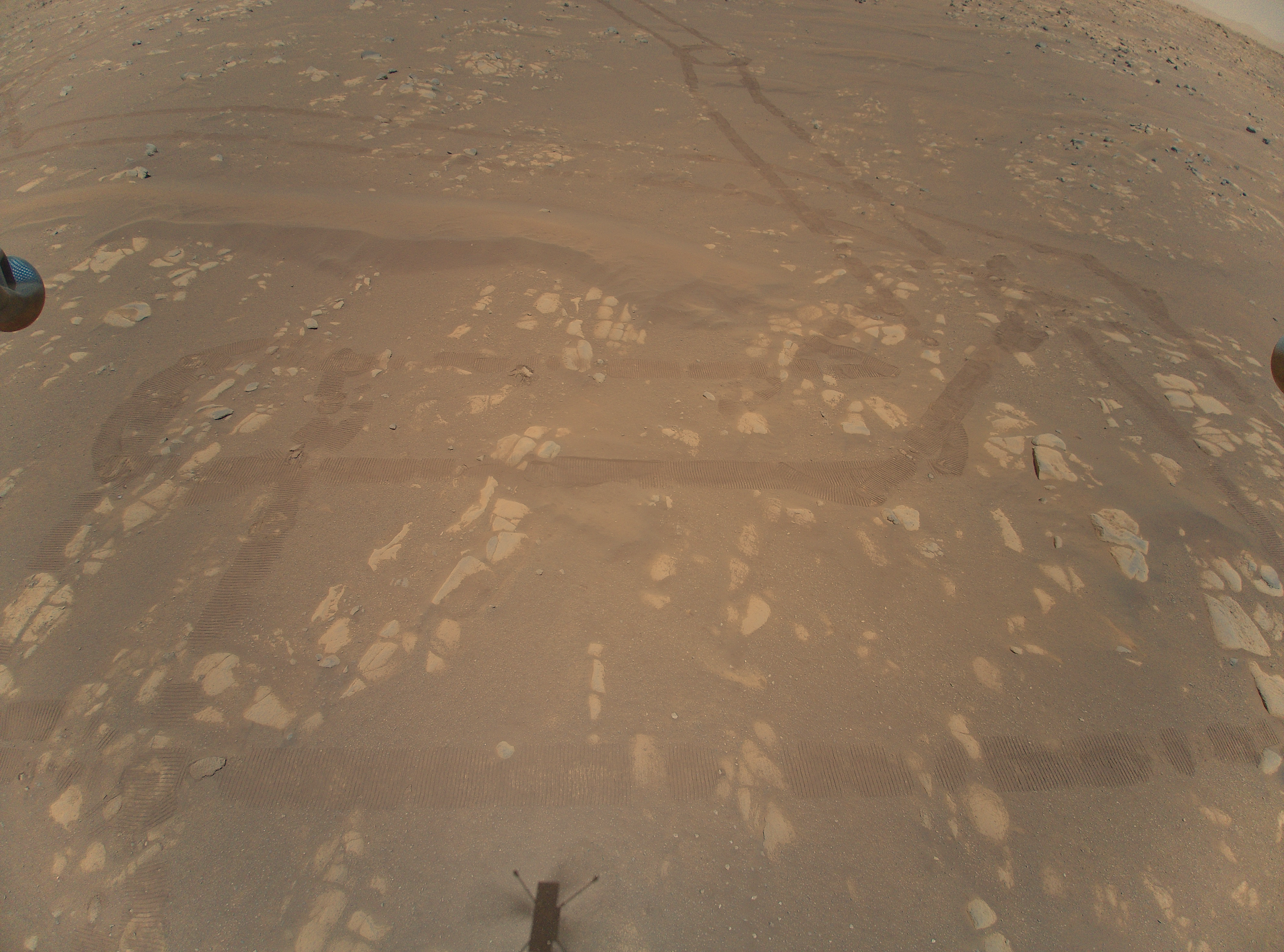
First color image from Ingenuity
Click for full image.

According to Håvard Grip, Ingenuity’s Mars Helicopter Chief, the helicopter’s team is now targeting very early Sunday morning for its third test flight.

For the third flight, we’re targeting the same altitude [as flight two], but we are going to open things up a bit too, increasing our max airspeed from 0.5 meters per second to 2 meters per second (about 4.5 mph) as we head 50 meters (164 feet) north and return to land at Wright Brothers Field. We’re planning for a total flight time of about 80 seconds and a total distance of 100 meters (330 feet).

While that number may not seem like a lot, consider that we never moved laterally more than about two-pencil lengths when we flight-tested in the vacuum chamber here on Earth. And while the 4 meters of lateral movement in Flight Two (2 meters out and then 2 meters back) was great, providing lots of terrific data, it was still only 4 meters. As such, Flight Three is a big step, one in which Ingenuity will begin to experience freedom in the sky.

The picture above was the first color image sent down by Ingenuity, taken during the second test flight when the helicopter was seventeen feet in the air and pitched slightly so that it could look east, toward Perseverance. From the caption:

The winding parallel discolorations in the surface reveal the tread of the six-wheeled rover. Perseverance itself is located top center, just out frame. “Wright Brothers Field” is in the vicinity of the helicopter’s shadow, bottom center, with the actual point of takeoff of the helicopter just below the image. A portion of the landing pads on two of the helicopter’s four landing legs can be seen in on the left and right sides of the image, and a small portion of the horizon can be seen at the upper right and left corners.

The data from tonight’s flight will arrive on Earth at around 7:16 am (Pacific) tomorrow.

2 comments
1 575 576 577 578 579 1,765