Poland fires head of its space agency

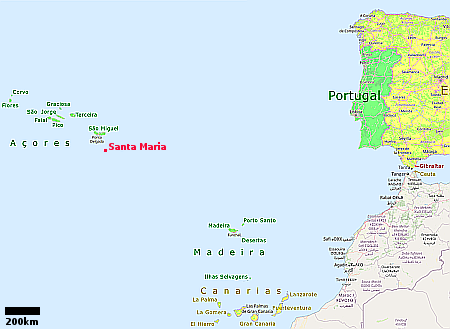
Apparently due to his failures in min-February dealing with debris dropped on Poland from a de-orbiting Falcon 9 upper station, the government has fired the head of its space agency.

The President of the Polish Space Agency, Grzegorz Wrochna, has been dismissed following a botched response to the uncontrolled re-entry of a Falcon 9 second stage that scattered debris across multiple locations in Poland.

It appears Wrochna’s office had sent its reports on the debris to the wrong email address, so that the people higher up in the command chain were not informed properly about what was happening. This failure was then compounded in early March when the space agency’s computer systems were hacked, forcing it to shut down its access to the internet.

You might ask why Poland even has a space agency, and if you do you are asking the right question. The nation does not have “a space program,” which would require an agency. Instead it has a handful of new rocket startups, mostly focused on suborbital flights. All these need is the right legal framework to succeed, not a bureaucracy telling them what to do.

3 comments

Europe’s Hera probe to fly past Mars tomorrow

As part of its journey to the binary asteroid Didymos/Dimorphos, the European Space Agency’s (ESA) Hera probe will slingshot past Mars tomorrow, obtaining images and data of both the red planet and its moon Deimos.

Three instruments will gather data, a navigational camera, and infrared camera, and a spectral camera, with the goal mostly to calibrate the instruments and make sure they are working as designed. The data won’t be available until the next day, when the ESA will hold a webcast unveiling the images.

0 comments

NASA shuts down three unneeded departments, including its DEI office

NASA this week began complying with Trump’s executive orders by finally shutting down its DEI office as well as two other unneeded departments.

NASA’s Office of Technology, Policy and Strategy; the Office of the Chief Scientist; and the Diversity, Equity, Inclusion and Accessibility branch in the Office of Diversity and Equal Opportunity will be shuttered, in compliance with Trump’s executive order, “Implementing the President’s Department of Government Efficiency Workforce Optimization Initiative.”

A total of 23 employees were laid off. All three offices were established during the Biden administration, and provided no real value to the agency. The first two merely gave advice to top management, advice unneeded if the right people are put in charge. The third agency, DEI, was worse than unneeded, because it shifted the agency’s focus from good engineering and space exploration to favoring some races over others in hiring and promotions.

In fact, the DEI office had already been neutered prior to this week’s layoffs, based on the nature of NASA press releases in the past two months. Prior to Trump taking office, almost every single NASA press release touting the work of one or more of its employees would be entirely focused on the race or ethnicity of that employee, with almost every profile featuring a woman or minority. White men need not apply.

Since January 20, 2025, the range of employees featured in these profiles has changed radically. While minorities and women have been profiled, their race and gender is no longer mentioned. Instead, the releases tout their experience, skills, and talent. More important, the releases have now stopped blacklisting white men (who actually make up a majority of NASA’s workforce), highlighting many new and long term such individuals in just the past three weeks. The change has been quite refreshing.

Meanwhile, most of the propaganda press has been lying about these layoffs, attempting to paint them as a major disaster that will destroy NASA’s ability to accomplish anything in the future, with the worse example this headline from the science journal Nature: “NASA begins mass firings of scientists ahead of Trump team’s deadline”. That headline is a total lie. This was certainly not a “mass firing” and no space scientist was fired. Of those let go from the first two offices, all were managers, one of whom was also a “climate scientist”, not a space researcher.

More layoffs are expected of course under Trump’s campaign to shrink the federal government. If later layoffs follow the pattern of this first one, they will likely improve NASA’s workforce, eliminating the fat so that what remains can be more focused on what needs to be done.

5 comments

SpaceX officials provide cause of loss Falcon 9 first stage after successful landing

Damaged Falcon 9 booster laying on its side on drone ship as it returns to port
The damaged Falcon 9 booster laying on its side
on its drone ship as it returns to port.

At a press conference yesterday, SpaceX officials outlined the results of its investigation into the loss of Falcon 9 first stage when it fell over on its drone ship shortly after a successful landing.

Speaking at a news conference following a flight readiness review for the Crew-10 mission to the International Space Station, Bill Gerstenmaier, vice president of Build and Flight Reliability at SpaceX, said about 85 seconds into the launch of the Starlink 12-20 mission, there was a fuel leak in the first stage booster, tail number B1086, and kerosene sprayed onto a hot component of the engine. He said that caused it to vaporize and become flammable.

Because there wasn’t enough oxygen to interact with the leaked fuel, it didn’t catch fire during the ascent, he said. But about 45 seconds after B1086 landed on their droneship, ‘Just Read the Instructions,’ there was enough oxygen available to get into the engine compartment and a fire broke out. “It subsequently blew out the barrel panel on the side of the rocket, just like it was designed to. The fire was all contained in the engine compartment,” Gerstenmaier said. “Even if we would’ve had a problem during ascent, this shows that the fire and the damage would be contained in just a single engine out, which still allows us to accomplish the entire mission.”

The company is still working to determine the cause of the leak itself.

Though the article and video at the link make a big deal about the FAA grounding SpaceX’s Falcon 9 fleet, the agency’s actions here were quite trivial compared to its behavior when Biden was president. It grounded the fleet for only a few days, while SpaceX did its initial investigation, and then immediately accepted the above conclusions from SpaceX and lifted the grounding, even though the company has not yet determined the leak’s cause.

1 comment

Space Force awards development contracts to eight startups

The Space Force’s commercial office, dubbed SpaceWERX, announced March 8, 2025 that it has awarded development contracts to eight startups totaling $440 million.

Each STRATFI agreement is worth up to $60 million, with SpaceWERX and several defense agencies contributing up to $30 million per project. Private investors provide matching funds to scale innovations that have already demonstrated viability through prototype development.

The winners — Albedo, Beast Code, CesiumAstro, Gravitics, LeoLabs, Rise8, Umbra and Xona — were announced March 8 at an event at the Capital Factory in Austin, Texas.

Of these companies, Gravitics is probably the most interesting, as it is attempting to become a major American provider of space station modules. It already has a $125 million contract with Axiom to build a small module for that company’s station. This new contract from the Space Force suggests the Pentagon is considering launching its own space station, or possibly attaching a Gravitics module to one of the four private stations presently being built. Below is my present ranking of these four stations:

  • Haven-1, being built by Vast, with no NASA funds. The company is moving fast, with Haven-1 to launch and be occupied in 2026 for a 30 day mission. It hopes this actual hardware and manned mission will put it in the lead to win NASA’s phase 2 contract, from which it will build its much larger mult-module Haven-2 station..
  • Axiom, being built by Axiom, has launched three tourist flights to ISS. There are rumors it is experiencing cash flow issues, but it is also going to do a fourth ISS tourist flight this spring, carrying passengers from India, Hungary, and Poland.
  • Orbital Reef, being built by a consortium led by Blue Origin and Sierra Space. Though Blue Origin has apparently done little, Sierra Space has successfully tested its inflatable modules, including a full scale version, and appears ready to start building the station’s modules for launch.
  • Starlab, being built by a consortium led by Voyager Space, Airbus, and Northrop Grumman. It recently had its station design approved by NASA.
2 comments

Blue Ghost activates NASA drill, prepares for hot lunar noon

Map of lunar landing sites
Landing sites for both Firefly’s Blue Ghost and
Ispace’s Resilience

More than a week after landing in Mare Crisium, ground controllers have prepared Firefly’s Blue Ghost lunar lander for surviving the very hot lunar noon while also activating NASA’s LISTER drill, which proceeded to successfully drill down into the lunar surface below the lander.

Mounted below Blue Ghost’s lower deck, NASA’s Lunar Instrumentation for Subsurface Thermal Exploration with Rapidity (LISTER) payload is a pneumatic, gas-powered drill developed by Texas Tech University and Honeybee Robotics that measures the temperature and flow of heat from the Moon’s interior.

I have embedded below the video of this drilling operation. At this moment it appears that nine of the lander’s payloads have completed their tasks successfully, with no indication yet that the tenth playload will have problems. All in all, Firefly has succeeded in establishing itself now as the leading private company capable of launching spacecraft to other worlds.
» Read more

1 comment

Expect no end, no slowdown, in Trump’s non-stop offensive

Trump defiant after being shot
Trump defiant

For those like me who have been around for awhile, the present Trump administration is truly remarkable in that it harks back to an old, very fundamental American military strategy established by Ulysses S. Grant: Never stop your offensive, not for one instant.

When Grant won a battle he didn’t rest on his laurels. He immediately pushed forward because he knew he had his enemy on the run and at its weakest. When he lost a battle (which almost never happened) he didn’t pull back to lick his wounds, but instead re-configured his forces to push forward nonetheless, knowing that his victorious enemy was likely unprepared for a new assault.

Eisenhower demonstrated his understanding of this strategy during the Battle of the Bulge in December 1944. The Germans had surprised the Allies with their offensive, and thus had successfully pushed a major westward prong splitting Eisenhower’s forces in two. Rather than retreat, however, Eisenhower immediately went on the offensive, moving to pinch off that salient from the north and south and thus trap the German army behind enemy lines. That strategy ended up defeating the Germans, forcing them either to surrender or retreat.

This Trump administration is different from all other Republican presidents, including Trump’s first term, in that he is following this basic winning military strategy, keeping the pressure up continuously, with an enthusiasm that is breath-taking. » Read more

23 comments

After a decade of development, ESA finally starts testing a part of its Callisto grasshopper

Callisto's basic design
Callisto’s basic design

My heart be still! First proposed in 2015 as Europe’s answer to SpaceX’s Falcon 9, the European Space Agency, in partnership with Japan, has finally begun acoustical testing of just one part of its Callisto grasshopper-type reusable test prototype, as shown on the right.

Callisto consists of five main sections: the Aft Bay, which includes the engine and landing legs, the LH2 Tank, the LOx Tank, the VEB, and the Fairing. The VEB houses much of the demonstrator’s electronics, including its onboard computer, avionics, and a reaction control system that uses H2O2 propellant. Its distinctive features include a pair of control fins.

In addition to confirming that the VEB had been transported to the CNES facilities in Toulouse, the 4 March Institute of Space Systems update also revealed that the acoustic test campaign for the key Callisto module had commenced last week. The acoustic test campaign simulates the intense sound vibrations the demonstrator will experience during flight to ensure structural integrity and component reliability.

The whole project has a budget of $100 million. The first test hop won’t occur until 2026, eleven years after the project began, and six years behind its original launch date. In that same time, SpaceX has completed several hundred commercial landings of its Falcon 9 first stage, reusing those stages up to two dozen times.

Nor is Callisto part of any program to develop a similar reusable rocket. It is a typical dead-end government project, with ESA having no clear goal to apply it commercially. The best Europe can hope for is that the engineering lessons from its tests will be given freely to the new European commercial rocket startups, so that they can use it someday.

2 comments

China launches classified communications test satellite

China yesterday successfully launched a classified communications satellite “to carry out multi-band and high-speed communication technology validation, its Long March 3B rocket lifting off from its Xichang spacesport in southwest China.

All we really know about this satellite is that it is part of series. Nor did China reveal where the core stage and four strap-on boosters of the rocket, which use very toxic hypergolic fuels, crashed inside China.

The leaders in the 2025 launch race:

26 SpaceX
10 China
3 Russia
2 Rocket Lab

0 comments

Space Force’s X-37B completes seventh flight, lasting 434 days

With landing on March 7, 2025 at Vandenberg in California, of one of the Space Force’s two X-37B reusable mini-shuttles, the military completed the seventh total flight, this one lasting over 434 days.

The mission achieved a number of important milestones. First, it was the first launched on SpaceX’s Falcon Heavy rocket. Previously launches had used both ULA’s Atlas-5 as well as SpaceX’s Falcon 9.

Second, the spacecraft successfully demonstrated its ability to use aerobraking to adjust its orbit.

The Space Force also claimed other classified experiments on board “tested space domain awareness technology experiments that aim to improve the United States Space Force’s knowledge of the space environment.” That’s however all they told us.

Because the Space Force has stopped telling us which of the two X-37B’s is flying on each launch, it is not clear the Space Force even has a fleet of two any longer. It could be one has been retired.

1 comment

Intuitive Machines confirms Athena fell over at landing; ends mission

Athena on its side on the Moon

Artist rendering of lander on Moon

Intuitive Machines today officially ended its Athena lunar lander mission after it released a picture taken from the top of the lander showing clearly that it had fallen over on its side after landing.

That picture, cropped, reduced, and brightened to post here, is to the right. You can clearly see two of the landing legs in the air, with the horizon in the background.

“With the direction of the sun, the orientation of the solar panels, and extreme cold temperatures in the crater, Intuitive Machines does not expect Athena to recharge,” the company stated. “The mission has concluded and teams are continuing to assess the data collected throughout the mission.”

This is the second Intuitive Machines lunar lander to tip over. More and more it does appear that the tall design of this lander is fundamentally flawed. The artist rendering to the right illustrates this. Most unmanned lunar landers are much wider than they are tall. Intuitive Machines’ Nova design has the lander’s height matching the spread of its legs. It creates a center of gravity high enough that the lander will tip over too easily if conditions are not perfect.

The company denies this, saying the center of gravity is much lower than this graphic makes it appear, but the proof is in the pudding. Their design has tried to land on the Moon twice, and both times the lander tipped over.

It is not clear what the company can do to fix this. Expanding its diameter to lower its height is a major redesign. It also might make the lander too wide to fit inside most rocket fairings. A better solution might be to redesign the legs, making their spread wider, and even increasing their number.

Fortunately, NASA’s shift to capitalism in space has produced a number of different companies building lunar landers. Firefly’s Blue Ghost is clearly a success. In June Ispace will make its second attempt to soft land its private lander design on the Moon. And Astrobotic has a contract to try again after it had a fuel line leak after launch last year that prevented it from even attempting a landing.

And of course, Intuitive Machines is still in the game. It has a contract for one more landing mission, plus a mission to put two data relay satellites in lunar orbit.

16 comments

Once again the leftist propaganda press takes out its knives to stab SpaceX and Musk

Superheavy captured safely by the chopsticks, for the third time in four attempts
Superheavy captured safely yesterday by the chopsticks,
for the third time in four attempts

As should be expected, the destruction of Starship yesterday just before it made orbit on its eighth test flight was immediately used by partisan leftist media outlets to play “Let’s beat up on SpaceX and Elon Musk because he’s a friend of Trump!”

All these outlets decided to emphasize the falling debris and disruption to air traffic, but in doing so they all spun the story in a very dishonest way. First, both SpaceX and the FAA had been prepared for this possibility, and had used well-established procedures — in league with all other involved nations — to respond to the launch failure. The air space was cleared for only about fifteen minutes, as only this Florida Today article noted. Take-off delays at affected airports ranged from minutes to almost an hour, but hardly much different that normal delays seen every day.

Most important, no one was hurt, no planes were damaged, and there were no negative consequences. If anything, yesterday’s Starship flight illustrated the competence shown by SpaceX as it runs a very ambitious and radical development program of the most powerful rocket ever built. For example, why so little mention of the successful catch of Superheavy, something SpaceX has been able to do three times in the first four test flights? That achievement is truly mind-blowing.

The obviousness of these attacks is truly getting tedious. Moreover, why the hostility to one of the most spectacular efforts by an American company? Shouldn’t the American news outlets above be enthused by this effort? Have they become so hateful of their own country in all things, they want it to fail, always?

Sadly, I think we know the answer to that last question. The leftist indoctrination effort that now dominates almost all of America’s universities has produced a generation that does hate America, because they literally know nothing of its history except the distorted lies put forth by these Marxist colleges. They would rather destroy success than have America succeed.

It is both tragic and shameful, and a perfect example of someone cutting off their own nose to spite their face.

17 comments
1 71 72 73 74 75 838