The present state of India’s space program

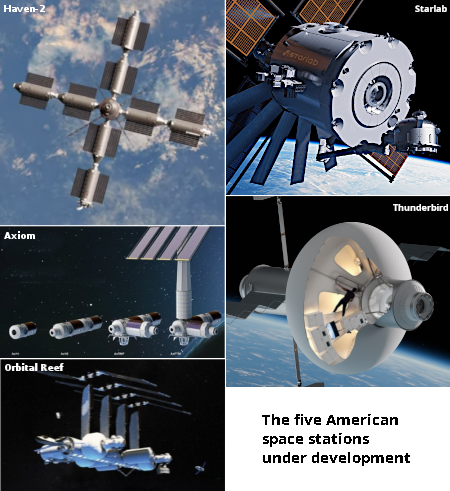
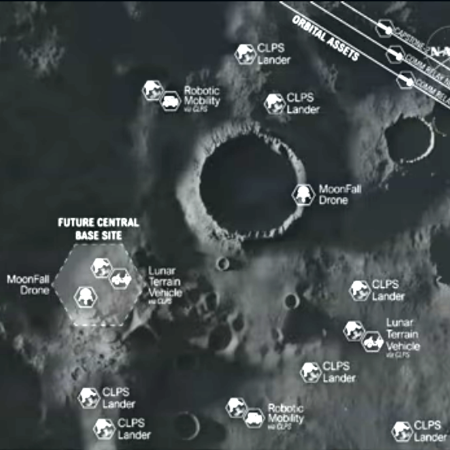
India's Bharatiya Antariksh Station as outlined in 2024
India’s Bharatiya Antariksh Station as outlined in 2024.
Click for original image.

India’s space agency ISRO yesterday released its annual report [pdf], outlining its accomplishments over during 2025.

Like all such reports, it is filled with glowing superlatives. It provides little concrete information about the agency’s more serious issues, such as what it is doing to fix the upper stage of its PSLV rocket, which has failed on the last two consecutive launches. All the annual report says on this subject is the following:

Based on the recommendations of the National Level Committee comprising of eminent experts from academia & industry, the third stage of PSLV i.e., HPS3 motor with modified design was realised and two static tests were successfully completed on October 06, 2025 and November 19, 2025 as in flight, from SDSC, SHAR. The overall performance of the motor and subsystems were as expected and closer to nominal performance.

The problem is that these fixes and tests did not work. The second failure of the upper stage occurred in January 2026, less than two months later. The annual report should have noted this fact, but did not.

As for India’s planetary program, digging out the present schedule from the report is difficult. Based on this review of the annual report, the dates are as follows:

  • Chandrayaan 4 lunar sample return mission: October 2027.
  • Venus Orbiter: March 2028.
  • Chandrayaan 5 /LUPEX lunar lander: September 2028.
  • Mars Lander: No target launch date as yet.

Expect these dates to be delayed.

The report also gives a detailed description on India’s Gaganyaan manned program, but little information about the planned unmanned tests that were planned for this year, leading to a manned orbital mission next year. At the moment the schedule appears to be experiencing delays, caused mostly by the PSLV launch failures. It appears ISRO wants this issue resolved before it launches that first unmanned Gaganyaan test flight.

If you want to get an overview of India’s government space program, this annual report is a good place to start. It will at least provide a baseline on which you can build a deeper knowledge.

1 comment

Who really was Jay Gould?

The life and legend of Jay Gould

To get to the point, right at the start, Jay Gould was not a “Robber Baron”, nor was he the worst “Robber Baron,” as many journalists of his time as well as many historians in the next century liked to slander him, implying he was unethical, cruel, and routinely used under-handed tactics to destroy others while making himself wealthy. In fact, he was no more a robber baron then the entire class of hard-nosed businessmen who in the 1800s became America’s first generation of today’s billionaires, using the free enterprise system to gather wealth to themselves while building vast industries that employed millions and made the lives of everyone better and more prosperous.

I have just finished reading Maury Klein’s 1997 fine biography of Jay Gould, the Life and Legend of Jay Gould, and was not surprised to learn that Gould was never the evil personification of worst sort of capitalist, as routinely portrayed by our leftist academia for the past century. Instead, I discovered he was no different then all the other leading businessmen of his time, hard-nosed and ruthless when it came to cutting deals, but strongly committed to making the businesses he ran profitable and successful, providing the public a useful product they would be eager to use.

You see, in a free capitalist society, you can’t succeed unless you are willing to be ruthless at times. This doesn’t necessarily mean you routinely use violence, or break the law, or go out of your way to hurt others, but it does mean you defend yourself from attack, and retaliate quickly using legal means when under attack. These rules apply today as they did in Gould’s time. Nothing has changed.

Gould was no different than Cornelius Vanderbilt (whose life I reviewed here). Nor does he differ from John D. Rockefeller, or Elon Musk, or Jeff Bezos, or any one of the thousands and thousands of American businessmen, who from the founding of this country used its free but legal framework to build a nation while enriching themselves.

Gould’s most famous area of success involved his ownership of many railroads, both in the American west as well as the first elevated subways in New York City. He also gained full control over Western Union, and for more than a decade ran a system that provided the entire country and even the world its first instantaneous method of communications. To gain control over these venues involved many battles, some of which required tactics that were harsh, even a bit under-handed, and clever. Sometimes it required payoffs to politicians, or tricky stock deals that once completed left many others sinking in the wake.

A typical anti-Gould newspaper cartoon from 1882

Gould’s tactics however were never much different than those of others of his ilk. And like those others, his overall good management of his companies he controlled, as well as the good treatment of the people who worked under him, garnered strong loyalty and support across these industries. Gould wanted control, but always when he had it he used it to make his product better and more useful.

When he died, it was the people who knew him who had good things to say about him, and it was the journalists who did not who continued to spread the slanders, because it made good copy and sold newspapers. And sadly, for the decades that followed, historians used those news reports — mostly wrong — as their primary sources of information, and thus the legend of an evil Gould was created.

Klein’s biography is a worthy effort to counter this bad history. More Americans should read it, if only to realize their past history was far more admirable than what they have been taught for the past few generations.

Gould’s tactics — and his success — were things he learned very earlier on in life, when he went out on his own.
» Read more

8 comments

Propaganda vs reporting in describing the battle over NASA’s budget

Jared Isaacman before the Senate

NASA administrator Jared Isaacman yesterday appeared before a subcommittee of the Senate Appropriations committee, and as happened last week when Isaacman appeared before a House committee, the reality of what happened at the hearing differed greatly from what most new sources reported.

The main topic of both hearings were the proposed $5.6 billion cut in NASA’s budget, proposed by President Trump. Isaacman has made it clear he does not oppose this cut, stating repeatedly in public that he has plenty of money to do what he wants, that there is much waste and needless spending at NASA that needs reform, and by trimming that out he will find the cash he needs.

As I noted in reporting about that House hearing, I was struck by the lack of hard opposition to those cuts. The Republicans generally made little of the issue, though they seemed generally opposed to the cuts. And though the Democrats as expected blasted the cuts, they did so in a generally subdued manner, only showing passion in noting the elimination to NASA STEM education office. Isaacman’s willingness to push back hard against more spending took the wind out of their demands for more money, and so they muted their protests.

Unfortunately, if you relied on our propaganda press for an honest report of this House hearing, you would have been misinformed. As shown below, that propaganda press distorted this reality to back big government spending without question.

The Senate hearing yesterday followed the exact same pattern. The questioning was generally friendly, and Isaacman aggressively pushed back at the demands for more spending by Democrats. This made their push for more spending more difficult, because Isaacman knows what he is talking about, supports an ambitious space program at NASA, and if he says he doesn’t need the extra money, they look foolish throwing it at him.

Yet, the propaganda press once again tried to spin the hearing to promote more spending. Though this hearing got less coverage, the following two stories were typical:

Only one news source (outside of my reporting here), R&D World, reporting this hearing accurately: Senate largely hearing splits on party lines over proposed $5.6 billion NASA cut

Now, I am not naive. I fully expect Congress to restore most of the proposed cuts to NASA’s budget. At the same time, both hearings suggest that Congress will also afford Isaacman more leeway on how he uses the money. He will be able to cut or reshape major projects. He will be able to shut down some offices that he considers wasteful or redundant. And above all, he will be given the freedom to reform NASA in ways no Congress has allowed in decades.

10 comments

Canada cancels $72 million contract to build constellation to track wildfires

In what appears to be an unexpected decision, the Canadian government this past week suddenly terminated a $72 million contract with the company Spire Global Canada to build a constellation of satellites designed to locate and track wildfires.

According to a Form 8-K filed with the U.S. Securities and Exchange Commission, Spire Global received a written notice on April 23, 2026, from the Minister of Public Works and Government Services (PWGS) terminating the agreement “for convenience,” effective immediately. The Phase B and C contract would have had an aggregate value of $71.8 million, including harmonized sales tax, if all contractual milestones had been achieved. The value of the overall WildFireSat satellite constellation including Phase D for manufacturing, system assembly, and integration is $106 million.
WildFireSat mission setback

This represents a serious setback for the Canadian Space Agency (CSA) and other government departments who are participating in the mission. Only a month ago the project was being touted as high return-on-investment climate mission in the annual Canadian Space Agency 2026–27 Departmental Plan.

The plan had called for a constellation of nine smallsats, with one back-up ready for launch on the ground.

No reason has been given for the cancellation. The Canadian Space Agency merely stated that “The Government of Canada will soon be engaging with industry and begin working closely with stakeholders on how best to advance the continued development of this important mission.” Spire Global meanwhile has until May 7th to apply for settlement costs.

12 comments

Rocket Factory Augsburg submits license application for a Saxavord launch window opening on July 1, 2026

Proposed or active spaceports in North Europe

The German rocket startup Rocket Factory Augsburg has now submitted a new marine license application to allow it to attempt the first launch of its RFA-1 rocket from the Saxavord spaceport on the Shetland Islands in Scotland, with a launch window opening on July 1, 2026.

Rocket Factory had hoped to do this launch in 2024, but lost the first stage mere weeks before launch when it exploded during a final static fire test on the launchpad. Since then the company has undergone a management shake-up and made major changes to operations and its rocket.

To do this launch, however, it needs a new launch license, and that is a major problem. The company’s announcement is filled with numerous vague qualifiers, as it knows getting the bureaucracies in the United Kingdom to move quickly in this matter is nigh on impossible.

This is a legally required step for planning, and a good sign of how far we’ve come – but it’s not a launch date just yet. We applied for this window because we’re working hard to be ready – and we’re getting closer every day.

So: the application means we’re entering a new phase of preparation. Still, as with any first-ever launch, there are uncertainties, and the schedule may evolve. Further specific details around launch timing will be released through the appropriate channels closer to the time. We’ll keep you posted!

In other words, the company will not be surprised if it doesn’t get its license in time for July, and is prepared for delays.

Another German rocket startup, Isar Aerospace, has been trying to launch its Spectrum rocket from Norway’s Andoya spaceport since January, with the launch scrubbed several times due to technical issues. Right now the launch its tentatively scheduled for May, which means the race to achieve the first orbital launch from Europe is tightening considerably.

If I had to place a bet, my money would be on Isar, not Rocket Factory, and the reason would be because I truly doubt the British bureaucracy will issue a license on time. Its track record has been abysmal, sometimes taking years to give an okay. In this case it might not take that long, since Saxavord has gotten all its own permits already (after years of waiting) but no one should be confident it will act with speed. And it is clear that the people at Rocket Factory are not.

0 comments

California Coastal Commission settles SpaceX lawsuit by apologizing and conceding all points

Wants to be a dictator
Wanted to be a dictator; ended up being
a patsy.

SpaceX yesterday settled its lawsuit [pdf] with the California Coastal Commission when the commission agreed to apologize to the company and agree it has no authority to regulate any SpaceX launches at Vandenberg Space Force Base.

The Commission agrees that it may not consider irrelevant factors in performing its function and specifically agrees that it will not take into account the perceived political beliefs, political speech, or labor practices of SpaceX or its officers in considering any regulatory action concerning SpaceX. The Commission acknowledges that Commissioners made statements, including during their October 10, 2024, hearing on the Base’s Falcon 9 launch program, that showed political bias against SpaceX and its CEO and were improper. The Commission apologizes for those statements, as set forth in the signed letter attached as Exhibit C.

The commission also agreed that it has no authority to regulate SpaceX’s launch rate at its launchpads at Vandenberg, and will never again attempt to interfere with these operations.

The SpaceX lawsuit stemmed from the comments made by the commissioners at a meeting in October 2024 when then voted against the military’s plan to allow SpaceX to increase its launch rate at Vandenberg spaceport to up to 50 launches per year. In those comments, the commissioners made it clear that the main reason they were voting against the motion was because they were offended by Elon Musk and his political positions, not because the company was doing anything wrong.

While the settlement does not restrict the commission’s right to regulate off-base actions, or other aspects under its statutory authority, this settlement is a complete victory for SpaceX. The commission members were probably made aware that if they didn’t back down completely, they would be personally liable for a great deal of damages. As a result of this settlement, they are absolved of all liabilities.

11 comments

FAA to begin taxing launches by payload weight

FAA logo

As per the provisions in last year’s reconciliation budget bill (dubbed for propaganda reasons by Trump the “One Big Beautiful Bill Act”), the FAA was authorized to begin charging fees (another word for taxes) on the mass of each launch payload. The agency last week announced it is now doing so.

More information here.

For 2026, that fee is 25 cents per pound of payload, capped at $30,000 per launch or reentry. The fees would fund work on improving integration of launches and reentries into the national airspace system directed by an FAA reauthorization act in 2024.

Though the amount per launch is small compared to the cost of the launch itself, this new tax is expected to provide ample funds to allow the FAA to expand its licensing operations to meet the growing launch industry. The real challenge will be whether the bureaucracy can stay focused on its main task of serving the public, or use the money to build a new bureaucratic empire aimed at garnering power over the private sector. History suggests we should be pessimistic, and expect the latter.

In the meantime, rocket companies are simply going to apply this new tax to the makers of their payloads, who in turn will have their customers pay the cost.

30 comments

Starlink returns to Papua New Guinea after court ruling

SpaceX’s Starlink internet service will once again be available in Papua New Guinea after its court this week overturned a ban that had been imposed by a government bureaucracy.

In early 2024, the [Ombudsman] Commission blocked licensing efforts for Starlink, arguing that existing regulations may not be adequate to manage potential risks to public interest and safety.

But in her National Court ruling last week, Judge Susan Purdon-Sully strongly criticised the Ombudsman Commission for its move to halt Starlink’s license process. Finding no breach of PNG’s leadership code, nor evidence of corruption, the judge said the Ombudsman’s concerns were more administrative, meaning its directive to NICTA had been “an unconstitutional exercise of power”.

Meanwhile, the prime minister again urged Starlink to work collaboratively with state-owned Telikom PNG to “ensure a coordinated rollout that complements national infrastructure priorities”.

The article describes in detail several recent natural disasters where the lack of Starlink was a critical component in rescue and repair operations. The country also has large rural areas where Starlink is the only method for reaching the rest of the world quickly. There was thus apparently great political pressure to end this ban.

4 comments

Avio makes more from its Vega-C rocket now that Arianespace is out of the picture

According to a report today at Europeanspaceflight.com, the European Space Agency (ESA) paid Arianespace €51.65 million ($60.6 million) for a December 2024 launch using the Vega-C rocket that the Italian company Avio produces.

That flight was one of the last ones managed by Arianespace. In November 2025 ESA completed the transfer of ownership back to Avio, so that the company now manages and sells its own rocket, rather than have a middle-man government agency run things and take a cut.

Since then Avio has won three separate launch contracts, one from Taiwan for $81 million, another from Brazil for $35.6 million, and a third from Airbus for $84.4 million (see here).

Based on these numbers, it appears that Avio is doing much better selling this rocket directly to the market than having Arianespace and ESA run things for it. It is not only generally getting slightly more revenue per launch (about $67 million average compared to $60.6 million under Arianespace), but it is keeping all the profits, rather than having the Arianespace government bureaucracy take a percentage.

These numbers however won’t hold in the coming years. In the U.S. in the next year at least two reusable rockets — Rocket Lab’s Neutron and Stoke Space’s Nova — are coming on line, and will drive these launch prices down. Furthermore, new smallsat rockets being developed in Germany (two), Spain, India (two), South Korea, and Australia should do the same.

At the moment however Avio is benefiting from the present state of the market, though even that advantage is threatened because it has had to delay the next Vega-C launch due to a technical issue.

Regardless, these numbers give us a strong sense of the present competitive launch costs in today’s market, averaging about $60 million per launch. Before SpaceX came along, that price generally exceeded more than $100 million, and often as high as $200 to $500 million. No more. SpaceX has forced competition on the industry, and the result has been a notable drop in price, with more to come.

0 comments

Trump fires the entire governing board of the National Science Foundation

In a move that should surprise no one at this point in Trump’s second term, yesterday President Trump informed all 24 members of the National Science Board, the committee that runs the National Science Foundation (NSF), that they have been fired.

“On behalf of President Donald J Trump, I am writing to inform you that your position as a member of the National Science Board is terminated, effective immediately,” reads a 24 April email from Mary Sprowls of the presidential personnel office to each NSB member. “Thank you for your service.”

The article at the link, from the journal Science, takes the typical one-sided propaganda press anti-Trump view, interviewing only those who oppose Trump and spending most of its time screaming “He’s destroying science!”

A wider view would ask this: Is there a reason that the president of the United States, elected by the American people, might have reasons to question the management of this board? At the moment the federal government is running a deficit that is back-breaking, and this board publicly criticized Trump’s effort to rein in spending when he proposed a 55% cut in NSF’s budget. If they are not going to cooperate with their boss, then maybe they should leave, and not let the door hit them as they head out.

The Science article also included this howler: “the mass firing is the latest indication that the White House is ignoring the board’s authority and dictating policies at NSF.” Um, who elected them? No one. In fact, they were appointed by the president himself, and he is the only one with the constitutional authority to decide these matters.

Expect court suits of course, with some lower level unelected judge somewhere attempting to take over running the executive branch by demanding these board members remain in power, defying the elected president of the U.S.

20 comments

Indian rocket startup Skyroot now shipping its Vikram rocket to launch site

The Indian rocket startup Skyroot has now finished assembling its Vikram-1 rocket, and is about to ship it to its launch site at the Sriharikota spaceport on the east coast of India.

At Sriharikota, the rocket moves into final assembly and a round of system checks before a launch window is locked in the coming months. This is the last stretch before liftoff. Countdown operations, testing and integration now shift fully to the launch site.

One of the company’s founders said the most critical testing has been completed, with launch campaign activities set to begin at the spaceport.

The company is presently targeting a launch in June. If Vikram-1 reaches orbit successfully, Skyroot would become the first Indian private company to design, build, and launch its own rocket, and would be well positioned to win launch contracts from smallsat companies, competing directly with Rocket Lab and its Electron rocket.

This success would also help accelerate the Modi government’s effort to transition from a space industry controlled entirely by its government space agency ISRO to a private industry run by competing indepedent companies.

1 comment

Why is Sierra Space’s Dream Chaser spacecraft not ready for flight?

In a press release posted last week Sierra Space proudly announced that its Tenacity Dream Chaser mini-shuttle has completed its pre-launch ground vibration tests at the Kennedy Space Center in Florida, but instead of moving the mini-shuttle to a local facility where it could be integrated with its rocket for launch, the company announced it was shipping it back “to Colorado for final modifications and mission-specific upgrades.”

Normally when a spacecraft, satellite, or any payload passes these last ground tests, it is ready for launch, and it immediately begins integration onto the rocket that will carry it into space. That Sierra Space is not doing this strongly suggests Tenacity did not pass with flying colors, and that some issues were identified that need correction.

Note too that this spacecraft had been delivered for these tests in early 2024, and had been expected to pass them then and be launched that year. Instead, months passed with no word, then its launch was postponed indefinitely, and then NASA canceled Sierra’s contract to provide cargo to ISS.

Now, two years later Tenacity is still not ready for launch. Though the company says the ground tests are now complete, I suspect otherwise. I suspect there is some fundamental issue with the spacecraft that they are hiding because to reveal it would be devastating to Sierra’s public reputation.

Until we know more however this is pure speculation on my part. What we do know however is that this mini-shuttle has not done what was promised, and increasingly appears to be a lemon that will never do it.

13 comments
1 3 4 5 6 7 988