Trump picks Janet Petro of Kennedy to be acting NASA administrator, not Jim Free of headquarters

In a surprise move, the Trump administration announced yesterday that the expected person to take over as acting administrator of NASA until Jared Isaacman is approved by the Senate would not be Jim Free. the present associate administrator at NASA headquarters, but Janet Petro, who is presently director of the Kennedy Space Center.

NASA had so much assumed Free had the job that it had already listed him as acting administrator today on the NASA webpage.

There has of course been speculation as to why Trump made this unexpected choice. My guess is that Trump wants to reduce significantly the size of NASA headquarters, and thus wants someone from outside to run it for the present. Petro has been at Kennedy since 2007. Before that she was in the private sector.

Free has been a working out of DC for several years, and thus has stronger ties to the workforce there.

The decision also makes it clear to the NASA bureaucracy who is in charge. Decisions will no longer be made by that bureaucracy without strong input from Trump.

8 comments

Did a high altitude Grasshopper rocket test last week by China fail?

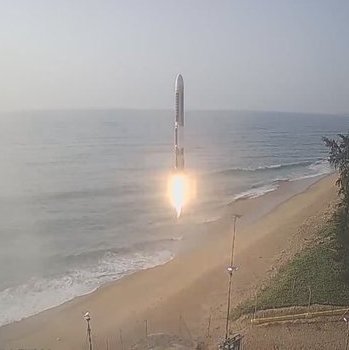
According to this report from Space News, a high altitude grasshopper-type vertical ascent-descent rocket test that China attempted on January 18, 2025 appears to possibly have been a failure.

Longxing-2 is thought to be a test article for the Long March 12A reusable launcher being developed by the Shanghai Academy of Spaceflight Technology (SAST). The rocket was designed to replicate the first stage of a reusable flight, reaching around 75 kilometers before performing a reentry burn and making a powered descent and splashdown into the Yellow Sea.

Amateur footage captured from near the launch area showed the rocket rise very slowly from the tower and perform an ascent phase with no apparent anomalies. The test was intended to build on a successful 12-kilometer-altitude vertical takeoff, vertical landing (VTVL) test performed in June 2024.

SAST published results and footage from the June test, but has so far remained silent on the 75-km attempt, being yet to publish any results or details of the flight more than 24 hours after liftoff. The lack of official updates raises questions about the success of the test, which could indicate challenges during reentry or landing phases.

It is also possible that the soft splashdown landing was a success and China is simply being its normal secretive self and refusing to release any information.

0 comments

Chinese pseudo-company completes launch

The Chinese pseudo-company Galactic Energy today completed its first launch in 2025, its solid-fueled Ceres-1 rocket lifting off from the Jiuquan spaceport in northwest China. It place five satellites in orbit, four for weather and one for Earth observation.

Meanwhile SpaceX yesterday had to scrub a Starlink launch from Vandenberg yesterday at T-11 seconds because an airplane had entered the launch range by mistake. It will try again in a few hours [UPDATE: Now scrubbed till tomorrow], and then follow up with another Starlink launch just after midnight tonight from Kennedy.

The 2025 launch race:

8 SpaceX
4 China
1 Blue Origin

1 comment

FAA demands SpaceX do “mishap investigation” into the loss of Starship yesterday

The FAA today announced that it is going to require SpaceX “to perform a mishap investigation into the loss of the Starship vehicle during launch operations on Jan. 16.”

Will this demand involve the same delays seen during the Biden years? I strongly believe they will not, for several reasons.

First, the FAA’s announcement seemed to me to have a decidedly different tone than in the past. It didn’t say “The FAA needed to complete a mishap investigation,” it said SpaceX had to do it. During the Biden administration the FAA made believe it was qualified to investigate any issues on a Starship/Superheavy launch, when in reality it had no such qualifications at all. It simply waited for SpaceX to complete its investigation, then would spend one to three months as it retyped SpaceX’s report.

Before Biden, the FAA let the company do the investigation, and quickly accepted its conclusions. That appears to be what it is doing now.

Second, Musk’s own response in announcing the preliminary results of the SpaceX investigation yesterday suggests he already expects the FAA to change its approach in this manner. “Nothing so far suggests pushing next launch past next month.” Right away he is signaling us that when SpaceX completes its work it expects the FAA to quickly okay the next flight. No long waits for paper work.

Third, there is Trump. If any FAA bureaucrats still try to play power games against SpaceX they will quickly discover they have no allies in the chain of command. Musk will make these games public, and Trump will come down hard against them.

That’s my hopeful prediction. We shall shortly see if my optimism has merit.

Hat tip to BtB’s stringer Jay.

17 comments

U.S and Norway sign deal to allow U.S. companies to launch from Andøya

Proposed spaceports surrounding Norwegian Sea

The U.S. and Norway have now signed an agreement that will make it possible for American rocket and satellite companies to launch from Norway’s Andøya Spaceport, easing State Department rules that up until now made such launches difficult if not impossible.

[The Technology Safeguards Agreement (TSA)] will ensure the protection of U.S. technology, enabling the transfer of commercial launchers to Norway. Similar agreements have been established between the U.S. and other allied nations, including Australia, New Zealand, and the United Kingdom.

Right now Andoya has only two rocket customers, the German startup Isar Aerospace and a Polish suborbital startup, SpaceForest. Both hope to do launches sometime this year. Unlike the red tape that the United Kingdom has imposed on its new spaceports, Norway appears to be doing everything it can to grease the wheels so that launches can occur quickly and on schedule.

1 comment

Rocket Factory Augsburg gets conditional licence for launching at Saxavord

Proposed spaceports surrounding Norwegian Sea

After years of delays and multiply approvals that in the end turned out to be meaningless, the United Kingdom’s Civil Aviation Authority (CAA) announced today that it has finally issued a launch license to the German rocket startup Rocket Factory Augsburg to do an orbital test launch from the Saxavord spaceport in the Shetland Islands.

The license however is not entirely without strings.

The licence is effective immediately, but a number of conditions need to be met before a launch can take place — including insurance arrangements and international agreements. The company is also required to give the CAA 60 days’ notice before launching.

Rocket Factory had hoped to launch last year, but it lost its RFA-1 rocket during a static fire test in August. It was planning a subsequent launch on the assumption the CAA would approve its licence in 2024. That assumption was wrong however. Even if the rocket had not been destroyed and was ready to go, the CAA was not, and continued to twiddle its thumbs until 2025. It is this twiddling that caused another German rocket startup, Hyimpulse, to abandon its plans to do launches from Saxavord, and switch to a new spaceport in Australia.

Rocket Factory now says it will attempt its first launch before the end of this year. Let’s see if the CAA lets that happen.

0 comments

Blue Ghost operating as expected on its way to the Moon

Blue Ghost selfie
Blue Ghost selfie. Click for original.

Firefly has announced that all is well with its Blue Ghost lunar lander, now in an ever expanding Earth orbit on its way to the Moon. Engineers have acquired signal and completed its on-orbit commissioning.

With a target landing date of March 2, 2025, Firefly’s 60-day mission is now underway, including approximately 45 days on-orbit and 14 days of lunar surface operations with 10 instruments as part of NASA’s Commercial Lunar Payload Services (CLPS) initiative.

…Firefly’s Blue Ghost will spend approximately 25 days in Earth orbit, four days in lunar transit, and 16 days in lunar orbit, enabling the team to conduct robust health checks on each subsystem, calibrate the propulsion system in preparation for critical maneuvers, and begin payload science operations.

NASA today released the first picture downloaded from the spacecraft, shown to the right. The view looks across the top deck of the lander, with two NASA science instruments on the horizon.

Once it lands it is designed to operate for about two weeks, during the lunar day. It will attempt to further gather some data during the long two-week long lunar night, but is not expected to survive to the next day.

0 comments

India’s Spadex mission completes docking

India’s space agency ISRO today announced that its engineers had successfully completed the autonomous docking of its two Spadex satellites, the chase vehicle making proper contact with the target vehicle and then linking together.

Manoeuvre from 15m to 3m hold point completed. Docking initiated with precision, leading to successful spacecraft capture. Retraction completed smoothly, followed by rigidisation for stability. Docking successfully completed

The docking needed to be completed before January 20th or the lighting conditions would have caused a delay until March.

Next engineers will demonstrate the spacecraft have linked electronically. Eventually they will then undock and spend up to two more years in orbit operating separately.

0 comments

Spadex’s unmanned docking faces possible two month delay

India’s Spadex mission, launched to test autonomous unmanned docking procedures necessary for many of that country’s future space plans, now faces a possible two month delay in orbit before the final docking can take place.

On January 11, 2025 the chase vehicle completed its closest proximity maneuver, getting within three meters of the target vehicle, after which it backed away as planned. ISRO engineers are presently analyzing the data before proceeding with the actual docking.

The problem is that this docking must occur by January 20, 2025. After that the lighting conditions will not allow another attempt until March.

It seems ISRO is not concerned about this situation, and would rather get things right, even if it means that delay.

0 comments

JPL survives LA fires

Though nothing is certain yet as the fires still rage, it appears that the facilities of JPL, including its Deep Space Network mission control that manages communications with all of America’s interplanetary probes have survived the Los Angeles fires that have destroy large swaths of that city.

The fires required a full evacuation of the facility, leaving that mission control unoccupied for the first time in sixty years. It appears however that the organization used work-arounds to maintain contact and operations with those probes.

How long the facility will remain in this state remains unclear. Some of the fires remain uncontrolled, and until that happens, there can be no return to any sense of normalcy in LA.

11 comments

Is China’s Yutu-2 lunar rover dead?

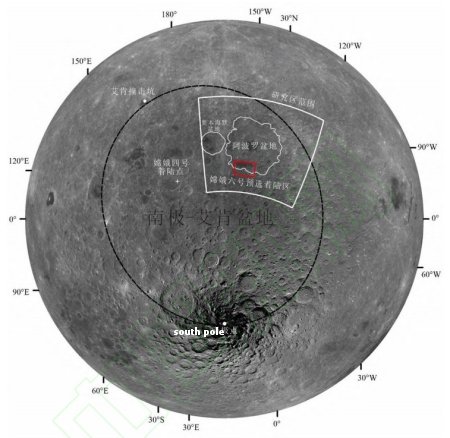
According to monthly images taken by Lunar Reconnaissance Orbiter (LRO) of China’s Yutu-2 lunar rover on the far side of the Moon, it has not moved since March 2024, suggesting it is no longer functioning.

“Up to about February 2023 the rover was moving about 7 or 8 metres every drive and typically about 40 m per lunar day. Suddenly the drives dropped to about 3 or 4 m each and only about 8 or 10 m per lunar day,” Stooke said in an email.

“That lasted until about October 2023, and then drives dropped to only 1 or 2 m each. In March 2024 Yutu 2 was resting just southwest of a 10 m diameter crater, and it’s been there ever since, as revealed by LRO images,” Stooke added.

It is possible the rover is not entirely dead, but there is no way to be sure. China is not generally forthcoming when things fail. For example, it has never acknowledged the shut down of its Zhurong Mars rover, which it had hoped would survive its first Martian winter. When that winter ended however no reports from Zhurong were released by China, which suggested it was no longer functioning. China however did not report this. It simply made believe the rover no longer existed.

It could be China is now doing the same with Yutu-2.

5 comments
1 81 82 83 84 85 988