Very Small Asteroid Makes record close Earth Approach on February 4, 2011
On February 4 a very small asteroid, about a yard in diameter, zipped past the Earth at a distance of only 3,400 miles, closer than any previously recorded asteroid.
Scientists have discovered a treasure trove of 250-million-year-old fossils in limestone layer in China. Key quote:
The 50-foot-thick (16 meters) layer of limestone that held these fossils dates back to when south China was a large island just north of the equator with a tropical climate. A smattering of fossil land plants suggest this marine community lived near a conifer forest. The fossils are exceptionally well-preserved, with more than half of them completely intact, including soft tissues. Apparently they were protected across the ages by mats of microbes that rapidly sealed their bodies off from decay after death.
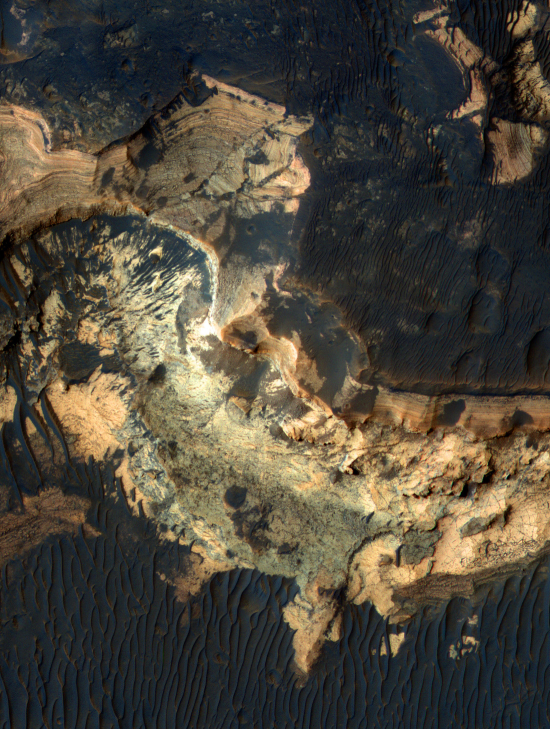
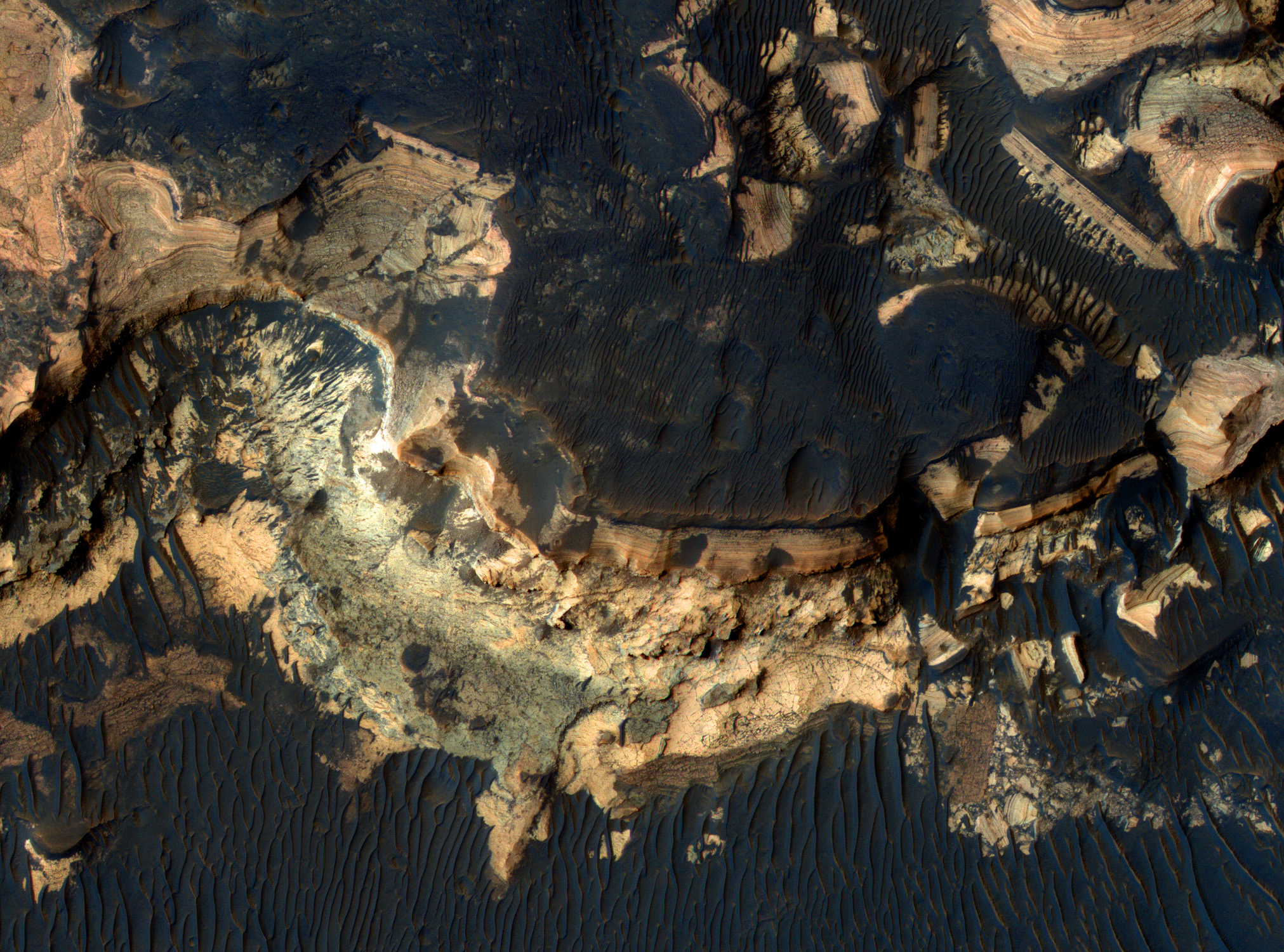
Scientists have discovered significant seasonal changes to the northern martian sand dunes, including a number of large avalanches.
Snowball Earth! Or at least, half a snowball: NOAA satellite images show almost the entire northern hemisphere covered in snow.
Exoplanets galore! The Kepler team announced today the discovery of 68 Earth-sized planets, five in the habitable zone. Key quote:
The discoveries are part of several hundred new planet candidates identified in new Kepler mission science data, released on Tuesday, Feb. 1. The findings increase the number of planet candidates identified by Kepler to-date to 1,235. Of these, 68 are approximately Earth-size; 288 are super-Earth-size; 662 are Neptune-size; 165 are the size of Jupiter and 19 are larger than Jupiter. Of the 54 new planet candidates found in the habitable zone, five are near Earth-sized. The remaining 49 habitable zone candidates range from super-Earth size — up to twice the size of Earth — to larger than Jupiter.
Japan’s Mount Shinmoe volcano erupted again today.
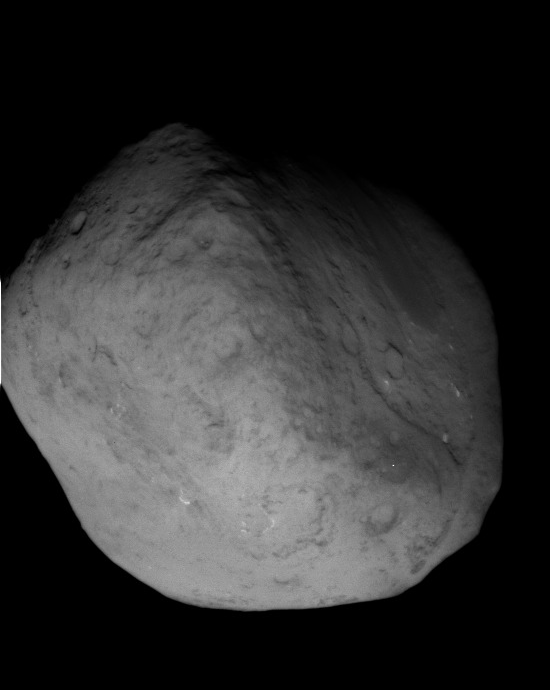
On Monday Stardust did a final mid-course correction in anticipation of its February 14 fly-by of of Comet Tempel 1.
The crew of a simulated 500 day long Mars mission has reached “Mars orbit” after 8 months of confinement in a facility in Russia.
An Israeli team has entered the Google Lunar X Prize competition, hoping to land a nanosat on the moon for only $8 million.
White nose syndrome, a fungus that is linked to the death of approximately a million bats throughout the eastern United States, has now been confirmed on two Indiana bats. You can read the actual Indiana Department of Natural Resources press release here. [pdf]
The bats are thus finally spreading the fungus north, as has been expected.
The Wide-Field Infrared Survey Explorer, WISE, has completed its four month extended mission, finishing a scan of the heavens that discovered more than 33,000 asteroids and comets.
The fossil of a female pterodactyl has been found in China, including an about-to-be laid egg. Key quote:
The egg indicates this ancient flying reptile was a female, and that realisation has allowed researchers to sex these creatures for the first time.
Want to know what the academic elite think is or is not politically correct? Make two different Freedom of Information Act requests at the same university for two scientists who just happen to be on opposite sides of the global warming debate and see how the university responds.
Not surprisingly, the university was glad to do whatever it could to hurt the global warming skeptic, while stonewalling any requests for information about the global warming advocate.
Chicken Little was right! The sky is falling!
Indiana teenager has built a “Solar death-ray” that can literally burn through almost anything!
The chimp that took America into space.
Using skateboards to test a prototype lunar lander.
Here we go again: NASA’s already overbudget Mars Science Laboratory rover is in need of even more cash.
Japan is on alert today after the biggest volcanic eruption in 50 years took place on the nation’s southernmost main island, Kyushu. The pictures at the link are truly incredible!