Global warming scientist Michael Mann loses Canadian lawsuit

Global warming scientist Michael Mann has lost a Canadian libel lawsuit he had filed against a skeptical scientist who had said that Mann “belongs in the state pen, not Penn State.”

More details here. The court also ruled that Mann must pay the defendant’s court costs. The key quote that proves Mann’s scientific work is either incompetent or fraudulent is this:

Dr Mann lost his case because he refused to show in open court his R2 regression numbers (the โ€˜working outโ€™) behind the world-famous โ€˜hockey stickโ€™ graph.

Mann is most well known for his hockey stick graph that eliminated any evidence of the well-documented Medieval Warming Period and thus made it appear global warming only began with the industrial age.

Many good scientists have questioned this graph, including Canadian scientist Dr. Tim Ball, the victorious defendant in this case. The court had demanded that to prove Ball’s statement was libel, Mann had to show everyone the legitimate scientific methods he used to create the graph. Mann refused to do so, and so the court ruled against him.

I should add that a number of different scientists have analyzed Mann’s hockey stick graph and have found that, based on the information in Mann’s own published papers, they could plug the data in and with his methods create any graph they wanted, essentially demonstrating that what Mann did was junk.

Does this prove human-caused global warming isn’t happening? No, it doesn’t. What it does demonstrate once again is that another one of the icons of that theory is either a fraud or incompetent, and that his work is not worth the electrons used to publish it. In the case of Mann, the evidence of his political biases and corrupt science practices has been evident for years, first exposed in his emails in the climategate emails. There, he actually worked to destroy the careers of any scientist who questioned his work, rather than debate the facts with them.

He tried to do the same this time with Dr. Ball, and has been soundly slapped down.

45 comments

Curiosity’s future travels

Curiosity's planned route up Mt Sharp
Click for full image.

The Curiosity science team has released a new map showing an update of their planned route for Curiosity in the coming year or so, showing how they plan on leaving Gediz Vallis Channel after spending some time exploring the numerous geological layers exposed on its eroded surface.

The new information in this map is the route near the bottom of the image, showing more precisely the route up the canyon and then their retreat through the gap in the canyon’s western wall.

To get a better idea of what this means, I have updated my annotations on this Mars Reconnaissance Orbiter image of Gediz Vallis Channel, posted previously in my May 30, 2019 rover update.
» Read more

0 comments

The first crime in space?

In a dispute between a divorced lesbian couple, a NASA astronaut has now been accused of illegally accessing the bank account of her wife during a tour on ISS.

Nasa is reported to be investigating a claim that an astronaut accessed the bank account of her estranged spouse from the International Space Station, in what may be the first allegation of a crime committed in space.

Anne McClain acknowledges accessing the account from the ISS but denies any wrongdoing, the New York Times reports. Her estranged spouse, Summer Worden, reportedly filed a complaint with the Federal Trade Commission.

Ms McClain has since returned to Earth.

The astronaut told the New York Times through a lawyer that she was merely making sure that the family’s finances were in order and there was enough money to pay bills and care for Ms Worden’s son – who they had been raising together prior to the split. “She strenuously denies that she did anything improper,” said her lawyer, Rusty Hardin, adding that Ms McClain was “totally co-operating”.

And who is the victim here? The boy, who it appears has been subjected to two divorces, an unnatural parentage arrangement, and finally a fight over care and custody, all simply because he had he temerity to be born and thus interfere with the selfish interests of all the adults around him.

Meanwhile, if it is determined and then proven in court that McClain did access that bank account illegally while on ISS this would make it the first crime ever committed in space.

29 comments

Unmanned test Soyuz aborts docking to ISS

Astronauts on ISS were forced to abort the docking of an unmanned upgraded Soyuz capsule today when it appeared to have problems locking onto its docking port.

According to NASA, Soyuz MS-14 entered an orbit above and behind the ISS, which would bring the spacecraft back into the vicinity of the outpost 24 hours later. However within an hour after the failed docking, the mission control in Korolev told the ISS crew that the next docking attempt would not be made until at least August 26 after a series of tests. Head of flight operations in Korolev Vladimir Soloviev informed the cosmonauts that ground specialists had narrowed down a potential root cause of the failure during docking to a “bad signal amplifier” in the Kurs-P avionics system aboard the station. Soloviev instructed the crew to swap the suspected amplifier for a new one and then conduct a test of the Kurs-P system. Provided the ongoing analysis confirmed the initial failure scenario and the in-orbit tests went successfully, another rendezvous attempt could be made in around 48 hours, between 08:00 and 09:00 Moscow Time on August 26. Soloviev asked the crew members whether they knew where the components in question had been located to which the cosmonauts said that they had remembered it approximately but asked for reference photos to be sent to them.

Assuming this is the same docking port the Russians have used for previous Soyuz and Progress dockings, the amplifier would have had to fail since the last docking.

UPDATE: It appears that they are instead going to use a different Russian docking port on ISS for the second docking attempt, thereby bypassing the suspect docking system.

0 comments

At a conference today

Posting will be intermittent, as I am attending a one day conference [pdf] at the University of Arizona being put on by Lunar & Planetary Laboratory.

Tidbits posted as I hear them (these tidbits do not involve new results that are still embargoed):

-Data from OSIRIS-REX at Bennu and Hayabua-2 at Ryugu have found that while both are rubble pile asteroids, there is evidence that suggests that Ryugu, but not Bennu, was subjected to heating in the past. In other words, it had been cooked.

-We presently possess no meteorites with a chemical make-up that matches the data obtained from orbit around Mercury. This isn’t a surprise, as any material thrown from the surface by an impact would not likely have the energy and velocity required to climb up out of the Sun’s gravitation well and get to Earth. Material from Mars however can easily fall into that well, which is why it is not difficult to find meteorites from Mars on Earth.

– Unlike the Earth, where atmospheric circulation in the north and south hemispheres is independent, Titan’s atmosphere is actually one large Hadley Cell, with flow going from one hemisphere to the other, depending on season.

-The evolutionary changes in Neptune’s orbit over time is thought to have caused the high inclination orbits seen in the objects in the Kuiper Belt, which are a mystery since all these objects must have once been confined within the protoplanetary disk, today’s plane of the solar system.

-Despite finding thousands of candidate exoplanets, Kepler found none in the habitable zone. This does not mean habitable exoplanets are rare, but that there were certain biases in Kepler’s observations that caused this lack.

-There is a lot of research going on to study buried ice/glaciers here on Earth. This work is directly aimed at better understanding the many buried glaciers now thought to exist on Mars.

1 comment

Results from tiny MASCOT lander on Ryugu

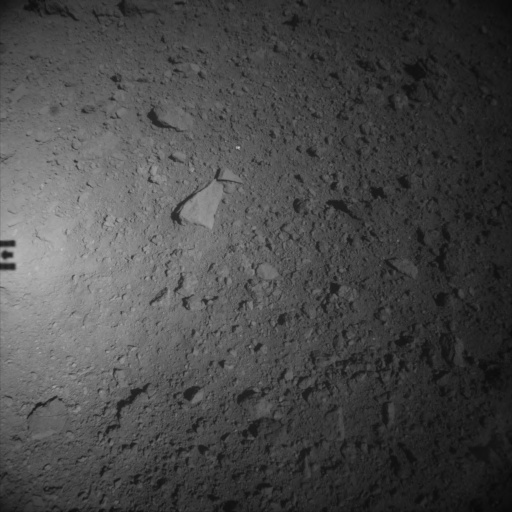
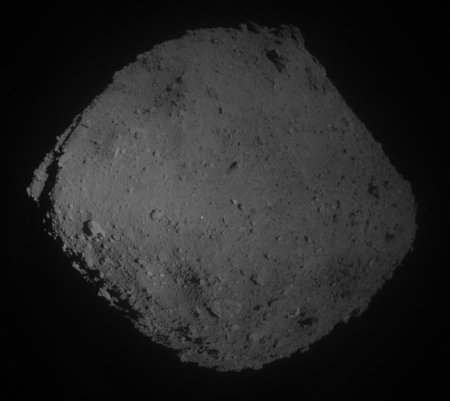
The scientists in charge of the tiny MASCOT lander dropped from Japan’s Hayabusa-2 spacecraft today released the results from the lander’s short seventeen hour observations of the surface of Ryugu.

They found that the asteroid has two different types of rocks (why is a mystery) and practically no dust.

Ralf Jaumann and his team were particularly surprised by the lack of dust: “Ryugu’s entire surface is littered with boulders, but we have not discovered dust anywhere. It should be present, due to the bombardment of the asteroid by micrometeorites over billions of years, and their weathering effect. However, as the asteroid has very low gravity โ€“ only one-sixtieth of that experienced on Earthโ€™s surface โ€“ the dust has either disappeared into cavities on the asteroid or has escaped into space. This gives an indication of the complex geophysical processes occurring on the surface of this small asteroid.โ€

They also confirmed that the asteroid is a very fragile rubble pile.

“If Ryugu or another similar asteroid were ever to come dangerously close to Earth and an attempt had to be made to divert it, this would need to be done with great care. In the event that it was impacted with great force, the entire asteroid, weighing approximately half-a-billion tonnes, would break up into numerous fragments. Then, many individual parts weighing several tonnes would impact Earth,” says Jaumann, who is supervising the MASCam experiment, interpreting the observations. The asteroid is very similar to carbonaceous meteorites found on Earth, which date back 4.5 billion years. With an average density of just 1.2 grams per cubic centimetre, Ryugu is only a little ‘heavier’ than water ice. But as the asteroid is made up of numerous pieces of rock of different sizes, this means that much of its volume must be traversed by cavities, which probably makes this diamond-shaped body extremely fragile.

MASCOT was another example of a cubesat demonstrating that these tiny spacecraft can do very sophisticated science.

2 comments

Melting rocks on Mars

Melt pools near Mohave Crater
Click for full image.

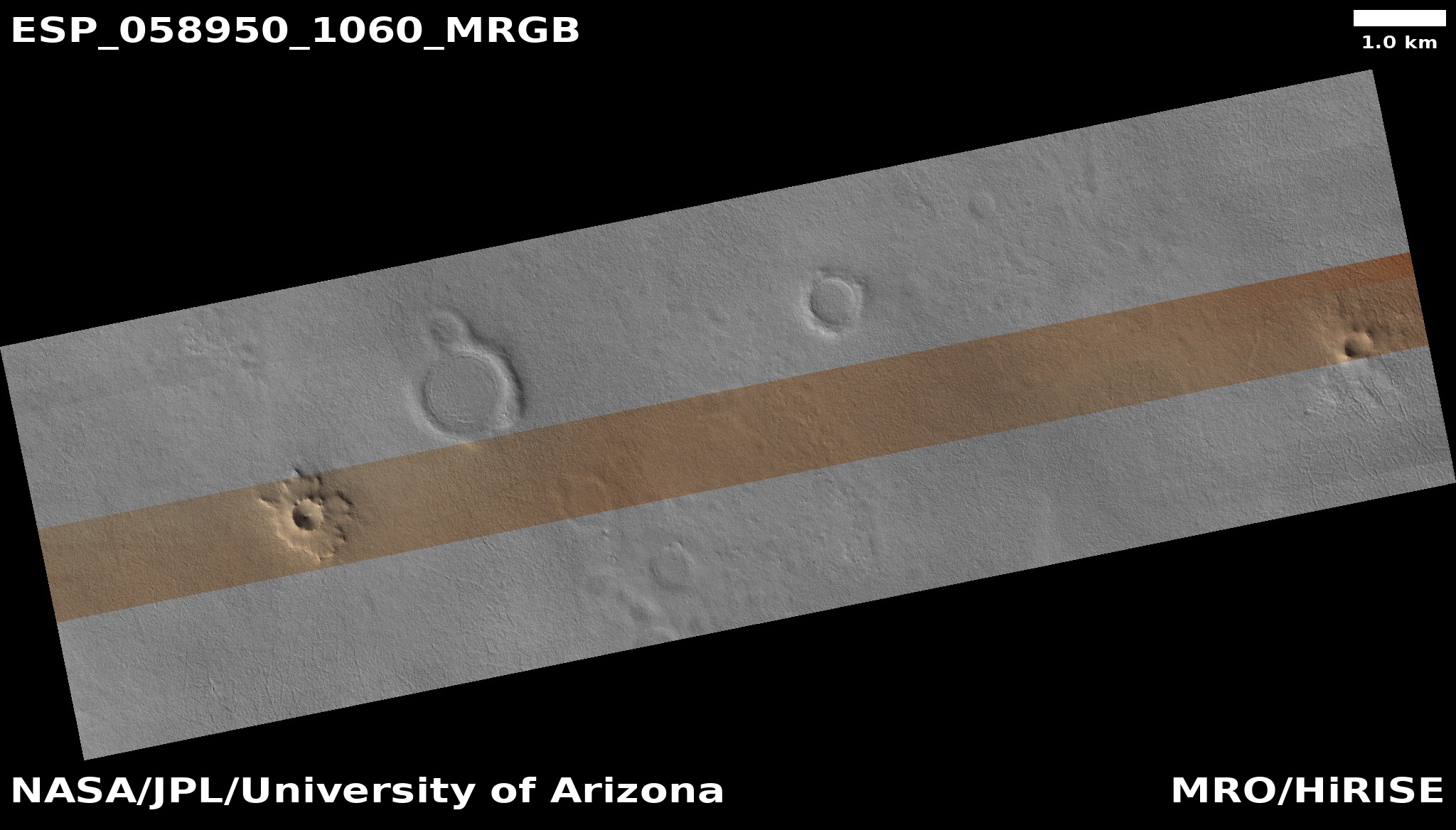
Cool image time! The image to the right, reduced, cropped, and annotated by me to post here, was part of the July image download from the high resolution camera on Mars Reconnaissance Orbiter (MRO) and was titled “Melt Pools around Mojave Crater”.

You can see that the flow began to the south, flowed northward (in the middle of the image), and then pooled in the two places as indicated. In the full photograph you can also see that the flow continued to the north, forming more pools.

The title to me suggests that this flow and the melt pools were lava, not ice. The low latitude, 7 degrees north, also suggests this is not ice. Though I was unable to reach the person who requested these images, it appears his research is aimed understanding the melt events that occur in the vicinity of craters upon impact. From his website:
» Read more

0 comments

Japan’s plan for returning Hayabusa-2’s Ryugu samples to Earth

Japan’s today provided an update on what it has done to prepare the location where Hayabusa-2’s samples from the asteroid Ryugu will land on Earth.

The landing site is in the Woomera Prohibited Area (WPA) in the outback of southern Australia. Japan has already signed an agreement with that country for the recovery, as well as done preliminary surface work

The recovery site is an Australian Government prohibited area and is not accessible to the public. As part of the preparatory work, a field survey of the proposed recovery site in the WPA was conducted with permission from the Australian Government. This preparatory work confirmed the suitability of both the proposed recovery site and the candidate site for the antenna station that will search for the capsule.

The landing of the recovery capsule is now scheduled for late in 2020.

0 comments

Sierra Nevada unveils full scale Gateway habitat module prototype

Capitalism in space: Sierra Nevada yesterday unveiled a full scale prototype of a habitable module that it developed under a NASA contract for the agency’s proposed Lunar Gateway space station.

[The module] measures more than 8 meters long, and with a diameter of 8 meters has an internal volume of 300 cubic meters, which is about one-third the size of the International Space Station.

Sierra Nevada developed this full-scale prototype under a NASA program that funded several companies to develop habitats that could be used for a space station in orbit around the Moon, as well as potentially serving as living quarters for a long-duration transit to and from Mars. As part of the program, NASA astronauts have, or will, spend three days living in and evaluating the prototypes built by Sierra Nevada, Boeing, Lockheed Martin, Northrop Grumman, and Bigelow Aerospace.

The selling point for Sierra Nevada’s habitat is its size, which is possible because the multi-layered fabric material can be compressed for launch, then expanded and outfitted as a habitat once in space. It can fit within a standard payload fairing used for launch vehicles such as SpaceX’s Falcon Heavy rocket, United Launch Alliance’s Vulcan booster, or NASA’s Space Launch System. It is light enough for any of those rockets to launch to the Moon.

What we are seeing here is the unfolding of the Washington lobbying game to guarantee Gateway gets funded and built. NASA is spreading its available Gateway cash around to multiple companies, who will now have a vested interest in lobbying Congress to get this lunar space station funded and built.

The one very good component of this lobbying process is that NASA is not doing the building or the designing. It is hiring private companies, which means the project will act to stimulate the American aerospace industry. Moreover, it is leaving the ownership of the spacecraft and the decision on what launch vehicle to use to the companies, which means this cannot be used as a lever to fund the SLS boondoggle. Under this arrangement more will get done faster for less.

Even so, Lunar Gateway will mostly act to slow the United States’ effort to colonize the solar system. We will be spending our government space dollars on an orbiting lunar space station, thus generally trapping us in orbit, as we watch China, India, Russia and others land and explore the surface.

There is only one way Gateway could possibly be beneficial to the United States. NASA gets it built fast and cheaply, so that it then can be used as a jumping off point for further exploration. This would give the U.S. capabilities in space that far exceed other countries.

My fear is that NASA has a terrible track record in the past half century of doing anything fast or cheaply. Instead, NASA projects like Gateway end up taking forever and costing many times their initial proposed budget. SLS is a perfect poster child for this. Its goal is not so much to launch as to provide Congress endless pork.

5 comments
1 50 51 52 53 54 156