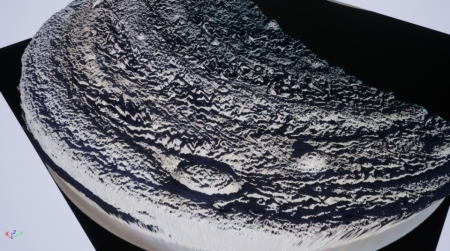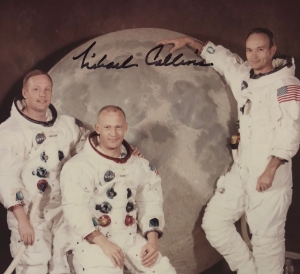
Dick Cavett interviewing Orson Welles about famous people

An evening pause: Wells made one of the greatest films ever, Citizen Kane (1941), and then spent the rest of his life failing at finishing almost anything. Along the way he met some interesting people, and in this short clip during an interview on the Dick Cavett Show from July 27, 1970, he tells some of those stories.

His story about Churchill fits the gracious and humorous personality of that man to a “T”.

Hat tip Cotour.

1 comment

SpaceX begins hunt for Starship landing sites on Mars

Candidate landing sites for SpaceX's Starship

In the August image release from the high resolution camera of Mars Reconnaissance Orbiter (MRO) were five images whose title immediately caught my interest:

The overview map on the right shows the location on Mars for these five photographs. The second and third images are of the same location, taken to produce a stereo pair.

To put it mildly, it is most intriguing to discover that SpaceX is beginning to research a place where it can land Starship on Mars. I immediately emailed Nathan Williams, the JPL scientist who requested these images from SpaceX, but he was bound by a non-disclosure agreement with SpaceX and could not comment. I have since tried to get some information directly from SpaceX but so far the company has not responded. A 2017 news story had indicated the company’s interest in this Mars’ location, but gave no details either.

Based on what we now know of Mars, however, it is possible to figure out why they favor this location, on the border between the two large northern lowland plains Arcadia and Amazonis Planitia.
» Read more

43 comments

Engineers attach test helicopter to Mars 2020

Engineers have now attached to the Mars 2020 rover the test helicopter that will attempt to make the first air-born flight on another world.

The Mars Helicopter is considered a high-risk, high-reward technology demonstration. If the small craft encounters difficulties, the science-gathering of the Mars 2020 mission won’t be impacted. If the helicopter does take flight as designed, future Mars missions could enlist second-generation helicopters to add an aerial dimension to their explorations.

“Our job is to prove that autonomous, controlled flight can be executed in the extremely thin Martian atmosphere,” said JPL’s MiMi Aung, the Mars Helicopter project manager. “Since our helicopter is designed as a flight test of experimental technology, it carries no science instruments. But if we prove powered flight on Mars can work, we look forward to the day when Mars helicopters can play an important role in future explorations of the Red Planet.”

If this works on Mars, MiMi Aung will be in a position to win contracts for similar helicopters for the rest of her life. It seems to me that this project has been her baby from the beginning.

0 comments

Elementary students to name NASA’s 2020 Mars rover

NASA announced today a contest among the nation’s elementary students to find a name for its Mars 2020 rover.

Starting Tuesday, Aug. 27, K-12 students in U.S. public, private and home schools can enter the Mars 2020 Name the Rover essay contest. One grand prize winner will name the rover and be invited to see the spacecraft launch in July 2020 from Cape Canaveral Air Force Station in Florida.

To enter the contest, students must submit by Nov. 1 their proposed rover name and a short essay, no more than 150 words, explaining why their proposed name should be chosen. The essays will be divided into three groups, by grade level – K-4, 5-8, and 9-12 – and judged on the appropriateness, significance and originality of their proposed name, and the originality and quality of their essay, and/or finalist interview presentation.

Fifty-two semifinalists will be selected per group, each representing their respective state or U.S. territory. Three finalists then will be selected from each group to advance to the final round.

As part of the final selection process, the public will have an opportunity to vote online on the nine finalists in January 2020. NASA plans to announce the selected name on Feb. 18, 2020 – exactly one year before the rover will land on the surface of Mars.

Obviously, there is a bit of hokum in this contest. The kids will make suggestions, the public will vote, but in the end NASA will make the selection. Requiring them to write short essays justifying their suggestion however is an excellent educational idea, and for this kudos to NASA.

1 comment

Webb assembled for the first time

Northrop Grumman engineers have successfully completed, for the first time, the full assembly of the James Webb Space Telescope.

To combine both halves of Webb, engineers carefully lifted the Webb telescope (which includes the mirrors and science instruments) above the already-combined sunshield and spacecraft using a crane. Team members slowly guided the telescope into place, ensuring that all primary points of contact were perfectly aligned and seated properly. The observatory has been mechanically connected; next steps will be to electrically connect the halves, and then test the electrical connections.

…Next up for Webb testing, engineers will fully deploy the intricate five-layer sunshield, which is designed to keep Webb’s mirrors and scientific instruments cold by blocking infrared light from the Earth, Moon and Sun. The ability of the sunshield to deploy to its correct shape is critical to mission success.

Only a decade late and nine times over budget ($1 billion vs $9 billion). Let us all pray that when this spacecraft finally reaches its operational location a million miles from Earth it operates as designed.

4 comments

What Starhopper achieved

Starhopper in flight
Click for full image.

Captalism in space: While most news reports (including mine yesterday) have focused on the spectacular 150-meter flight of Starhopper, the real story here is the Raptor engine. As one of my readers said most succinctly in a comment:

As impressive as the flight was, there is so much more going on here. This is the most efficient rocket engine ever, with all fuel and LOX running through the combustion chamber – including exhaust from the turbopumps. The Russians tried it, and NASA tried it, but this is the first time such a design has flown. It’s also the first major engine using methane, so SpaceX is learning all the ground support processes for storing, fueling, and detanking methane (mostly) safely. (Still causing grass fires at launch…) They’re aiming for production cost below $2M per Raptor, and they’re about ready to go full production on the engines, around 500 engines per year.

In fact, Musk himself reveals the truth of Diane Wilson’s comment in a tweet, found in this news story about yesterday’s flight:

Starhopper’s flying days may be done, but the stubby prototype will be retasked rather than put out to pasture.

“Yes, last flight for Hopper. If all goes well, it will become a vertical test stand for Raptor,” Musk said via Twitter on Saturday.

In a sense, yesterday’s flight was no different. Starhopper was essentially a flying test stand for Raptor, which is in itself an incredible concept, when you think about it. Now it will continue to be used as a test stand, but will no longer fly.

I have been told by rocket engineers more than once that you need to build and test your engine before you can really start your rocket design. Once you know its capabilities you can then design and construct the rocket.

This is why Virgin Galactic’s SpaceShipTwo has generally been a failure. They built the ship before the engine, and when the engine had issues they had to improvise redesigns that have limited the ship’s capability and seriously delayed its launch.

SpaceX now has its engine ready. Construction on its two prototype Starships, in Boca Chica and Florida, will now proceed quickly. Based on how quickly it took SpaceX to do the first Starhopper test flights (announced in late 2018 and flying in about eight months), expect test flights within six to eight months. (Note that in this last link I expressed doubt they could get those Starhopper flights off in 2019. SpaceX proved me wrong.)

Finally, a minor news note: SpaceX today successfully brought a Dragon cargo capsule back to Earth after a month at ISS, completing its third flight in space. That this multi-use flight is hardly mentioned in the news illustrates how far SpaceX has reshaped space engineering in only a few years.

4 comments

Starhopper: Success!

Starhopper in flight
Click for full image.

It appears today’s 150 meter hop (about 500 feet) of SpaceX’s Starhopper prototype was a complete success. To the right, and also below, are screen captures grabbed by me from one private live stream as well as from SpaceX’s own live stream.

In fact, this quick hop appears to have gone amazingly smoothly. It launched almost exactly at the target time, and landed quite softly on the launchpad, as intended. You can see the nozzle of the Raptor engine shifting and adjusting throughout the flight, also another indication that their engineering here is working perfectly. Congratulations SpaceX!

I have embedded SpaceX’s video below the fold. The flight begins around 30 minutes in.

Starhopper near the top of its flight

Starhopper beginning its descent

Starhopper on the ground
» Read more

24 comments

Astronomers find Jupiter-sized exoplanet with comet-like orbit

Worlds without end: Astronomers have discovered a Jupiter-sized exoplanet with an extremely eccentric and comet-like orbit circling a star about 103 light years away.

Astronomers have discovered a planet three times the mass of Jupiter that travels on a long, egg-shaped path around its star. If this planet were somehow placed into our own solar system, it would swing from within our asteroid belt to out beyond Neptune. Other giant planets with highly elliptical orbits have been found around other stars, but none of those worlds were located at the very outer reaches of their star systems like this one.

This discovery, like so many others, illustrates again our lack of knowledge about the make-up and formation of solar systems. According to modern formation theories, you shouldn’t get such a large exoplanet in such an eccentric orbit. But here we are.

0 comments

Assembly complete on Europe’s Franklin Mars rover

Engineers have completed the assembly of Europe’s Rosalind Franklin rover that is scheduled for launch to Mars in July 2020

Rosalind Franklin, which is the result of cutting edge work from UK, European and Canadian scientists and engineers will now be shipped from the Airbus factory in Stevenage, Hertfordshire to Toulouse in France for testing to ensure it survives its launch from Earth next summer and the freezing conditions of Mars when it lands on the planet in March 2021.

Whether they can meet this schedule remains unknown because of the problems that occurred during testing of the spacecraft’s landing parachutes.

0 comments

Starhopper test flight scrubbed

The planned 150-meter-high test flight of SpaceX’s Starhopper test prototype was aborted at T-0 seconds last night when the Raptor engine did not ignite as expected.

A live video feed provided by SpaceX showed the squat, 30-foot-wide (9-meter) Starhopper vehicle counting down to a planned liftoff shortly after 6 p.m. CDT (7 p.m. EDT; 2300 GMT) Monday from the company’s facility in South Texas. The vehicle’s single methane-fueled Raptor engine could be seen swiveling side-to-side in a preflight steering check, as the Starhopper pad’s sound suppression system dumped water under the vehicle.

But the Raptor engine did not ignite as the countdown clock reached zero.

“Test aborted just after T-0,” read a text banner on SpaceX’s webcast. “Teams evaluating next test opportunity.”

They say they will try again today. If you want to watch this link provides some suggestions.

These test flights are testing the Raptor engine more than they are testing vehicle take-off and landing. This engine is a significant advancement from not only SpaceX’s Merlin engine but from almost every rocket engine previously built. It has the potential to set the record for the most efficient and powerful engine. It is therefore not unexpected that there will be issues during these test flights.

0 comments
1 48 49 50 51 52 156