November 7, 2022 Quick space links

Courtesy of BtB’s Twitter stringer, Jay.


  • Chinese spaceplane fantasy 1
  • Chinese spaceplane fantasy 2
  • The animated movies at both links are intriguing, but they mean nothing until we see some real footage of real hardware. Otherwise, this stuff is no different than the decades of powerpoint presentations NASA and Roscosmos would put out about what each intended to do, while doing nothing.


4 comments

One of two solar panels on Cygnus capsule fails to deploy

The failure of one of the two solar panels on Northrop Grumman’s Cygnus capsule to deploy today shortly after launch might cause some issues with getting the spacecraft docked to ISS.

Northrop Grumman has reported to NASA that Cygnus has sufficient power to rendezvous with the International Space Station on Wednesday, Nov. 9, to complete its primary mission, and NASA is assessing this and the configuration required for capture and berthing.

The capsule does not dock directly with the station, but is instead grabbed by a robot arm, which then brings it into its port. The grapple point that the arm uses is on the end where the solar panels are, with the docking port at the capsule’s other end. What is not presently clear is whether that point is blocked by the undeployed panel.

7 comments

Northrop Grumman’s Antares rocket launches Cygnus freighter to ISS

Capitalism in space: Early this morning Northrop Grumman’s Antares rocket successfully completed its second launch this year, lifting off from Wallops Island and carrying a Cygnus freighter for ISS.

This launch is also the next-to-last for this version of Antares. Northrop Grumman is using up the last few first stages built in the Ukraine that use Russian engines, after which it will send the next three Cygnus capsules into space using SpaceX’s Falcon 9. It hopes to introduce a new Antares using a Firefly first stage following that.

The leader board in the 2022 launch race remains the same:

51 SpaceX
48 China
19 Russia
9 Rocket Lab
7 ULA

American private enterprise still leads China 73 to 48 in the national rankings, but trails the rest of the world combined 76 to 73.

1 comment

Iran test launches first stage of new solid-fueled rocket

According to Iran’s state-run press, on November 5, 2022 it successfully completed a test launch of the first stage of its new Ghaem-100 solid-fueled rocket.

Amir Ali Hajizadeh, head of the Revolutionary Guardโ€™s aerospace division which developed the Ghaem 100, said the rocket would be used to launch Iranโ€™s Nahid satellite for the telecommunications ministry, state media reported.

Saturdayโ€™s operation tested the first sub-orbital stage of the rocket, the reports added.

There are so many unknowns about this story it would be foolish to speculate.

2 comments

Long March 3B launches communications satellite

China’s Long March 3B rocket today launched a communications satellite from one of its interior spaceports.

No word on where the first stage landed. The satellite replaced one that had failed in 2019 immediately after launch.

The leaders in the 2022 launch race:

51 SpaceX
48 China
19 Russia
9 Rocket Lab
7 ULA

American private enterprise still leads China 72 to 48 in the national rankings, but trails the rest of the world combined 76 to 72.

A scheduled Antares launch of a Cygnus capsule from Wallops Island in Virginia was scrubbed today because a fire alarm when off in the capsule’s control center in Dulles, Virginia. It has been rescheduled for wee hours of tomorrow.

0 comments

November 4, 2022 Quick space links

Courtesy of BtB’s stringer Jay.


0 comments

The weirdly eroded rocks of Mount Sharp

A weirdly eroded rock on Mars

Cool image time! The picture to the right, cropped, reduced, and enhanced to post here, was taken on November 2, 2022 by one of the high resolution cameras on the Mars rover Curiosity.

There isn’t much to say. This strangely eroded rock appears somewhat typical for many surface rocks in this area in the foothills of Mount Sharp. The erosion is likely from wind, combined with the rock’s low density because of Mars’ one-third Earth gravity. Even so, that wind would have needed many many eons to achieve this erosion, as the atmosphere on Mars is only about 1% as thick as Earth’s.

The lack of data also leaves open the possibility that other as-yet-unknown chemical processes contributed to that erosion.

Note: The grid pattern in the image is an artifact from the camera, and is not an actual feature on the Martian surface.

3 comments

Rocket Lab successfully launches but fails to catch first stage

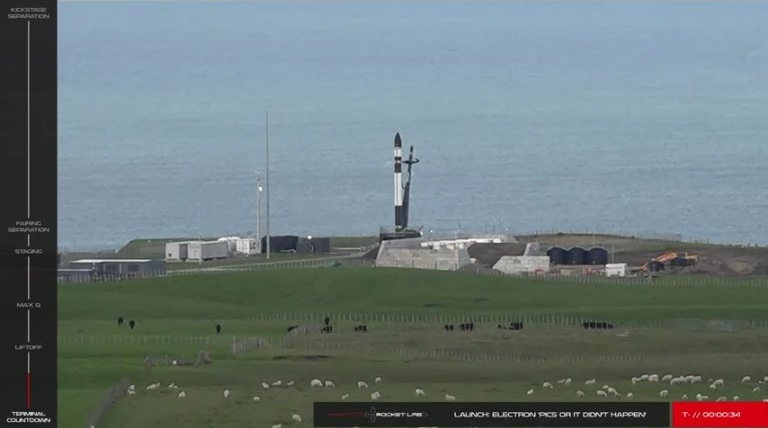
Rocket Lab today used its Electron rocket to successfully launch a Swedish atmospheric research satellite.

The attempt to catch the first stage with a helicopter as the stage came back to Earth on parachutes failed. Based on the live stream, the failure appears unrelated to the helicopter, which never even made an attempt to capture. Nor did the video from the copter ever show the stage in view. A later update explained that the helicopter had lost telemetry from the stage, and for safety reasons would not attempt a capture without that information.

The company will still recover the stage from the ocean and test its engines. An engine from a previous ocean recovery actually passed all subsequent engine tests, suggesting it could even be reused on a launch.

The leaders in the 2022 launch race:

51 SpaceX
47 China
19 Russia
9 Rocket Lab
7 ULA

American private enterprise now leads China 72 to 47 in the national rankings, though it still trails the rest of the world combined 75 to 72.

6 comments

Virgin Galactic losses 3x higher than last year

Even as Virgin Galactic has announced a contract with Axiom to fly a zero gravity suborbital training flight for one of its astronauts, the company also posted its 2021 third quarter statement, revealing losses three times higher than the previous year.

The company posted a net loss of $146 million for the three months ended Sept. 30, compared with a $48 million net loss in the same period last year. The widened loss was in part driven by increased research and development cost, which came at $97 million in the June-September quarter, three times higher than last year.

The company posted a net loss of $146 million for the three months ended Sept. 30, compared with a $48 million net loss in the same period last year. The widened loss was in part driven by increased research and development cost, which came at $97 million in the June-September quarter, three times higher than last year.

Quarterly revenue was only $767,000, down 70 percent from a year ago. Virgin Galactic hasnโ€™t started commercial service of its suborbital spaceflight. The company currently makes money by taking deposits for future flights and providing engineering services to other companies.

Company officials still say that it will begin flying customers in the second quarter of ’23, as promised, though it also appears that the demand for its business has plummeted. At the same time, it reports it has $1.1 billion in its coffers for future development.

2 comments

Orbital tug company signs launch agreement with German rocket startup Isar Aerospace

The German rocket startup company, Isar Aerospace, has now signed a launch agreement with a French orbital tug company, Exotrail, to put multiple tugs into orbit over a five year period.

The companies announced Nov. 3 they signed a launch services agreement to launch Exotrailโ€™s spacevan vehicle on Isarโ€™s Spectrum rocket on multiple missions between 2024 and 2029. The launches will take place from Andรธya, Norway, and Kourou, French Guiana. The companies did not disclose a specific number of launches or the value of the agreement.

Exotrail will apparently act as the agent to get the satellite customer by providing that customer transportation to the desired orbit after deployment from Isar’s rocket.

This is the second orbital tug launch contract that Isar has won, with the first from the Italian company D-Orbit. Both deals will fly on Isar’s rocket Spectrum, which it hopes to launch for the first time next year.

1 comment

Remains or DNA samples of numerous Star Trek actors/creators to be sent into space

Because the space burial company Celestis has now made agreements to fly into space the remains or DNA samples of so many actors or creators from the classic Star Trek television series on its next burial flight, it has named that flight its “Enterprise Mission.”

Slipping the gravitational bonds of Earth early next year, the Enterprise Flight will blast off in early 2023 using United Launch Alliance’s Vulcan rocket carrying additional cremated remains and DNA samples of “Star Trek” creator Gene Roddenberry, his wife Majel Barrett Roddenberry, “Star Trek” engineer James “Scotty” Doohan, and “2001: A Space Odyssey” VFX wizard Douglas Trumbull.

The Enterprise Flight’s trajectory will send the spacecraft roughly 93 million miles to 186 million miles (150 million to 300 million kilometers) into deep space beyond our familiar Earth-moon system. Celestis’ memorial mission intends on launching over 200 space burial flight capsules comprised of cremated ash remains, special messages, mementos and DNA samples from a range of international customers headed towards the great mystery of interplanetary space.

The flight will also include the remains or DNA samples from special effects artist Greg Jein, the series original associated producer Robert H. Justman, and actors Nichelle Nichols and DeForest Kelly.

What makes this burial flight especially unique is that the cremated remains and DNA samples will apparently be on a part of the Vulcan rocket that will escape Earth orbit and enter solar orbit.

5 comments

Long March 5B core stage crashes in Pacific

According to a tweet from the U.S. Space Force, the out-of-control core stage of China’s Long March 5B rocket has come down in the Pacific Ocean sometime around 4 am (Mountain).

#USSPACECOM can confirm the Peopleโ€™s Republic of China Long March 5B #CZ5B rocket re-entered the atmosphere over the south-central Pacific Ocean at 4:01am MDT/10:01 UTC on 11/4.

The exact location has not yet been revealed, nor do we know yet if any pieces landed on any habitable islands. The odds however of the re-entry causing any damage or injury now appears nil, which is a fortunate thing considering the risks China asked everyone else to take.

0 comments
1 547 548 549 550 551 2,411