Vast signs deal with Lithuania

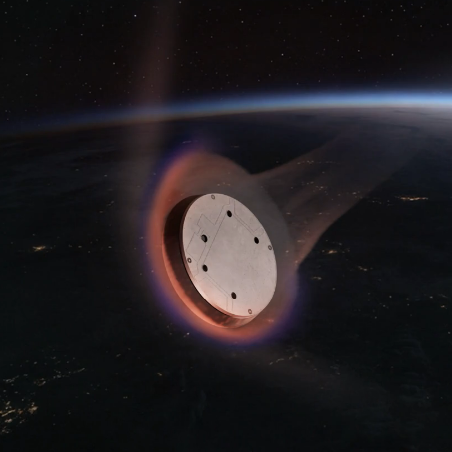
Haven-1 with docked Dragon capsule
Artist rendering of Haven-1 with docked
Dragon capsule

The space station startup Vast earlier this week signed an agreement with Lithuania to work together on future space missions, either to ISS or its Haven-1 single-module station scheduled for launch next year.

Under the agreement, Vast and Innovation Agency Lithuania will explore opportunities for joint scientific research activities either in the International Space Station National Lab or Haven-1, scheduled to be the world’s first commercial space station, launching in 2027. The partnership also includes plans to further develop educational programs in Lithuania and deepen engagement with local industry.

This deal is similar to Vast’s earlier deals with the European Space Agency, the Czech Republic, Colombia, Uzbekistan, Japan, and the Maldives. All are structured so that should Haven-1 reach orbit and be proven operational and safe for occupancy, these countries could consider sending their own astronauts on missions there. All thus show there is an international market for a private space station, a market that Vast is working hard to capture.

In other space station news, Voyager Technologies, the lead company building the Starlab station, released its 2026 first quarter fiscal report, indicating a solid financial position resulting from its diversification into military-based space applications. Though the report notes that “Starlab does not generate revenue today, nor is expected to generate revenue in the near term,” the company’s overall strength lays a strong foundation for that station’s eventual construction.

In my rankings below of the five stations under development, these two stations remain essentially tied for first place, with Axiom a close third.
» Read more

3 comments

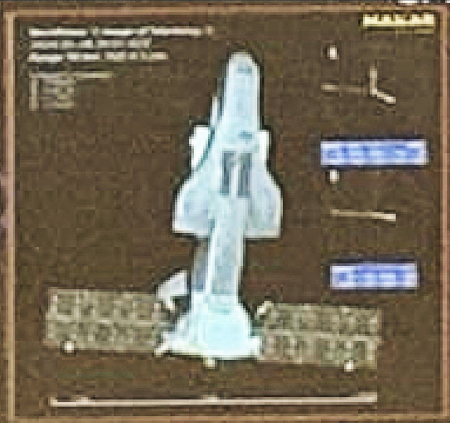
Katalyst completes final ground testing of its Swift rescue spacecraft

Katalyst's proposed Swift rescue mission
Katalyst’s proposed Swift rescue mission.
Click for original image.

The orbital servicing startup Katalyst has now successfully completed the final ground testing of its Swift rescue spacecraft, dubbed LINK, that it hopes will be able to catch the Gehrels-Swift Telescope and raise its orbit, thus saving the telescope.

During vibration testing at NASA Goddard, engineers mimicked the shaking the spacecraft will experience during its launch from a Northrop Grumman Pegasus rocket. In the footsteps of Swift itself and NASA’s upcoming Nancy Grace Roman Space Telescope, the Katalyst team also used NASA Goddard’s Space Environment Simulator for thermal vacuum testing.

Once the air was pumped out of this 27-foot-wide chamber, LINK experienced space-like hot and cold temperature extremes. The team also practiced firing the satellite’s three xenon-powered ion thrusters and deployed one of the arms.

After some more testing in Arizona, the spacecraft will be integrated in June onto Northrop Grumman’s Pegasus rocket — the last one in its inventory — and launched later that month.

Katalyst has never done this before. It was preparing LINK as a demo mission when NASA requested bids for saving Swift. It proposed reconfiguring LINK for that purpose, and won the contract in September 2025, only eight months ago.

If this mission succeeds it will be a big feather in Katalyst’s cap.

9 comments

Genesis cover

On Christmas Eve 1968 three Americans became the first humans to visit another world. What they did to celebrate was unexpected and profound, and will be remembered throughout all human history. Genesis: the Story of Apollo 8, Robert Zimmerman's classic history of humanity's first journey to another world, tells that story, and it is now available as both an ebook and an audiobook, both with a foreword by Valerie Anders and a new introduction by Robert Zimmerman.

The print edition can be purchased at Amazon or any other book seller. If you want an autographed copy the price is $60 for the hardback and $45 for the paperback, plus $8 shipping for each. Go here for purchasing details. The ebook is available everywhere for $5.99 (before discount) at amazon, or direct from my ebook publisher, ebookit. If you buy it from ebookit you don't support the big tech companies and the author gets a bigger cut much sooner.


The audiobook is also available at all these vendors, and is also free with a 30-day trial membership to Audible.
 

"Not simply about one mission, [Genesis] is also the history of America's quest for the moon... Zimmerman has done a masterful job of tying disparate events together into a solid account of one of America's greatest human triumphs."--San Antonio Express-News

Conscious Choice cover

Now available in hardback and paperback as well as ebook!

From the press release: In this ground-breaking new history of early America, historian Robert Zimmerman not only exposes the lie behind The New York Times 1619 Project that falsely claims slavery is central to the history of the United States, he also provides profound lessons about the nature of human societies, lessons important for Americans today as well as for all future settlers on Mars and elsewhere in space.

 
Conscious Choice: The origins of slavery in America and why it matters today and for our future in outer space, is a riveting page-turning story that documents how slavery slowly became pervasive in the southern British colonies of North America, colonies founded by a people and culture that not only did not allow slavery but in every way were hostile to the practice.  
Conscious Choice does more however. In telling the tragic history of the Virginia colony and the rise of slavery there, Zimmerman lays out the proper path for creating healthy societies in places like the Moon and Mars.


“Zimmerman’s ground-breaking history provides every future generation the basic framework for establishing new societies on other worlds. We would be wise to heed what he says.” —Robert Zubrin, founder of the Mars Society.


All editions are available at Amazon, Barnes & Noble, and all book vendors, with the ebook priced at $5.99 before discount. All editions can also be purchased direct from the ebook publisher, ebookit, in which case you don't support the big tech companies and the author gets a bigger cut much sooner.


Autographed printed copies are also available at discount directly from the author (hardback $29.95; paperback $14.95; Shipping cost for either: $6.00). Just send an email to zimmerman @ nasw dot org.

May 8, 2026 Quick space links

Courtesy of BtB’s stringer Jay. This post is also an open thread. I welcome my readers to post any comments or additional links relating to any space issues, even if unrelated to the links below.

5 comments

Rover startup Lunar Outpost raises $30 million in investment capital

The lunar rover startup Lunar Outpost revealed yesterday that it has raised $30 million in private investment capital in its latest funding round.

Lunar Outpost, the leader in off-planet mobility and in-space infrastructure, today announced a $30M Series B led by Industrious Ventures, with participation from Type One Ventures, Eniac Ventures, Promus Ventures, Reliable Equity, and others. The capital injection accelerates production and deployment of the company’s advanced robotics and mobility platforms as it scales the critical industrial layer required for a permanent human presence in space.

The company started out competing for NASA’s initial planned contract to build a manned lunar rover, proposing its “Eagle” rover and even signing a contract with SpaceX to deliver it to the Moon on Starship. Since then it has developed and successfully tested an autonomous excavator, dubbed Owl, while expanding its product line beyond rovers.

1 comment

Leaving Earth cover

Leaving Earth: Space Stations, Rival Superpowers, and the Quest for Interplanetary Travel, can be purchased as an ebook everywhere for only $3.99 (before discount) at amazon, Barnes & Noble, all ebook vendors, or direct from my ebook publisher, ebookit.

If you buy it from ebookit you don't support the big oppressive tech companies and I get a bigger cut much sooner.


Winner of the 2003 Eugene M. Emme Award of the American Astronautical Society.

 
"Leaving Earth is one of the best and certainly the most comprehensive summary of our drive into space that I have ever read. It will be invaluable to future scholars because it will tell them how the next chapter of human history opened." -- Arthur C. Clarke

Rocket Lab gets big launch contract for both its Electron and new Neutron rocket

Artist's rendering of the Neutron first stage deploying its second stage
Artist’s rendering of Neutron’s first stage fairings opening
to deploy the payload with the second stage engine.

Rocket Lab announced yesterday that it has won a big new launch contract with an undisclosed customer for three launches of its Electron rocket and five launches of its new Neutron rocket.

The multi-launch agreement includes five dedicated Neutron launches and three dedicated Electron launches baselined to launch between 2026 and 2029. The missions will lift-off from both Rocket Lab Launch Complex 1 in New Zealand and Rocket Lab Launch Complex 3 in Virginia. Pricing for these launches aligns with Rocket Lab’s average selling price for Neutron and Electron. The remaining terms of the deal are undisclosed.

Based on the known average launch prices for these rockets, this deal is likely worth somewhere between $250 million to $300 million. That a customer was willing to purchase five launches of Neutron before the rocket has even launched is also a strong statement of confidence in Rocket Lab itself. The company hopes to do the first test launch of Neutron before the end of this year.

Rocket Lab also made a slew of other announcements yesterday. The company will be partnering with Anduril as part of its 20-launch contract with the War department to use its suborbital HASTE version of its Electron first stage for hypersonic testing. The deal involves three of those twenty launches.

The company also announced a partnership with Raytheon to “demonstrate advanced capabilities for the United States Space Force’s Space Based Interceptor program.” Rocket Lab also revealed it is acquiring the California robotic company Motiv Space Systems that has built equipment used on the Mars rover Perseverance.

Rocket Lab might not be as big as SpaceX, but it has unquestionably been as successful in its own way.

17 comments

Louisiana state senator: Two unnamed aerospace companies are bidding for major land purchase

Pecan Island SpaceX facility?

In response to the story earlier this week that SpaceX might be acquiring a 200-plus square mile patch of land near Pecan Island on the southern coast of Louisiana, a state senator has now confirmed that two unnamed aerospace companies have been talking with landowners about a possible purchase.

State Sen. Bob Hensgens, R-Abbeville, said he knows of two companies — he did not reveal if it is Elon Musk-owned SpaceX or Jeff Bezos’ Blue Origin — that have reached out to landowners in coastal Vermilion and Cameron parishes about a possible acquisition. “I know both companies are trying to find property in southwest Louisiana,” Hensgens said. “I know from people in the parishes that the companies have made outreach in the area.”

If so, we might actually have a bidding war for this property. Note however that nothing has yet been confirmed, including the names of the companies involved. The article at the link however provides some background into the 136K acre plot owned by Exxon, and how it might now be for sale. It also reports that a number of legislators (not Hensgens) have signed non-disclosure agreements about the negotiations.

14 comments

Testing new high speed rotors for the next generation of Mars helicopters

Ingenuity with missing blade
Ingenuity with its missing blade, at its final resting place on Mars.
Click for original image.

Engineers from JPL and the aerospace company AeroVironment have been testing a new set of high speed rotors that they hope to use on the next generation Mars helicopters, designed to increase their payload capacity by as much as 30%.

The rotors of Ingenuity — the first helicopter to fly on Mars — never spun faster than 2,700 rpm, because at faster speeds it would be approaching the speed of sound (on Mars), when unpredictable things could happen. Engineers are pushing those limits with these new rotors, in a chamber mimicking the thin Martian atmosphere.

The test engineers had taken the precaution of lining part of the chamber with sheet metal in case the blades broke apart during the supersonic experiment. From a control room a few yards away from the chamber, the team watched displays showing data and a view inside the chamber as the rpm climbed as high as 3,750. At that rate, the tips were traveling at Mach 0.98 [just under the Martian speed of sound]. Then the engineers activated a fan inside the chamber that pelted the rotors with headwinds. After each run, they increased in wind velocity for the next run.

The team pushed rotor tip speeds to Mach 1.08, boosting the Mars vehicle’s lift capability by 30%. This breakthrough allows future missions to support heavier scientific payloads, including advanced sensors and larger batteries for extended flight. Next the team tried their luck with the two-bladed SkyFall rotor. Because it is slightly longer than the three-bladed version, only 3,570 rpm was needed to achieve the same near-supersonic speed at the rotor tips prior to introducing the headwinds.

NASA administrator Jared Isaacman has said he wants to send a fleet of helicopters to Mars in 2028, on that first nuclear-powered mission. Whether or not that mission happens as he proposed, there is ample evidence scientists plan on sending more helicopters there in the next few years (see here, here, here). These tests lay the groundwork for those future missions.

2 comments

Paraguay becomes the 67th nation to sign Artemis Accords

Artemis program logo

Paraguay yesterday became the 67th nation to sign Artemis Accords, continued the flood of smaller third world nations that have signed up in the last few weeks following the completion of the Artemis-2 mission around the Moon.

The remarks of NASA administration Jared Isaacman in connection with this event I find most tantalizing:

“They join an ever-growing coalition of like-minded nations committed to the peaceful, transparent, and responsible exploration of space. Established by President Trump in his first term, the Artemis Accords provided the principles for how we explore the Moon, Mars, and beyond. Now, with his national space policy, we are putting the Artemis Accords into practice with our Moon Base. We are creating opportunities for all Artemis Accords signatories, including Paraguay, to join us on the lunar surface and advance our shared objectives in this next era of exploration.” [emphasis mine]

While that national space policy [pdf] accepts the Outer Space Treaty’s limitation on establishing American law on other worlds, including property rights, it also makes its first goal that of promoting private enterprise.
» Read more

0 comments

May 7, 2026 Quick space links

Courtesy of BtB’s stringer Jay. This post is also an open thread. I welcome my readers to post any comments or additional links relating to any space issues, even if unrelated to the links below.

12 comments
1 10 11 12 13 14 2,928