Perseverance reaches top of Jezero Crater rim

The view west out of Jezero Crater
Click for high resolution panorama. For original images, go here and here.

Overview map
Click for interactive map.

After spending more than three and a half years exploring the floor of Jezero Crater, the rover Perseverance has finally reached the top of the crater’s western rim, and is about to begin exploring the mountainous and potentially rich mining region to the west.

The panorama above, created from two pictures taken by Perseverance’s right navigation camera on December 11, 2024 (here and here), has been cropped, reduced, enhanced, and annotated to post here. It looks west into that mountainous region, with the yellow lines on the overview map to the right indicating the approximate view. The blue dot on that map marks Perseverance’s present position, on top of Lookout Hill, the name the rover team has given to that spot on the rim.

The low resolution of the region beyond the grey strip is unexplained. For some reason the rover team has not yet updated the interactive map showing Perseverance’s travels with the many high resolution pictures that Mars Reconnaissance Orbiter (MRO) has taken of this region, in anticipation of Perseverance’s travels there. I expect however this will change shortly.

Witch Hazel Hill is the first target beyond the rim, where there is an outcrop 330-feet-high with many layers. The rover will then head downhill and south to check out a spot that the scientists believe might show features existing from before Jezero Crater was formed. The rover will then head back up to the rim further south to look at an outcrop of blocks that might actually be ejecta from another much larger Martian impact.

These blocks may represent ancient bedrock broken up during the Isidis impact, a planet-altering event that likely excavated deep into the Martian crust as it created an impact basin some 745 miles (1,200 kilometers) wide, 3.9 billion years in the past.

Jezero sits on the northwestern rim of Isidis.

0 comments

Curiosity begins to round the corner out of Gediz Vallis

Curiosity looks ahead
Click for original image.

According to an update yesterday from the rover team, the Mars rover Curiosity has finally begun to round the corner of the northern nose of the long ridge dubbed Texoli that forms the western wall of Gediz Vallis, the slot canyon that the rover has been exploring since August 2022.

The picture to the right, reduced, sharpened, and annotated to post here, was taken on December 10, 2024 and shows the view looking west. The red dotted line indicates the planned route. As the rocky ground indicates, travel forward in the near term will be interesting. As noted in the update:

While we want to head southwest, we had to divert a bit to the north (right of the image shown) to avoid some big blocks and high tilt. The path is very constrained in order to avoid driving over some smaller pointy rocks, scraping wheels along the sides of blocks, or steering into the side of blocks that might cause the steering to fail. And we also needed to worry about our end-of-drive heading to be sure the antenna will be clear to talk to Earth for the next plan. We ended up relying on the onboard behavior to help us optimize everything by implementing a really interesting and curvy 24-meter path (about 79 feet).

» Read more

0 comments

Genesis cover

On Christmas Eve 1968 three Americans became the first humans to visit another world. What they did to celebrate was unexpected and profound, and will be remembered throughout all human history. Genesis: the Story of Apollo 8, Robert Zimmerman's classic history of humanity's first journey to another world, tells that story, and it is now available as both an ebook and an audiobook, both with a foreword by Valerie Anders and a new introduction by Robert Zimmerman.

The print edition can be purchased at Amazon or any other book seller. If you want an autographed copy the price is $60 for the hardback and $45 for the paperback, plus $8 shipping for each. Go here for purchasing details. The ebook is available everywhere for $5.99 (before discount) at amazon, or direct from my ebook publisher, ebookit. If you buy it from ebookit you don't support the big tech companies and the author gets a bigger cut much sooner.


The audiobook is also available at all these vendors, and is also free with a 30-day trial membership to Audible.
 

"Not simply about one mission, [Genesis] is also the history of America's quest for the moon... Zimmerman has done a masterful job of tying disparate events together into a solid account of one of America's greatest human triumphs."--San Antonio Express-News

Rocket startup Stoke Space completes static fire test of first stage engine

Stoke's Nova rocket
Stoke’s Nova rocket

The rocket startup Stoke Space revealed yesterday that it has completed a static fire test of the first stage engine it will use on its Nova rocket, shown in the graphic to the right.

The test, which was not the first for this engine, proved out several new technologies.

Stoke Space called the test significant for several reasons. It’s the first hotfire of the company’s Block 2 (flight layout) stage 1 engine, and this engine architecture — called full-flow staged combustion (FFSC) — is considered particularly challenging. Only two entities in the world — Stoke and SpaceX — have successfully developed FFSC engines. … Stoke’s stage 1 engine is a liquified natural gas/liquid oxygen engine capable of producing 100,000 pounds of thrust. The duration of the test was not revealed.

It was the first time Stoke has tested on its new vertical test stand in Moses Lake. The company’s testing philosophy is that you must “test like you fly,” and it believes vertical testing is key to engine development.

Nor is the first stage engine the only technological innovation. Nova’s second stage uses a radical design whereby the engine releases its thrust through a ring of small nozzles on the outside perimeter of the stage, rather than a single central nozzle. This design is what the company hopes will allow it to return that upper stage intact for reuse.

The four year old company has raised $100 million in investment capital, but has also faced environmental red tape from the Space Force for its launch facility at Cape Canaveral. It had previously targeted 2025 for the first test flights of Nova, but that schedule appears unlikely because of this red tape.

1 comment

SpaceX requests special election to make Starbase at Boca Chica a city

In a letter [pdf] sent yesterday to a local judge, SpaceX requested that a special election be held in Cameron County on whether its Starbase facilities in Boca Chica should be incorporated as a city.

To continue growing the workforce necessary to rapidly develop and manufacture Starship, we need the ability to grow Starbase as a community. That is why we are requesting that Cameron County call an election to enable the incorporation of Starbase as the newest city in the Rio Grande Valley.

Incorporating Starbase will streamline the processes required to build the amenities necessary to make the area a world class place to live—for the hundreds already calling it home, as well as for prospective workers eager to help build humanity’s future in space. As you know, through agreements with the County, SpaceX currently performs several civil functions around Starbase due to its remote location, including management of the roads, utilities, and the provision of schooling and medical care for the residents. Incorporation would move the management of some of these functions to a more appropriate public body.

The letter went on to list the many other things SpaceX is already doing to benefit the area, including many of the environmental requirements imposed on it by the FAA and Fish & Wildlife.

At this moment there has been no response from the judge or Cameron County. I suspect there will be no objection, and this vote will take place in the near future. I also expect it will pass, because SpaceX employees now make up almost the entire population of Boca Chica.

9 comments

Conscious Choice cover

Now available in hardback and paperback as well as ebook!

From the press release: In this ground-breaking new history of early America, historian Robert Zimmerman not only exposes the lie behind The New York Times 1619 Project that falsely claims slavery is central to the history of the United States, he also provides profound lessons about the nature of human societies, lessons important for Americans today as well as for all future settlers on Mars and elsewhere in space.

 
Conscious Choice: The origins of slavery in America and why it matters today and for our future in outer space, is a riveting page-turning story that documents how slavery slowly became pervasive in the southern British colonies of North America, colonies founded by a people and culture that not only did not allow slavery but in every way were hostile to the practice.  
Conscious Choice does more however. In telling the tragic history of the Virginia colony and the rise of slavery there, Zimmerman lays out the proper path for creating healthy societies in places like the Moon and Mars.


“Zimmerman’s ground-breaking history provides every future generation the basic framework for establishing new societies on other worlds. We would be wise to heed what he says.” —Robert Zubrin, founder of the Mars Society.


All editions are available at Amazon, Barnes & Noble, and all book vendors, with the ebook priced at $5.99 before discount. All editions can also be purchased direct from the ebook publisher, ebookit, in which case you don't support the big tech companies and the author gets a bigger cut much sooner.


Autographed printed copies are also available at discount directly from the author (hardback $29.95; paperback $14.95; Shipping cost for either: $6.00). Just send an email to zimmerman @ nasw dot org.

December 12, 2024 Quick space links

Courtesy of BtB’s stringer Jay. This post is also an open thread. I welcome my readers to post any comments or additional links relating to any space issues, even if unrelated to the links below.

2 comments

Leaving Earth cover

Leaving Earth: Space Stations, Rival Superpowers, and the Quest for Interplanetary Travel, can be purchased as an ebook everywhere for only $3.99 (before discount) at amazon, Barnes & Noble, all ebook vendors, or direct from my ebook publisher, ebookit.

If you buy it from ebookit you don't support the big oppressive tech companies and I get a bigger cut much sooner.


Winner of the 2003 Eugene M. Emme Award of the American Astronautical Society.

 
"Leaving Earth is one of the best and certainly the most comprehensive summary of our drive into space that I have ever read. It will be invaluable to future scholars because it will tell them how the next chapter of human history opened." -- Arthur C. Clarke

Head of FAA resigns

You could leave now for all I care: Mike Whitaker, who has been director of the Federal Aviation Administration (FAA) under the Biden administration and who has apparently been the main source of that agency’s increased red tape that has almost destroyed the new rocket industry that had been emerging during the first Trump administration, announced today that he is stepping down next month.

Mike Whitaker announced his pending resignation in a message to employees of the FAA, which regulates airlines and aircraft manufacturers and manages the nation’s airspace. He became the agency’s administrator in October 2023.

Since then, the challenges confronting Whitaker have included a surge in close calls between planes, a need for stricter oversight of Boeing. antiquated equipment and a shortage of air traffic controllers at a time of high consumer demand for air travel.

The article at the link is from PBS, so of course it makes this federal bureaucrat appear a hero. Instead, he was a disaster for America’s space industry, forcing unnecessary delays in SpaceX’s Starship/Superheavy program, imposing new regulations that claimed to streamline the launch licensing process but did exactly the opposite, and generally forcing FAA regulators to take a fearful attitude to any new technology, so much so that it became almost impossible for that new technology to launch.

As for the aviation industry, Whitaker’s term did little to change things. For example, he did nothing to shut down the DEI programs at major airline and airplane companies that were causing the hiring of unqualified people.

All I can say is good riddance.

5 comments

Land of knobs

Land of knobs
Click for original image.

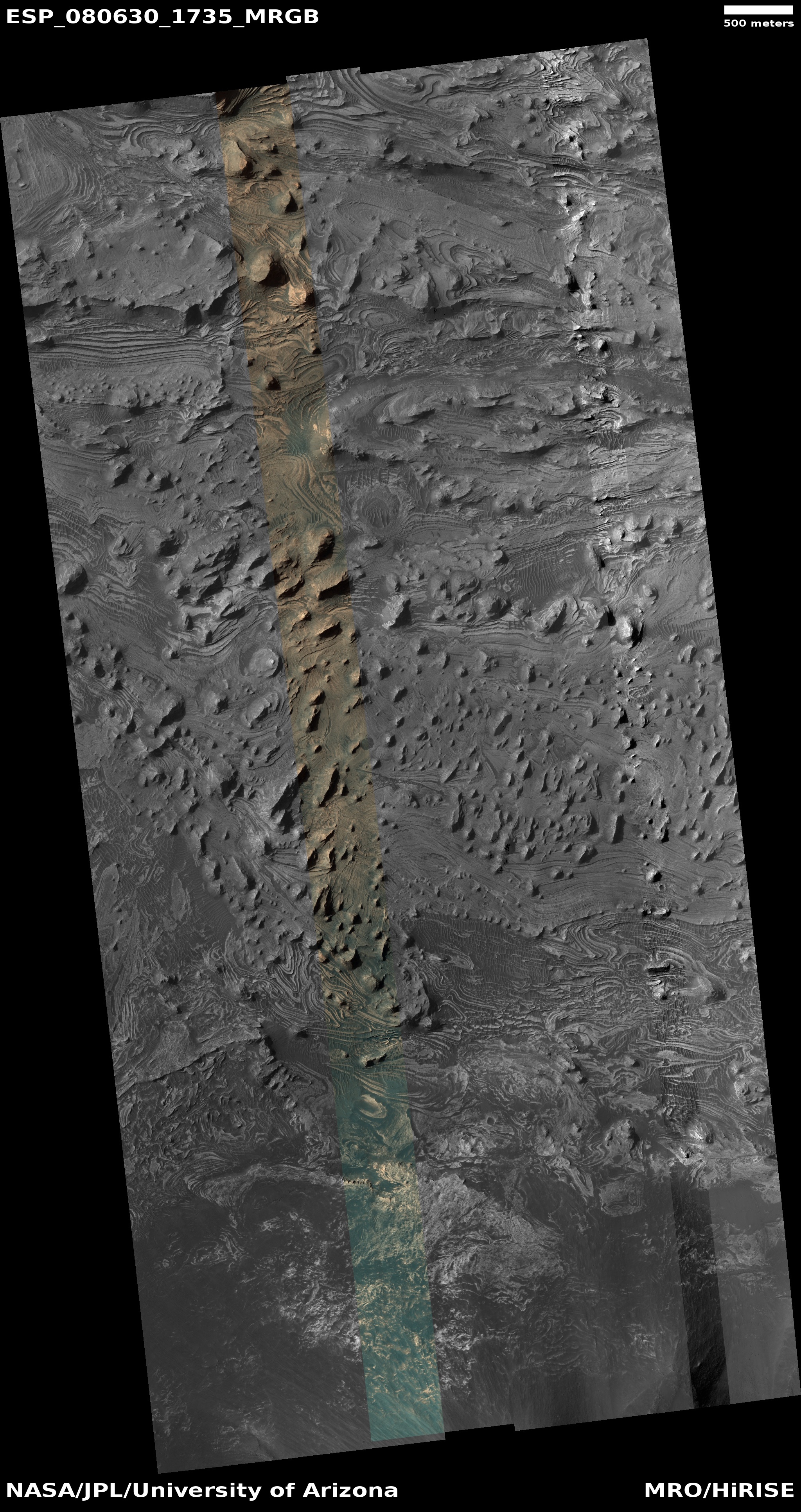
Cool image time! The picture to the right, rotated, cropped, reduced, and sharpened to post here, was taken on July 17, 2024 by the high resolution camera on Mars Reconnaissance Orbiter (MRO). Labeled merely as a “terrain sample,” it was likely taken not as part of any specific research project, but to fill a gap in the camera’s schedule in order to maintain its proper temperature.

When the camera team does this, they try to pick interesting targets. In this case, they targeted this 400-foot-high pointy-topped hill. The smoothness of its slopes suggest this hill is made up largely of packed dust, possibly a hardened former dune. This hypothesis seems strengthened by the erosion on the eastern slopes, which appears to be areas where that packed sand has worn or blow away.

Think of sandstone in the American southwest. It is made of sand that has hardened into rock, but wind and water and friction can easily break it back into dust particles, resulting often in the spectacular and weird geological shapes that make the southwest so enticing.

But is this sand?
» Read more

2 comments

Io’s volcanoes get their lava from separate magma chambers, not a global underground ocean of magma

Io's interior as presently theorized
Click for original animation.

Using data collected from Juno’s multiple fly-bys of the Jupiter moon Io, scientists now hypothesize that the moon does not have a global underground ocean of magma, feeding its many volcanoes, but that instead each volcano is fed its lava from a separate magma chamber.

The graphic to the right illustrates the present conclusion. You can read the paper here [pdf]. From the press release:

The Juno team compared Doppler data from their two flybys with observations from the agency’s previous missions to the Jovian system and from ground telescopes. They found tidal deformation consistent with Io not having a shallow global magma ocean.

“Juno’s discovery that tidal forces do not always create global magma oceans does more than prompt us to rethink what we know about Io’s interior,” said lead author Ryan Park, a Juno co-investigator and supervisor of the Solar System Dynamics Group at JPL. “It has implications for our understanding of other moons, such as Enceladus and Europa, and even exoplanets and super-Earths. Our new findings provide an opportunity to rethink what we know about planetary formation and evolution.” [emphasis mine]

The highlighted words indicate the significance of this data. It possibly suggests that the underground oceans of water that have been theorized for these other moons — where life could possibly exist — might be mistaken. Instead, they might have smaller pockets of water, similar to Io’s many magma chambers.

Everything here however is uncertain, including these new conclusions about Io. We just don’t have enough data from any of these moons to make any definitive conclusions.

0 comments

ESA continues to dither about building a heavy lift rocket

In what almost appears to be a clown show, the European Space Agency (ESA) has three times issued and then retracted and then reissued a request for proposals for studying possible designs to possibly build a heavy lift rocket to both replace Ariane-6 as well as compete with SpaceX’s Starship/Superheavy.

ESA published an initial call for its European 60T LEO Reusable Launch System Pathfinder Study initiative on 20 November. The call was, however, deleted later that day. On 3 December, a second version of the call was published and then removed, once again, on the same day. On 10 December, ESA published a third iteration of the call, with this one being the first to remain published overnight.

The second version put more emphasis on “time and cost efficiency.” The third version added details noting the limitations of Ariane-6 (its cost, limited payload capacity, and non-re-usability).

When ESA issued the second version, I noted its lack of urgency. “This is ‘call’ for a ‘study’ to ‘explore’ the ‘options’ for development. Hell will freeze over before ESA starts construction.” The new version doesn’t change this in the slightest. It only recognizes more fully the bad decisions that ESA made in 2015 when it approved the expendable design of Ariane-6, making it too expense then to compete with SpaceX’s Falcon 9.

7 comments

Chinese citizen arrested for flying drone illegally over Vandenberg

Yinpiao Zhou, a Chinese citizen in America on a legal immigrant visa, has been arrested for flying a drone illegally over Vandenberg Air Force Base.

Nearly a mile above Vandenberg Space Force Base in Santa Barbara County, a hacked drone soared through restricted airspace for roughly an hour. The lightweight drone photographed sensitive areas of the military facility on Nov. 30, including a complex used by SpaceX, according to federal investigators. The drone then descended back to the ground, where the pilot and another man waited at a nearby park.

Before either could leave however, four security officers from Vandenberg showed up. Initially Zhou lied about what he was doing, hiding the drone under his jacket. At one point however the officers spotted the drone, forcing Zhou to admit the truth as well as delete the footage on the drone.

Neither Zhou or the second man, who remains unidentified, were arrested at that time. Zhou was arrested on December 9, 2024 at San Francisco International Airport, just before he was to board a flight back to China. He is charged with flying a drone illegally out of his line of sight and in a no-fly zone, and remains in custody.

It appears this was an intended spying operation by China or one of its pseudo-companies, attempting to steal more information about SpaceX’s technology in order to copy it. Why Zhou and that other man were not arrested immediately is unclear.

17 comments

Ispace signs agreement with lunar mining startup

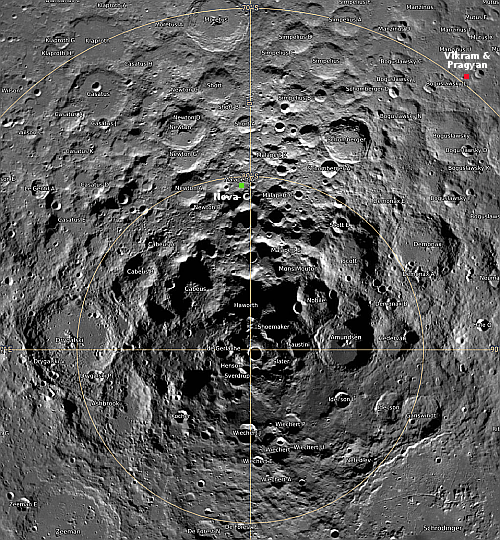
Landing sites on Moon

The Japanese lunar lander startup Ispace has now signed an agreement with a lunar mining startup dubbed Magna Petra to transport the latter company’s helium-3 mining equipment to the Moon.

In a memo of understanding, ispace and Magna Petra have agreed to collaborate to utilize the moon’s resources for economic benefits to life on Earth, the companies announced Tuesday, Dec. 10. Through “non-destructive, sustainable harvesting,” according to a joint statement, Magna Petra plans to one day extract “commercial quantities” of helium-3 isotopes from regolith on the lunar surface for delivery and distribution back on Earth, where the resource is facing an extreme supply shortage.

Ispace meanwhile still has to prove it can put a lander on the Moon. Its first attempt, Hakuto-R1, almost succeeded, but crashed in April 2023 when its software thought it was just above the ground and shut down its engines when it was still three miles high. The company’s second attempt, dubbed Resilience and carrying a rover dubbed Tenacious, is scheduled for launch in January 2025. The landing site is shown on the map to the right, within Mare Frigoris in the northern part of the Moon’s nearside hemisphere.

2 comments
1 265 266 267 268 269 2,930