Airbus to eliminate 2,500 jobs in its space and defense divisions

Airbus has decided that through 2026 it will eliminate 2,500 jobs in its space and defense divisions.

The Airbus cuts come just months after it said in its second-quarter earnings report that the space division was affecting its financial performance. In those earnings, it took a charge of 989 million euros ($1.08 billion) against the space business, relating to an audit of costs in the division and projected lower revenues.

According the company’s press release, the cuts will be targeting what appears to be a bloated management structure.

Intended measures will include creating a more effective and efficient organisational structure for the Division, especially with regard to headquartered functions.

The company does not plan to lay off anyone against their will. Instead, it will work out a buy-out program, the details of which are not yet known, that will encourage employees to leave voluntarily.

The issues here are probably related to the failure of the Ariane-6 rocket, which though now operational is too expensive to compete effectively in the modern launch market. Though it is built by ArianeGroup, a joint partnership of Airbus and Safran, its losses will percolate back to Airbus itself. That the cuts will target upper management also makes sense. Why does Airbus’s space division need a large payroll at its headquarters if it has shifted its space operations to the subsidiary ArianeGroup?

2 comments

Proposed commerical spaceport in Nova Scotia signs launch deal with rocket startup Reaction Dynamics

UPDATE: My first version of this post was fundamentally incorrect. I had confused the new Canadian rocket startup Reaction Dynamics (RDX) with the renamed Raytheon (RTX). Because some of the content relating to Raytheon and the comments is still relevant, I have placed that content below the fold so that readers will understand the context of those comments..

Maritime Launch Services, the company that has been trying to build a commerical spaceport in Nova Scotia since 2016, has now signed a launch deal with a small new Canadian rocket startup, Reaction Dynamics, to do a suborbital test launch.

This new partnership between the two Canadian space companies will begin with a pathfinder launch designed to reach the edges of space. The low impulse launch will push the limits toward a future orbital launch by reaching the Karman Line, the internationally recognized edge of Space.

Under the terms of the MOU, Maritime Launch and Reaction Dynamics [RDX] will work towards a Pathfinder mission that will enable a first ever orbital launch of a Canadian vehicle from Canadian soil on the coast of Nova Scotia. These missions will be supported by RDX’s patented, cutting-edge hybrid rocket technology. Building on the success of the first launch, both companies will work toward the first commercial missions of the Aurora vehicle.

This Nova Scotia spaceport has had a complex and difficult history. Initially it was going to offer launches using a Ukrainian-built rocket, but that plan fell through with Russia’s invasion of the Ukraine. It then opened the spaceport to any rocket company, but it appears it has gotten few takers. Now it is working with Reaction Dynamics to once again provide its own launch services. We shall see how this plays out.
» Read more

6 comments

Genesis cover

On Christmas Eve 1968 three Americans became the first humans to visit another world. What they did to celebrate was unexpected and profound, and will be remembered throughout all human history. Genesis: the Story of Apollo 8, Robert Zimmerman's classic history of humanity's first journey to another world, tells that story, and it is now available as both an ebook and an audiobook, both with a foreword by Valerie Anders and a new introduction by Robert Zimmerman.

The print edition can be purchased at Amazon or any other book seller. If you want an autographed copy the price is $60 for the hardback and $45 for the paperback, plus $8 shipping for each. Go here for purchasing details. The ebook is available everywhere for $5.99 (before discount) at amazon, or direct from my ebook publisher, ebookit. If you buy it from ebookit you don't support the big tech companies and the author gets a bigger cut much sooner.


The audiobook is also available at all these vendors, and is also free with a 30-day trial membership to Audible.
 

"Not simply about one mission, [Genesis] is also the history of America's quest for the moon... Zimmerman has done a masterful job of tying disparate events together into a solid account of one of America's greatest human triumphs."--San Antonio Express-News

NOAA and NASA declare the Sun has reached solar maximum

The sunspot cycle since the 1700s
Click for originial graph.

The uncertainty of science: During a press conference yesterday NOAA and NASA scientists announced that they now believe the Sun has reached solar maximum as part of its regular 11-year sunspot cycle.

“This announcement doesn’t mean that this is the peak of solar activity we’ll see this solar cycle,” said Elsayed Talaat, director of space weather operations at NOAA. “While the Sun has reached the solar maximum period, the month that solar activity peaks on the Sun will not be identified for months or years.”

Scientists will not be able to determine the exact peak of this solar maximum period for many months because it’s only identifiable after they’ve tracked a consistent decline in solar activity after that peak. However, scientists have identified that the last two years on the Sun have been part of this active phase of the solar cycle, due to the consistently high number of sunspots during this period. Scientists anticipate that the maximum phase will last another year or so before the Sun enters the declining phase, which leads back to solar minimum. Since 1989, the Solar Cycle Prediction Panel — an international panel of experts sponsored by NASA and NOAA — has worked together to make their prediction for the next solar cycle.

In other words, they have no idea yet it the actual peak has been reached. All they are really telling us is that the Sun is now in that maximum phase, something that has been very evident for many months.

This announcement is filled with a lot of blarney. For example, one scientist is quoted as saying the activity this maximum “has slightly exceeded expectations.” A simply glance at the graph they released, shown on the right, illustrates how wrong that statement is. The activity has been almost twice what was predicted (as indicated by the red curve). And though they say we have hit maximum, they admit they don’t know if we have reached the peak yet.

Having followed the predictions of the solar scientist community on this subject now for more than two decades, I have learned that this community knows far less than it lets on, and likes to exaggerate its capabilities to predict what the Sun will do. At the same time, they have also often played Chicken Little, warning everyone that if we don’t pay attention to them and do what they say, sun storms and solar activity will kill us all. (Interestingly, this announcement backs off somewhat from that doom-saying, making it a refreshing change.)

4 comments

NASA appears to be about to drop Boeing’s Starliner from its manned mission schedule in 2025

In a short announcement outlining its planned two manned ISS missions for 2025, NASA by omission revealed that it now does not expect Boeing’s Starliner capsule to be ready for the second manned flight in July 2025, as previously planned.

Previous updates had noted what capsule would launch the astronauts, with the plan to have Dragon launch the February 2025 crew and Starliner the July 2025 crew. It was assumed in those earlier updates that Starliner would be certified for operational use after the completion of its first manned demo this past summer. This new update does not provide this capsule information, instead saying the following:

The timing and configuration of Starliner’s next flight will be determined once a better understanding of Boeing’s path to system certification is established. This determination will include considerations for incorporating Crew Flight Test lessons learned, approvals of final certification products, and operational readiness.

Meanwhile, NASA is keeping options on the table for how best to achieve system certification, including windows of opportunity for a potential Starliner flight in 2025.

It appears NASA is pulling back from that certification, based on the various technical issues experienced by Starliner during that demo mission, issues that eventually forced NASA to return the capsule unmanned. As such, this announcement yesterday suggests that there is serious negotiations going on between Boeing and NASA as to what will happen next. It appears the agency wants Boeing to fly another demo mission — on Boeing’s dime — before putting astronauts on board and paying for a mission. The Starliner contract was fixed price, and until Boeing successfully completes that manned demo mission NASA is not obligated to pay it any additional funds.

I suspect Boeing is telling NASA it can’t afford to do this, and if NASA doesn’t pony up some bucks for that demo flight it will simply not do it, and NASA will be stuck with just SpaceX as its manned ferry to ISS.

Unconfirmed reports had suggested NASA was considering issuing Boeing a separate contract to do a cargo mission to ISS using Starliner, thus allowing it to pay the company to fly a test mission outside of the fixed price contract. This NASA update yesterday suggests these negotiations are on going, but likely cannot be completed until after the election. A new administration might balk at such a deal.

2 comments

Conscious Choice cover

Now available in hardback and paperback as well as ebook!

From the press release: In this ground-breaking new history of early America, historian Robert Zimmerman not only exposes the lie behind The New York Times 1619 Project that falsely claims slavery is central to the history of the United States, he also provides profound lessons about the nature of human societies, lessons important for Americans today as well as for all future settlers on Mars and elsewhere in space.

 
Conscious Choice: The origins of slavery in America and why it matters today and for our future in outer space, is a riveting page-turning story that documents how slavery slowly became pervasive in the southern British colonies of North America, colonies founded by a people and culture that not only did not allow slavery but in every way were hostile to the practice.  
Conscious Choice does more however. In telling the tragic history of the Virginia colony and the rise of slavery there, Zimmerman lays out the proper path for creating healthy societies in places like the Moon and Mars.


“Zimmerman’s ground-breaking history provides every future generation the basic framework for establishing new societies on other worlds. We would be wise to heed what he says.” —Robert Zubrin, founder of the Mars Society.


All editions are available at Amazon, Barnes & Noble, and all book vendors, with the ebook priced at $5.99 before discount. All editions can also be purchased direct from the ebook publisher, ebookit, in which case you don't support the big tech companies and the author gets a bigger cut much sooner.


Autographed printed copies are also available at discount directly from the author (hardback $29.95; paperback $14.95; Shipping cost for either: $6.00). Just send an email to zimmerman @ nasw dot org.

Astrolab unveils small prototype unmanned rover

Astrolab, one of three companies with NASA design contracts to develop a manned lunar rover, yesterday unveiled a small prototype unmanned rover that the company has designed to test on the Moon and actually hopes to launch on Astrobotic’s Griffin lander.

In a presentation at the International Astronautical Congress here Oct. 15, Astrolab announced plans to build the FLEX Lunar Innovation Platform, or FLIP, rover for launch as soon as the end of 2025. The half-ton rover will have a payload capacity of 30 to 50 kilograms.

A key purpose of FLIP is to test key systems for its larger FLEX, or Flexible Logistics and Exploration, rover, maturing their technology readiness levels (TRLs). “We want to raise the TRL of our technologies ahead of our other missions,” said Jaret Matthews, founder and chief executive of Astrolab. FLIP will test the same battery modules that the larger FLEX will use and has the same tires as FLEX. Other technologies Astrolab plans to test on the smaller rover include actuators, power systems and communications.

Though no deal has been announced, FLIP was clearly designed to match the fit of NASA’s now canceled VIPER rover that was to be launched on Astrobotic’s Griffin lander. Griffin is still being prepped for its lunar mission to be launched in 2025, but no longer has that prime payload. It is very obvious that Astrolab is vying to make FLIP that prime payload.

If so, the company will have once again demonstrated the advantages of private enterprise. NASA spent almost a billion on VIPER, going so much over budget and behind schedule that the agency had to cancel it. Astrolab has now come up with a replacement in almost no time at all, for likely pennies on the dollar. It is for sure simpler, but it also is likely to fly and test engineering, while VIPER will not.

0 comments

ESA releases first section of grand mosaic of the sky to be produced by Euclid

Euclid's first released mosaic
For original images, go here, here, and here.

The European Space Agency (ESA) yesterday released the first mosaic section of a grand atlas of the sky that its recently launched Euclid space telescope was designed to produce.

The image to the right, assembled from several images but of very low resolution to post here, will give my readers an idea of Euclid’s capabilities. The top image shows this first mosaic in green, made up of 260 photos, laid on top of the sky atlases produced by the Gaia and Plank orbiting telescopes. As you can see, it covers only about 12% of the sky, but was also produced in only the last six months, since science observations began in February. When complete, the Euclid atlas will cover one third of the sky, and provide very high resolution data for that entire area.

The middle image provides a close-up of that mosaic, albeit in very low resolution.

This first piece of the map already contains around 100 million sources: stars in our Milky Way and galaxies beyond. Some 14 million of these galaxies could be used to study the hidden influence of dark matter and dark energy on the Universe. “This stunning image is the first piece of a map that in six years will reveal more than one third of the sky. This is just 1% of the map, and yet it is full of a variety of sources that will help scientists discover new ways to describe the Universe,” says Valeria Pettorino, Euclid Project Scientist at ESA.

The bottom image, once again at low resolution to post here, zooms into only one small section of that mosaic, and illustrates the high level of detail each Euclid image will contain. Though the details in this photo seem a bit fuzzy, at full resolution they remain remarkably sharp. To get an idea of how good that resolution is, see an earlier Euclid close-up photo released in May.

Euclid doesn’t take pictures with the quite the resolution of Hubble (its primary mirror at 1.2 meters diameter is half the width). While Hubble was designed to zoom in at specific objects and do so over and over if desired, Euclid will instead provide a high resolution snapshot of the entire sky, at a resolution almost as good, in both optical and infrared wavelengths.

2 comments

Leaving Earth cover

Leaving Earth: Space Stations, Rival Superpowers, and the Quest for Interplanetary Travel, can be purchased as an ebook everywhere for only $3.99 (before discount) at amazon, Barnes & Noble, all ebook vendors, or direct from my ebook publisher, ebookit.

If you buy it from ebookit you don't support the big oppressive tech companies and I get a bigger cut much sooner.


Winner of the 2003 Eugene M. Emme Award of the American Astronautical Society.

 
"Leaving Earth is one of the best and certainly the most comprehensive summary of our drive into space that I have ever read. It will be invaluable to future scholars because it will tell them how the next chapter of human history opened." -- Arthur C. Clarke

China launches “Earth observation satellite”

China today successfully launched what its state-run press described as an “Earth observation satellite,” its Long March 4C rocket lifting off from its Jiuquan spaceport in northwest China.

No word on where the rocket’s first stage, using very toxic hypergolic fuels, crashed inside China. As for the satellite, it was described as something to “be used in a variety of fields including land surveys, urban planning, road network design, crop yield estimation and disaster relief.”

The leaders in the 2024 launch race:

100 SpaceX
47 China
11 Russia
11 Rocket Lab

American private enterprise still leads the rest of the world combined in successful launches 117 to 70, while SpaceX by itself now leads the entire world, including American companies, 100 to 87.

2 comments

October 15, 2024 Quick space links

Courtesy of BtB’s stringer Jay, who also let me know about today’s Chinese launch. This post is also an open thread. I welcome my readers to post any comments or additional links relating to any space issues, even if unrelated to the links below.

8 comments

The evidence strongly suggests FAA top management is working to sabotage SpaceX

FAA administrator Mike Whitaker today said this to SpaceX:
FAA administrator Mike Whitaker to SpaceX:
“Nice company you have there. Shame if something
happened to it.”

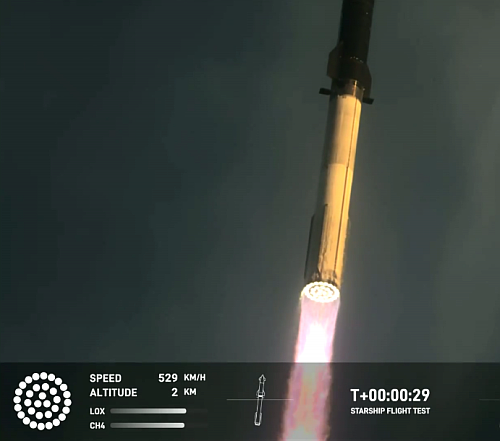
After SpaceX’s incredibly successful fifth test flight of Starship/Superheavy on October 13, 2024, I began to wonder about the complex bureaucratic history leading up to that flight. I was most puzzled by the repeated claims by FAA officials that it would issue no launch license before late November, yet ended up approving a license in mid-October in direct conflict with these claims. In that context I was also puzzled by the FAA’s own written approval of that launch, which in toto seemed to be a complete vindication of all of SpaceX’s actions while indirectly appearing to be a condemnation of the agency’s own upper management.

What caused the change at the FAA? Why was it claiming no approval until late November when it was clear by early October that SpaceX was preparing for a mid-October launch? And why claim late November when the FAA’s own bureaucracy has now made it clear in approving the launch that a mid-October date was always possible, and nothing SpaceX did prevented that.

I admit my biases: My immediate speculation is always to assume bad behavior by government officials. But was that speculation correct? Could it also be that SpaceX had not done its due diligence properly, causing the delays, as claimed by the FAA?

While doing my first review of the FAA’s written reevaluation [pdf] that approved the October 13th launch, I realized that a much closer review of the history and timeline of events might clarify these questions.

So, below is that timeline, as best as I can put together from the public record. The lesser known acronyms stand for the following:

TCEQ: Texas Commission on Environmental Quality
NMFS: National Marine Fisheries Service (part of NOAA)
FWS: Fish & Wildlife Service (part of the Department of Interior)

My inserted comments periodically tell the story and provide some context.
» Read more

17 comments

China launches “satellite group” using Long March 6A rocket

According to China’s state run press, it today successfully launched what it simply describes as “a new satellite group,” its Long March 6A rocket lifting off from its Taiyuan spaceport in northeast China.

This tweet appears to show video of the launch, though once again there is little information.

First, we have no idea where the rocket’s lower stage and four strap-on stide boosters crashed inside China, doing so at night when no one can see them coming down. Second, we have no idea whether China has made any upgrades to the Long March 6A upper stage, which on four previous launches has broken apart and scattered space junk after deploying its payload in orbit.

The leaders in the 2024 launch race:

100 SpaceX
46 China
11 Russia
11 Rocket Lab

American private enterprise still leads the rest of the world combined in successful launches 117 to 69, while SpaceX by itself now leads the entire world, including American companies, 100 to 86.

2 comments
1 294 295 296 297 298 2,929