October 17, 2023 Quick space links

Courtesy of BtB’s stringer Jay.


  • India targets its first manned landing on the Moon by 2040
  • This was simply Prime Minister Narendra Modi’s opportunity to give his Kennedy-like Moon speech, something politicans have been doing over and over again since 1961. Only Kennedy met his goals. All the others have simply been empty political speeches that were never fulfilled.

    This is not to say India won’t try, as it certainly appears that the new colonial movement in space is heating up. It just means we should not take his speech very seriously.

4 comments

Genesis cover

On Christmas Eve 1968 three Americans became the first humans to visit another world. What they did to celebrate was unexpected and profound, and will be remembered throughout all human history. Genesis: the Story of Apollo 8, Robert Zimmerman's classic history of humanity's first journey to another world, tells that story, and it is now available as both an ebook and an audiobook, both with a foreword by Valerie Anders and a new introduction by Robert Zimmerman.

The print edition can be purchased at Amazon or any other book seller. If you want an autographed copy the price is $60 for the hardback and $45 for the paperback, plus $8 shipping for each. Go here for purchasing details. The ebook is available everywhere for $5.99 (before discount) at amazon, or direct from my ebook publisher, ebookit. If you buy it from ebookit you don't support the big tech companies and the author gets a bigger cut much sooner.


The audiobook is also available at all these vendors, and is also free with a 30-day trial membership to Audible.
 

"Not simply about one mission, [Genesis] is also the history of America's quest for the moon... Zimmerman has done a masterful job of tying disparate events together into a solid account of one of America's greatest human triumphs."--San Antonio Express-News

Very bad things are on the verge of happening

Cry havoc and let loose the dogs of war!

Yesterday I wrote about how I thought the public might finally be awakening to the evil that now controls so much of American cultural and political life.

I noted several positive developments, and then added that the window of opportunity for freedom and the rule of law however was quickly closing. Without strong action these positive developments will mean nothing, to be quickly overrun by the immoral actions of the power-hungry, who will not take losing their power kindly.

Today I am far more pessimistic. I sense deeply that very very bad things are about to happen, on all fronts. The right is divided and weak, and too often unwilling to stand up to the worst behavior of the left. It is so divided that it can’t even elect a speaker in the House of Representatives.

The left meanwhile is united and angry, and willing to use that anger forcefully at all times. For example, for the last week decent people on the right found themselves being forced by the left to debate the absurd question of whether Hamas terrorists beheaded babies or merely killed them, as if that distinction mattered.

And in Gaza the destruction of a hospital by a missile is immediately being used as a propaganda weapon against Israel. First the claim by the Hamas-run Gaza Health Ministry that “500+” people were killed is immediately accepted without question, without evidence. Second, it is immediately accepted that the missile likely came from Israel, though there is evidence otherwise.

You need to read the AP report at the link to grasp the full flavor of this anti-Israeli propaganda. Somehow only Israeli is killing civilians, while Gazans huddle in fear and helplessness against that evil empire throwing bombs and missiles at them.
» Read more

21 comments

More Martian inverted rivers?

More Martian inverted rivers?
Click for original image.

Cool image time! The picture to the right, rotated, cropped, reduced, and sharpened to post here, was taken on June 23, 2023 by the high resolution camera on Mars Reconnaissance Orbiter (MRO). It shows what the scientists label “branching deposits,” two wiggling ridgelines with other ridges branching off from them.

What caused this? On Mars there are many such meandering ridges, all of which look like rivers that have positive relief, the opposite of what you would expect. The theory is that these weaving ridges were once canyons where either water or ice once flowed, compacting the streambed so that it was more dense than the surrounding terrain. When that terrain eroded away it left that streambed behind, as a raised meandering ridge.

That answer however might not apply here.
» Read more

0 comments

Conscious Choice cover

Now available in hardback and paperback as well as ebook!

From the press release: In this ground-breaking new history of early America, historian Robert Zimmerman not only exposes the lie behind The New York Times 1619 Project that falsely claims slavery is central to the history of the United States, he also provides profound lessons about the nature of human societies, lessons important for Americans today as well as for all future settlers on Mars and elsewhere in space.

 
Conscious Choice: The origins of slavery in America and why it matters today and for our future in outer space, is a riveting page-turning story that documents how slavery slowly became pervasive in the southern British colonies of North America, colonies founded by a people and culture that not only did not allow slavery but in every way were hostile to the practice.  
Conscious Choice does more however. In telling the tragic history of the Virginia colony and the rise of slavery there, Zimmerman lays out the proper path for creating healthy societies in places like the Moon and Mars.


“Zimmerman’s ground-breaking history provides every future generation the basic framework for establishing new societies on other worlds. We would be wise to heed what he says.” —Robert Zubrin, founder of the Mars Society.


All editions are available at Amazon, Barnes & Noble, and all book vendors, with the ebook priced at $5.99 before discount. All editions can also be purchased direct from the ebook publisher, ebookit, in which case you don't support the big tech companies and the author gets a bigger cut much sooner.


Autographed printed copies are also available at discount directly from the author (hardback $29.95; paperback $14.95; Shipping cost for either: $6.00). Just send an email to zimmerman @ nasw dot org.

New Io images from Juno

Io as seen on October 15, 2023 by Juno
Click for original image.

The Jupiter orbiter Juno completed its 55th close pass of the gas giant on October 15, 2023, which also included a close pass of the Jupiter moon Io. The science team has now released the first images of Io from that fly-by, and several citizen scientists have released their processed versions.

The picture to the right, cropped, reduced, and sharpened to post here, was processed by Ted Stryk. It is the best view seen of this volcano-covered world since the Galileo orbiter in the 1990s. The dark patches are lava flows, with the dimensions of mountains along the terminator line between night and day clearly distinguishable.

An even closer look will occur during Juno’s 57th Jupiter orbit on December 30, 2023, when it will get within 1000 miles of Io’s surface, crossing the mid- to high latitudes of the planet’s western hemisphere.

5 comments

Blue Origin announces another big project, with few details

Blue Origin has now announced another proposed big project, dubbed Blue Ring, which will put a platform into orbit as part of a new division focused on in-space services.

Blue Ring serves commercial and government customers and can support a variety of missions in medium Earth orbit out to the cislunar region and beyond. The platform provides end-to-end services that span hosting, transportation, refueling, data relay, and logistics, including an “in-space” cloud computing capability. Blue Ring can host payloads of more than 3,000 kg and provides unprecedented delta-V capabilities and mission flexibility.

The company did not reveal many details about the size of this orbital platform, nor did it reveal a time schedule. It appears to be an effort by the company to enter the orbital tug/satellite repair market, though the announcement is so vague it is hard to determine what exactly is being proposed.

The list of big ambitious Blue Origin projects is long and impressive: the New Glenn reusuable rocket, the Orbital Reef space station, the Blue Moon manned lunar lander, and now Blue Ring. However, since none of these projects has yet launched, and the first is years behind schedule, no one should put much money on this new project ever seeing fruition. Right now Blue Origin needs to actually fly something before anyone should take seriously any proposal it puts forth.

6 comments

Leaving Earth cover

Leaving Earth: Space Stations, Rival Superpowers, and the Quest for Interplanetary Travel, can be purchased as an ebook everywhere for only $3.99 (before discount) at amazon, Barnes & Noble, all ebook vendors, or direct from my ebook publisher, ebookit.

If you buy it from ebookit you don't support the big oppressive tech companies and I get a bigger cut much sooner.


Winner of the 2003 Eugene M. Emme Award of the American Astronautical Society.

 
"Leaving Earth is one of the best and certainly the most comprehensive summary of our drive into space that I have ever read. It will be invaluable to future scholars because it will tell them how the next chapter of human history opened." -- Arthur C. Clarke

China to launch its second lunar relay communications satellite next year

China now plans to launch its second Queqiao lunar relay communications satellite early next year in order to support several upcoming missions, including Chang’e-6 mission to bring samples back from the far side of the Moon.

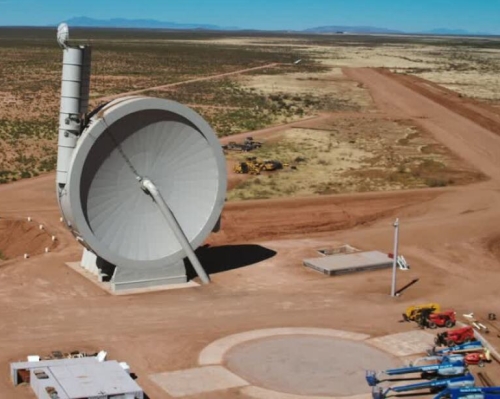
Queqiao-2 is set to launch on a Long March 8 rocket from the coastal Wenchang spaceport in early 2024, according to Zhang Lihua of DFH Satellite under the China Aerospace Science and Technology Corp. (CASC), the satellite’s developer. The 1,200-kilogram satellite will feature a 4.2-meter-diameter parabolic antenna and a mission lifetime of more than eight years, Zhang said during a presentation at the 74th International Astronautical Congress (IAC) in Baku, Oct. 3.

It will also be used later to provide relay communications to two additional Chang’e missions to the Moon’s south pole.

The satellite is an upgrade from the first Queqiao relay satellite, which is still operational but now at one of the Lagrange points rather than in orbit around the Moon. This new satellite is intended to be the first in a future constellation of lunar communications satellites, and is also being considered for the same use at Venus and Mars.

Once again it seems that China’s long term plan for the exploration of the solar system is not only rational and carefully thought out, it is also being implemented with increasing speed. Meanwhile in the U.S. our federal government seems schizophrenic, with one agency (NASA) trying to put together a long term plan using commercial space while other departments (FAA, FCC, Fish & Wildlife) doing everything they can to stymie this effort.

3 comments

NASA to award small contracts to develop universal payload interfaces

NASA yesterday announced a competition to award up to three contracts to companies to develop a universal payload interface that can be used to more easily mount payloads prior to launch.

The NASA TechLeap Prize’s Universal Payload Interface Challenge invites applicants to propose an optimized “system of systems” to enable easy integration of diverse technology payloads onto various commercial suborbital vehicles, orbital platforms, and planetary landers. The proposed universal payload interfaces should seamlessly adapt a wide range of small space payloads – be they technologies, laboratory instruments, or scientific experiments – for flight testing.

A maximum of three winners will receive up to $650,000 each to build their system plus the opportunity to flight test it at no cost. The focus is on achieving a simplified and streamlined payload integration process that has the potential to accelerate future flight-testing timelines.

The idea is to have the same interface for mounting, either on flight testing on Earth (using high altitude balloons, aircraft, or suborbital spacecraft) or in space.

Applications are due by February 22, 2024.

0 comments

ISS Russians to do spacewalk on October 25 to investigate Nauka coolant leak

Due to the coolant leak that appeared in a back up outside radiator connected to Russia’s Nauka module, NASA and Russia have rearranged their upcoming spacewalk schedule, with two American spacewalks now delayed until after a Russian spacewalk on October 25 that will investigate the leak.

During that spacewalk, [Oleg] Kononenko and [Nikolai] Chub will install a synthetic radar communications system on the Russian segment of the orbiting laboratory and deploy a nanosatellite to test solar sail technology. In addition, they plan to inspect and photograph the backup radiator that leaked on the Nauka multipurpose laboratory module.

The leak itself has stopped, though neither NASA nor Roscosmos have explained why. The leaked material is considered non-toxic, but there appears to be a concern it might get into some “internal systems” and cause problems.

1 comment

October 16, 2023 Quick space links

Courtesy of BtB’s stringer Jay, who also deserves a hat tip for the Hubble budget story earlier today, that I had missed.


5 comments

NASA: Budget cuts to Hubble/Chandra under consideration

In what is likely a negotiating ploy with Congress to prevent any budget cuts at all at NASA, the agency revealed late last week that it is considering cutting the budgets to both the Hubble and Chandra space telescopes in order to meet proposed budget limits.

In an Oct. 13 presentation to the National Academies’ Committee on Astronomy and Astrophysics, Mark Clampin, director of NASA’s astrophysics division, said he was studying unspecified cuts in the operating budgets of the Chandra X-Ray Observatory and Hubble Space Telescope to preserve funding for other priorities in the division.

The potential cuts, he said, are driven by the expectation that his division will not receive the full request of nearly $1.56 billion for fiscal year (FY) 2024 because of legislation passed in June that caps non-defense discretionary spending for 2024 at 2023 levels, with only a 1% increase for 2025. “We’re working with the expectation that FY24 budgets stay at the ’23 levels,” he said. “That means that we have decided to reduce the budget for missions in extended operations, and that is Chandra and Hubble.”

That he provided no details suggests this is merely a lobbying tactic. Essentially he is saying to Congress, “If you don’t give me more money I will be forced to shut down our most popular programs. That won’t sit well with your constituents!”

That the House in its appropriations to NASA for 2024 did not cut the agency’s budget significantly also suggests this is mere lobbying. There should be no reason to trim Hubble or Chandra, which are two of the agency’s most successful projects, unless the cost overruns on SLS/Orion and the Mars Sample Return missions are forcing NASA to grab money from other programs. If so, that problem is not Congress’s, but NASA’s. The agency should reconsider those failed projects in order to keep what works working.

6 comments
1 486 487 488 489 490 2,929